Plastic RFID Shielding Card Case
CN → USProduct Images


AI Analysis
🛡️ Plastic RFID Shielding Card Case (RFID Blockers)
🌐 HS Code Reference & Customs Clearance Guide | 2026 Latest Tariff Analysis | Professional通关 Strategy
📌 Part 1: Product Definition & Classification: What Exactly is an "RFID Card Case"?
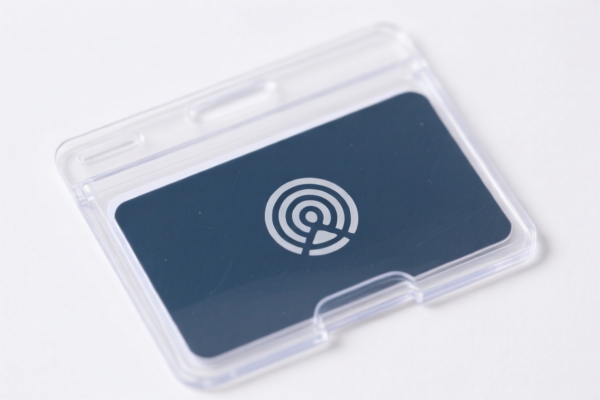
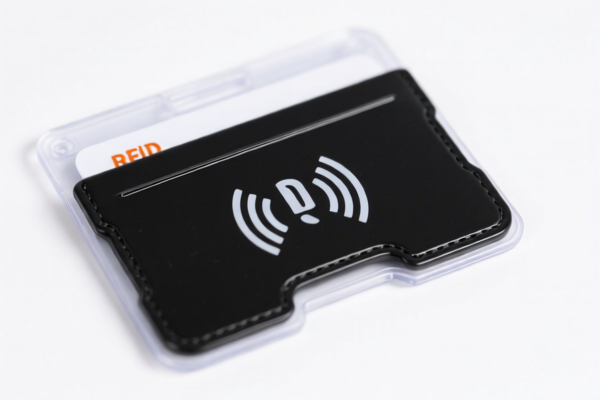
A Plastic RFID Shielding Card Case is a protective wallet or sleeve designed to prevent unauthorized scanning of contactless payment cards (credit/debit), transit cards, and passports using Radio Frequency Identification (RFID) technology.
Internationally, these products are often categorized based on their function (shielding) vs. their material (plastic), leading to two primary classification paths:
Path A: Accessories for Wallets (Most Common)
If the product is designed specifically to fit into a wallet and functions primarily as a "security insert" or "blocker," it is often classified under accessories for wallets.
Path B: Plastic Containers / Storage Articles
If the product is a standalone sleeve or holder not strictly tied to a specific wallet mechanism but made primarily of plastic, it may fall under plastic containers.
⚠️ Critical Distinction:
- If it contains a metallic mesh or foil lining specifically for electromagnetic shielding, customs may scrutinize if it qualifies for specific "electronic accessories" or remains a "plastic accessory." - US Specifics: In the US, these are heavily scrutinized under "Accessories for Wallets" vs. "Other articles of plastics".
📦 Part 2: HS Code Classification Details (2026 Latest Tariff Authority)
| HS Code | Product Description | Application Scenario | Material/Function |
|---|---|---|---|
4202.92.90.00 |
Other articles of a kind with outer surface of textile materials, plastic sheeting, or other materials | Most common for US/EU: Wallets, card cases, and holders made of plastic sheeting (including RFID blocking ones) | ✅ Plastic / Textile |
3926.90.90.00 |
Other articles of plastics | Standalone plastic sleeves, non-standard shapes, or if not considered a "wallet accessory" | ✅ Pure Plastic |
8544.42.00.00 |
Other insulated electric conductors | Rare: If the shielding is sold as a raw conductive material rather than a finished case (usually not applicable) | ✅ Conductive |
🔍 Key Insight for Customs:
- USA & Canada: Prefer4202.92.90.00(Plastic sheeting article) if it resembles a wallet, cardholder, or passport holder. - EU: Classifies under4202(Articles of leather, plastic, etc.) if it has a pocket structure. - ⚠️ Warning: Do NOT classify as4202.32.00(Wallets) unless it is a full wallet. A small sleeve is usually4202.92. - Shielding Feature: The RFID blocking function does not change the HS Code to a "Electronic" category in most jurisdictions; it remains a "Plastic Article" with a functional additive.
💰 Part 3: 2026 Latest Tariff Rate Breakdown (Including Duties & Surtaxes)
✅ Applicable Country: United States (US)
✅ Country of Origin: China (CN)
✅ Effective Date: November 2025 onwards (Post-2026 Tariff Rules)
🎯 1. 4202.92.90.00 —— Articles of Plastics (Card Cases/Wallets)
| Item | Content |
|---|---|
| Base Tariff Rate | 6.0% (Standard MFN Duty for Plastic Articles) |
| Section 301 / USITC Surtax | +25% (Targeted on Chinese plastic accessories) |
| IEEPA / 10% Surtax | +10% (China-specific emergency tariff) |
| Total Landed Duty | 41% |
| Tax Calculation | CIF Value × 41% |
| De Minimis Exemption? | ❌ NO (Not eligible for $800 exemption if classified as commercial goods; if shipped individually as gifts, may apply, but B2B is taxed) |
| Legal Basis Path | USITC:4202.92.90.00 → Footnote: 9903.88.01 → IEEPA:9903.01.24 |
📌 Explanation:
- Although "RFID Shielding" sounds high-tech, US Customs views it primarily as a plastic accessory. - The 25% Section 301 tax is the killer here. Many suppliers try to classify it as "Textile" (4202.32) to avoid it, but if the outer material is clearly plastic (PVC/TPU),4202.92is the correct classification, and the tax applies.
🎯 2. 3926.90.90.90 —— Other Articles of Plastics (Generic Sleeves)
| Item | Content |
|---|---|
| Base Tariff Rate | 5.3% |
| Section 301 / USITC Surtax | +25% (Often applies to "Other Plastics") |
| IEEPA / 10% Surtax | +10% |
| Total Landed Duty | ~40.3% |
| Tax Calculation | CIF Value × 40.3% |
📌 Note:
- Even if you argue it's a "plastic container" (3926), the Section 301 surtax usually still hits these categories hard for Chinese origin.
🛠️ Part 4: Customs Clearance Practical Advice (Real-World Pitfall Guide)
✅ 1. Preparation Checklist (Must-Haves)
| Document | Must Provide? | Description |
|---|---|---|
| ✅ Product Photos | ✔️ | Show the internal metallic layer (cutaway view) to prove RFID shielding function. |
| ✅ Material Composition | ✔️ | Explicitly state "Outer: TPU/PVC, Inner: Aluminum Foil/Metallic Mesh". |
| ✅ Function Declaration | ✔️ | "RFID/NFC Blocking Card Sleeve" – DO NOT write "Electronic Device" (this raises suspicion of 85 chapter). |
| ✅ Usage Scenario | ✔️ | "For protection of credit cards, ID, passports." |
| ✅ Commercial Invoice | ✔️ | Must clearly state "Plastic RFID Shielding Card Case". |
| ✅ Packaging | ✔️ | Ensure packaging doesn't claim "High Tech Electronic" to avoid misclassification. |
✅ 2. Declaration Strategy (The "Golden Rules")
🔥 "Material First, Function Second"
| Scenario | Correct Declaration | Wrong Practice |
|---|---|---|
| Standard RFID Card Sleeve | 4202.92.90.00 (Plastic article) |
❌ Claim 8544 (Conductor) → Higher scrutiny |
| Leather + RFID Card Case | 4202.32.00 (Leather article) |
❌ Claim 3926 (Plastic) → Incorrect material |
| Standalone Plastic Holder | 3926.90.90.90 |
❌ Claim 4202 (if not a wallet accessory) |
| RFID Shielding Material (Bulk) | 8544.42.00.00 |
❌ Claim 4202 for raw foil |
✅ 3. Special Scenarios
| Scenario | Handling Advice |
|---|---|
| "Smart" Card Cases (with Bluetooth) | If it has a battery/bluetooth chip, it becomes 9102 (Watch/Timepiece) or 8542 (Electronic). Tariff Risk: VERY HIGH. |
| Mixed Material (Leather/Plastic) | Classify based on principal material. If >50% leather → 4202.32. If >50% plastic → 4202.92. |
| Vietnam/Mexico Origin | If assembled in Vietnam/Mexico with Chinese components, check Rules of Origin. Some 301 taxes may be avoided if "Substantial Transformation" is proven. |
🌍 Part 5: Global Market Comparison (2026)
| Country/Region | Recommended HS Code | Base Duty | 301/Surtax (China) | Total Est. | Remarks |
|---|---|---|---|---|---|
| 🇺🇸 USA | 4202.92.90.00 |
6.0% | +35% | 41% | High Risk: 301 tax applies. |
| 🇨🇳 China | 4202.92.90.00 |
10% | 0% | 10% | No export tax, but domestic market is competitive. |
| 🇪🇺 EU | 4202.92.00 |
3.7% | 0% | 3.7% | No Section 301. Low duty. |
| 🇦🇺 Australia | 4202.92.00 |
5.0% | 0% | 5.0% | No extra surtax. |
| 🇯🇵 Japan | 4202.92.00 |
7.5% | 0% | 7.5% | Standard tariff. |
📌 Conclusion:
- USA is the only market with the 35%+ surtax on these items. - EU/Australia/Japan are much safer for export. - Strategy: If shipping to the US, consider warehousing in Vietnam and re-exporting (if legal/origin rules met) to avoid the 301 tax, though "transshipment" fraud risks must be managed carefully.
📌 Part 6: Common Mistakes & Pitfalls (Lessons Learned)
❌ Mistake 1: Classifying as "Electronic Device" (8544 or 8542)
👉 Consequence: Customs delays, request for FCC certification (unnecessary for passive shielding), potential penalty.
❌ Mistake 2: Declaring as "Wallet" (4202.32) when it is purely plastic
👉 Consequence: Misclassification audit. If the material is 100% plastic, 4202.32 is rejected.
❌ Mistake 3: Omitting "RFID Shielding" in description
👉 Consequence: While it doesn't change the tax, it hides the product's unique value. If inspected, the lack of shielding verification can lead to "misleading declaration" flags.
❌ Mistake 4: Trying to hide the "Made in China" label on the product itself (if shipped to US)
👉 Consequence: Seizure, 25%+10% penalty, and blacklisting of the importer.
✅ Correct Practice:
"Passive RFID Blocking Card Sleeve, PVC/TPU Material with Aluminum Foil Lining, No Electronic Components."
🎯 Part 7: Conclusion: Precision Classification Saves Profits
🎯 Key Takeaways:
🔹 "Plastic + Shielding" =
4202.92, NOT Electronics.
🔹 USA Tariff is ~41%: Plan for this in your cost structure.
🔹 No FCC Needed: Since it's passive (no battery), you save on certification costs, but must prove "Passive" nature.
🔹 Origin Matters: If you can move assembly to Vietnam, you may avoid the 301 surtax (but must comply with "Substantial Transformation" rules).
📌 Pro Tip:
For US imports, if the value is under $800 per individual shipment (De Minimis), you MIGHT avoid duty entirely if shipped directly to consumers (Section 321), BUT this does not apply to B2B bulk imports. For B2B, the 41% duty is unavoidable for Chinese origin.
📣 Call to Action:
📞 Contact: Verify "Plastic Sheet" vs "Textile" composition before shipping.
🚀 Optimize: If exporting to the US, calculate the 41% duty into your pricing. If targeting EU, focus on 3.7% duty for better margins.
📦 Compliance: Ensure your supplier declares the exact material composition on the commercial invoice.
✨ Professional Customs Clearance Starts with Accurate Classification!
💼 Every percentage point of duty saved is pure profit!
Customer Reviews
About HS Code Classification
The Harmonized System (HS) is an internationally standardized nomenclature developed by the World Customs Organization (WCO) to classify traded products. Over 200 countries use the HS system as the basis for customs tariffs, trade statistics, and import/export regulations.
Each HS code follows a hierarchical structure:
- Chapter (2 digits) — Broad category of goods (e.g., Chapter 84: Machinery and Mechanical Appliances)
- Heading (4 digits) — More specific grouping within the chapter
- Subheading (6 digits) — Internationally standardized breakdown, used by all WCO member countries
- National subdivisions (8-10 digits) — Country-specific extensions for further classification, such as US HTSUS 10-digit codes
Correct HS code classification is essential for smooth customs clearance, accurate duty payment, and compliance with trade regulations. Misclassification can lead to customs delays, overpayment of duties, or penalties.
When importing from CN to US, the applicable tariff rates may include:
- Most-Favored-Nation (MFN) rate — The standard duty rate applied to WTO members
- General rate — Applied to countries without trade agreements
- Trade remedy duties — Additional tariffs such as Section 301 (anti-dumping), Section 232 (national security), or countervailing duties
The information provided on this page is for reference purposes only. For official classification, please consult with your local customs authority or a licensed customs broker.