Plastic RFID Shielding Card Holder
CN → USProduct Images

AI Analysis
🛡️ Plastic RFID Shielding Card Holder: The Ultimate Guide to HS Codes & 2026 Customs Clearance
🌐 HS Code Reference & Clearance Strategy | 2026 Tariff Breakdown | Professional Logistics Playbook
📌 I. Product Definition: What Exactly is an "RFID Shielding Card Holder"?
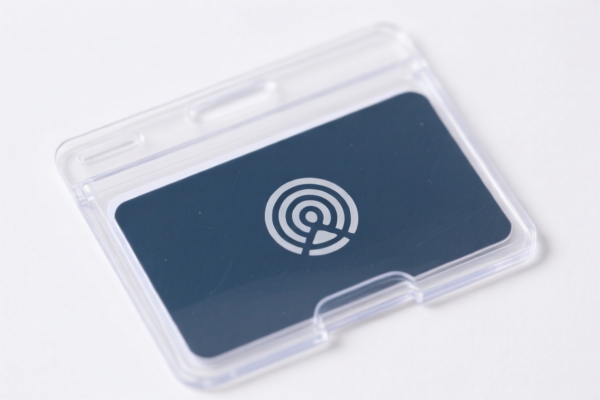
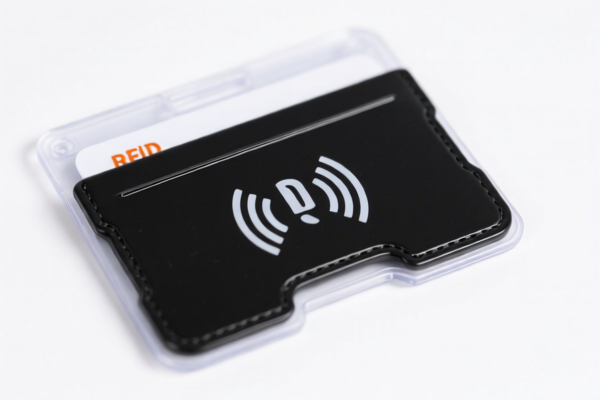
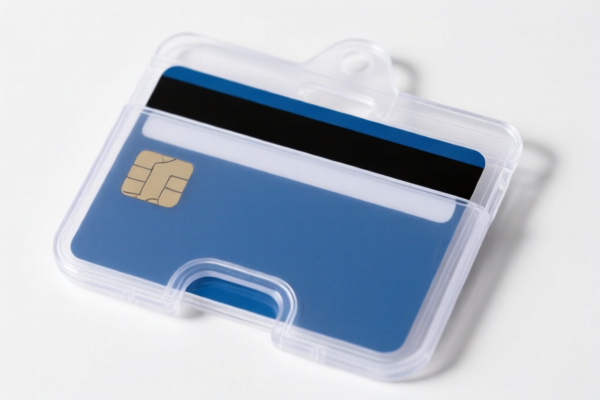
In the modern digital age, a Plastic RFID Shielding Card Holder is not just a wallet; it's a security device. It is designed to prevent unauthorized radio frequency identification (RFID) scanning of credit cards, passports, and ID cards.
Key Components: 1. Material: Primarily Plastic (PVC, PET, or ABS) or layered with metal/aluminum foil. 2. Function: Contains a conductive layer (metalized fabric, foil, or metal mesh) that blocks RFID/NFC signals. 3. Form: Sleeves, slim cardholders, or cases.
⚠️ The Critical Classification Dilemma: * Is it a Plastic Article (Chapter 39)? * Is it a Textile Article (Chapter 63)? * Is it a Security Device? * The Verdict: Since the primary material is plastic and the shielding is embedded, it generally falls under Plastic Articles. However, if the shielding layer dominates the function, customs may scrutinize the composition.
Key Distinction: * Pure Plastic Holder (with embedded foil) → 3926.90 (Other articles of plastics). * Textile Wallet with RFID → 4205.00 or 6307.90 (If textile is primary). * Metal Shielding Device → 8302 (Base metal fittings - Rare for cardholders).
📦 II. HS Code Classification Matrix (2026 Authorized Tariff)
| HS Code | Product Description | Applicable Scenario | Material Dominance |
|---|---|---|---|
| 3926.90.99.00 | Other articles of plastics (Most Common) | Plastic sleeve/card holder with embedded metal foil for RFID blocking. | ✅ Plastic (>50%) |
| 3926.20.00.00 | Articles of apparel and clothing accessories (Specific) | Plastic wallets/fobs if classified as "accessories" (Less common). | ✅ Plastic |
| 4205.00.90.00 | Other articles of leather or of composition leather | If the holder is "Leather + Plastic lining" with RFID. | ✅ Leather (Surface) |
| 9005.90.99.00 | Optical instruments (Not applicable) | ❌ DO NOT USE (Do not classify as optical gear). | ❌ N/A |
| 8308.10.00.00 | Clasps, frames, buckles | ❌ DO NOT USE (Not a metal fitting). | ❌ N/A |
🔍 Authority Note: * According to the 2026 Harmonized System (HS) and US HTSUS interpretations, items made primarily of plastic, even if they contain conductive shielding layers, are classified under Chapter 39 (Plastics). * Specific Subheading: 3926.90.99.00 is the standard "Other" category for plastic goods not specified elsewhere.
💰 III. 2026 Tariff Rate Deep Dive (USA Import Focus)
✅ Applicable Country: United States (US) ✅ Origin: China (CN) – Highest Risk Scenario ✅ Effective Date: Nov 10, 2025 (Current 2026 Policy)
🎯 1. HS Code: 3926.90.99.00 — Other Articles of Plastics
| Item | Content |
|---|---|
| Base Rate (MFN) | 5.3% (ad valorem) |
| Section 301 / USITC Additional Duty | +7.5% to +25% (Depends on specific "China-specific" lists) |
| IEEPA (Emergency Economic Powers) | +10% (China Origin) |
| Total Effective Rate (China) | ~22.8% - 40.3% (Depending on specific list inclusion) |
| De Minimis Threshold | ❌ NO (Items over $800 are not exempt from Section 301 duties) |
| Legal Reference Path | HTSUS:3926.90.99.00 → USITC:301 → FOOTNOTE:9903.88.01 |
📌 Explanation: * Base 5.3%: Standard Most Favored Nation (MFN) rate for general plastic goods. * 301 Clause: Most plastic consumer goods from China are subject to Section 301 tariffs. While not all are at 25%, many "plastic household articles" carry a 7.5% surcharge. * IEEPA 10%: A mandatory add-on for Chinese-origin goods under the 2026 framework. * Total Risk: If the item is flagged as a "high-risk plastic good," the duty can approach 40%.
🎯 2. HS Code: 3926.20.00.00 — Apparel Accessories (Rare Case)
| Item | Content |
|---|---|
| Base Rate | 11.6% |
| Section 301 | +7.5% (Likely) |
| IEEPA | +10% |
| Total Effective Rate | ~29.1% |
⚠️ Warning: Do not attempt to classify a plastic cardholder as "Apparel Accessory" to avoid 3926 rates unless it is explicitly a belt/buckle accessory. Customs will reject this as "Misclassification."
🛠️ IV. Clearance Practical Strategy (Avoid the Pitfalls)
✅ 1. Mandatory Documentation Checklist
| Document | Requirement | Why? |
|---|---|---|
| Product Specification Sheet | ✅ Mandatory | Must explicitly state: "Plastic composition with embedded metal foil shielding." |
| Bill of Materials (BOM) | ✅ Mandatory | Prove Plastic % > 50%. If Metal % > 50%, HS Code changes to Chapter 73/83 (Higher Duty). |
| RFID Testing Report | ✅ Optional but Recommended | Shows functionality (blocking signal at 13.56 MHz). Proves it's a "Shielding Device," not just a "Plastic Case." |
| Commercial Invoice | ✅ Critical | Description: "Plastic RFID Shielding Card Holder, Model X, China Origin." NO vague terms like "Gift." |
| FCC Declaration (if electronic) | ⚠️ Context Dependent | If the holder contains an active chip (e.g., Bluetooth tracker), it needs FCC. Pure passive shielders do NOT need FCC. |
✅ 2. Declaration Best Practices (The "Golden Rule")
🔥 Formula: "Material + Function + HS Code = Safe Clearance"
| Scenario | Correct Declaration | Risky/Incorrect Declaration |
|---|---|---|
| Passive Shielding (Foil) | "Plastic RFID Blocking Card Sleeve (HS 3926.90)" | "Wallet" (Too vague, may be checked as Leather 4205) |
| Active Tracker (with battery) | "Smart RFID Card Holder with NFC Chip (HS 8517)" | "Plastic Card Holder" (Misclassification, leads to seizure) |
| Mixed Material (Leather + Plastic) | "Hybrid Wallet: Leather Exterior, Plastic Interior (HS 4205)" | "Plastic Holder" (Under-declares material value) |
✅ 3. Special Handling: "De Minimis" & Section 301
- The $800 Rule: If shipping under $800 via courier (e.g., DHL/FedEx), you might qualify for De Minimis entry.
- BUT: Section 301 duties (7.5% - 25%) DO NOT APPLY to De Minimis entries if the goods are not listed in the "China Country Specific" exclusion list for that specific date.
- Crucial: Plastic cardholders are often included in the 301 list. Check the latest USITC database before assuming $0 duty for small parcels.
- The "Foil" Trap: If the metal foil layer is so thick it makes the item "metal," Customs may shift the HS Code to Chapter 83 (Miscellaneous articles of base metal), which has a different (often higher) duty rate. Keep the foil thin (<0.1mm) and ensure plastic is the structural backbone.
🌍 V. Global Market Comparison (2026)
| Region | Recommended HS Code | Duty Rate (China Origin) | Key Requirement |
|---|---|---|---|
| 🇺🇸 USA | 3926.90.99.00 |
~23% - 40% (Section 301 applies) | FCC/ICN exemption proof (if passive) |
| 🇪🇺 EU | 3926.90.97 |
0% - 6% | CE Mark (Low Voltage Directive) |
| 🇯🇵 Japan | 3926.90.99 |
8% | PSE (if active) |
| 🇨🇦 Canada | 3926.90.99 |
0% - 5% | Canadian safety standards |
| 🇦🇺 Australia | 3926.90.99 |
5% | RCM (Radio Compliance) |
📌 Conclusion: * The USA is the most hostile market for RFID plastic goods due to Section 301 and IEEPA. * Europe and Asia are more favorable, with lower or zero duties.
📌 VI. Common Mistakes & Red Flags (Blood & Tears)
❌ Mistake 1: "It's a wallet, so it's leather!" * Consequence: If declared as Leather (4205) but actually 90% plastic, Customs will reclassify, seize goods, and fine you for fraud. * Fix: Declare based on dominant material.
❌ Mistake 2: Calling it a "Security Device" to avoid duty. * Consequence: Security devices often fall under 8517 (Electronics). If your product is just a passive foil shield, 8517 is wrong. If you declare 8517, you face 25% + 10% electronics tariffs. * Fix: Declare as Plastic Article (3926).
❌ Mistake 3: Ignoring the "Metal Foil" content. * Consequence: If the foil is too thick, it might be classified as 8302 (Metal fittings) or 7326 (Other articles of iron/steel). * Fix: Ensure the plastic provides the structure; the foil is just a lining.
❌ Mistake 4: Shipping "Active" chips as "Passive" holders. * Consequence: If the holder has a battery/Bluetooth, it requires FCC ID. Shipping without it = Seizure. * Fix: Clearly distinguish Passive Shield (No Battery) vs. Active Tracker (Battery).
🎯 VII. Final Professional Advice
🚀 Strategy for 2026: 1. Always declare as
3926.90.99.00for standard plastic RFID holders. 2. Budget 35% duty for US imports from China. Do not rely on "free shipping" promises for duties. 3. Material Proof: Keep a sample BOM (Bill of Materials) ready for every shipment. 4. Passive vs. Active: If your product has a battery, change your strategy entirely (HS 8517/8518). 5. Pre-Classification: For high-volume shipments, apply for a Binding Ruling from CBP (US Customs) to lock in your HS Code and avoid surprise audits.💡 Pro Tip: "If you want to lower US tariffs, consider Final Assembly in Mexico or Vietnam (under USMCA or GSP rules). A 'Made in Vietnam' RFID holder may qualify for 0% Section 301 duties if the manufacturing process meets the origin criteria!"
✨ Smart Shipping Starts with the Right HS Code!
💼 Don't let a 40% duty eat your profit margin. Classify correctly today.
Customer Reviews
About HS Code Classification
The Harmonized System (HS) is an internationally standardized nomenclature developed by the World Customs Organization (WCO) to classify traded products. Over 200 countries use the HS system as the basis for customs tariffs, trade statistics, and import/export regulations.
Each HS code follows a hierarchical structure:
- Chapter (2 digits) — Broad category of goods (e.g., Chapter 84: Machinery and Mechanical Appliances)
- Heading (4 digits) — More specific grouping within the chapter
- Subheading (6 digits) — Internationally standardized breakdown, used by all WCO member countries
- National subdivisions (8-10 digits) — Country-specific extensions for further classification, such as US HTSUS 10-digit codes
Correct HS code classification is essential for smooth customs clearance, accurate duty payment, and compliance with trade regulations. Misclassification can lead to customs delays, overpayment of duties, or penalties.
When importing from CN to US, the applicable tariff rates may include:
- Most-Favored-Nation (MFN) rate — The standard duty rate applied to WTO members
- General rate — Applied to countries without trade agreements
- Trade remedy duties — Additional tariffs such as Section 301 (anti-dumping), Section 232 (national security), or countervailing duties
The information provided on this page is for reference purposes only. For official classification, please consult with your local customs authority or a licensed customs broker.