Plastic Raw Materials (HS 3901901000)
CN → US| HS Code | Tariff Rate | Origin | Destination | Doc |
|---|---|---|---|---|
| 3924905650 | 20.9% | CN | US | Official Doc |
| 3924104000 | 13.4% | CN | US | Official Doc |
| 3923109000 | 38.0% | CN | US | Official Doc |
| 3923900080 | 38.0% | CN | US | Official Doc |
| 3402311000 | 41.5% | CN | US | Official Doc |
Product Images
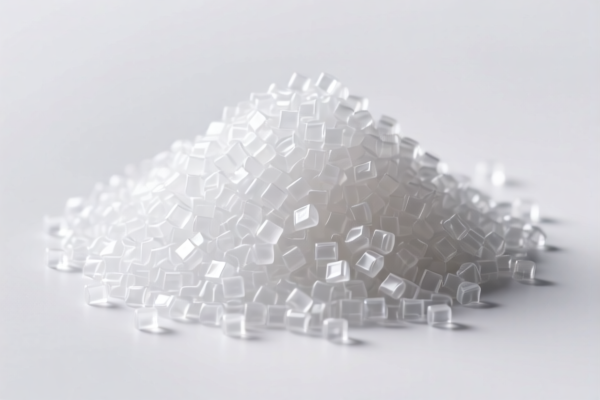

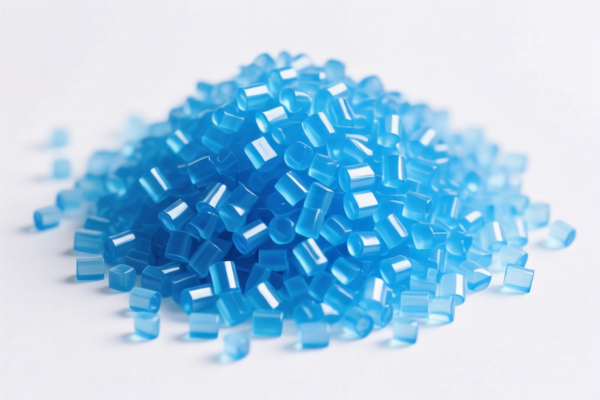
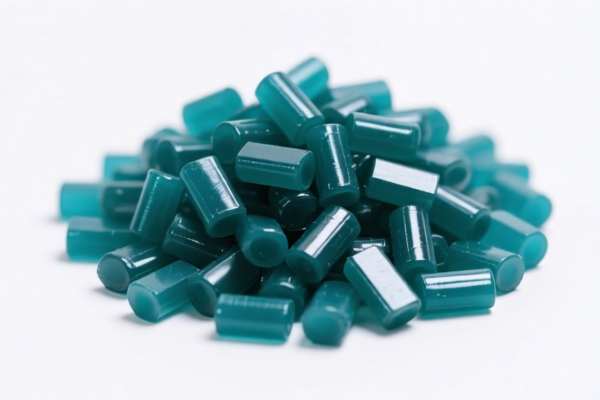
AI Analysis
🧪 Plastic Raw Materials (HS 3901901000)
🌐 HS Code Reference & Customs Clearance Guide | 2026 Latest Tariff Analysis | Professional Clearance Strategy
📌 I. Product Definition: What Are "Plastic Raw Materials"?
Plastic Raw Materials generally refer to primary polymer substances used as the foundation for manufacturing various plastic products. In international trade, these are typically classified under Chapter 39 (Plastics and Articles Thereof).
⚠️ Critical Distinction:
- Raw Materials (HS 3901/3902/3904 series): Polymers in primary forms (powders, granules, liquids, pastes) ready for further processing.
- Finished/Intermediate Products (HS 3923/3924/3926 series): Containers, packaging, tableware, or other articles made from plastic.Key Pitfall: Misclassifying raw polymer granules as "plastic articles" can lead to significant duty discrepancies and customs delays.
📦 II. HS Code Classification Analysis (Based on Provided Data)
The provided data indicates that while the core nature of the product is Plastic Raw Material, the customs system has flagged several potential classifications depending on specific usage, form, or fallback logic. Below is the detailed breakdown of why each HS Code was generated and the associated tax implications.
📊 Classification Summary Table
| HS Code | Category Description | Reason for Classification (from Data) | Total Tax Rate | Tax Composition |
|---|---|---|---|---|
| 3924.90.56.50 | Other Plastic Tableware/Kitchenware | "Plastic material attribute matches; falls under other catch-all category for plastics." | 20.9% | Base: 3.4% Add'l: 7.5% Section 301: 10% |
| 3924.10.40.00 | Plastic Tableware | "Plastic material, used as plastic product; fits other catch-all logic." | 13.4% | Base: 3.4% Add'l: 0.0% Section 301: 10% |
| 3923.10.90.00 | Plastic Articles for Transport/Packaging | "Plastic material, consistent with target code; belongs to 'Other' catch-all category." | 38.0% | Base: 3.0% Add'l: 25.0% Section 301: 10% |
| 3923.90.00.80 | Other Plastic Packing Articles | "Plastic material, function/purpose fits plastic articles; matches packaging/transport material requirements." | 38.0% | Base: 3.0% Add'l: 25.0% Section 301: 10% |
| 3402.31.10.00 | Surface-Active Organic Agents | "Chemical raw material, highly consistent with organic compound category in material attributes." | 41.5% | Base: 6.5% Add'l: 25.0% Section 301: 10% |
🔍 Analysis:
The system is struggling to pinpoint the exact "Primary Form" classification (like 3901, 3902, etc.) and is instead falling back to Finished Article categories (3924, 3923) or Chemical Agents (3402). This suggests the declaration might lack specific details on the polymer type (e.g., PE, PP, PVC) or form (pellets, powder), leading to "catch-all" assignments.
💰 III. 2026 Tariff Rate Detailed Breakdown (US Import from China)
✅ Applicable Country: United States (US)
✅ Origin: China (CN)
✅ Effective Time: Post-2025 policies (Section 301 & IEEPA)
🎯 1. 3924.90.56.50 & 3924.10.40.00 — Plastic Tableware/Articles
These codes fall under Chapter 39.24, which covers plastic tableware, kitchenware, and other household articles.
| Item | Details |
|---|---|
| Base Duty | 3.4% (Ad Valorem) |
| Additional Duty (Section 301) | +7.5% (for 3924.90.56.50) / 0.0% (for 3924.10.40.00) |
| IEEPA/Retaliatory Duty | +10% (Section 122条款) |
| Total Effective Rate | 20.9% or 13.4% |
| Calculation | CIF Value × Total Rate |
| De Minimis Exemption | ❌ Not Eligible |
📌 Explanation:
- The 7.5% additional duty on3924.90.56.50is part of the Section 301 tariff list.
- The 10% IEEPA tariff applies to Chinese-origin goods under recent emergency powers.
- Risk: If you are importing raw plastic granules but declaring them as "tableware" (HS 3924), this is a misclassification error. However, if the system forces this classification due to ambiguous data, the duty is lower than packaging codes.
🎯 2. 3923.10.90.00 & 3923.90.00.80 — Plastic Packaging/Transport Articles
These codes fall under Chapter 39.23, covering plastic articles for the conveyance or packaging of goods (bags, sacks, boxes, reels).
| Item | Details |
|---|---|
| Base Duty | 3.0% (Ad Valorem) |
| Additional Duty (Section 301) | +25.0% |
| IEEPA/Retaliatory Duty | +10% (Section 122条款) |
| Total Effective Rate | 38.0% |
| Calculation | CIF Value × 38.0% |
| De Minimis Exemption | ❌ Not Eligible |
📌 Explanation:
- The 25% Section 301 duty is significantly higher than for tableware.
- Risk: This is a high-cost classification. If your "Plastic Raw Materials" are actually just polymer resins (pellets/powders), this is likely incorrect. However, if the raw materials are pre-packaged in plastic sacks/bags, customs may view the packaging as the primary attribute.
🎯 3. 3402.31.10.00 — Organic Surface-Active Agents
This code falls under Chapter 34, which covers soap, organic surface-active agents, and preparations.
| Item | Details |
|---|---|
| Base Duty | 6.5% (Ad Valorem) |
| Additional Duty (Section 301) | +25.0% |
| IEEPA/Retaliatory Duty | +10% (Section 122条款) |
| Total Effective Rate | 41.5% |
| Calculation | CIF Value × 41.5% |
| De Minimis Exemption | ❌ Not Eligible |
📌 Explanation:
- The system flagged this because raw plastic materials are organic compounds. If the material is a surfactant, plasticizer, or chemical additive rather than pure polymer resin, this code may apply.
- Risk: This is the highest tax rate in the provided list. Only use if the product is chemically classified as a surface-active agent or additive, not a structural polymer.
🛠️ IV. Customs Clearance Practical Advice
✅ 1. Essential Documentation (Must-Haves)
| Document | Requirement | Purpose |
|---|---|---|
| Product Specification Sheet | Must include: Polymer Type (e.g., LDPE, HDPE, PP), Form (Pellets, Powder, Liquid), Molecular Weight, Color, Additives. | To prove it is a Raw Material (HS 3901-3914) and not a finished article. |
| Formula/CAS Numbers | Provide CAS registry numbers for all components. | To distinguish between pure polymers (lower duty) and chemical mixtures/additives (higher duty). |
| Certificate of Analysis (COA) | From manufacturer. | Confirms purity and chemical composition. |
| Commercial Invoice | Clearly state: "Plastic Raw Material [Polymer Name] in Primary Form." | Avoid vague terms like "Plastic Goods" or "Plastic Parts." |
| Material Safety Data Sheet (MSDS) | Required for chemical transport and classification. | For customs and safety assessment. |
✅ 2. Classification Strategy (Key Tips)
🔥 "Declare the Material, Not the Use!"
| Scenario | Correct Declaration | Wrong Declaration | Result |
|---|---|---|---|
| Polymer Pellets (e.g., PP Granules) | HS 3902.10 / 3901.10 (Specific Polymer) | "Plastic Raw Material" (Vague) | Risk of falling back to HS 3924/3923 → Higher Duty |
| Plastic Bags Containing Pellets | HS 3923.20 (Bags) OR Separate Line Items | Single line for "Bag with Pellets" | Misclassification risk |
| Chemical Additives/Plasticizers | HS 3907/3915 or 3824 | "Plastic Raw Material" | May be classified as HS 3402 → 41.5% Duty |
⚠️ Critical Warning:
- If you declare HS 3901-3914 (Raw Polymers), you must provide specific polymer type.
- If the system cannot identify the specific polymer, it defaults to "Other Plastics" (HS 3926/3924) or "Chemicals" (HS 3402), which have much higher duties.
- Recommendation: Do NOT rely on the vague "Plastic Raw Materials" label. Specify: "Polypropylene (PP) Granules, Virgin, for Injection Molding".
✅ 3. Special Cases
| Case | Advice |
|---|---|
| Recycled Plastic Pellets | Must declare as "Recycled." May face additional scrutiny or different HS codes (e.g., HS 3915). |
| Plastic in Liquid Form | Check if it is a resin or a solution/suspension. Solutions may fall under Chapter 38 or 3906. |
| Colored vs. Natural | Natural (unpainted) vs. Colored (painted) can affect classification within Chapter 39. |
🌍 V. Global Market Comparison (2026)
| Market | Recommended HS Code (Raw Polymer) | Base Duty | Additional Duty (China) | Total Est. | Notes |
|---|---|---|---|---|---|
| 🇺🇸 USA | 3901.10 / 3902.10 (Specific) |
0-3% | 25% (Section 301) | 25-28% | Avoid fallback to 3924/3923 (13-38%) |
| 🇨🇳 China | 3901.10 / 3902.10 |
0-6% | None | 0-6% | Low duty, but strict import licensing may apply. |
| 🇪🇺 EU | 3901.10 / 3902.10 |
0-6.5% | None | 0-6.5% | No Section 301 equivalent. |
| 🇬🇧 UK | 3901.10 / 3902.10 |
0-6.5% | None | 0-6.5% | Post-Brexit tariffs generally low for raw materials. |
📌 Conclusion:
- USA is the most challenging market due to Section 301 tariffs.
- Correct classification is critical: Misclassifying raw polymer as "packaging" (3923) or "tableware" (3924) results in unjustified duties (13-38%) instead of the standard ~25% for raw polymers.
- Always specify the polymer type to avoid "catch-all" penalties.
📌 VI. Common Errors & Pitfalls (Lessons Learned)
❌ Error 1: Declaring "Plastic Raw Materials" without specifying the polymer type.
👉 Consequence: Customs applies fallback code (e.g., 3924.90.56.50) → 20.9-38% Duty.
✅ Fix: Specify "Polyethylene (PE) Resin, HDPE, Grade XYZ."
❌ Error 2: Including packaging in the HS code of the raw material.
👉 Consequence: If plastic bags contain pellets, declaring only the pellets ignores the bag duty.
✅ Fix: Declare pellets under HS 3901 and bags under HS 3923 separately, or if the bag is integral, clarify.
❌ Error 3: Confusing Plasticizers/Additives with Base Polymers.
👉 Consequence: Chemical additives may be classified under Chapter 38 or 34 (e.g., HS 3402.31.10.00) → 41.5% Duty.
✅ Fix: Provide CAS numbers and MSDS to prove if it's a base resin or an additive.
❌ Error 4: Ignoring IEEPA/Section 301 Updates.
👉 Consequence: Paying only base duty and facing audits/fines later.
✅ Fix: Always calculate total duty = Base + Section 301 + IEEPA (10%).
🎯 VII. Conclusion: Precision in Classification Saves Money
🎯 Remember the Key Points:
🔹 "Raw Material ≠ Finished Article"
🔹 "Specify Polymer Type to Avoid Fallback Codes"
🔹 "Section 301 (25%) + IEEPA (10%) = High Cost in USA"
🔹 "Fallback to 3923/3924/3402 = Unnecessary High Tax (13-41.5%)"
📌 Pro Tip:
If your product is 100% Virgin Polymer Resin, strive for HS 3901-3914 codes. If the system forces a fallback to 3924 or 3923, submit a Binding Tariff Ruling (BTR) or Advance Ruling with full technical documentation to justify the correct raw material classification.
📣 Immediate Action:
📞 Provide Full Technical Data Sheet + CAS Numbers
📄 Declare Specific Polymer Type (e.g., "Polypropylene Homopolymer")
🚀 Avoid Generic Terms like "Plastic Raw Materials"
✨ Professional Clearance Starts with Accurate Classification!
💼 Every Point of Duty Difference is Pure Profit!
Customer Reviews
About HS Code Classification
The Harmonized System (HS) is an internationally standardized nomenclature developed by the World Customs Organization (WCO) to classify traded products. Over 200 countries use the HS system as the basis for customs tariffs, trade statistics, and import/export regulations.
Each HS code follows a hierarchical structure:
- Chapter (2 digits) — Broad category of goods (e.g., Chapter 84: Machinery and Mechanical Appliances)
- Heading (4 digits) — More specific grouping within the chapter
- Subheading (6 digits) — Internationally standardized breakdown, used by all WCO member countries
- National subdivisions (8-10 digits) — Country-specific extensions for further classification, such as US HTSUS 10-digit codes
Correct HS code classification is essential for smooth customs clearance, accurate duty payment, and compliance with trade regulations. Misclassification can lead to customs delays, overpayment of duties, or penalties.
When importing from CN to US, the applicable tariff rates may include:
- Most-Favored-Nation (MFN) rate — The standard duty rate applied to WTO members
- General rate — Applied to countries without trade agreements
- Trade remedy duties — Additional tariffs such as Section 301 (anti-dumping), Section 232 (national security), or countervailing duties
The information provided on this page is for reference purposes only. For official classification, please consult with your local customs authority or a licensed customs broker.