Plastic Recyclable Packaging Boxes
CN → US| HS Code | Tariff Rate | Origin | Destination | Doc |
|---|---|---|---|---|
| 3923102000 | 35.0% | CN | US | Official Doc |
| 3923109000 | 38.0% | CN | US | Official Doc |
| 3926100000 | 15.3% | CN | US | Official Doc |
| 3926909989 | 22.8% | CN | US | Official Doc |
| 4819200020 | 35.0% | CN | US | Official Doc |
Product Images
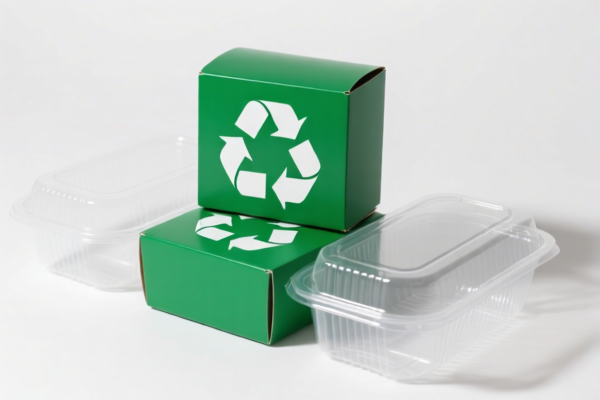
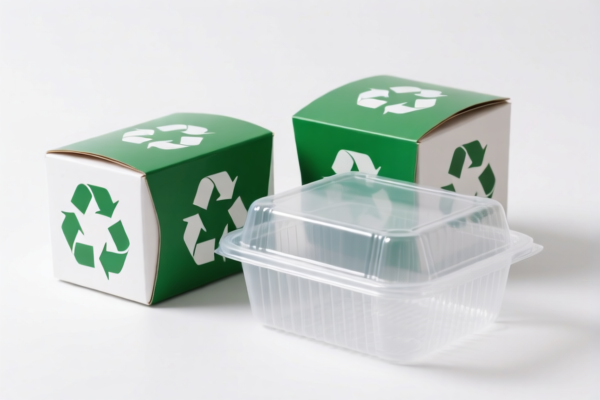
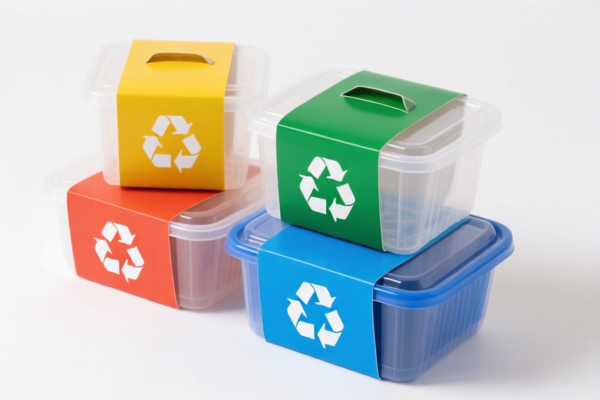
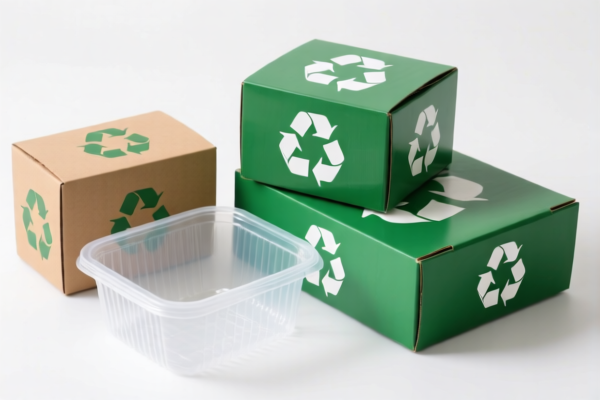
AI Analysis
📦 Plastic Recyclable Packaging Boxes
🌐 HS Code Reference & Clearance Guide | 2026 Latest Tariff Analysis | Professional Customs Strategy
📌 I. Product Definition & Classification: What Are "Plastic Recyclable Packaging Boxes"?
Plastic Recyclable Packaging Boxes are containers primarily made of plastic polymers, designed for the transport, storage, or retail display of goods. The term "Recyclable" implies material composition (e.g., PET, HDPE, PP) but does not change the HS Code classification, which is based on material, form, and function.
In international trade, these are strictly categorized under Chapter 39 (Plastics and Articles Thereof). The key distinction lies in whether they are classified as specific packaging articles (Chapter 39, Heading 3923) or general plastic articles (Chapter 39, Heading 3926).
⚠️ Key Distinction:
- If the box is specifically designed for packaging purposes (e.g., corrugated-style plastic boxes, folding cartons made of plastic, clamshells) → Likely Heading 3923.
- If the box is a general-purpose plastic item not specifically for packaging (e.g., storage bins, crates not primarily for shipping) → Likely Heading 3926.
- Recyclability is a marketing feature, not a customs classification criterion.
📊 II. HS Code Classification Matrix (2026 Latest Tariff Alignment)
Based on the provided data, here are the only five valid HS Codes for "Plastic Recyclable Packaging Boxes" with corresponding tax rates.
| HS Code | Product Description | Material & Form | Primary Use | Total Tax Rate (US Import from CN) |
|---|---|---|---|---|
| 3923.10.20.00 | Plastic Packaging Boxes (Specific Type) | Plastic, Box Form | Packaging | 35.0% |
| 3923.10.90.00 | Other Plastic Packaging Boxes | Plastic, Box Form | Packaging Supplies | 38.0% |
| 3926.10.00.00 | Plastic Articles for Packaging | Plastic, General Packaging | Plastic Products / Packaging Class | 15.3% |
| 3926.90.99.89 | Other Plastic Articles | Plastic, Box Form (Other) | Other Manufactures | 22.8% |
| 4819.20.00.20 | ❌ EXCLUDED: Paper Folding Boxes | Paper, Box Form | Paper Packaging | 35.0% |
🔍 Critical Note:
- HS Code 4819.20.00.20 is INVALID for plastic boxes. It refers to Paper Folding Boxes. If you import plastic boxes under this code, you will face misclassification penalties, delays, and re-classification to 3923/3926.
- Only 3923.10.20.00, 3923.10.90.00, 3926.10.00.00, and 3926.90.99.89 are valid for plastic packaging boxes.
💰 III. 2026 Tariff Rate Breakdown (US Import from China)
✅ Country: United States (US)
✅ Origin: China (CN)
✅ Effective Date: 2025–2026 Trade Policies
🎯 1. 3923.10.20.00 – Plastic Packaging Boxes (Specific)
| Item | Detail |
|---|---|
| Base Tariff | 0.0% |
| Section 301 Surcharge | 25.0% |
| Section 122 Tariff | 10.0% |
| Total Tax Rate | 35.0% |
| Calculation Basis | CIF Value × 35% |
| De Minimis Exemption | ❌ Not Applicable (Section 301 & 122 tariffs apply) |
| Legal Basis | USITC:3923.10.20.00 → 301 Footnote → 122 Provision |
📌 Explanation:
- This code is for specific plastic packaging boxes that fit precise definitions in Heading 3923.10.
- 0% base tariff is offset by 35% in附加 fees, resulting in a high effective rate.
- Must be clearly labeled as "Plastic Packaging Box" in commercial invoices.
🎯 2. 3923.10.90.00 – Other Plastic Packaging Boxes
| Item | Detail |
|---|---|
| Base Tariff | 3.0% |
| Section 301 Surcharge | 25.0% |
| Section 122 Tariff | 10.0% |
| Total Tax Rate | 38.0% |
| Calculation Basis | CIF Value × 38% |
| De Minimis Exemption | ❌ Not Applicable |
| Legal Basis | USITC:3923.10.90.00 → 301 Footnote → 122 Provision |
📌 Explanation:
- Used for plastic packaging boxes that do not fit into3923.10.20.00.
- 3% base tariff + 35% surcharges = 38% total.
- This is the highest tax rate among plastic packaging options.
🎯 3. 3926.10.00.00 – Other Plastic Articles for Packaging
| Item | Detail |
|---|---|
| Base Tariff | 5.3% |
| Section 301 Surcharge | 0.0% |
| Section 122 Tariff | 10.0% |
| Total Tax Rate | 15.3% |
| Calculation Basis | CIF Value × 15.3% |
| De Minimis Exemption | ❌ Not Applicable (Section 122 applies) |
| Legal Basis | USITC:3926.10.00.00 → 122 Provision |
📌 Explanation:
- This code is for plastic articles that serve a packaging function but are not strictly "packaging articles" under Heading 3923.
- No Section 301 tariff (25%) applies! Only 5.3% base + 10% Section 122 = 15.3%.
- This is the MOST COST-EFFECTIVE code if the product qualifies as "Other Plastic Articles" rather than "Packaging Articles."
- Qualification: Must not be a standard "box" but rather a plastic article used for packaging (e.g., plastic inserts, trays, or non-standard containers).
🎯 4. 3926.90.99.89 – Other Plastic Articles (Not Elsewhere Specified)
| Item | Detail |
|---|---|
| Base Tariff | 5.3% |
| Section 301 Surcharge | 7.5% |
| Section 122 Tariff | 10.0% |
| Total Tax Rate | 22.8% |
| Calculation Basis | CIF Value × 22.8% |
| De Minimis Exemption | ❌ Not Applicable |
| Legal Basis | USITC:3926.90.99.89 → 301 Footnote (7.5%) → 122 Provision |
📌 Explanation:
- A catch-all code for plastic articles not specified elsewhere.
- Lower Section 301 surcharge (7.5% vs 25%) results in a moderate tax rate.
- Use only if the product does not fit3926.10.00.00but is still a plastic article.
❌ 4819.20.00.20 – Paper Folding Boxes (INVALID for Plastic)
| Item | Detail |
|---|---|
| Base Tariff | 0.0% |
| Section 301 Surcharge | 25.0% |
| Section 122 Tariff | 10.0% |
| Total Tax Rate | 35.0% |
| Material | Paper |
| Applicability | ❌ Not for Plastic |
🚨 WARNING:
- Do NOT use this code for plastic boxes. It is for paper folding boxes.
- Misclassification leads to customs holds, fines, and forced re-classification.
🛠️ IV. Customs Clearance Best Practices (Avoid Pitfalls)
✅ 1. Required Documentation Checklist
| Document | Mandatory? | Notes |
|---|---|---|
| Commercial Invoice | ✔️ | Must state "Plastic Packaging Box" and HS Code. Avoid vague terms like "container." |
| Product Specifications | ✔️ | Detail material (e.g., PET, PP), dimensions, weight, and recyclability claims. |
| Material Safety Data Sheet (MSDS) | ✔️ | If plastic contains additives, fire retardants, or recycled content. |
| Packaging Photos | ✔️ | Show the box in use, labeling, and structure to prove it is a "box" and not a general container. |
| Origin Certificate | ✔️ | Confirm China origin for Section 301/122 applicability. |
| Recyclability Certification | Optional | If marketing as "recyclable," provide proof (e.g., How2Recycle label) to avoid false advertising claims. |
✅ 2. Declaration Tips (Critical for Accuracy)
🔥 Rule of Thumb:
"If it’s a box for packaging, it’s 3923. If it’s a plastic article used for packaging, it’s 3926."
| Scenario | Recommended HS Code | Tax Rate | Risk |
|---|---|---|---|
| Standard plastic shipping/retail box | 3923.10.20.00 or 3923.10.90.00 | 35%–38% | Low if described correctly |
| Plastic insert, tray, or non-standard packaging item | 3926.10.00.00 | 15.3% | ✅ Best Rate if eligible |
| General plastic container not primarily for packaging | 3926.90.99.89 | 22.8% | Moderate risk if deemed "packaging" |
| Paper box mistakenly declared as plastic | 4819.20.00.20 | 35% | ❌ High Risk: Misclassification |
✅ 3. Special Cases & Strategies
| Case | Strategy |
|---|---|
| Mixed Materials (e.g., plastic box with paper label) | Declare as plastic (3923/3926) if plastic is primary material. |
| Recycled Content | No tariff benefit, but ensure recyclability claims are substantiated to avoid FTC issues. |
| OEM/Custom Designs | Provide design specs to prove it’s a "packaging box" (3923) vs. "storage bin" (3926). |
| High-Value Luxury Packaging | Consider 3926.10.00.00 if it’s more of a "display article" than a functional box, to save 12.7% in taxes. |
🌍 V. Global Market Comparison (2026)
| Country | Best HS Code | Tax Rate (China Origin) | Notes |
|---|---|---|---|
| 🇺🇸 USA | 3926.10.00.00 | 15.3% | Lowest among plastic options. Avoid 3923 if possible. |
| 🇪🇺 EU | 3923.10.00 | 3.0%–6.5% | No Section 301/122. Lower base tariffs. |
| 🇨🇳 China | 3923.10.00 | 5.0%–6.5% | Import duties apply, but no US surcharges. |
| 🇬🇧 UK | 3923.10.00 | 3.0%–5.0% | Post-Brexit tariffs. No US-style surcharges. |
| 🇨🇦 Canada | 3923.10.00 | 5.0% | NAFTA/USMCA may apply for US/Mexico origin. |
📌 Insight:
- The US is the only major market with Section 301 & 122 surcharges, making tax optimization critical.
- 3926.10.00.00 (15.3%) is significantly cheaper than 3923 codes (35%–38%).
- Strategy: If your product can be classified as an "Other Plastic Article" (3926) rather than a "Packaging Article" (3923), you save 12.7%–22.7% in taxes.
📌 VI. Common Mistakes & How to Avoid Them
❌ Mistake 1: Using 4819.20.00.20 (Paper Code) for plastic boxes.
👉 Result: Customs seizure, fines, and delay.
✅ Fix: Always use 39xx codes for plastic.
❌ Mistake 2: Declaring all plastic boxes as 3923.10.20.00/90.00 (35%–38%).
👉 Result: Overpaying taxes by up to 22.7%.
✅ Fix: Evaluate if the box qualifies as 3926.10.00.00 (15.3%). Argue it’s a "general plastic article" with packaging function, not a dedicated "packaging article."
❌ Mistake 3: Vague descriptions like "Plastic Container."
👉 Result: Customs officer discretion leads to higher classification (e.g., 3923 instead of 3926).
✅ Fix: Use precise terms: "Plastic Packaging Box, PET Material, Recyclable, Model XYZ."
🎯 VII. Conclusion: Maximize Savings with Accurate Classification
🎯 Key Takeaway:
For Plastic Recyclable Packaging Boxes Imported into the US from China:
- Best Tax Rate: 3926.10.00.00 (15.3%)
- Standard Packaging Rate: 3923.10.20.00 (35.0%) or 3923.10.90.00 (38.0%)
- Avoid: 4819.20.00.20 (Paper Code)🔹 "Choose 3926 if possible, pay 15.3%. Choose 3923, pay 35%+. Never use 4819 for plastic!"
📌 Pro Tip:
- Request a Customs Ruling (Binding Tariff Information) from US CBP before large shipments to confirm your HS Code.
- Work with a freight forwarder experienced in Section 301/122 exemptions to ensure accurate classification.
📣 Next Steps:
📞 Contact your customs broker with product samples and specs.
📄 Submit for pre-classification ruling to lock in the 15.3% rate if eligible.
🚀 Save up to 22.7% in taxes by choosing the right HS Code!
✨ Precision in Classification = Profit in Your Pocket!
💼 Don’t let customs duties eat your margins – classify right, pay less!
Customer Reviews
About HS Code Classification
The Harmonized System (HS) is an internationally standardized nomenclature developed by the World Customs Organization (WCO) to classify traded products. Over 200 countries use the HS system as the basis for customs tariffs, trade statistics, and import/export regulations.
Each HS code follows a hierarchical structure:
- Chapter (2 digits) — Broad category of goods (e.g., Chapter 84: Machinery and Mechanical Appliances)
- Heading (4 digits) — More specific grouping within the chapter
- Subheading (6 digits) — Internationally standardized breakdown, used by all WCO member countries
- National subdivisions (8-10 digits) — Country-specific extensions for further classification, such as US HTSUS 10-digit codes
Correct HS code classification is essential for smooth customs clearance, accurate duty payment, and compliance with trade regulations. Misclassification can lead to customs delays, overpayment of duties, or penalties.
When importing from CN to US, the applicable tariff rates may include:
- Most-Favored-Nation (MFN) rate — The standard duty rate applied to WTO members
- General rate — Applied to countries without trade agreements
- Trade remedy duties — Additional tariffs such as Section 301 (anti-dumping), Section 232 (national security), or countervailing duties
The information provided on this page is for reference purposes only. For official classification, please consult with your local customs authority or a licensed customs broker.