Plastic Roller Blackout Fabric Blinds
CN → US| HS Code | Tariff Rate | Origin | Destination | Doc |
|---|---|---|---|---|
| 5903902500 | 42.5% | CN | US | Official Doc |
| 5903102500 | 42.5% | CN | US | Official Doc |
| 3926909989 | 22.8% | CN | US | Official Doc |
| 6304930000 | 22.8% | CN | US | Official Doc |
| 3921121950 | 40.3% | CN | US | Official Doc |
Product Images
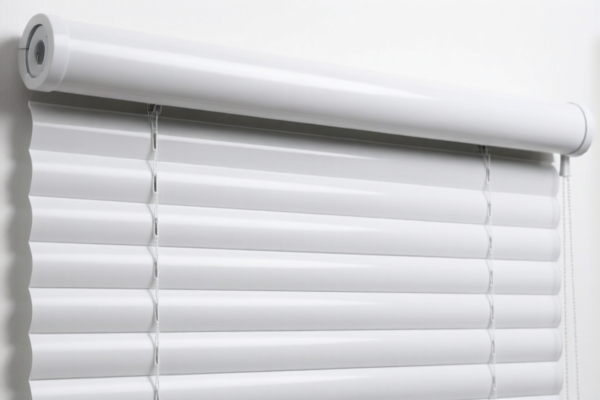
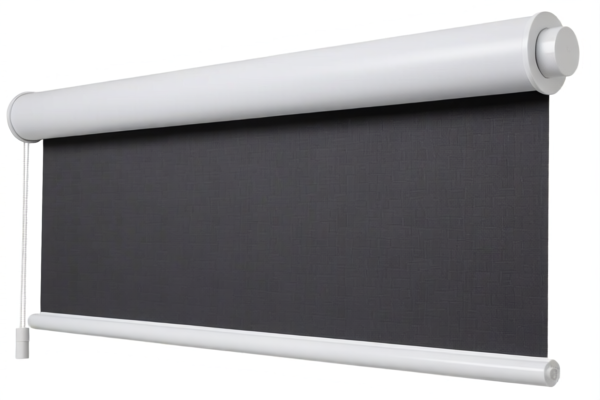
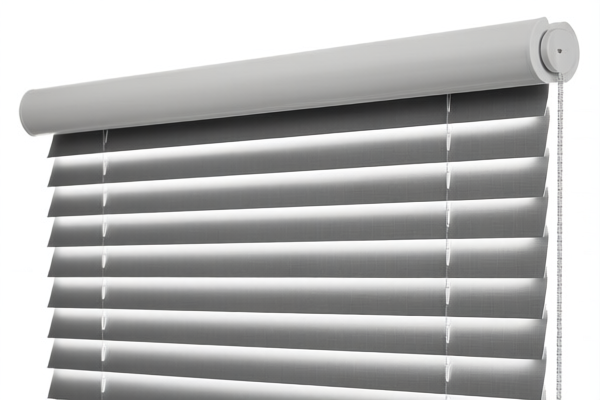
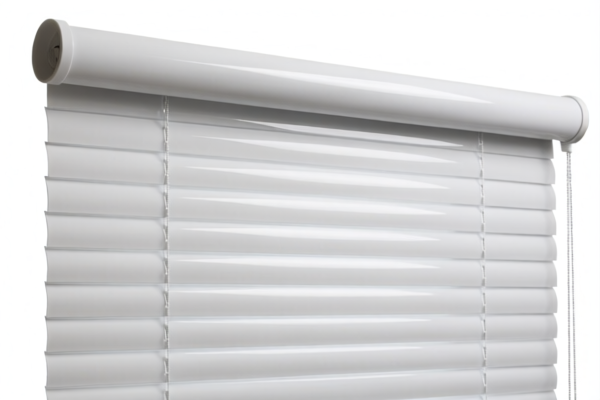
AI Analysis
🪟 Plastic Roller Blackout Fabric Blinds (Honeycomb/Ceiling Shade Systems)
🌐 HS Code Reference & Customs Clearance Guide | 2026 Latest Tariff Analysis | Professional Compliance Strategy
📌 I. Product Definition & Classification: What Are "Plastic Roller Blackout Blinds"?
Plastic Roller Blackout Blinds, often referred to as Honeycomb Shades or Cellular Shades, are window coverings designed to block light and insulate. In international trade, they are classified based on their material composition (PVC, Polyethylene, etc.) and structural form (roll-up, coated fabric, or molded plastic).
The classification depends heavily on whether the product is viewed as a textile product coated with plastic, a specific functional fabric, or a general plastic article.
⚠️ Key Classification Distinction:
- If the base is a textile/fabric coated/laminated with PVC or other polymers → Look at Chapter 59 (Impregnated Textiles) or Chapter 63 (Other Made-up Articles).
- If the product is a solid plastic sheet/membrane rolled up → Look at Chapter 39 (Plastics and Articles Thereof).
- Critical Note: Misclassification between "Textile" (59/63) and "Plastic" (39) can lead to significant tariff discrepancies due to different Section Notes and additional duties (e.g., Section 301/122).
📦 II. HS Code Classification Matrix (2026 Latest Tariff Alignment)
Based on the provided data, here are the five potential HS Codes for "Plastic Roller Blackout Blinds," categorized by their legal definition and tax implication.
| HS Code | Product Description & Legal Basis | Material/Form | Primary Classification Logic |
|---|---|---|---|
5903.90.25.00 |
Plastic-Coated Roller Blinds (Specific Functional Fabric) | Plastic/PVC | Classified under Chapter 59 as textile fabrics impregnated, coated, covered, or laminated with plastics (other than those in 5902). Highest Risk/Tax. |
5903.10.25.00 |
PVC-Coated Roller Blinds | Polyvinyl Chloride (PVC) | Specific sub-category under Chapter 59 for fabrics coated with PVC. Treated strictly as impregnated textiles. |
3926.90.99.89 |
Other Plastic Roller Shades (General Articles) | Plastic | Classified under Chapter 39 as "Other articles of plastics." Views the blind as a finished plastic good rather than a coated textile. |
6304.93.00.00 |
Synthetic Fiber Window Blinds (Furnishings) | Synthetic Fiber | Classified under Chapter 63 as "Other made-up furnishings." Focuses on the end-use (window covering) and material (synthetic fiber), ignoring the plastic coating for tax purposes. |
3921.12.19.50 |
Polymer Plastic Blackout Membrane | PVC Polymer | Classified under Chapter 39 as "Plates, sheets, film, foil, and strip." Views the product primarily as a plastic film/membrane product. |
🔍 Analysis:
- Chapter 59 (5903...): Treats the blind as a textile base + plastic coating. This path usually incurs the highest tariffs (42.5%) because it is often subject to stricter "Section 301" or "122" additions depending on the specific plastic type.
- Chapter 39 (3926...,3921...): Treats the blind as a pure plastic product. Tariffs vary significantly (22.8% - 40.3%).
- Chapter 63 (6304...): Treats the blind as a household textile furnishing. Tariffs are lower (22.8%) but require proof that the item is primarily a "made-up furnishing" rather than a raw material.
💰 III. 2026 Tariff Rate Breakdown (Detailed Tax Components)
✅ Jurisdiction: USA (Imported from China)
✅ Effective Date: Current rates apply based on the provided data.
✅ Warning: All listed codes include Additional Duties (Section 301/122).
🎯 1. High-Tax Path: Chapter 59 (Impregnated Textiles)
Applies to: 5903.90.25.00 & 5903.10.25.00
| Tax Component | Rate | Explanation |
|---|---|---|
| Base MFN Duty | 7.5% | Standard Most Favored Nation duty for coated textile fabrics. |
| Section 301 Duty (Additional) | 25.0% | Critical: Additional tariffs on Chinese goods under US Trade Act Section 301. |
| Section 122 Duty (If Applicable) | 10.0% | Specific Penalty: Additional tariffs often applied to specific textile/plastic categories under "122" authorities (likely referencing recent enforcement actions on circumvention or specific textile rules). |
| Total Effective Rate | 42.5% | High Cost. Requires precise documentation proving the textile nature. |
📌 Compliance Note:
- To use5903, you must prove the textile base is essential. If the product is 100% PVC film without a woven backing, this classification may be challenged.
- The 10% (122) and 25% (301) are additive. This is the most expensive classification.
🎯 2. Medium-High Tax Path: Chapter 39 (Pure Plastics/Films)
Applies to: 3921.12.19.50
| Tax Component | Rate | Explanation |
|---|---|---|
| Base MFN Duty | 5.3% | Lower base duty for plastic plates/sheets/films. |
| Section 301 Duty (Additional) | 25.0% | Standard 25% additional duty on Chinese plastic articles. |
| Section 122 Duty | 10.0% | Additional 10% tariff under specific provisions. |
| Total Effective Rate | 40.3% | Still high due to the 25% add-on, but base is lower than Chapter 59. |
📌 Compliance Note:
- Use this if the product is a solid plastic membrane (e.g., PVC blackout film) without a significant textile weave structure.
- Description must emphasize "Plastic Film/Membrane" rather than "Fabric/Blind."
🎯 3. Low-Tax Path: Chapter 39 (General Plastic Articles) & Chapter 63 (Furnishings)
Applies to: 3926.90.99.89 & 6304.93.00.00
| Tax Component | Rate | Explanation |
|---|---|---|
| Base MFN Duty | 5.3% | Lower base for general plastic articles (3926) or other furnishings (6304). |
| Section 301 Duty (Additional) | 7.5% | Reduced Additional Duty: Note that some plastic articles or specific furnishings may fall under a lower tier of Section 301 (7.5% vs 25%). Verify current list. |
| Section 122 Duty | 10.0% | Standard 10% add-on. |
| Total Effective Rate | 22.8% | Most Cost-Effective. Significant savings compared to 42.5%. |
📌 Compliance Note:
-3926.90.99.89: Must argue the product is a "finished article" of plastic, not a raw sheet. Honeycomb structures are often argued here.
-6304.93.00.00: Must argue the product is a "made-up furnishing" (window covering) made of synthetic fibers. If the "plastic" is just a coating on a synthetic fiber mesh, this is a strong argument.
- Risk: Customs may reclassify these to Chapter 59 if they deem the plastic coating dominant.
🛠️ IV. Customs Clearance Strategy & Pro Tips
✅ 1. Documentation Requirements (The "Paper Trail")
| Document | Requirement | Why It Matters |
|---|---|---|
| Product Specifications | Must detail: Material (e.g., "PVC-coated polyester mesh"), Weight, Dimensions, Opacity. | Determines if it's "Textile" (59/63) or "Plastic" (39). |
| Manufacturing Process | Describe how it's made: Is a fabric dipped in PVC? Or is a plastic sheet molded into cells? | Key Differentiator: Dipping = Chapter 59; Molding/Extruding = Chapter 39. |
| Photos/Renderings | Show the honeycomb structure, the roll-up mechanism, and the material texture. | Visual proof of "Article" vs. "Sheet." |
| Commercial Invoice | Clearly state: "Honeycomb Roller Shade, 100% Synthetic Fiber, PVC Coated, For Window Use." | Avoid generic terms like "Plastic Blind" which may trigger high-rate defaults. |
| Harmonized Tariff Schedule (HTS) Justification | Provide a technical memo explaining why 6304 or 3926 is correct (e.g., "Primary function is furnishing, not insulation film"). |
Helps CBP officers agree with your lower-rate classification. |
✅ 2. Classification Strategy: How to Choose the Right Code?
| Scenario | Recommended HS Code | Reasoning |
|---|---|---|
| Fabric Base + PVC Coating | 5903.10.25.00 or 5903.90.25.00 |
If the textile weave is visible and essential, it falls under Ch 59. But be prepared for 42.5% tax. |
| Synthetic Fiber Furnishing | 6304.93.00.00 |
If the product is marketed as a "Window Shade" and made of synthetic fiber (even if coated), argue for Ch 63. Target Rate: 22.8%. |
| Molded Plastic Honeycomb | 3926.90.99.89 |
If the honeycomb is extruded/molded from solid plastic (no fabric), argue for Ch 39. Target Rate: 22.8%. |
| Thin Plastic Film Roll | 3921.12.19.50 |
If it's just a rolled-up sheet of blackout plastic film (no complex structure), use Ch 39 Film code. Target Rate: 40.3%. |
✅ 3. Red Flags & Avoidance
🚩 Red Flag 1: Using vague terms like "Plastic Material" in the invoice. 👉 Fix: Specify "Polyester Mesh with PVC Coating" or "Extruded Honeycomb Polymer."
🚩 Red Flag 2: Importing "Honeycomb Shades" as "Plastic Sheets."
👉 Fix: If it's a finished shade with a roller bar and chain, it's an "Article" (3926 or 6304), not a "Sheet" (3921). Misclassification here can lead to penalties.
🚩 Red Flag 3: Ignoring the "122" Duty. 👉 Fix: The data explicitly lists a 10% "122 Clause" tariff for all codes. Ensure your broker accounts for this. It is likely a specific anti-circumvention or labor-related duty currently active for Chinese textiles/plastics.
🌍 V. Global Market Comparison (Contextual)
| Market | Preferred HS Code | Approx. Rate (Excl. US Add-ons) | Note |
|---|---|---|---|
| USA | 6304.93.00.00 or 3926.90.99.89 |
22.8% (Total w/ 7.5% + 10%) | Best balance of classification and cost. Avoid Ch 59 if possible. |
| EU | 6304.93.00 |
4% - 7% | EU classifies window coverings under Ch 63. No Section 301/122. |
| China (Export) | N/A | Varies by export policy | Ensure export license if required for synthetic fibers. |
| Canada | 6304.93.00 |
~8-10% | Similar to EU, favors Ch 63 for furnishings. |
📌 Conclusion:
For US imports,6304.93.00.00(Synthetic Fiber Furnishings) or3926.90.99.89(Plastic Articles) offer the lowest total tariff (22.8%) compared to the Chapter 59 options (42.5%).
Strategy: Argue that the product is a finished furnishing (6304) or a molded plastic article (3926), not a raw coated textile (5903).
📌 VI. Common Mistakes & Pitfalls
❌ Mistake 1: Declaring "PVC Blinds" under 3926 when they are clearly textile-based.
👉 Result: Customs may reclassify to 5903, resulting in a ~20% tax increase and potential penalties.
❌ Mistake 2: Assuming "Plastic" automatically means 3921 (Film).
👉 Result: If it has a functional structure (honeycomb, roller), it's an "Article" (3926), not a "Film." Misclassification leads to delays.
❌ Mistake 3: Ignoring the 10% Section 122 Duty.
👉 Result: This duty is separate from Section 301. Many brokers forget it, leading to underpayment and later audits.
✅ Correct Approach:
"Honeycomb Cell Shade, Made of Polyester Mesh with PVC Coating, Finished with Roller Mechanism, For Residential Window Use."
Proposed HS:6304.93.00.00(Argue: Finished furnishing, synthetic fiber base).
Backup HS:3926.90.99.89(Argue: Plastic article).
🎯 VII. Final Recommendation
For "Plastic Roller Blackout Fabric Blinds", the goal is to avoid Chapter 59 if possible due to the 42.5% tax rate.
- Best Option: Try to classify under
6304.93.00.00(Other Made-up Furnishings, Synthetic).- Tax: 22.8%
- Argument: It is a window furnishing made of synthetic fiber.
- Second Best: Classify under
3926.90.99.89(Other Plastic Articles).- Tax: 22.8%
- Argument: It is a finished plastic article (honeycomb structure).
- Last Resort:
5903...- Tax: 42.5%
- Argument: If it is strictly a coated fabric roll without finished furnishing features.
🚀 Action Item:
Provide your customs broker with material specs proving the synthetic fiber base or plastic molding process. Request a Pre-Ruling from CBP to lock in the 22.8% rate.
✨ Smart Classification Saves Money!
💼 Every percentage point matters in global trade.
Customer Reviews
About HS Code Classification
The Harmonized System (HS) is an internationally standardized nomenclature developed by the World Customs Organization (WCO) to classify traded products. Over 200 countries use the HS system as the basis for customs tariffs, trade statistics, and import/export regulations.
Each HS code follows a hierarchical structure:
- Chapter (2 digits) — Broad category of goods (e.g., Chapter 84: Machinery and Mechanical Appliances)
- Heading (4 digits) — More specific grouping within the chapter
- Subheading (6 digits) — Internationally standardized breakdown, used by all WCO member countries
- National subdivisions (8-10 digits) — Country-specific extensions for further classification, such as US HTSUS 10-digit codes
Correct HS code classification is essential for smooth customs clearance, accurate duty payment, and compliance with trade regulations. Misclassification can lead to customs delays, overpayment of duties, or penalties.
When importing from CN to US, the applicable tariff rates may include:
- Most-Favored-Nation (MFN) rate — The standard duty rate applied to WTO members
- General rate — Applied to countries without trade agreements
- Trade remedy duties — Additional tariffs such as Section 301 (anti-dumping), Section 232 (national security), or countervailing duties
The information provided on this page is for reference purposes only. For official classification, please consult with your local customs authority or a licensed customs broker.