Plastic Roller Blind Bracket
CN → US| HS Code | Tariff Rate | Origin | Destination | Doc |
|---|---|---|---|---|
| 3925900000 | 40.3% | CN | US | Official Doc |
| 3925100000 | 41.3% | CN | US | Official Doc |
| 9032100030 | 36.7% | CN | US | Official Doc |
| 8536509032 | 35.0% | CN | US | Official Doc |
| 9032896025 | 36.7% | CN | US | Official Doc |
Product Images

AI Analysis
🏗️ Plastic Roller Blind Bracket (The "Hidden Cost" of Plastic Hardware)
🌐 HS Code Reference & Customs Clearance Guide | 2024/2025 Tax Rules Breakdown | Strategic Compliance for Plastic Hardware
📌 Part 1: Product Definition & Classification – What Exactly Is a "Bracket"?
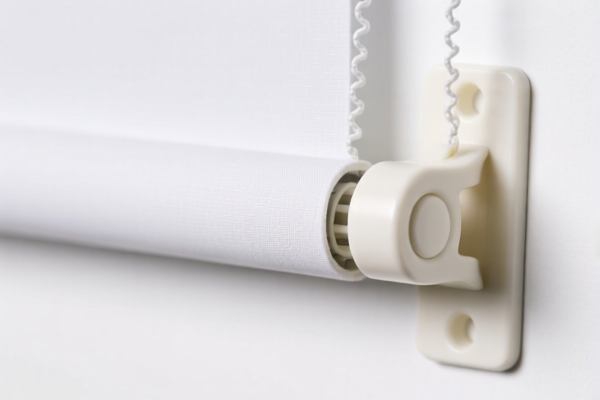
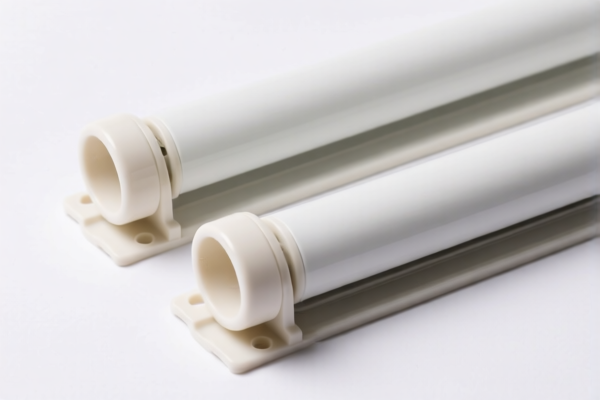
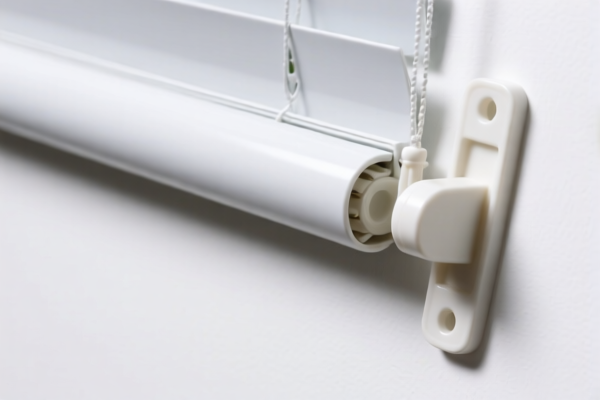
A Plastic Roller Blind Bracket is a structural component used to mount roller blinds to walls, ceilings, or windows. In international trade, its classification depends heavily on its specific form and function. Is it a generic building fixture? Is it a spare part? Or is it part of a larger automated control system?
Key Distinctions: * Generic Building Component: If it’s a simple holder for the blind roll, it falls under Building Materials (Ch. 39). * Part of Automation: If it is integrated with or exclusively sold with a motorized controller, it might be classified under Electrical Control Equipment (Ch. 90 or 85). * Material Conflict: Since the bracket is Plastic, we must look at Chapter 39 (Plastics) first, unless it is strictly defined as an electrical part.
⚠️ Critical Distinction:
- If the bracket is just a mounting piece (no electronics) → Chapter 39.
- If the bracket includes or is primarily defined by an electronic controller → Chapter 90/85.
- Do not mix pure mechanical brackets with electronic controllers in the same HS code line unless explicitly allowed by local customs rulings.
📦 Part 2: HS Code Classification Matrix (Based on Provided Data)
| HS Code | Product Description | Key Characteristics | Total Tax Rate | Tax Breakdown |
|---|---|---|---|---|
| 3925.90.00.00 | Plastic Bracket (Building Component) | Material: Plastic; Form: Other building component | 40.3% | Base: 5.3% Add-on: 25.0% Section 122: 10% |
| 3925.10.00.00 | Plastic Bracket (Spare Part/Component) | Material: Plastic; Form: Accessory/Part | 41.3% | Base: 6.3% Add-on: 25.0% Section 122: 10% |
| 9032.10.00.30 | Plastic Roller Blind Controller | Material: Plastic; Use: Control Device (Automated) | 36.7% | Base: 1.7% Add-on: 25.0% Section 122: 10% |
| 8536.50.90.32 | Plastic Roller Blind Controller (Part) | Material: Plastic; Use: Accessory/Part | 35.0% | Base: 0.0% Add-on: 25.0% Section 122: 10% |
| 9032.89.60.25 | Plastic Roller Blind Controller (Other) | Material: Plastic; Use: Other Control Instrument | 36.7% | Base: 1.7% Add-on: 25.0% Section 122: 10% |
🔍 Data Insight:
- Pure Plastic Brackets (39xx) carry a higher base tax (5.3%-6.3%) compared to Controllers (90xx/85xx) which have lower or zero base taxes (0.0%-1.7%).
- However, all items face the same 25.0% Add-on Tariff and 10% Section 122 Tariff.
- Savings Potential: Choosing the correct HS code can save 1.0% - 4.7% in total tax burden.
💰 Part 3: Tariff Structure Explained (The "Why" Behind the Rates)
✅ Applicable Country: United States (US)
✅ Origin: China (CN)
✅ Effective Date: Current US-China Trade Rules (Section 301 & 122)
🎯 1. 3925.90.00.00 – Plastic Bracket (Building Component)
| Item | Detail |
|---|---|
| Base Duty | 5.3% (Standard MFN rate for "Other plastic articles of buildings") |
| Section 301 Add-on | +25.0% (Retaliatory tariff on Chinese plastics/building materials) |
| Section 122 Tariff | +10.0% (Additional tariff on certain Chinese imports, often linked to trade remediation) |
| Total Effective Rate | 40.3% |
| Formula | CIF Value × 40.3% |
| De Minimis? | ❌ No (Excluded from $800 exemption) |
📌 Why this code?
This is the "catch-all" for plastic building accessories not specifically listed elsewhere. It assumes the bracket is a standalone architectural component.
🎯 2. 3925.10.00.00 – Plastic Bracket (Spare Part/Component)
| Item | Detail |
|---|---|
| Base Duty | 6.3% (Slightly higher base rate for "Parts" in this subheading) |
| Section 301 Add-on | +25.0% |
| Section 122 Tariff | +10.0% |
| Total Effective Rate | 41.3% |
| Formula | CIF Value × 41.3% |
| De Minimis? | ❌ No |
📌 Warning:
Classifying as a "Spare Part" often triggers a higher base duty. Only use this if the bracket is explicitly sold as a replacement part for a specific system, and even then, 3925.90.00.00 is usually safer and cheaper.
🎯 3. 9032.10.00.30 / 9032.89.60.25 – Plastic Roller Blind Controllers
| Item | Detail |
|---|---|
| Base Duty | 1.7% (Lower base for "Automatic Regulating/Controlling Instruments") |
| Section 301 Add-on | +25.0% |
| Section 122 Tariff | +10.0% |
| Total Effective Rate | 36.7% |
| Formula | CIF Value × 36.7% |
| De Minimis? | ❌ No |
📌 Strategy:
If your product is motorized and includes a control box, you may argue it belongs here. The lower base duty (1.7% vs 5.3%) saves 3.6% compared to the general bracket classification.
🎯 4. 8536.50.90.32 – Plastic Controller Part
| Item | Detail |
|---|---|
| Base Duty | 0.0% (Zero base duty for certain electrical parts) |
| Section 301 Add-on | +25.0% |
| Section 122 Tariff | +10.0% |
| Total Effective Rate | 35.0% |
| Formula | CIF Value × 35.0% |
| De Minimis? | ❌ No |
📌 Best Rate Opportunity:
This is the lowest total tax rate (35.0%). However, it requires the product to be classified as an electrical part/accessory under Chapter 85. This is risky unless the item is clearly an electrical component (e.g., a switch module) rather than a mechanical bracket.
🛠️ Part 4: Customs Clearance Strategy & Pro Tips
✅ 1. Documentation Checklist (Mandatory)
| Document | Requirement | Why? |
|---|---|---|
| Product Specifications | ✔️ Must state: Material (Plastic), Weight, Dimensions, Intended Use (Roller Blind) | Proves classification under Ch. 39 or Ch. 90/85 |
| Photos (Clear & Detailed) | ✔️ Show full bracket, any motors/controllers, and labeling | Helps customs verify if it’s mechanical or electrical |
| Bill of Lading / Commercial Invoice | ✔️ Must describe item as "Plastic Bracket for Roller Blinds" or "Electronic Controller for Roller Blinds" | Avoids vague terms like "Hardware" which trigger audits |
| Certification (if applicable) | ✔️ FCC (for controllers), RoHS, UL (if electrical) | Required for Ch. 90/85 entries |
| Origin Certificate | ✔️ China (CN) | Confirms applicability of 301/122 tariffs |
✅ 2. Classification Decision Tree (Quick Guide)
mermaid
graph TD
A[Plastic Roller Blind Bracket] --> B{Does it contain electronics?}
B -->|No| C[Classify under Chapter 39]
C --> D{Is it a generic building part?}
D -->|Yes| E[HS: 3925.90.00.00
Tax: 40.3%]
D -->|No, it's a spare part| F[HS: 3925.10.00.00
Tax: 41.3%]
B -->|Yes| G{Is it a control device?}
G -->|Yes, standalone controller| H[HS: 9032.10.00.30
Tax: 36.7%]
G -->|Yes, part/accessory| I[HS: 8536.50.90.32
Tax: 35.0%]
G -->|No, other control instrument| J[HS: 9032.89.60.25
Tax: 36.7%]
✅ 3. Critical Warnings (Avoid These Mistakes!)
❌ Mistake 1: Mixing Mechanical Brackets with Electrical Controllers
👉 Result: If you sell a bracket AND a motor separately, do not bundle them under the electrical HS code. Customs will tax the entire shipment at the higher rate or reject the electrical classification for the non-electrical part.
✅ Fix: Declare separately. Brackets under 3925, Motors under 8501.
❌ Mistake 2: Using "Hardware" or "Fittings" as Description
👉 Result: Vague descriptions lead to random audits. Customs may assign a generic HS code with a higher duty or fine.
✅ Fix: Use precise descriptions: "Plastic Bracket, Model X, for Roller Blinds, Material: PP/ABS."
❌ Mistake 3: Assuming "Spare Part" is Always Better
👉 Result: As shown, 3925.10.00.00 (41.3%) is more expensive than 3925.90.00.00 (40.3%).
✅ Fix: Only use "Spare Part" classification if legally required. Otherwise, use "Building Component."
🌍 Part 5: Market Comparison & Strategic Advice
| Market | Recommended HS Code | Total Tax Rate (Est.) | Notes |
|---|---|---|---|
| 🇺🇸 USA | 3925.90.00.00 or 9032.10.00.30 | 35.0% - 41.3% | High tariffs due to Section 301 & 122. Choose 8536.50.90.32 if possible for lowest rate (35.0%), but only if truly an electrical part. |
| 🇨🇳 China | 3926.90.90.90 | ~5% - 10% | Low base duty. No Section 301/122. |
| 🇪🇺 EU | 3926.90.97 | ~0% - 4.5% | No retaliatory tariffs. Favorable for plastic goods. |
| 🇨🇦 Canada | 3926.90.90.00 | ~5% | No Section 301. Lower cost than US. |
📌 Strategic Insight:
- The US market is the most expensive for Chinese plastic goods due to layered tariffs.
- If your product is motorized, try to classify it under 8536.50.90.32 (35.0%) instead of 3925.90.00.00 (40.3%). The 5.3% base duty difference is significant.
- Pre-Ruling: Apply for a US CBP Ruling Letter before shipping. This locks in the HS code and protects you from retroactive penalties.
📌 Part 6: Final Checklist for Shippers
- Identify Product Type: Is it purely mechanical (bracket) or electronic (controller)?
- Choose HS Code:
- Pure Bracket → 3925.90.00.00 (40.3%)
- Electronic Controller → 8536.50.90.32 (35.0%) [Best Rate]
- Prepare Documents: Specs, Photos, Invoice with precise description.
- Calculate Landed Cost: Include CIF + 35-41% Tax + Freight + Insurance.
- Apply for Pre-Ruling: Save time and money by getting customs approval beforehand.
🎯 Conclusion: Precision Pays Off
🎯 Key Takeaway:
"Classify correctly, save 5%+. Misclassify, lose 10%+ in penalties."
- For pure plastic brackets, 3925.90.00.00 is the standard choice.
- For motorized systems, 8536.50.90.32 offers the lowest tax rate (35.0%).
- Always declare accurately. Vague descriptions = Customs delays = Demurrage fees.
📣 Call to Action:
📞 Contact your customs broker today.
📄 Request a Pre-Ruling for your specific bracket model.
🚀 Optimize your supply chain for the US market!
✨ Smart Customs, Higher Profits!
💼 Your product description is your first line of defense.
Customer Reviews
About HS Code Classification
The Harmonized System (HS) is an internationally standardized nomenclature developed by the World Customs Organization (WCO) to classify traded products. Over 200 countries use the HS system as the basis for customs tariffs, trade statistics, and import/export regulations.
Each HS code follows a hierarchical structure:
- Chapter (2 digits) — Broad category of goods (e.g., Chapter 84: Machinery and Mechanical Appliances)
- Heading (4 digits) — More specific grouping within the chapter
- Subheading (6 digits) — Internationally standardized breakdown, used by all WCO member countries
- National subdivisions (8-10 digits) — Country-specific extensions for further classification, such as US HTSUS 10-digit codes
Correct HS code classification is essential for smooth customs clearance, accurate duty payment, and compliance with trade regulations. Misclassification can lead to customs delays, overpayment of duties, or penalties.
When importing from CN to US, the applicable tariff rates may include:
- Most-Favored-Nation (MFN) rate — The standard duty rate applied to WTO members
- General rate — Applied to countries without trade agreements
- Trade remedy duties — Additional tariffs such as Section 301 (anti-dumping), Section 232 (national security), or countervailing duties
The information provided on this page is for reference purposes only. For official classification, please consult with your local customs authority or a licensed customs broker.