Plastic Roller Insulating Blinds
CN → US| HS Code | Tariff Rate | Origin | Destination | Doc |
|---|---|---|---|---|
| 5903902500 | 42.5% | CN | US | Official Doc |
| 5903102500 | 42.5% | CN | US | Official Doc |
| 3926909989 | 22.8% | CN | US | Official Doc |
| 6304930000 | 22.8% | CN | US | Official Doc |
| 5903102090 | 35.0% | CN | US | Official Doc |
Product Images

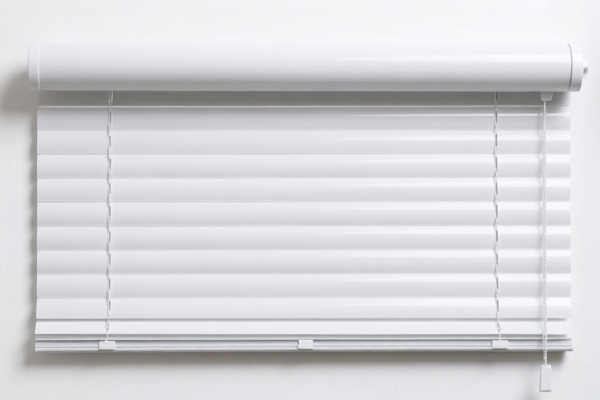
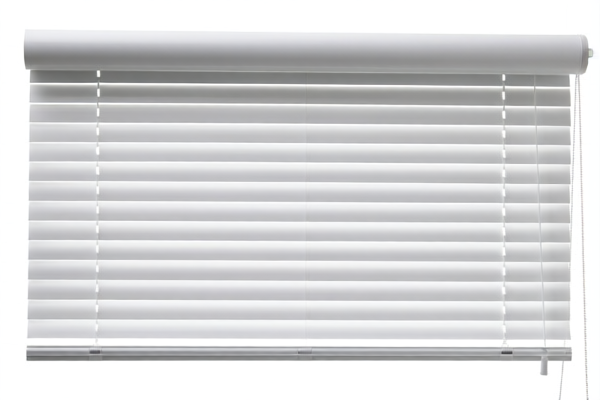
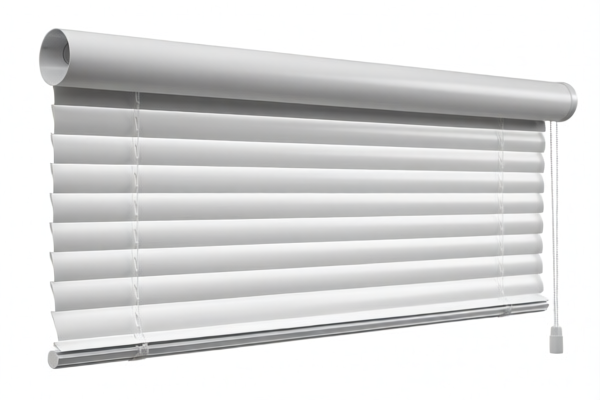
AI Analysis
🏠 Plastic Roller Insulating Blinds (Honeycomb Shades)
🌐 HS Code Reference & Customs Clearance Guide | 2026 Latest Tariff Analysis | Professional Customs Strategy
📌 1. Product Definition & Classification: What Exactly Are "Plastic Roller Insulating Blinds"?
Plastic Roller Insulating Blinds, commonly known as Honeycomb Shades or Cellular Blinds, are window covering products designed to provide thermal insulation. They are constructed from plastic materials (typically PVC or polyester coated with plastic) formed into a honeycomb structure to trap air.
In international trade, the classification depends heavily on two factors: 1. Material Composition: Is it considered a "textile fabric" impregnated/coated with plastic, or a pure "plastic product"? 2. Structure: Does it form a continuous fabric roll or a pre-formed structural unit?
⚠️ Key Classification Dilemma:
- If viewed as textile fabric impregnated/coated/laminated with plastic → GHS 5903.
- If viewed as a finished plastic article (not fabric) → HS Code 3926.
- If viewed as a curtain/furnishing article made of synthetic fibers/plastic → HS Code 6304.
- If viewed as a PVC-based textile fabric → HS Code 5903.10.
📦 2. HS Code Classification Details (2026 Latest Tariff Authority)
Based on the provided data, here are the four possible classifications for Plastic Roller Insulating Blinds, each with distinct tax implications.
| HS Code | Product Description | Reason for Classification | Estimated Total Tax Rate |
|---|---|---|---|
5903.90.25.00 |
Plastic Roller Blinds (Non-5902 specific functional fabrics) | Classified as a specific functional fabric category for roller blinds made of plastic, distinct from standard 5902 materials. | 42.5% |
5903.10.25.00 |
Plastic Roller Blinds (PVC/Textile Form) | "Plastic" corresponds to Polyvinyl Chloride (PVC); "Roller/Honeycomb" is considered a textile form created by impregnation, coating, or lamination. | 42.5% |
3926.90.99.89 |
Other Plastic Articles (Curtains) | Classified as a finished plastic product. Since the shape is a "curtain" but not explicitly listed elsewhere, it falls under "other" plastic articles. | 22.8% |
6304.93.00.00 |
Other Furnishing Articles (Curtains) | Classified as a furnishing article. The plastic material is treated as a "synthetic fiber form," and the use is as a curtain. | 22.8% |
🔍 Critical Insight:
- The 5903 codes (5903.90.25.00and5903.10.25.00) result in a significantly higher tax burden (42.5%) because they are treated as specialized textile fabrics subject to stricter trade remedies. - The 3926 and 6304 codes offer a more favorable rate (22.8%) by classifying the item as a finished good (plastic article or furnishing article) rather than a raw textile material. - Risk: Customs authorities often scrutinize "plastic blinds" to ensure they are not misclassified to avoid the higher 5903 duties. Proper documentation proving the "finished article" nature vs. "fabric" nature is crucial.
💰 3. 2026 Latest Tariff Rate Details (Including Surcharges & Policy Add-ons)
✅ Applicable Country: United States (US)
✅ Country of Origin: China (CN)
✅ Effective Date: From November 10, 2025 (including subsequent imports)
🎯 1. High-Tax Scenario: 5903.90.25.00 & 5903.10.25.00
Classification: Textile Fabrics Impregnated/Coated with Plastic
| Item | Content |
|---|---|
| Base Tariff | 7.5% (ad valorem) |
| Section 301 Surtax | +25.0% (Additional duties under US Trade Law Section 301) |
| 122 Clause Tariff | +10.0% (Specific clause for certain Chinese textile/fabric imports) |
| Total Tax Rate | 42.5% |
| Tax Calculation | CIF Value × 42.5% |
| De Minimis Exemption | ❌ Not Applicable (Denied) |
| Legal Basis Path | Base: 5903 → S301: 25% → Clause 122: 10% |
📌 Explanation:
- The 7.5% base rate is the standard MFN (Most Favored Nation) rate for plastic-coated fabrics.
- The 25% Section 301 surcharge is a heavy penalty imposed on many Chinese-manufactured goods.
- The 10% Clause 122 tariff is an additional penalty specifically targeting certain textile and fabric-related imports from China.
- Total 42.5% is a very high cost, significantly impacting profit margins.
🎯 2. Low-Tax Scenario: 3926.90.99.89 & 6304.93.00.00
Classification: Finished Plastic Articles / Furnishing Articles
| Item | Content |
|---|---|
| Base Tariff | 5.3% (ad valorem) |
| Section 301 Surtax | +7.5% (Reduced surcharge for plastic articles/furnishings under specific sub-headings) |
| 122 Clause Tariff | +10.0% (Still applies under certain interpretations for Chinese origin goods) |
| Total Tax Rate | 22.8% |
| Tax Calculation | CIF Value × 22.8% |
| De Minimis Exemption | ❌ Not Applicable (Denied) |
| Legal Basis Path | Base: 3926/6304 → S301: 7.5% → Clause 122: 10% |
📌 Explanation:
- The 5.3% base rate is much lower than the 7.5% for fabrics.
- The Section 301 surcharge is only 7.5% (compared to 25% for 5903), reflecting a different trade remedy category for "other plastic articles."
- The 10% Clause 122 tariff still applies, but the overall burden is nearly half of the 5903 classification.
- Strategic Advantage: If the product can be legally justified as a finished plastic good or furnishing item rather than a raw textile fabric, this saves 19.7% in total duties.
🛠️ 4. Customs Clearance Operational Advice (Practical Pitfall Avoidance)
✅ 1. Preparation Checklist (Mandatory Documents)
| Document | Required? | Purpose |
|---|---|---|
| Product Specification Sheet | ✔️ | Must detail material composition (e.g., "PVC-coated polyester"), structure (honeycomb), and dimensions. |
| Product Photos (Clear) | ✔️ | Show the honeycomb cell structure and the finish (roller mechanism). Helps distinguish from plain fabric. |
| Commercial Invoice | ✔️ | Must accurately describe the item. Avoid vague terms like "Plastic Cloth." Use "Plastic Honeycomb Roller Blinds." |
| Packing List | ✔️ | Detail how the blinds are packed (e.g., rolled, boxed). |
| Material Test Report | ✔️ | Proof of material composition (e.g., % of PVC, % of polyester) to support classification argument. |
| Origin Certificate | ✔️ | Required for determining applicable surcharges (e.g., 301 duties). |
✅ 2. Classification Strategy (Key Arguments)
🔥 “Finish Over Fabric, Structure Over Raw Material”
| Scenario | Recommended HS Code | Reasoning | Risk if Misclassified |
|---|---|---|---|
| Finished Blinds with Hardware | 3926.90.99.89 or 6304.93.00.00 |
Emphasize the finished utility (window covering) and honeycomb structure, not just the plastic material. | Risk of being up-rated to 5903 → 42.5% Tax |
| Raw Plastic-Coated Fabric Rolls | 5903.10.25.00 or 5903.90.25.00 |
If sold as raw material to be cut/sewn later, customs may view it as fabric. | Accept 42.5% if truly raw fabric; disputing may lead to delays. |
| PVC-Specific Blinds | 5903.10.25.00 |
If the plastic layer is clearly PVC, it falls under 5903.10. | High tax (42.5%). Consider if alternative classification is viable. |
✅ 3. Special Handling Tips
| Situation | Advice |
|---|---|
| Honeycomb Structure | Highlight the 3D cellular structure in product descriptions. This supports the argument for 6304 (furnishing article) as it’s a structural product, not just a flat fabric. |
| PVC vs. Polyester | If the base is polyester coated with plastic, customs may lean toward 5903. If the entire mass is plastic, argue for 3926. |
| 122 Clause Impact | The 10% surcharge applies regardless of the 5903 vs. 3926 choice. Focus on reducing the base rate and Section 301 rate by choosing the lower-tax HS code. |
| Pre-Ruling Request | Given the significant tax difference (42.5% vs. 22.8%), consider applying for a US Customs Binding Ruling before shipment to secure the lower tax rate. |
🌍 5. Global Market Comparison (2026)
| Country/Region | Recommended HS Code | Total Tax Rate (China Origin) | Notes |
|---|---|---|---|
| 🇺🇸 United States | 3926.90.99.89 or 6304.93.00.00 |
22.8% (Optimal) | Avoid 5903 (42.5%) unless necessary. 301 duties apply. |
| 🇨🇳 China | 6304.93.00.00 |
~5-10% | Low import tax, but focus on domestic market. |
| 🇪🇺 European Union | 6304.93.00.00 |
0-12% (Varies) | CE marking required. No Section 301 equivalent. |
| 🇨🇦 Canada | 6304.93.00.00 |
~0-15% | CUSMA benefits if originating in North America. |
📌 Conclusion:
- USA is the most critical market due to the high impact of Section 301 and Clause 122 tariffs.
- Classification as a finished product (3926/6304) rather than a textile fabric (5903) is the primary strategy to reduce duty costs by nearly half.
📌 6. Common Errors & Pitfalls (Lessons Learned)
❌ Error 1: Describing product as "Plastic Curtain Fabric"
👉 Consequence: Customs may classify as 5903 → 42.5% Tax.
👉 Fix: Use "Finished Roller Blinds" or "Honeycomb Window Coverings."
❌ Error 2: Ignoring the 122 Clause Tariff
👉 Consequence: Unexpected 10% surcharge even on lower-tax codes if not anticipated.
👉 Fix: Include 10% in all cost calculations regardless of HS code choice.
❌ Error 3: Assuming "Plastic" Always Means 3926
👉 Consequence: If the product is essentially a coated textile fabric, customs will correct it to 5903.
👉 Fix: Ensure the product has substantial finishing, hardware, or structural integrity (honeycomb) to justify non-fabric classification.
🎯 7. Conclusion: Professional Declaration, Cost Optimization!
🎯 Remember These Key Points:
🔹 "Finish First, Material Second" – Emphasize the finished article status to target
3926/6304.
🔹 "42.5% vs 22.8%" – The choice between5903and3926/6304saves nearly 20% in duties.
🔹 "Clause 122 is Universal" – The 10% surcharge applies to most Chinese-origin goods in this category, so focus on minimizing the base + 301 rates.
📌 Pro Tip:
If your Plastic Roller Insulating Blinds are produced in Vietnam, Mexico, or Malaysia, you may qualify for IEEPA Exemptions or lower Section 301 rates.
Recommendation: Apply for an Advance Ruling (Pre-Ruling) with US Customs to lock in the lower 22.8% rate and avoid post-import audits.
📣 Immediate Action:
📞 Contact a licensed customs broker
📄 Provide detailed product specs and photos
🚀 Secure the optimal HS Code before shipment to ensure smooth clearance and cost efficiency.
✨ Professional Customs Clearance Starts with Accurate Classification!
💼 Every percentage point saved is pure profit!
Customer Reviews
About HS Code Classification
The Harmonized System (HS) is an internationally standardized nomenclature developed by the World Customs Organization (WCO) to classify traded products. Over 200 countries use the HS system as the basis for customs tariffs, trade statistics, and import/export regulations.
Each HS code follows a hierarchical structure:
- Chapter (2 digits) — Broad category of goods (e.g., Chapter 84: Machinery and Mechanical Appliances)
- Heading (4 digits) — More specific grouping within the chapter
- Subheading (6 digits) — Internationally standardized breakdown, used by all WCO member countries
- National subdivisions (8-10 digits) — Country-specific extensions for further classification, such as US HTSUS 10-digit codes
Correct HS code classification is essential for smooth customs clearance, accurate duty payment, and compliance with trade regulations. Misclassification can lead to customs delays, overpayment of duties, or penalties.
When importing from CN to US, the applicable tariff rates may include:
- Most-Favored-Nation (MFN) rate — The standard duty rate applied to WTO members
- General rate — Applied to countries without trade agreements
- Trade remedy duties — Additional tariffs such as Section 301 (anti-dumping), Section 232 (national security), or countervailing duties
The information provided on this page is for reference purposes only. For official classification, please consult with your local customs authority or a licensed customs broker.