Plastic Roller Shutter Controller
CN → US| HS Code | Tariff Rate | Origin | Destination | Doc |
|---|---|---|---|---|
| 9032100030 | 36.7% | CN | US | Official Doc |
| 8536509032 | 35.0% | CN | US | Official Doc |
| 9032896025 | 36.7% | CN | US | Official Doc |
| 8536509033 | 35.0% | CN | US | Official Doc |
Product Images
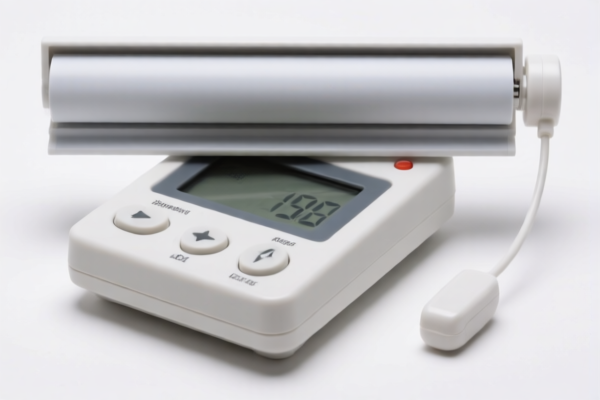
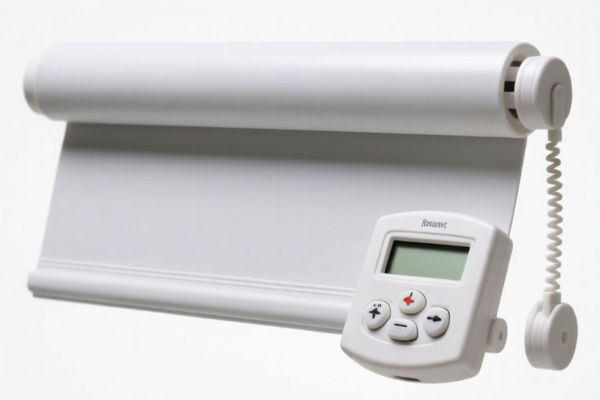
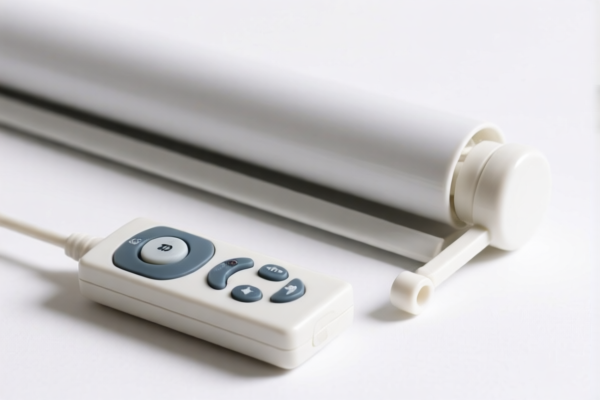
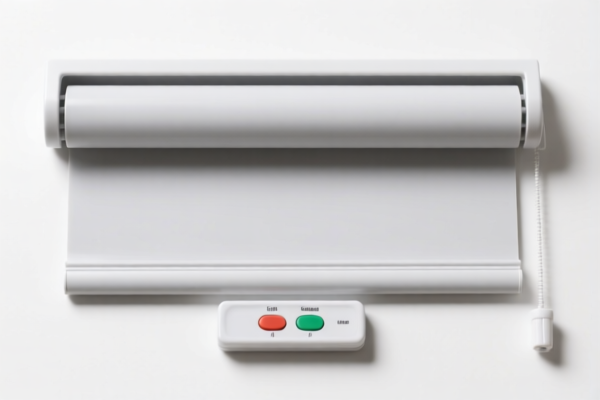
AI Analysis
🎛️ Plastic Roller Shutter Controller
🌐 HS Code Reference & Customs Clearance Guide | 2026 Latest Tariff Analysis | Professional Clearance Strategy
📌 I. Product Definition & Classification: Do You Really Understand "Plastic Roller Shutter Controller"?
A Plastic Roller Shutter Controller is an essential component for controlling electric rolling shutters, blinds, or awnings. In international trade, its classification depends heavily on its function (is it a temperature regulator? an electrical switch?) and its material (plastic housing vs. internal electrical components).
The data provided highlights a critical classification conflict: Is it an Automatic Regulating/Control Instrument (Chapter 90) or an Electrical Switch/Control Apparatus (Chapter 85)? This distinction drastically affects the Basic Tariff Rate.
⚠️ Key Distinction Point:
- If viewed as a process control device or temperature regulator (often used in motor control for climate/environmental reasons) → Chapter 90 (9032...).
- If viewed strictly as an electrical switch/contact for circuit control (opening/closing power to the motor) → Chapter 85 (8536...).
- Material Note: The "Plastic" description refers to the housing/casing. This does not change the functional classification but confirms it is a finished appliance part, not raw material.
📦 II. HS Code Classification Details (2026 Latest Tariff Authority)
Based on the provided <DATA>, here are the four possible HS Codes and their specific justifications:
| HS Code | Product Description | Justification from Data | Key Attribute |
|---|---|---|---|
9032.10.00.30 |
Temperature Regulators (Part of Auto Control Instruments) | Regarded as a "Temperature Regulator" category. Plastic material, automated control nature. | Function: Control Instrument |
8536.50.90.32 |
Other Switches (Electrical Control Components) | Regarded as "Switches/Control Elements". Plastic is raw material attribute, Controller is part/component use. No conflict. | Function: Electrical Switch |
9032.89.60.25 |
Other Control Instruments | General "Other Control Instrument". Plastic material, control device use. Not excluded industrial process control. | Function: General Control |
8536.50.90.33 |
Other Switches (Circuit Breaker/Control) | Electrical switch/control element category. "Catch-all" for electrical control parts. No material conflict. | Function: Electrical Switch |
🔍 Critical Analysis:
- Codes9032.10.00.30and9032.89.60.25fall under Chapter 90. These carry a 1.7% Basic Tariff.
- Codes8536.50.90.32and8536.50.90.33fall under Chapter 85. These carry a 0.0% Basic Tariff.
- Conclusion: While the Total Tax is similar due to additional duties, the Basic Tariff differs. However, the Total Tax Rate is higher for Chapter 90 items (36.7%) compared to Chapter 85 items (35.0%) in the provided data.
💰 III. 2026 Latest Tariff Rate Details (Including Additional Duties)
✅ Applicable Country: United States (US)
✅ Origin: China (CN) (Implied by "122 Clause" and specific US ITCA/IEEPA structures)
✅ Effective Date: Current as of 2025/2026 Trade Policy
🎯 1. 9032.10.00.30 & 9032.89.60.25 —— Control Instruments (Chapter 90)
These codes are classified as Automatic Regulating or Control Instruments.
| Item | Content |
|---|---|
| Basic Tariff | 1.7% (Ad Valorem) |
| Section 301 Additional Tariff | +25.0% (USITC Footnote / 301 List 3/4) |
| IEEPA Additional Tariff (Clause 122) | +10.0% (Specific US policy对中国产品附加税) |
| Total Tax Rate | 36.7% |
| Tax Calculation | CIF Value × 36.7% |
| Legal Basis Path | HTSUS:9032 → USITC:Section301 → IEEPA:122Clause |
📌 Explanation:
- The 1.7% is the standard MFN (Most Favored Nation) rate for certain control instruments.
- The 25% is the standard Section 301 tariff on Chinese goods in this category.
- The 10% is an additional penalty/tariff under specific US executive orders (often related to national security or trade deficits, referred to here as "122 Clause").
- Total: 36.7%.
🎯 2. 8536.50.90.32 & 8536.50.90.33 —— Other Switches (Chapter 85)
These codes are classified as Electrical Switches for protecting or making connections in circuits.
| Item | Content |
|---|---|
| Basic Tariff | 0.0% (Ad Valorem) |
| Section 301 Additional Tariff | +25.0% (USITC Footnote / 301 List 3/4) |
| IEEPA Additional Tariff (Clause 122) | +10.0% (Specific US policy对中国产品附加税) |
| Total Tax Rate | 35.0% |
| Tax Calculation | CIF Value × 35.0% |
| Legal Basis Path | HTSUS:8536 → USITC:Section301 → IEEPA:122Clause |
📌 Explanation:
- The 0.0% basic tariff makes this category slightly more attractive at the base level.
- However, the additional duties are identical to Chapter 90.
- Total: 35.0%.
- Savings: Compared to Chapter 90 codes, this saves 1.7% on the base rate, resulting in a 1.7% lower total tax burden.
🛠️ IV. Customs Clearance Practical Advice (Real-World Pitfall Avoidance)
✅ 1. Preparation Checklist (Non-Negotiable)
| Material | Required | Explanation |
|---|---|---|
| ✅ Product Specification Sheet | ✔️ | Must clearly state: "Electric Roller Shutter Controller", Input Voltage, Frequency, Max Load (Amps/Watts). |
| ✅ Circuit Diagram / Schematic | ✔️ | Crucial: To prove it is a simple switch (Chapter 85) vs. a complex regulating instrument (Chapter 90). If it only opens/closes power, argue for 8536. |
| ✅ Product Photos (Label & Interior) | ✔️ | Show plastic housing. Show terminals. Show any display/thermostat (if present, pushes towards 9032). |
| ✅ Commercial Invoice | ✔️ | Description: "Plastic Casing Electric Switch for Roller Shutters". Avoid vague terms like "Controller" without context. |
| ✅ Declaration of Origin | ✔️ | Required for Section 301 and IEEPA duty calculations. |
✅ 2. Declaration Strategy (Key Mantra)
🔥 “Function Defines Code, Switch is Cheaper Base, But Add-ons Kill It!”
| Scenario | Correct Declaration | Wrong Practice |
|---|---|---|
| Simple On/Off/Reverse Switch | 8536.50.90.32/33 (Basic 0%) |
Declare as "Instrument" → 1.7% Base |
| Controller with Temp Sensor | 9032.10.00.30 (Basic 1.7%) |
Declare as "Switch" → Risk of Rejection |
| General Motor Controller | 9032.89.60.25 (Basic 1.7%) |
Vague "Plastic Part" → High Audit Risk |
| Complete Unit with Remote | Declare as Control System | Split into Switch + Remote → Complex Duty Calc |
⚠️ Warning:
- If the controller has temperature sensing or automated environmental regulation features, customs may force it into 9032.
- If it is purely an electrical switch (e.g., wall switch, wired controller for motor direction), 8536 is safer and has a 0% base rate.
✅ 3. Special Cases
| Situation | Handling Advice |
|---|---|
| OEM Plastic Housing | Ensure the plastic is merely casing. If it contains the circuit board, it's an electrical good. |
| Smart/APP Controller | If it has Wi-Fi/Bluetooth and complex logic, customs may view it as an Automatic Control Instrument (9032). |
| Mixed Packaging | Do not separate the plastic switch from its power cord. Declare as one unit. |
🌍 V. Global Market Comparison (2026 Latest)
| Country/Region | Recommended HS Code | Estimated Duty (China Origin) | Notes |
|---|---|---|---|
| 🇺🇸 USA | 8536.50.90.32/33 |
35.0% | Best option due to 0% base. 9032 is 36.7%. |
| 🇨🇳 China (Import) | 8536.50.90.32/33 |
Varies (Low) | Standard MFN rates apply. No Section 301. |
| 🇪🇺 EU | 8536.50.90.00 |
4.5% (approx) | No additional anti-dumping/retaliatory tariffs. |
| 🇬🇧 UK | 8536.50.90.00 |
4.5% (approx) | Post-Brexit tariffs similar to EU pre-2021. |
📌 Conclusion:
- USA is the most expensive market due to the叠加 (stacking) of Base + Section 301 + IEEPA duties.
- Choosing8536over9032in the USA saves 1.7% of the CIF value, which can be significant for high-volume shipments.
📌 VI. Common Errors & Pitfall Guide (Lessons Learned)
❌ Error 1: Declaring a Thermostatic Controller as a simple Switch (8536).
👉 Consequence: Customs audits, penalty, forced re-classification to 9032 + back taxes.
❌ Error 2: Declaring a Simple Switch as an Instrument (9032).
👉 Consequence: Overpayment of 1.7% on CIF value unnecessarily.
❌ Error 3: Ignoring the IEEPA 10% Clause.
👉 Consequence: Under-declaration of duties. US Customs will charge back-taxes + interest + penalties.
❌ Error 4: Using "Plastic Controller" as the only description.
👉 Consequence: Vague description leads to Duty-Free Audit delays. Must specify electrical function.
✅ Correct Practice:
"Plastic Housing Electric Switch for Roller Shutters, Model XYZ, 120V AC, No Temperature Control, FCC Certified"
🎯 VII. Conclusion: Professional Declaration, Cost Optimization!
🎯 Remember the Mantra:
🔹 "Switch vs. Instrument: 0% Base vs 1.7% Base."
🔹 "Total Tax is High (35-37%), but Precision Saves 1.7%."
🔹 "IEEPA 10% is Mandatory, Do Not Skip!"
📌 Pro Tip:
If your product has smart features (Wi-Fi, App control), it leans towards Chapter 90. If it is a wired, simple On/Off/Reverse switch, stick to Chapter 85 for the lower base rate.
Always apply for an Advance Ruling if the function is ambiguous to avoid clearance holds.
📣 Immediate Action:
📞 Consult a US Customs Broker + Provide Circuit Diagram + Confirm "No Temperature Regulation"
🚀 Lower your base tax, ensure compliance, and streamline your clearance!
✨ Professional Clearance, Starts with Precise Classification!
💼 Every Percentage Point Counts in High-Duty Markets!
Customer Reviews
About HS Code Classification
The Harmonized System (HS) is an internationally standardized nomenclature developed by the World Customs Organization (WCO) to classify traded products. Over 200 countries use the HS system as the basis for customs tariffs, trade statistics, and import/export regulations.
Each HS code follows a hierarchical structure:
- Chapter (2 digits) — Broad category of goods (e.g., Chapter 84: Machinery and Mechanical Appliances)
- Heading (4 digits) — More specific grouping within the chapter
- Subheading (6 digits) — Internationally standardized breakdown, used by all WCO member countries
- National subdivisions (8-10 digits) — Country-specific extensions for further classification, such as US HTSUS 10-digit codes
Correct HS code classification is essential for smooth customs clearance, accurate duty payment, and compliance with trade regulations. Misclassification can lead to customs delays, overpayment of duties, or penalties.
When importing from CN to US, the applicable tariff rates may include:
- Most-Favored-Nation (MFN) rate — The standard duty rate applied to WTO members
- General rate — Applied to countries without trade agreements
- Trade remedy duties — Additional tariffs such as Section 301 (anti-dumping), Section 232 (national security), or countervailing duties
The information provided on this page is for reference purposes only. For official classification, please consult with your local customs authority or a licensed customs broker.