Plastic Roller Sunshade Curtain
CN → US| HS Code | Tariff Rate | Origin | Destination | Doc |
|---|---|---|---|---|
| 6303922010 | 21.3% | CN | US | Official Doc |
| 3921901910 | 40.3% | CN | US | Official Doc |
| 3921901950 | 40.3% | CN | US | Official Doc |
| 6303922030 | 28.8% | CN | US | Official Doc |
| 5903902500 | 42.5% | CN | US | Official Doc |
| 5903102500 | 42.5% | CN | US | Official Doc |
Product Images
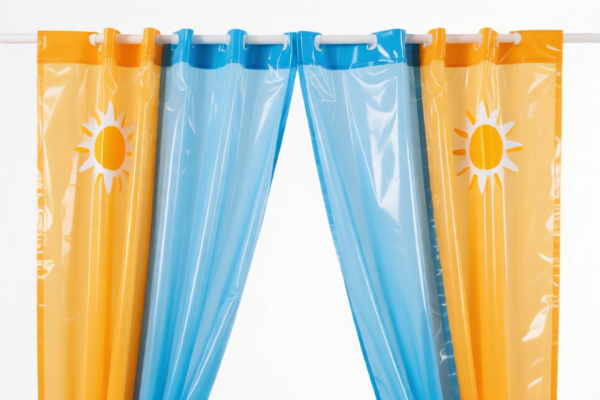

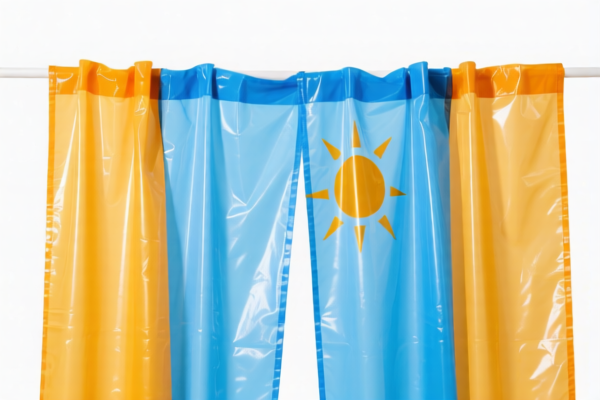
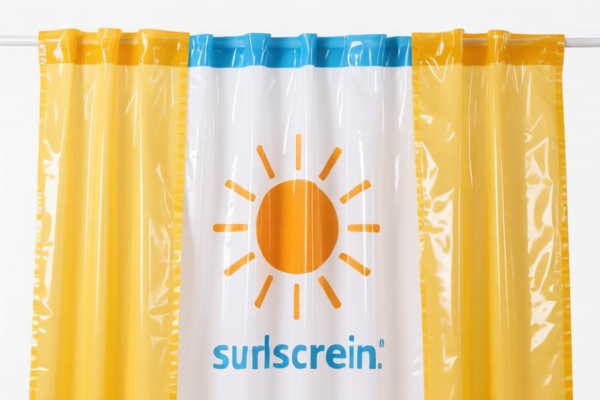
AI Analysis
🪟 Plastic Roller Sunshade Curtain (Roller Blinds)
🌐 HS Code Reference & Customs Clearance Guide | 2026 Latest Tariff Analysis | Professional Clearance Strategy
📌 I. Product Definition & Classification: Do You Truly Understand "Plastic Roller Curtains"?
Plastic Roller Sunshade Curtains are window treatment products primarily made from synthetic materials (such as PVC, PE, or polyester blends) designed to block light, reduce glare, and provide privacy. In international trade, their classification is critical and highly dependent on their material composition and physical structure.
They are generally categorized into two main groups based on customs logic:
- Textile/Lining Characteristics (Chapter 63): If the product is viewed as a finished good (like a curtain) with specific lining or layering, it may fall under Chapter 63 (Other made-up textile articles).
- Raw Material/Sheet Characteristics (Chapters 39 & 59): If the product is viewed primarily as a plastic sheet, film, or coated fabric, it may fall under Chapter 39 (Plastics) or Chapter 59 (Impregnated/Coated Textile Fabrics).
⚠️ Key Distinction Point:
- If the product is essentially a finished curtain assembly (often with specific fiber content) → Look at HS 6303.
- If the product is essentially a plastic sheet/film or coated fabric used for shading → Look at HS 3921 or HS 5903.
- Risk: Misclassification can lead to a tax difference of up to 21.2% (from 21.3% to 42.5%).
📦 II. HS Code Classification Details (2026 Latest Tariff Authority Reference)
| HS Code | Product Description & Logic | Applicable Scenario | Tax Rate (Total) |
|---|---|---|---|
6303.92.20.10 |
Plastic Material Sunshade, conforms to the form and use of curtains and curtain valances. | Finished plastic curtains, standard roller blinds sold as "curtains". | 21.3% |
3921.90.19.10 |
Plastic Material inferred as sheet/film form, conforms to other plastic products classification. | Treated as a rigid or semi-rigid plastic sheet/film product. | 40.3% |
3921.90.19.50 |
Plastic Material Sunshade inferred as film or sheet, conforms to other plastic product logic. | Flexible plastic film used for shading, not strictly "textile" structure. | 40.3% |
6303.92.20.30 |
Plastic/Synthetic Fiber material sunshade, conforms to classification of synthetic fiber made curtains/blinds. | Blends of plastic and synthetic fibers, treated as textile curtains. | 28.8% |
5903.90.25.00 |
Plastic Roller Honeycomb Blind, conforms to fabric layering covering and plastic coating material characteristics. | Honeycomb blinds or layered structures with plastic coating. | 42.5% |
5903.10.25.00 |
Plastic Roller Honeycomb Blind, corresponds to PVC material and impregnated/coated/layered textile form. | Specifically PVC-coated textiles or fabrics impregnated with PVC. | 42.5% |
🔍 Critical Reminder:
- Chapter 63 (6303) is generally the most favorable (lowest tax: 21.3% - 28.8%) if the product is clearly a "curtain" or "window covering" assembly.
- Chapter 59 (5903) carries the highest tax (42.5%) if the customs authority deems it primarily a "coated textile" or "PVC-laminated fabric" rather than a finished curtain.
- Chapter 39 (3921) is a middle-high tax bracket (40.3%) if classified merely as a plastic sheet/film.
💰 III. 2026 Latest Tariff Rate Breakdown (Including Surcharges, Policy Add-ons)
✅ Applicable Country: United States (US)
✅ Origin: China (CN)
✅ Effective Time: November 10, 2025 onwards (including subsequent imports)
🎯 1. 6303.92.20.10 —— Plastic Material Sunshade (Curtain Form)
| Item | Content |
|---|---|
| Basic Tariff | 11.3% (ad valorem) |
| Section 301 Surcharge | 0.0% |
| Section 122 Tariff | +10.0% (Specific to this code/category) |
| Total Tax Rate | 21.3% |
| Tax Calculation | CIF Value × 21.3% |
| De Minimis Eligibility | ❌ Not Eligible (Section 122 and 301 surcharges generally negate de minimis exemptions for high-value shipments or specific categories) |
| Legal Basis Path | Section 122: 10% + Base: 11.3% |
📌 Explanation:
- This is the lowest tax bracket in the dataset.
- It applies when the product is clearly defined as a "curtain" or "valance" made of plastic materials.
- Note: The 10% Section 122 tariff is a specific addition for this classification.
🎯 2. 3921.90.19.10 / 3921.90.19.50 —— Plastic Sheet/Film Interpretation
| Item | Content |
|---|---|
| Basic Tariff | 5.3% |
| Section 301 Surcharge | +25.0% (USITC Footnote for plastic products) |
| Section 122 Tariff | +10.0% |
| Total Tax Rate | 40.3% |
| Tax Calculation | CIF Value × 40.3% |
| De Minimis Eligibility | ❌ Not Eligible |
| Legal Basis Path | IEEPA/Section 301: 25% + Section 122: 10% + Base: 5.3% |
📌 Note:
- Even though the basic tariff is low (5.3%), the 25% Section 301 surcharge significantly increases the cost.
- This classification treats the roller blind as a "plastic sheet" rather than a "textile/curtain good."
🎯 3. 6303.92.20.30 —— Plastic/Synthetic Fiber Sunshade
| Item | Content |
|---|---|
| Basic Tariff | 11.3% |
| Section 301 Surcharge | +7.5% |
| Section 122 Tariff | +10.0% |
| Total Tax Rate | 28.8% |
| Tax Calculation | CIF Value × 28.8% |
| De Minimis Eligibility | ❌ Not Eligible |
| Legal Basis Path | Section 301: 7.5% + Section 122: 10% + Base: 11.3% |
📌 Explanation:
- A middle-ground option for products made of plastic/synthetic fiber blends.
- The Section 301 surcharge is lower (7.5%) than for pure plastics, but still significant.
🎯 4. 5903.90.25.00 / 5903.10.25.00 —— Coated/Laminated Textile Blinds
| Item | Content |
|---|---|
| Basic Tariff | 7.5% |
| Section 301 Surcharge | +25.0% |
| Section 122 Tariff | +10.0% |
| Total Tax Rate | 42.5% |
| Tax Calculation | CIF Value × 42.5% |
| De Minimis Eligibility | ❌ Not Eligible |
| Legal Basis Path | IEEPA/Section 301: 25% + Section 122: 10% + Base: 7.5% |
📌 Warning:
- This is the highest tax bracket.
- It applies if the product is considered a PVC-coated fabric or laminated textile (e.g., honeycomb blinds with specific coating).
- Avoid this classification if possible, unless the product structure strictly matches "coated fabric" definitions.
🛠️ IV. Customs Clearance Practical Advice (Battle-Tested Pitfall Guide)
✅ 1. Preparation Checklist (All Documents Required)
| Document | Required | Explanation |
|---|---|---|
| ✅ Product Specification Sheet | ✔️ | Must detail material composition (e.g., "100% PVC," "Polyester with PVC coating"). |
| ✅ Structure Diagram | ✔️ | Show if it is a simple sheet vs. a layered/coated fabric. |
| ✅ Product Photos (with Labels) | ✔️ | Clear images of the roll, texture, and any labels indicating material type. |
| ✅ Commercial Invoice | ✔️ | Describe as "Plastic Roller Sunshade Curtain" or "Synthetic Fiber Blinds" to support Chapter 63. Avoid vague terms like "Plastic Sheet." |
| ✅ Packing List | ✔️ | Detail units, weight, and dimensions. |
✅ 2. Declaration Strategy (Key Mantras)
🔥 “Define as Curtain, Not Sheet; Highlight Fiber, Avoid PVC Focus”
| Scenario | Correct Declaration | Incorrect Declaration |
|---|---|---|
| Standard Plastic Roller Blind | 6303.92.20.10 (Plastic Curtain) |
3921.90.19.10 (Plastic Sheet) → Tax jumps from 21.3% to 40.3% |
| Honeycomb Blind (Layered) | 6303.92.20.10 or 5903.90.25.00 |
5903.10.25.00 (PVC Coated) → Tax jumps to 42.5% if deemed PVC-coated |
| Blended Material (Plastic+Poly) | 6303.92.20.30 (Synthetic Curtain) |
3921.90.19.10 → Tax jumps from 28.8% to 40.3% |
✅ 3. Special Cases Handling
| Scenario | Handling Advice |
|---|---|
| Honeycomb Blinds | These are often flagged as "layered fabrics." If they are primarily plastic sheets, they may fall under 5903 (42.5%). Try to argue for 6303 (21.3%) if they are finished curtain assemblies. |
| PVC-Coated Fabric | If the product is a textile with a heavy PVC coating, customs may insist on 5903 (42.5%). Ensure your spec sheet highlights the "curtain" function, not just the "coated fabric" aspect. |
| 100% Plastic Sheet | If it’s a simple plastic roller shade with no fabric backing, it may fall under 3921 (40.3%). There is no low-tax option here. |
| Section 122 Applicability | Note that all codes in the provided data include a 10% Section 122 tariff. This is a fixed cost for this product category from China. |
🌍 V. Global Market Customs Comparison (2026 Latest)
| Country/Region | Recommended HS Code | Tariff (China Origin) | Certification Requirements | Remarks |
|---|---|---|---|---|
| 🇺🇸 USA | 6303.92.20.10 |
21.3% (Lowest) | CPC (Children's Product Certificate) if for kids, otherwise standard | High Risk: Misclassification leads to 40-42.5%. |
| 🇺🇸 USA | 5903.10.25.00 |
42.5% (Highest) | CPC, possibly TSCA compliance | Avoid if possible. |
| 🇨🇳 China | 6303.92.20.10 |
11.3% (Basic) | CCC (if applicable) | No Section 301 or 122 surcharges. |
| 🇪🇺 EU | 6303.92 |
12% (Standard) | CE, REACH | No Section 301/122. |
📌 Conclusion:
- The US market is the most challenging due to Section 301 and Section 122 surcharges.
- Chapter 63 (6303) is the optimal classification for minimizing duty costs (21.3%).
- Avoid Chapter 59 (5903) unless the product structure strictly requires it, as the tax burden is double that of Chapter 63.
📌 VI. Common Mistakes & Pitfall Guide (Lessons Learned)
❌ Mistake 1: Describing the product as "Plastic Roller Shade" without material details.
👉 Consequence: Customs may default to the highest risk code (5903 or 3921) → Tax up to 42.5%.
❌ Mistake 2: Submitting a "PVC-Coated Fabric" spec for a finished curtain.
👉 Consequence: Customs classifies as coated textile (5903.10.25.00) → Tax 42.5%.
❌ Mistake 3: Assuming De Minimis (Section 321) applies.
👉 Consequence: Not Eligible. All codes listed include surcharges that negate de minimis benefits. Full duty must be paid.
❌ Mistake 4: Ignoring Section 122.
👉 Consequence: All codes have a +10% addition. Failing to account for this leads to underpayment and penalties.
✅ Correct Practice:
"Plastic Roller Sunshade Curtain, Synthetic Fiber Content, Finished Window Treatment, Model XYZ, Certified for US Market"
🎯 VII. Conclusion: Professional Declaration Saves Money!
🎯 Remember the Mantra:
🔹 "Curtain over Sheet, Fiber over PVC, 6303 is the Goal!"
🔹 "Tax Gap is 21.2%, Declaration Matters!"
🔹 "Section 122 is 10%, Don't Forget It!"
📌 Pro Tip:
- If your product is a blended material (plastic + synthetic fiber), use 6303.92.20.30 (28.8%) as a backup if 6303.92.20.10 is challenged.
- If your product is 100% plastic sheet, you must accept 3921.90.19.10 (40.3%).
- Pre-Ruling Recommendation: Apply for an Advance Ruling from US Customs (CBP) if your shipment volume is high, to lock in the 6303.92.20.10 classification.
📣 Immediate Action:
📞 Contact a Professional Customs Broker + Provide Detailed Material Specs + Request HS Code Pre-Ruling
🚀 Minimize Duty, Maximize Profit, Ensure Smooth Clearance!
✨ Professional Clearance Starts with Accurate Classification!
💼 Every Percent of Duty Counts!
Customer Reviews
About HS Code Classification
The Harmonized System (HS) is an internationally standardized nomenclature developed by the World Customs Organization (WCO) to classify traded products. Over 200 countries use the HS system as the basis for customs tariffs, trade statistics, and import/export regulations.
Each HS code follows a hierarchical structure:
- Chapter (2 digits) — Broad category of goods (e.g., Chapter 84: Machinery and Mechanical Appliances)
- Heading (4 digits) — More specific grouping within the chapter
- Subheading (6 digits) — Internationally standardized breakdown, used by all WCO member countries
- National subdivisions (8-10 digits) — Country-specific extensions for further classification, such as US HTSUS 10-digit codes
Correct HS code classification is essential for smooth customs clearance, accurate duty payment, and compliance with trade regulations. Misclassification can lead to customs delays, overpayment of duties, or penalties.
When importing from CN to US, the applicable tariff rates may include:
- Most-Favored-Nation (MFN) rate — The standard duty rate applied to WTO members
- General rate — Applied to countries without trade agreements
- Trade remedy duties — Additional tariffs such as Section 301 (anti-dumping), Section 232 (national security), or countervailing duties
The information provided on this page is for reference purposes only. For official classification, please consult with your local customs authority or a licensed customs broker.