Plastic Rubber Bands
CN → US| HS Code | Tariff Rate | Origin | Destination | Doc |
|---|---|---|---|---|
| 3926909905 | 22.8% | CN | US | Official Doc |
| 3926906090 | 39.2% | CN | US | Official Doc |
| 9113904000 | 17.2% | CN | US | Official Doc |
| 9113908000 | 19.3% | CN | US | Official Doc |
| 4005990000 | 35.0% | CN | US | Official Doc |
| 4005910000 | 35.0% | CN | US | Official Doc |
Product Images
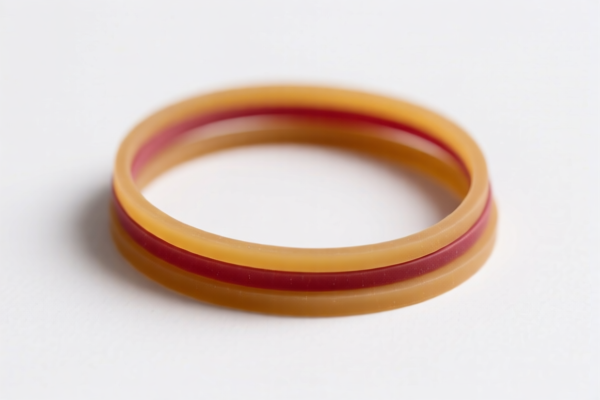
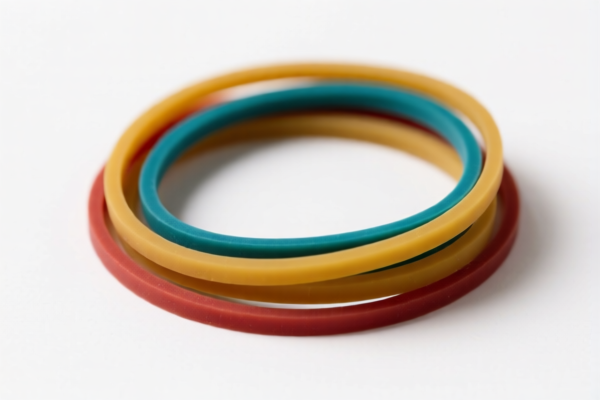
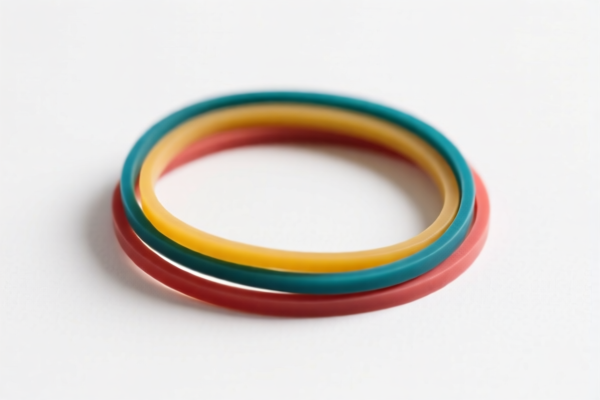
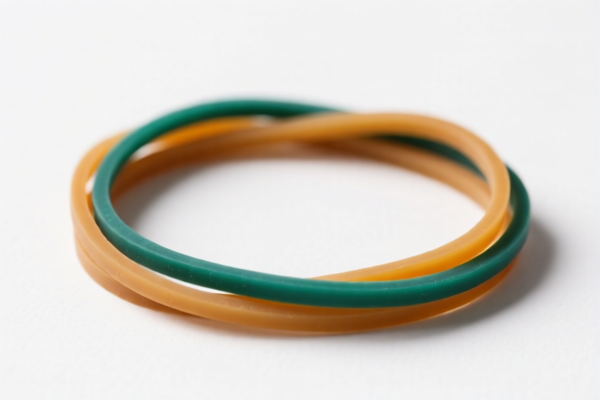
AI Analysis
🛡️ Plastic Rubber Bands & Compounded Rubber Products
🌐 HS Code Reference & Customs Clearance Guide | 2026 Latest Tariff Analysis | Professional Compliance Strategy
📌 I. Product Definition & Classification: Are You Confusing "Plastic Bands" with "Rubber"?
In international trade, the term "Plastic Rubber Bands" is often a misnomer or a colloquial description for two entirely different material categories:
1. Elastic Bands made wholly of Plastics (e.g., PVC, PE, PP bands used for bundling or sealing).
2. Compounded Rubber (unvulcanized) in the form of plates, sheets, or strips (often used for manufacturing rubber bands).
⚠️ Critical Distinction:
- If the product is 100% plastic and functions as an elastic band → It belongs to Chapter 39 (Plastics).
- If the product is rubber-based (even if unvulcanized) in strip/plate form → It belongs to Chapter 40 (Rubber).
- Watch Bands made of textile or other materials are Chapter 91, but are not typically called "rubber bands" in a commercial bundling context.
📌 Key Classification Rule:
- Plastic Elastic Bands: Classified under 3926.90.99.05.
- Unvulcanized Rubber (Strip/Plate/Other): Classified under 4005.91.00.00 or 4005.99.00.00.
- Do NOT confuse with Belts for Machinery (3926.90.60.90) or Watch Straps (9113.90.xx).
📦 II. HS Code Classification Details (2026 Latest Tariff Authority Comparison)
| HS Code | Product Description | Material Type | Application Scenario |
|---|---|---|---|
3926.90.99.05 |
Other Elastic bands made wholly of plastics | 100% Plastic (PVC/PE/PP) | Bundling boxes, office supplies, plastic hair ties, industrial plastic straps |
4005.91.00.00 |
Compounded rubber, unvulcanized: Plates, sheets, and strip | Unvulcanized Rubber | Raw rubber strips for manufacturing, industrial rubber sheets |
4005.99.00.00 |
Compounded rubber, unvulcanized: Other | Unvulcanized Rubber | Unvulcanized rubber in other primary forms (not plate/sheet/strip) |
3926.90.60.90 |
Belting and belts, for machinery: Other | Plastic/Rubber Composite | Conveyor belts, drive belts for machines (Note: Not "elastic bands") |
9113.90.40.00 |
Watch straps... Of textile material | Textile | Watch bands (Not relevant to "rubber bands" unless mislabeled) |
9113.90.80.00 |
Watch straps... Other | Non-Textile (e.g., Plastic/Metal) | Watch bands (Not relevant to "rubber bands") |
🔍 Focus Area:
For "Plastic Rubber Bands" (interpreted as Plastic Elastic Bands), the correct HS Code is3926.90.99.05.
If the product is actually Unvulcanized Rubber (raw material for rubber bands), it falls under4005.91.00.00or4005.99.00.00.
💰 III. 2026 Latest Tariff Rate Breakdown (Including Surcharges & Policy Add-ons)
✅ Applicable Country: United States (US)
✅ Country of Origin: China (CN)
✅ Effective Date: November 10, 2025 (and subsequent imports)
🎯 1. 3926.90.99.05 —— Plastic Elastic Bands (Wholly Plastic)
| Item | Details |
|---|---|
| Base Tariff | 5.3% (Ad Valorem) |
| Additional Tariff (Section 301) | +7.5% |
| Total Tariff Rate | 12.8% |
| Tax Calculation | CIF Value × 12.8% |
| De Minimis Exemption? | ❌ Not Applicable for this specific subheading under current enforcement interpretations for Chinese-origin goods subject to Section 301. |
| Legal Path | USITC:3926.90.99.05 + Section 301 Footnote |
📌 Explanation:
- The base rate of 5.3% applies to "Other articles of plastics."
- An additional 7.5% is imposed under Section 301 for Chinese-origin goods in this category.
- Total Duty: 12.8%. This is lower than the 25% applied to many rubber products.
🎯 2. 4005.91.00.00 —— Unvulcanized Rubber (Plates, Sheets, Strip)
| Item | Details |
|---|---|
| Base Tariff | 0.0% |
| Additional Tariff (Section 301) | +25.0% |
| Total Tariff Rate | 25.0% |
| Tax Calculation | CIF Value × 25.0% |
| De Minimis Exemption? | ❌ No (Subject to Section 301 surcharge) |
| Legal Path | USITC:4005.91.00.00 + Section 301 Footnote |
📌 Explanation:
- While the base rate is 0%, the 25% Section 301 tariff makes it expensive.
- This code is for raw unvulcanized rubber in strip/sheet form. If you are shipping finished plastic bands, do NOT use this code.
🎯 3. 4005.99.00.00 —— Unvulcanized Rubber (Other)
| Item | Details |
|---|---|
| Base Tariff | 0.0% |
| Additional Tariff (Section 301) | +25.0% |
| Total Tariff Rate | 25.0% |
| Tax Calculation | CIF Value × 25.0% |
| De Minimis Exemption? | ❌ No |
| Legal Path | USITC:4005.99.00.00 + Section 301 Footnote |
📌 Explanation:
- Same as above. Use only if the product is unvulcanized rubber in non-strip/sheet forms.
🎯 4. 3926.90.60.90 —— Belts for Machinery (Plastic/Other)
| Item | Details |
|---|---|
| Base Tariff | 0.0% |
| Additional Tariff (Section 301) | 0.0% |
| Total Tariff Rate | 0.0% |
| Tax Calculation | CIF Value × 0.0% |
| De Minimis Exemption? | ✅ Yes (If value < $800 and not subject to specific exclusions) |
| Legal Path | USITC:3926.90.60.90 |
📌 Warning:
- This code is for industrial machinery belts, not "elastic bands" for consumer use. Misdeclaring "plastic bands" as "machine belts" is high-risk fraud.
🛠️ IV. Customs Clearance Practical Advice (Real-World Pitfall Avoidance)
✅ 1. Preparation Checklist (Must-Haves)
| Document | Required? | Purpose |
|---|---|---|
| ✅ Product Spec Sheet | ✔️ | Must clearly state material (e.g., "100% PVC Plastic") vs. "Rubber". |
| ✅ HS Code Justification Letter | ✔️ | Explain why it is 3926.90.99.05 (Plastic) and not 4005.xx (Rubber). |
| ✅ Commercial Invoice | ✔️ | Description must be precise: "Elastic Bands, Plastic, for Bundling". |
| ✅ Material Composition Test Report | ✔️ | Lab test confirming >95% plastic content to support 3926.90.99.05. |
| ✅ Photographs | ✔️ | Show product flexibility, texture, and lack of rubber scent/properties. |
✅ 2. Declaration Tips (Key Mantra)
🔥 "Plastic Bands go to 39, Rubber Strips go to 40. Don't mix materials or pay the 25% penalty!"
| Scenario | Correct HS Code | Risk if Incorrect |
|---|---|---|
| Plastic Elastic Bands (Office/Industrial) | 3926.90.99.05 |
Misdeclaring as 4005 → 25% Tariff (vs. 12.8%). Overpay! |
| Unvulcanized Rubber Strip | 4005.91.00.00 |
Misdeclaring as 3926 → Wrong classification, potential fine. |
| Machine Belts | 3926.90.60.60 or .90 |
Misdeclaring as "Elastic Bands" → 0% Tariff, but high audit risk for fraud. |
| Watch Bands | 9113.90.xx |
Misdeclaring as "Plastic Bands" → Different tax rate & regulatory requirements. |
✅ 3. Special Cases & Strategies
| Case | Handling Suggestion |
|---|---|
| Composite Materials (e.g., Plastic with Fabric Core) | If plastic is the essential character → 3926.90.99.05. If fabric/rubber dominates → Different code. Provide material ratio. |
| Low-Value Shipments (<$800) | If classified as 3926.90.60.90 (Machine Belts), you may claim De Minimis. BUT only if truly machine belts. For plastic bands, De Minimis may not apply due to Section 301 enforcement on certain plastic goods. |
| Chinese Origin | Always expect Section 301 surcharges. Do not assume "0% base" means "0% total." |
🌍 V. Global Market Comparison (2026 Latest)
| Country/Region | Recommended HS Code | Tariff (China Origin) | Certification | Notes |
|---|---|---|---|---|
| 🇺🇸 USA | 3926.90.99.05 |
12.8% | None specific | Highest risk of misclassification. |
| 🇺🇸 USA | 4005.91.00.00 |
25.0% | None specific | For rubber products. |
| 🇪🇺 EU | 3926.90.90 |
0-6.5% | REACH | No Section 301. |
| 🇨🇳 China | 3926.90.90 |
5-6.5% | CCC (if applicable) | Import tariff for Chinese producers. |
📌 Conclusion:
- USA is the most expensive market due to Section 301 tariffs.
- Plastic bands (12.8%) are cheaper to import than Rubber strips (25%).
- Ensure your product is truly plastic to benefit from the lower 12.8% rate.
📌 VI. Common Mistakes & Pitfall Guide (Lessons Learned)
❌ Mistake 1: Calling "Plastic Bands" "Rubber Bands"
👉 Consequence: Customs may classify as 4005.91.00.00 → 25% Tariff instead of 12.8%. You pay 12.2% more!
❌ Mistake 2: Declaring "Plastic Bands" as "Machine Belts" to get 0% Tax
👉 Consequence: Customs Audit, Seizure, and 100% Penalties for fraud.
❌ Mistake 3: Ignoring Material Composition
👉 Consequence: If lab test shows 30% rubber, it may be classified as 4005. Always test!
✅ Correct Declaration Example:
"Plastic Elastic Bands, 100% PVC, for Office Use, Model XYZ, US Origin/China Origin"
🎯 VII. Conclusion: Precision Saves Money!
🎯 Remember:
🔹 "Plastic = 12.8%, Rubber = 25%. Know your material!"
🔹 "HS Code 3926.90.99.05 is your friend for Plastic Bands."
🔹 "Don't let 'Rubber' in the name fool you into paying 25%."
📌 Pro Tip:
If your product is 100% Plastic, insist on
3926.90.99.05.
If it is Unvulcanized Rubber, prepare for 25% duty under4005.91.00.00.
Consult a customs broker before shipment to confirm material classification.
📣 Act Now:
📞 Contact Logistics Provider + Provide Material Test Report + Confirm HS Code
3926.90.99.05
🚀 Optimize Costs, Avoid Delays, Ensure Compliance!
✨ Smart Classification, Smarter Profits!
💼 Every Percentage Point Counts in Cross-Border Trade!
Customer Reviews
About HS Code Classification
The Harmonized System (HS) is an internationally standardized nomenclature developed by the World Customs Organization (WCO) to classify traded products. Over 200 countries use the HS system as the basis for customs tariffs, trade statistics, and import/export regulations.
Each HS code follows a hierarchical structure:
- Chapter (2 digits) — Broad category of goods (e.g., Chapter 84: Machinery and Mechanical Appliances)
- Heading (4 digits) — More specific grouping within the chapter
- Subheading (6 digits) — Internationally standardized breakdown, used by all WCO member countries
- National subdivisions (8-10 digits) — Country-specific extensions for further classification, such as US HTSUS 10-digit codes
Correct HS code classification is essential for smooth customs clearance, accurate duty payment, and compliance with trade regulations. Misclassification can lead to customs delays, overpayment of duties, or penalties.
When importing from CN to US, the applicable tariff rates may include:
- Most-Favored-Nation (MFN) rate — The standard duty rate applied to WTO members
- General rate — Applied to countries without trade agreements
- Trade remedy duties — Additional tariffs such as Section 301 (anti-dumping), Section 232 (national security), or countervailing duties
The information provided on this page is for reference purposes only. For official classification, please consult with your local customs authority or a licensed customs broker.