Plastic Salad Bowl
CN → US| HS Code | Tariff Rate | Origin | Destination | Doc |
|---|---|---|---|---|
| 3924102000 | 24.0% | CN | US | Official Doc |
| 3926901000 | 20.9% | CN | US | Official Doc |
| 3924104000 | 13.4% | CN | US | Official Doc |
| 3926904000 | 12.8% | CN | US | Official Doc |
| 3924905650 | 20.9% | CN | US | Official Doc |
Product Images
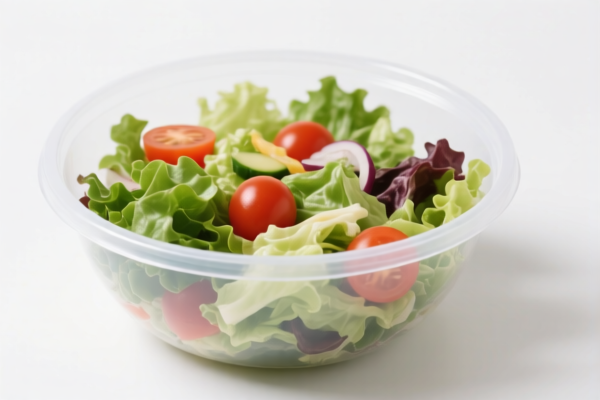
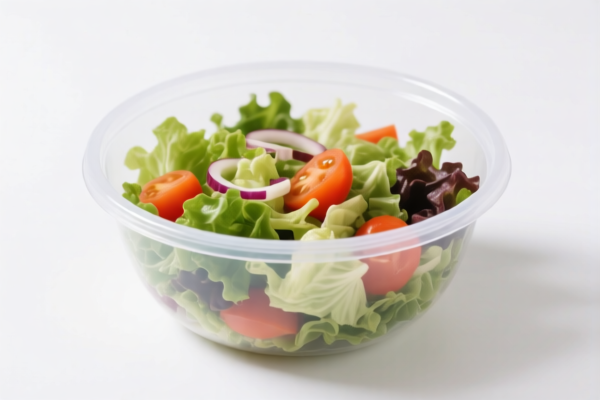


AI Analysis
🥗 Plastic Salad Bowl (Plastic Tableware & Containers)
🌐 HS Code Reference & Customs Clearance Guide | 2026 Latest Tariff Analysis | Professional Clearance Strategy
📌 I. Product Definition & Classification: Do You Really Know "Plastic Salad Bowls"?
Plastic salad bowls are essential items in modern food service, catering, and household dining. In international trade, they are primarily classified based on their specific function and construction. The key distinction lies between "Tableware/Dishes" (410/420 subheadings) and "Other Plastic Articles/Containers" (90/99 subheadings).
1. Dedicated Tableware (Plastic Dishes/Salad Bowls):
Specifically designed for serving food, falling under heading 3924. This includes bowls, plates, and cutlery sets.
2. General Plastic Containers/Articles:
Broader plastic storage or serving containers not specifically designated as "tableware" in the tariff schedule, often falling under heading 3926.
⚠️ Key Distinction Point:
- If the item is explicitly a bowl, plate, or dish intended for direct food contact at the table →归入 3924 (e.g., 3924.10).
- If the item is a generic container or article not specifically listed as tableware →归入 3926 (e.g., 3926.90).
📦 II. HS Code Classification Details (2026 Latest Tariff Authority Cross-Reference)
| HS Code | Product Description | Application Scenario | Total Tax Rate (CN→US) | Tax Breakdown |
|---|---|---|---|---|
3924.10.20.00 |
Plastic Tableware and Kitchenware, Other | Plastic Salad Bowls (Tableware) | 24.0% | Base: 6.5% + Sec 301: 7.5% + Sec 122: 10% |
3926.90.10.00 |
Other Plastic Articles | Plastic Bowls (Container Type) | 20.9% | Base: 3.4% + Sec 301: 7.5% + Sec 122: 10% |
3924.10.40.00 |
Plastic Tableware, Other | Plastic Bowls (Tableware Use) | 13.4% | Base: 3.4% + Sec 301: 0.0% + Sec 122: 10% |
3926.90.40.00 |
Other Plastic Articles, Other | Plastic Bowls (General Article) | 12.8% | Base: 2.8% + Sec 301: 0.0% + Sec 122: 10% |
3924.90.56.50 |
Other Plastic Tableware/Kitchenware | Plastic Bowls (Household/Homewares) | 20.9% | Base: 3.4% + Sec 301: 7.5% + Sec 122: 10% |
🔍 Important Note:
- All codes include Section 122 Tariff (10%), which applies to certain plastic articles from China.
- Section 301 Tariff (7.5%) applies to most plastic goods unless exempted.
- Base Tariff varies by specific subheading (2.8% – 6.5%).
💰 III. 2026 Latest Tariff Rate Breakdown (Including Additional Taxes)
✅ Applicable Country: United States (US)
✅ Origin: China (CN)
✅ Effective Time: Current (including subsequent imports)
🎯 1. 3924.10.20.00 —— Plastic Tableware (Salad Bowls)
| Item | Content |
|---|---|
| Base Tariff | 6.5% |
| Sec 301 Tariff | +7.5% |
| Sec 122 Tariff | +10.0% |
| Total Rate | 24.0% |
| Tax Calculation | CIF Value × 24.0% |
| De Minimis Exemption | ❌ Not Eligible (Section 321 exemption does not apply to Section 301/122 goods) |
| Legal Basis | HTSUS:3924.10.20.00 → Sec301:7.5% → Sec122:10% |
📌 Explanation:
- This is the highest rate for dedicated plastic tableware.
- High base tariff (6.5%) plus both Section 301 and 122 additions.
🎯 2. 3926.90.10.00 —— Other Plastic Articles (Container Type)
| Item | Content |
|---|---|
| Base Tariff | 3.4% |
| Sec 301 Tariff | +7.5% |
| Sec 122 Tariff | +10.0% |
| Total Rate | 20.9% |
| Tax Calculation | CIF Value × 20.9% |
| De Minimis Exemption | ❌ Not Eligible |
| Legal Basis | HTSUS:3926.90.10.00 → Sec301:7.5% → Sec122:10% |
📌 Note:
- Lower base tariff than 3924.10.20.00, but still subject to both additional tariffs.
🎯 3. 3924.10.40.00 —— Plastic Tableware (Other)
| Item | Content |
|---|---|
| Base Tariff | 3.4% |
| Sec 301 Tariff | 0.0% |
| Sec 122 Tariff | +10.0% |
| Total Rate | 13.4% |
| Tax Calculation | CIF Value × 13.4% |
| De Minimis Exemption | ❌ Not Eligible |
| Legal Basis | HTSUS:3924.10.40.00 → Sec122:10% |
📌 Advantage:
- Exempt from Section 301 (7.5%)!
- Only pays Base + Section 122.
- Ideal for cost optimization if the product fits this subheading.
🎯 4. 3926.90.40.00 —— Other Plastic Articles (Other)
| Item | Content |
|---|---|
| Base Tariff | 2.8% |
| Sec 301 Tariff | 0.0% |
| Sec 122 Tariff | +10.0% |
| Total Rate | 12.8% |
| Tax Calculation | CIF Value × 12.8% |
| De Minimis Exemption | ❌ Not Eligible |
| Legal Basis | HTSUS:3926.90.40.00 → Sec122:10% |
📌 Optimal Choice:
- Lowest Total Rate (12.8%).
- No Section 301 tax.
- Only Base + Section 122.
- Requires careful product description to fit "Other Plastic Articles."
🎯 5. 3924.90.56.50 —— Other Plastic Tableware/Kitchenware
| Item | Content |
|---|---|
| Base Tariff | 3.4% |
| Sec 301 Tariff | +7.5% |
| Sec 122 Tariff | +10.0% |
| Total Rate | 20.9% |
| Tax Calculation | CIF Value × 20.9% |
| De Minimis Exemption | ❌ Not Eligible |
| Legal Basis | HTSUS:3924.90.56.50 → Sec301:7.5% → Sec122:10% |
📌 Note:
- Similar rate to3926.90.10.00.
- Higher base than the optimized codes but exempt from some specific 301 exclusions if applicable.
🛠️ IV. Customs Clearance Practical Advice (Real-World Pitfall Avoidance)
✅ 1. Documentation Checklist (Essential)
| Document | Required | Description |
|---|---|---|
| ✅ Product Specification Sheet | ✔️ | Material (e.g., PP, PET), dimensions, food-grade certification |
| ✅ Product Photos (Clear) | ✔️ | Front/back view, showing it's a "bowl" not a "storage box" |
| ✅ Commercial Invoice | ✔️ | Clearly state "Plastic Salad Bowl" or "Plastic Tableware" |
| ✅ Packing List | ✔️ | Unit quantity, gross weight, net weight |
| ✅ Food Contact Safety Cert | ✔️ | FDA compliance proof (for US market) |
✅ 2. Declaration Strategy (Key Tips)
🔥 "Describe Accurately, Classify Smartly, Save 10%+!"
| Scenario | Correct Declaration | Wrong Practice |
|---|---|---|
| Dedicated Salad Bowl | 3924.10.40.00 or 3924.10.20.00 |
Declare as "Container" → Risk of audit |
| Generic Plastic Bowl | 3926.90.40.00 (Lowest Tax) |
Declare as "Tableware" → Higher tax |
| Set with Cutlery | 3924.10.xx.xx |
Split into parts → Complex clearance |
Key Tip:
- If the bowl is simple, single-piece, and for eating, try to classify under 3924.10.40.00 (13.4%) to save 7.5% (Section 301) compared to 3924.10.20.00.
- If it's a storage container used for salad, consider 3926.90.40.00 (12.8%) for the lowest overall cost.
✅ 3. Special Cases
| Case | Handling Advice |
|---|---|
| Disposable vs. Reusable | Both fall under similar HS codes if plastic; focus on design/function |
| BPI (Bamboo Plastic Composite) | If >50% plastic by weight, still plastic; if bamboo dominant, may change |
| Branded vs. Generic | Brand does not affect HS code; focus on material and function |
🌍 V. Global Market Comparison (2026 Latest)
| Country/Region | Recommended HS Code | Tariff (China Origin) | Notes |
|---|---|---|---|
| 🇺🇸 USA | 3924.10.40.00 / 3926.90.40.00 |
13.4% / 12.8% | Optimal to avoid Sec 301 |
| 🇨🇳 China | 3924.10.20.00 |
6.5% | No additional tariffs |
| 🇪🇺 EU | 3924.10.00 |
0% | No Section 122/301 equivalents |
| 🇬🇧 UK | 3924.10.00 |
4.5% | Post-Brexit tariff structure |
| 🇦🇺 Australia | 3924.10.00 |
5.0% | Free Trade Agreement benefits may apply |
📌 Conclusion:
- US Market is the most complex due to Section 301 and 122 tariffs.
- Choose3926.90.40.00(12.8%) or3924.10.40.00(13.4%) to minimize costs.
- Avoid3924.10.20.00(24.0%) unless necessary for classification accuracy.
📌 VI. Common Mistakes & Pitfalls (Lessons Learned)
❌ Mistake 1: Declaring "Plastic Salad Bowl" as 3924.10.20.00 (24.0%) when 3924.10.40.00 (13.4%) applies.
👉 Consequence: Paying 10.6% extra tax unnecessarily.
❌ Mistake 2: Using 3926.90.10.00 (20.9%) for a simple bowl.
👉 Consequence: Higher cost than 3926.90.40.00 (12.8%).
❌ Mistake 3: Not providing FDA compliance docs.
👉 Consequence: Goods held at US border, rejected, or destroyed.
✅ Best Practice:
"Plastic Salad Bowl, Food-Grade PP, Reusable, Model XYZ, FDA Compliant"
→ Declare as3924.10.40.00or3926.90.40.00to optimize tax.
🎯 VII. Conclusion: Smart Classification, Cost Savings, Efficient Clearance
🎯 Remember:
🔹 "3924.10.40.00 saves 7.5% (Sec 301)"
🔹 "3926.90.40.00 saves 10%+ vs. other codes"
🔹 "Always check FDA compliance for food-contact plastics!"
📌 Pro Tip:
- If your product is simple and generic, consider
3926.90.40.00for the lowest tax (12.8%).- If it's clearly tableware, use
3924.10.40.00(13.4%) to avoid Section 301.- Avoid
3924.10.20.00unless you have no other option, as it carries the highest tax (24.0%).
📣 Immediate Action:
📞 Consult with a customs broker for Pre-Ruling if unsure.
🚀 Optimize your HS Code to save up to 10.6% in tariffs.
💼 Your profits depend on accurate classification!
✨ Professional Clearance Starts with Precise Classification!
💼 Every cent saved matters in global trade!
Customer Reviews
About HS Code Classification
The Harmonized System (HS) is an internationally standardized nomenclature developed by the World Customs Organization (WCO) to classify traded products. Over 200 countries use the HS system as the basis for customs tariffs, trade statistics, and import/export regulations.
Each HS code follows a hierarchical structure:
- Chapter (2 digits) — Broad category of goods (e.g., Chapter 84: Machinery and Mechanical Appliances)
- Heading (4 digits) — More specific grouping within the chapter
- Subheading (6 digits) — Internationally standardized breakdown, used by all WCO member countries
- National subdivisions (8-10 digits) — Country-specific extensions for further classification, such as US HTSUS 10-digit codes
Correct HS code classification is essential for smooth customs clearance, accurate duty payment, and compliance with trade regulations. Misclassification can lead to customs delays, overpayment of duties, or penalties.
When importing from CN to US, the applicable tariff rates may include:
- Most-Favored-Nation (MFN) rate — The standard duty rate applied to WTO members
- General rate — Applied to countries without trade agreements
- Trade remedy duties — Additional tariffs such as Section 301 (anti-dumping), Section 232 (national security), or countervailing duties
The information provided on this page is for reference purposes only. For official classification, please consult with your local customs authority or a licensed customs broker.