Plastic Salt Shaker
CN → US| HS Code | Tariff Rate | Origin | Destination | Doc |
|---|---|---|---|---|
| 3924101000 | 13.4% | CN | US | Official Doc |
| 3924104000 | 13.4% | CN | US | Official Doc |
Product Images


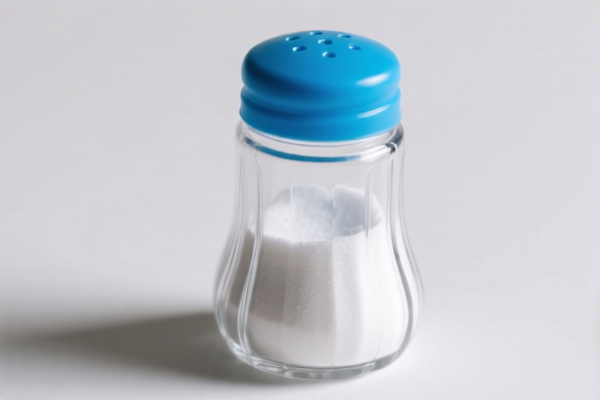
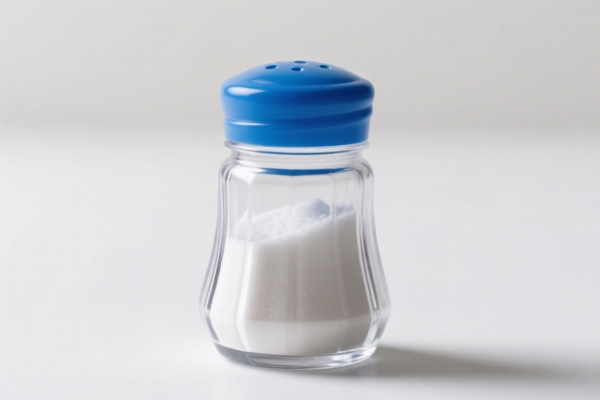
AI Analysis
🧂 Plastic Salt Shaker (Plastic Dispensers)
🌐 HS Code Reference & Customs Clearance Guide | 2026 Latest Tariff Analysis | Professional Clearance Strategy
📌 I. Product Definition & Classification: Do You Truly Understand “Plastic Salt Shakers”?
A Plastic Salt Shaker falls under the broad category of "Tableware and Kitchenware of Plastics." In international trade, this product is strictly defined by its function and material:
- Material: Made primarily of plastic (polypropylene, polyethylene, etc.).
- Function: Used for dispensing condiments (salt, pepper, mustard, ketchup) or similar table/kitchen items.
- Key Distinction:
- If it is a simple shaker/dispenser for table use → Classified under 3924.10.10.00.
- If it is a general plastic kitchen/household item not fitting specific sub-headings → Classified under 3924.10.40.00.
⚠️ Critical Distinction Point:
- If the item is explicitly a "dispenser" (like salt, pepper, mustard, ketchup) or similar tableware/kitchenware → It belongs to 3924.10.10.00.
- If the item is a "plastic bottle/jar" not primarily designed as a shaker/dispenser for immediate table use → It might fall under 3924.10.40.00 (Other).
- Note: Based on the provided data, the primary applicable code for standard salt shakers is 3924.10.10.00.
📦 II. HS Code Classification Details (2026 Latest Tariff Authority Comparison)
| HS Code | Product Description | Applicable Scenario | Tax Rate (Total) |
|---|---|---|---|
3924.10.10.00 |
Tableware and kitchenware: Salt, pepper, mustard and ketchup dispensers and similar dispensers | Plastic salt/pepper shakers, mustard/ketchup squeeze bottles for table use | 3.4% |
3924.10.40.00 |
Tableware and kitchenware: Other | General plastic kitchenware not classified as specific dispensers | 3.4% |
🔍 Key Reminder:
- Both codes carry the same total tax rate of 3.4% in the provided data.
- However, classification accuracy matters for customs verification and potential future tariff changes.
- Salt shakers are explicitly covered under 3924.10.10.00 as "dispensers."
- Avoid misclassifying as general "plastic articles" unless it does not fit the dispenser definition.
💰 III. 2026 Latest Tariff Rate Breakdown (Detailed Tax Clauses)
✅ Applicable Country: United States (US)
✅ Origin: China (CN) (Assumed based on common trade context; verify if origin differs)
✅ Effective Time: Current 2026 Tariff Schedule
🎯 1. 3924.10.10.00 — Plastic Salt/Pepper/Mustard/Ketchup Dispensers
| Item | Content |
|---|---|
| Base Tariff Rate | 3.4% (ad valorem) |
| Additional Tariff | 0.0% (No Section 301 or IEEPA additional tariff applied to this specific subheading in the provided data) |
| Total Tax Rate | 3.4% |
| Tax Calculation | CIF Value × 3.4% |
| De Minimis Eligibility | ✅ Yes (If value < $800, may be exempt under Section 321; verify current threshold) |
| Legal Basis Path | HTSUS:3924.10.10.00 → Note: 3.4% base, 0% additional |
📌 Explanation:
- The 3.4% rate is the standard base tariff for plastic tableware/kitchenware dispensers.
- No additional 25% or 10% tariffs are listed in the provided data for this code, making it significantly more favorable than electronics or high-tech goods.
- This is a low-risk, low-cost category for importers.
🎯 2. 3924.10.40.00 — Other Plastic Tableware/Kitchenware
| Item | Content |
|---|---|
| Base Tariff Rate | 3.4% (ad valorem) |
| Additional Tariff | 0.0% |
| Total Tax Rate | 3.4% |
| Tax Calculation | CIF Value × 3.4% |
| De Minimis Eligibility | ✅ Yes |
| Legal Basis Path | HTSUS:3924.10.40.00 → Note: 3.4% base, 0% additional |
📌 Note:
- Same tax treatment as3924.10.10.00.
- Use this code only if the item does not fit the "dispenser" definition (e.g., a simple plastic salt container not designed for shaking/dispensing).
🛠️ IV. Customs Clearance Practical Advice (Battle-Tested Pitfall Avoidance Guide)
✅ 1. Required Documentation Checklist (No Exception)
| Document | Must Provide | Description |
|---|---|---|
| ✅ Product Specification Sheet | ✔️ | Material (PP/PE), dimensions, capacity, intended use |
| ✅ Product Photos | ✔️ | Clear images of the shaker, lid, and any dispensing mechanism |
| ✅ Commercial Invoice | ✔️ | Clearly state "Plastic Salt Shaker" or "Plastic Dispenser" |
| ✅ Packing List | ✔️ | Weight, quantity, package dimensions |
| ✅ HS Code Declaration | ✔️ | Pre-classified as 3924.10.10.00 |
| ✅ Certificate of Origin (if applicable) | ✔️ | To verify origin for potential FTAs (though no FTA benefit shown here) |
✅ 2. Declaration Tips (Key Mantra)
🔥 "Material First, Function Second, Code Precise, Tariff Low!"
| Scenario | Correct Declaration | Wrong Practice |
|---|---|---|
| Standard Plastic Salt Shaker | 3924.10.10.00 |
Misclassified as general plastic → Same tax, but risk of audit |
| Ceramic Salt Shaker | 6911.xxxx |
Misclassified as plastic → Wrong HS, Penalty Risk! |
| Glass Salt Shaker | 7013.xxxx |
Misclassified as plastic → Wrong HS, Penalty Risk! |
| Electric Salt Dispenser | 8509.xxxx |
Misclassified as plastic → Wrong HS, Higher Tax! |
📌 Critical Warning:
- Material Matters: If the shaker has a wooden lid, ceramic body, or glass insert, it may NOT qualify for3924.10.xxxx.
- Electric Components: If it has a motor or electronic sensor, it is not simple plastic tableware.
- Name Precision: Use "Plastic Salt Shaker" or "Plastic Condiment Dispenser" — avoid vague terms like "Kitchen Container."
✅ 3. Special Case Handling
| Scenario | Handling Advice |
|---|---|
| Mixed Material (Plastic + Wood/Ceramic) | Declare based on essential character. If plastic is predominant, 3924.10.10.00 may still apply, but provide material breakdown. |
| Set of Shakers (Salt, Pepper, Sugar) | Declare each item separately if different materials; if all plastic, use 3924.10.10.00 for each. |
| OEM Custom Design | Provide design files to prove it’s a "dispenser" and not a general storage bottle. |
| Small Quantity (Under $800) | Eligible for Section 321 De Minimis exemption — no duty, no formal entry. |
🌍 V. Global Market Comparison (2026 Latest)
| Country/Region | Recommended HS Code | Tariff | Certification Required | Notes |
|---|---|---|---|---|
| 🇺🇸 United States | 3924.10.10.00 |
3.4% | FDA Compliance (Food Contact) | No additional tariffs |
| 🇨🇳 China (Import) | 3924.10.10.00 |
5-7% | GB Standards | Verify exact rate |
| 🇪🇺 European Union | 3924.10.10.00 |
4.5% | EU Food Contact Regulations | No additional tariffs |
| 🇬🇧 United Kingdom | 3924.10.10.00 |
4.5% | UKCA Marking | Post-Brexit rules apply |
| 🇦🇺 Australia | 3924.10.10.00 |
5% | Australian Competition & Consumer Commission (ACCC) | No additional tariffs |
📌 Conclusion:
- Plastic salt shakers are low-tariff items globally.
- USA offers 3.4% with no additional penalties in the provided data.
- Certification (FDA/EU Food Contact) is more critical than tariff savings.
📌 VI. Common Mistakes & Pitfall Guide (Blood-Tested Lessons)
❌ Mistake 1: Classifying a ceramic salt shaker as plastic (3924.10.10.00)
👉 Consequence: Customs seizure, fine, or reclassification to 6911 (higher tax).
✅ Fix: Always verify primary material.
❌ Mistake 2: Using vague terms like "Kitchen Accessory" in the declaration
👉 Consequence: Customs delay, request for more info, potential audit.
✅ Fix: Use specific terms: "Plastic Salt Shaker."
❌ Mistake 3: Ignoring FDA/EU Food Contact Regulations
👉 Consequence: Product banned from sale, even if duty is low.
✅ Fix: Ensure plastic is food-grade and certified.
❌ Mistake 4: Assuming no additional tariffs means no compliance
👉 Consequence: Non-compliance with safety standards.
✅ Fix: Obtain FDA LFGB or EU 10/2011 compliance certificates.
🎯 VII. Conclusion: Precise Classification Saves Time & Money!
🎯 Remember the Mantra:
🔹 "Plastic Salt Shaker → 3924.10.10.00 → 3.4% Tax → FDA Required!"
🔹 "Material Matters, Function Defines, Code Precise, Tariff Low!"
🔹 "HS Code Sets the Tariff, Compliance Sets the Sale!"
📌 Pro Tip:
- If your product value is under $800, use Section 321 De Minimis to avoid duty entirely (if eligible).
- For bulk imports, always obtain FDA Food Contact Compliance documents.
- Pre-classify with a customs broker if the product has mixed materials.
📣 Immediate Action:
📞 Contact a Customs Broker + Provide Product Photos + Obtain FDA Compliance
🚀 Clear Customs Smoothly, Sell Efficiently, Profit Maximally!
✨ Professional Clearance Starts with Accurate Classification!
💼 Your Every Penny Counts — Optimize Your Tariff Strategy!
Customer Reviews
About HS Code Classification
The Harmonized System (HS) is an internationally standardized nomenclature developed by the World Customs Organization (WCO) to classify traded products. Over 200 countries use the HS system as the basis for customs tariffs, trade statistics, and import/export regulations.
Each HS code follows a hierarchical structure:
- Chapter (2 digits) — Broad category of goods (e.g., Chapter 84: Machinery and Mechanical Appliances)
- Heading (4 digits) — More specific grouping within the chapter
- Subheading (6 digits) — Internationally standardized breakdown, used by all WCO member countries
- National subdivisions (8-10 digits) — Country-specific extensions for further classification, such as US HTSUS 10-digit codes
Correct HS code classification is essential for smooth customs clearance, accurate duty payment, and compliance with trade regulations. Misclassification can lead to customs delays, overpayment of duties, or penalties.
When importing from CN to US, the applicable tariff rates may include:
- Most-Favored-Nation (MFN) rate — The standard duty rate applied to WTO members
- General rate — Applied to countries without trade agreements
- Trade remedy duties — Additional tariffs such as Section 301 (anti-dumping), Section 232 (national security), or countervailing duties
The information provided on this page is for reference purposes only. For official classification, please consult with your local customs authority or a licensed customs broker.