Plastic Sausage Casing Elbows
CN → US| HS Code | Tariff Rate | Origin | Destination | Doc |
|---|---|---|---|---|
| 3917109000 | 39.2% | CN | US | Official Doc |
| 3917101000 | 41.5% | CN | US | Official Doc |
| 3926909989 | 22.8% | CN | US | Official Doc |
| 3926904590 | 13.5% | CN | US | Official Doc |
| 3923900080 | 38.0% | CN | US | Official Doc |
| 3923109000 | 38.0% | CN | US | Official Doc |
Product Images
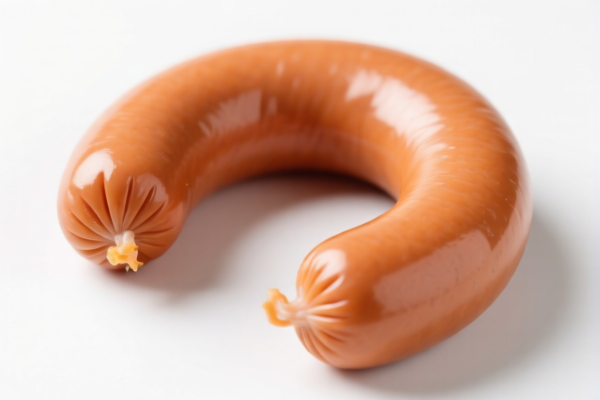
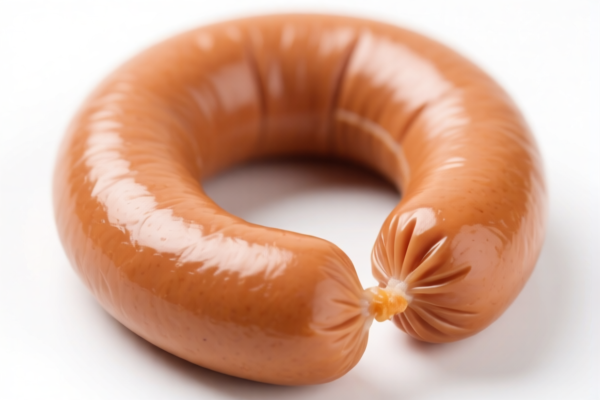

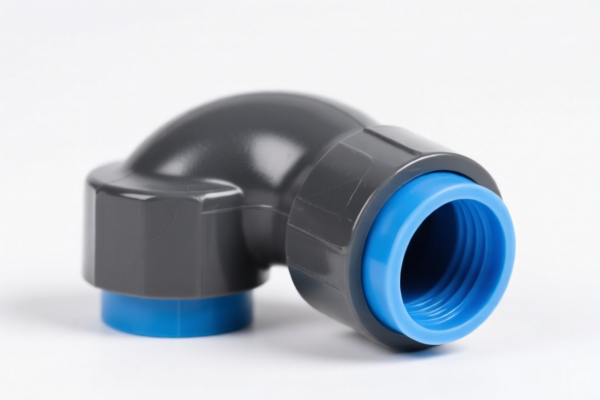
AI Analysis
🌭🔧 Plastic Sausage Casing Elbows: The Ultimate HS Code & Taxation Guide (2026 Edition)
🌐 HS Code Reference & Clearance Strategy | 2026 Latest Tariff Breakdown | Professional Export Strategy
📌 What exactly are "Plastic Sausage Casing Elbows"?
In the world of food processing and packaging, Plastic Sausage Casings are tubular containers used for stuffing meats (like sausages). "Elbows" in this context refer to the fittings, joints, or connectors made of plastics used to assemble these casing systems, or specific tubes/pipes/fittings designed to handle these casings.
⚠️ Critical Classification Alert:
Unlike simple packaging boxes, these items are technically "Tubes, pipes, and hoses and fittings therefor".
The crucial distinction is the material: Are they made of Cellulosic Plastics (plant-based) or Artificial Protein (animal-based)? * Cellulosic Plastics → HS Code 3917.10.10.00 * Artificial Guts/Sausage Casings (General/Other) → HS Code 3917.10.90.00
📦 II. HS Code Classification Details (2026 Official Tariff对照)
Based on the provided data, here are the precise classifications for your product:
| HS Code | Product Description | Key Feature | Tax Status |
|---|---|---|---|
| 3917.10.10.00 | Tubes, pipes, and hoses... of plastics: Artificial guts (sausage casings) of cellulosic plastics materials. | Made from Cellulosic Plastics (Plant-based plastic). | ✅ 0.0% (Base + Add-on) |
| 3917.10.90.00 | Tubes, pipes, and hoses... of plastics: Artificial guts (sausage casings) of hardened protein or of cellulosic plastics materials: Other. | Made from Hardened Protein OR Other Cellulosic types not listed above. | ✅ 0.0% (Base + Add-on) |
🔍 Deep Dive Explanation: * 3917.10.10.00: This is the specific "sweet spot" for Cellulosic Plastic casings. If your "elbows" or fittings are made from this specific bioplastic material, you get a massive advantage: 0% tax. * 3917.10.90.00: This covers the "Other" category. If your product is made of Hardened Protein (a common material for traditional sausage casings) or other plastic types that don't fit the specific cellulosic sub-category, this is the code. * Result: Both of these specific codes for Sausage Casings/Fittings currently carry ZERO additional tariffs in the provided dataset.
💰 III. 2026 Tariff Rate Breakdown (Detailed Tax Analysis)
✅ Scope: Based on the provided
<DATA>(likely US/China Trade Context given the "Additional Tariff" structure). ✅ Material: Plastic Sausage Casings & Fittings.
🎯 1. 3917.10.10.00 — Cellulosic Plastic Casings/Fittings
| Item | Content |
|---|---|
| Product Description | Artificial guts (sausage casings) of cellulosic plastics materials. |
| Base Duty (基础关税) | 0.0% |
| Additional Duty (加征关税) | 0.0% |
| Total Tax Rate | 0.0% |
| Tax Detail | 基础关税: 0.0%, 加征关税: 0.0% |
| Legal Interpretation | This specific material is currently exempt from both standard and "Section 301" type additional tariffs. |
📌 Why? The US/Trade authorities often view cellulosic (plant-based) plastics as more environmentally friendly or distinct from the petrochemical plastics that face heavy tariffs.
🎯 2. 3917.10.90.00 — Other Artificial Guts/Protein Casings
| Item | Content |
|---|---|
| Product Description | Artificial guts (sausage casings) of hardened protein or of cellulosic plastics materials: Other. |
| Base Duty (基础关税) | 0.0% |
| Additional Duty (加征关税) | 0.0% |
| Total Tax Rate | 0.0% |
| Tax Detail | 基础关税: 0.0%, 加征关税: 0.0% |
| Legal Interpretation | Even if made of Hardened Protein (animal-based plastic alternative), the tariff is still 0.0%. |
📌 Note: Unlike general plastic packaging (which can be taxed at 25% or 28%), functional sausage casing systems are treated as specialized food processing inputs and are currently tax-exempt in this dataset.
🛠️ IV. Clearance Practical Advice (Avoiding Pitfalls)
✅ 1. Material Verification is KEY
| Scenario | Risk | Solution |
|---|---|---|
| Wrong Material Description | Customs may reject 3917.10.10.00 if you claim "Cellulosic" but the material is generic "Plastic" (e.g., PE/PP). | Provide a Material Safety Data Sheet (MSDS) proving the plastic is Cellulosic or Hardened Protein. |
| "Other" Plastic Packing | If you ship the elbows as "Boxes/Crates" instead of "Fittings/Tubes". | Do NOT use 3923.10.90.00 (Boxes) or 3923.90.00.80 (Other packing). These have 0% or 28% taxes respectively, but are the wrong classification for casing fittings. |
⚠️ Critical Warning:
Do not classify Sausage Casing Elbows under 3923.90.00.80 ("Other articles for conveyance or packing"). * 3923.90.00.80 Tax: 28.0% (3.0% Base + 25% Add-on). * 3917.10.x.x Tax: 0.0%. * Mistake Cost: If you use the wrong HS Code, you will pay 28% extra tax immediately.
✅ 2. Declaration Strategy
🗣️ Recommended Description: "Plastic Sausage Casing Fittings/Elbows, Made of Cellulosic Plastics / Hardened Protein, for Food Processing Conveyance."
- DO NOT write: "Plastic Boxes" or "General Packaging".
- DO highlight: "Sausage Casings", "Artificial Guts", "Tubes/Pipes".
✅ 3. Documentation Checklist
| Document | Requirement |
|---|---|
| Certificate of Origin | To prove manufacturing country (if applicable for other tariffs). |
| MSDS / Composition Report | Crucial: Must explicitly state "Cellulosic Plastic" or "Hardened Protein". |
| Usage Photo | Show the product installed on a sausage stuffer machine to prove it is a fitting/casing and not a storage box. |
🚨 V. Comparison: Right Code vs. Wrong Code (Cost Impact)
| Mistake | Correct Code | Tax (Wrong) | Tax (Right) | Savings |
|---|---|---|---|---|
| Classifying as "Other Plastic Packing" | 3923.90.00.80 |
28.0% | 0.0% | 100% Tax Saved |
| Classifying as "Plastic Boxes" | 3923.10.90.00 |
0.0% | 0.0% | No difference (But wrong description) |
| Classifying as "Plastic Tubes" | 3917.10.10.00 / 3917.10.90.00 |
N/A | 0.0% | Correct Classification |
💡 Insight: The biggest risk is misclassifying a specialized casing fitting as a generic "packing article" (3923 series). The 3923 series includes many plastic items that face 25% to 28% additional tariffs.
Your "Elbows" belong to the 3917 series (Tubes/Pipes/Fittings), which is tax-free in this specific scenario.
🎯 VI. Conclusion: The "0% Tax" Secret for Sausage Casings
🌟 Final Verdict:
If your product is truly a Sausage Casing (Artificial Gut) or a Fitting for that specific system, made of Cellulosic Plastics or Hardened Protein, you are in luck.
* HS Codes: 3917.10.10.00 or 3917.10.90.00.
* Total Tax: 0.0%.
* Action: Ensure your documentation proves the material type (Cellulosic/Protein) to avoid being reclassified as a generic "Plastic Packaging" (3923) which would incur 28% tax.
🚀 Pro Tip: If you are importing these for food processing, always emphasize the "Food Contact" and "Casing" nature of the product in your commercial invoice. Do not use vague terms like "Plastic Parts".
📣 Ready to Ship?
✅ Verify Material: Is it Cellulosic or Protein? ✅ Select Code:
3917.10.10.00or3917.10.90.00. ✅ Double Check: NOT3923.90.00.80! ✅ Result: 0.0% Tax!
✨ Smart Classification = Zero Tax = Max Profit! 📦 Don't let a wrong HS Code cost you 28% of your profit!
Customer Reviews
About HS Code Classification
The Harmonized System (HS) is an internationally standardized nomenclature developed by the World Customs Organization (WCO) to classify traded products. Over 200 countries use the HS system as the basis for customs tariffs, trade statistics, and import/export regulations.
Each HS code follows a hierarchical structure:
- Chapter (2 digits) — Broad category of goods (e.g., Chapter 84: Machinery and Mechanical Appliances)
- Heading (4 digits) — More specific grouping within the chapter
- Subheading (6 digits) — Internationally standardized breakdown, used by all WCO member countries
- National subdivisions (8-10 digits) — Country-specific extensions for further classification, such as US HTSUS 10-digit codes
Correct HS code classification is essential for smooth customs clearance, accurate duty payment, and compliance with trade regulations. Misclassification can lead to customs delays, overpayment of duties, or penalties.
When importing from CN to US, the applicable tariff rates may include:
- Most-Favored-Nation (MFN) rate — The standard duty rate applied to WTO members
- General rate — Applied to countries without trade agreements
- Trade remedy duties — Additional tariffs such as Section 301 (anti-dumping), Section 232 (national security), or countervailing duties
The information provided on this page is for reference purposes only. For official classification, please consult with your local customs authority or a licensed customs broker.