Plastic Sealing Cap
CN → US| HS Code | Tariff Rate | Origin | Destination | Doc |
|---|---|---|---|---|
| 3926902500 | 24.0% | CN | US | Official Doc |
| 3926909989 | 22.8% | CN | US | Official Doc |
| 8538906000 | 38.5% | CN | US | Official Doc |
| 8538908180 | 38.5% | CN | US | Official Doc |
| 9032906180 | 36.7% | CN | US | Official Doc |
Product Images

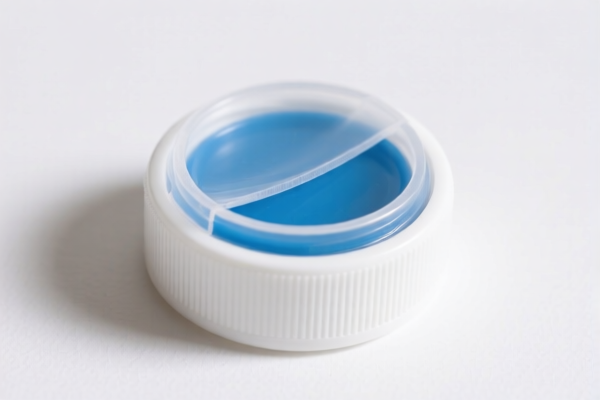
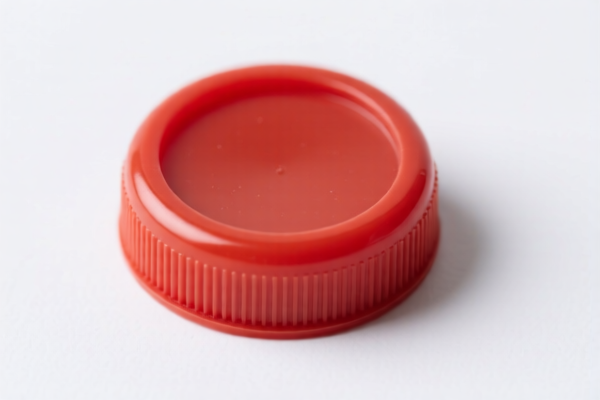
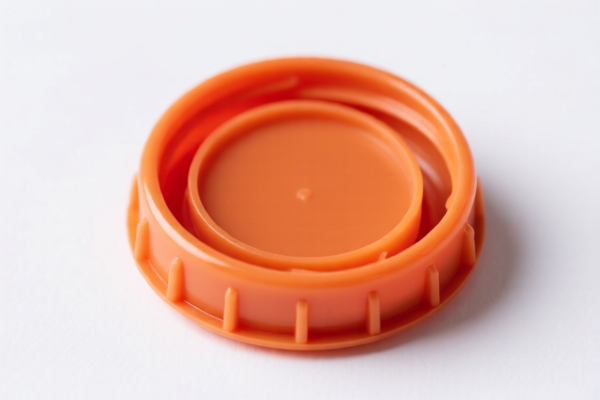
AI Analysis
🍾 Plastic Sealing Cap (Stopper/Lid)
🌐 HS Code Reference & Customs Clearance Guide | 2026 Latest Tariff Analysis | Professional-Level Clearance Strategy
📌 I. Product Definition & Classification: Do You Really Know "Plastic Sealing Cap"?
A Plastic Sealing Cap (often referred to as a stopper, lid, or cap) is a ubiquitous component in packaging, automotive, and industrial sectors. However, in international trade, its HS Code classification is highly volatile depending on its specific function and final application.
It is generally categorized into two main streams: 1. General Plastic Article: If it’s a simple packaging cap (e.g., for bottles, jars) with no specific mechanical function beyond sealing → Chapter 39. 2. Specific Functional Component: If it serves as a part of a switch, control device, or precision instrument → Chapters 85 or 90.
⚠️ Critical Distinction Point:
- If the cap is merely for convenience or containment (e.g., a water bottle cap, a cosmetic jar lid) → Classify under 3926.
- If the cap is a functional part of a switch (e.g., a button cover that completes a circuit when pressed) → Classify under 8538.
- If it is a part of a measuring/controlling instrument (e.g., a dial cover on a pressure gauge) → Classify under 9032.
📦 II. HS Code Classification Details (2026 Latest Tariff Authority Comparison)
| HS Code | Product Description | Application Scenario | Key Identifier |
|---|---|---|---|
3926.90.25.00 |
Plastic Buttons/Covers, other plastic articles | General plastic caps, bottle caps, simple covers | ✅ Basic Plastic Article |
3926.90.99.89 |
Other Plastic Articles (Catch-all) | If not specifically listed in 3926.25, or generic plastic parts | ✅ Generic/Unspecified Plastic |
8538.90.60.00 |
Parts of Switches, molded components | Switch button covers, actuator caps that interact with electrical contacts | ⚡ Functional Electrical Part |
8538.90.81.80 |
Parts of Switches (Other) | Any other plastic component that is a distinct part of a switch assembly | ⚡ Functional Electrical Part |
9032.90.61.80 |
Parts/Attachments of Instruments | Covers for measuring, checking, or controlling instruments (e.g., industrial gauges) | 📏 Precision Instrument Part |
🔍 Key Reminder:
- Misclassification Risk: Many traders mistakenly classify "switch button covers" as "plastic articles" (3926) to save on tariffs. This is a high-risk error. If the cap is integral to the operation of an electrical switch, it must go to Chapter 85. - "Molded Components" vs. "Parts": In Chapter 85, whether it’s a "molded component" (60) or "other part" (81) depends on the specific sub-heading wording in your country's tariff schedule, but both attract high tariffs for Chinese origins due to trade restrictions.
💰 III. 2026 Latest Tariff Rate Breakdown (Including Additional Taxes & Policy Surcharges)
✅ Applicable Country: United States (US)
✅ Country of Origin: China (CN)
✅ Effective Date: Includes all imports post-2025 (Current 122-Clause/Section 301 policies active)
🎯 1. 3926.90.25.00 —— Plastic Buttons/Covers (General Plastic Article)
| Item | Content |
|---|---|
| Base Rate | 6.5% (Ad Valorem) |
| Section 301 Surtax | +7.5% (List 4B items, typical for many plastic articles) |
| Section 122 Surtax | +10% (Specificly targeted at certain plastic goods from China) |
| Total Rate | 24.0% |
| Tax Calculation | CIF Value × 24.0% |
| De Minimis Exemption | ❌ Not Eligible (Deny de minimis) |
| Legal Basis Path | HTSUS:3926.90.25.00 → Section 301: 7.5% → Section 122: 10% |
📌 Explanation:
- This is the lowest tax bracket among the options.
- Applicable only if the item is truly a general-purpose plastic item (e.g., a bottle cap, a generic cover) and not a functional part of an electrical switch or instrument.
- Warning: If Customs determines the item is a switch part, they will reclassify it to Chapter 85, resulting in a much higher tax.
🎯 2. 3926.90.99.89 —— Other Plastic Articles (Catch-All)
| Item | Content |
|---|---|
| Base Rate | 5.3% |
| Section 301 Surtax | +7.5% |
| Section 122 Surtax | +10% |
| Total Rate | 22.8% |
| Tax Calculation | CIF Value × 22.8% |
| De Minimis Exemption | ❌ Not Eligible (Deny de minimis) |
| Legal Basis Path | HTSUS:3926.90.99.89 → Section 301: 7.5% → Section 122: 10% |
📌 Explanation:
- Use this only if the cap does not fit the specific description of3926.25(buttons/covers) but is still clearly a general plastic article.
- Slightly lower base rate than 3926.25, but the risk of misclassification is higher because it is a "basket" category.
🎯 3. 8538.90.60.00 —— Parts of Switches (Molded Components)
| Item | Content |
|---|---|
| Base Rate | 3.5% |
| Section 301 Surtax | +25.0% (High-tier Section 301 items) |
| Section 122 Surtax | +10% |
| Total Rate | 38.5% |
| Tax Calculation | CIF Value × 38.5% |
| De Minimis Exemption | ❌ Not Eligible (Deny de minimis) |
| Legal Basis Path | HTSUS:8538.90.60.00 → Section 301: 25.0% → Section 122: 10% |
📌 Explanation:
- High Tax Trap! Many importers try to avoid this, but if your "plastic cap" is a switch button or a functional cover that users press to operate an electrical device, you MUST use this code.
- The 25% Section 301 tariff applies to electrical switch parts.
🎯 4. 8538.90.81.80 —— Parts of Switches (Other)
| Item | Content |
|---|---|
| Base Rate | 3.5% |
| Section 301 Surtax | +25.0% |
| Section 122 Surtax | +10% |
| Total Rate | 38.5% |
| Tax Calculation | CIF Value × 38.5% |
| De Minimis Exemption | ❌ Not Eligible (Deny de minimis) |
| Legal Basis Path | HTSUS:8538.90.81.80 → Section 301: 25.0% → Section 122: 10% |
📌 Explanation:
- Similar to above. Use if the part is a switch component but doesn't fit the "molded component" sub-heading.
- Same high tax burden. Do not attempt to downgrade to Chapter 39 if functionally it is an electrical part.
🎯 5. 9032.90.61.80 —— Parts of Measuring/Controlling Instruments
| Item | Content |
|---|---|
| Base Rate | 1.7% |
| Section 301 Surtax | +25.0% |
| Section 122 Surtax | +10% |
| Total Rate | 36.7% |
| Tax Calculation | CIF Value × 36.7% |
| De Minimis Exemption | ❌ Not Eligible (Deny de minimis) |
| Legal Basis Path | HTSUS:9032.90.61.80 → Section 301: 25.0% → Section 122: 10% |
📌 Explanation:
- Use only if the plastic cap is a cover or part of an automatic regulating or controlling instrument (e.g., a dial cover on a thermostat, pressure gauge, or flow meter).
- If it’s just a bottle cap for a chemical sample container, do not use this. It must be part of a measuring device.
🛠️ IV. Customs Clearance Practical Advice (Real-World Pitfall Guide)
✅ 1. Preparation Checklist (Non-Negotiable)
| Document | Required? | Notes |
|---|---|---|
| ✅ Product Specifications | ✔️ | Clearly state: "Is this electrical?" "Is it for measuring?" "Is it for packaging?" |
| ✅ Function Diagram / Schematic | ✔️ | Critical for 8538/9032. Show how the cap interacts with the switch/instrument. |
| ✅ Product Photos (Clear & Detailed) | ✔️ | Show the cap in use. Does it look like a simple lid or a complex mechanical part? |
| ✅ Bill of Lading / Packing List | ✔️ | Ensure description matches HS Code logic (e.g., "Plastic Switch Cover" vs. "Plastic Bottle Cap"). |
| ✅ Commercial Invoice | ✔️ | Value must reflect true transaction value. |
| ✅ Origin Certificate | ❌ (Optional) | If you have non-China origin (e.g., Vietnam), you may qualify for exemptions. |
✅ 2. Declaration Tips (Key Mnemonics)
🔥 "Function Defines Chapter: Packaging=39, Switch=85, Instrument=90!"
| Scenario | Correct HS Code | Consequence of Error |
|---|---|---|
| Bottle Cap / Cosmetic Lid | 3926.90.25.00 (24.0%) |
If declared as 8538 → Overpaid tax. If declared as 9032 → Misclassification fine. |
| Simple Plastic Stopper (Generic) | 3926.90.99.89 (22.8%) |
Low risk, but ensure it's not a switch part. |
| Switch Button Cover | 8538.90.60.00 (38.5%) |
DO NOT declare as 3926. Customs will reclassify + Penalty. |
| Cover for Pressure Gauge | 9032.90.61.80 (36.7%) |
Must prove it’s part of an instrument, not just a container lid. |
✅ 3. Special Situation Handling
| Situation | Handling Advice |
|---|---|
| OEM Custom Switch Covers | Provide the client’s design drawings. Prove it’s a "part of a switch" to avoid being labeled as a "general plastic article" (which might be flagged if the design is highly specialized). |
| Mixed Shipments | If you ship both bottle caps and switch covers in one container, separate them on the invoice and packing list. Mixed HS Codes can trigger audits. |
| "Multi-Use" Caps | If a cap can be used for both a switch and a bottle, declare based on principal use. If it’s mostly for switches, use 8538. If you misclassify, risk is high. |
| Origin Tracing | If the plastic resin is from China but assembly is in Vietnam, check rules of origin. You might escape Section 122/301 if properly certified. |
🌍 V. Global Market Clearance Comparison (2026 Latest)
| Country/Region | Recommended HS Code | Tariff (CN Origin) | Certification Required | Notes |
|---|---|---|---|---|
| 🇺🇸 USA | 3926 (Packaging) |
24.0% / 22.8% | No special certs | High risk for 8538/9032 (38.5%+) |
| 🇪🇺 EU | 3926 |
~6.5% | CE (if electrical) | No 301/122 surcharges. Lower overall cost. |
| 🇨🇳 China | 3926 |
~5-6% | CCC (if electrical) | Domestic trade benefits from lower base rates. |
| 🇯🇵 Japan | 3926 |
~5% | PSE (if electrical) | Competitive, but strict on labeling. |
📌 Conclusion:
- The US is the most complex market due to Section 301 and Section 122 tariffs.
- Accuracy is paramount. A 2-3% base rate difference between 3926 and 8538 is negligible compared to the 17.5% tariff hike (from 7.5% to 25%) for switch parts.
- Strategy: If your product is borderline (e.g., a switch cover), consult a customs broker for a Pre-Ruling before shipping.
📌 VI. Common Errors & Pitfall Guide (Lessons Learned)
❌ Error 1: Declaring a Switch Button Cover as a "Plastic Toy Part" or "General Plastic Article".
👉 Consequence: Customs reclassifies to 8538. You owe the difference (14.5%+) + Penalties + Interest.
❌ Error 2: Declaring a Gauge Cover as a "Plastic Bottle Cap".
👉 Consequence: Misclassification. The item is clearly for an instrument (9032). Risk of audit.
❌ Error 3: Ignoring Section 122 Tariff.
👉 Consequence: Many importers calculate only Base + Section 301, forgetting the additional 10%. This leads to underpayment and debt collection issues.
❌ Error 4: Using vague descriptions like "Plastic Cap".
👉 Consequence: CBP may request additional documentation or assign a default (often higher) tariff code.
✅ Correct Approach:
"Plastic Actuator Cover for Industrial Switch, Model XYZ, Non-Conductive"
OR
"Plastic Screw Cap for HDPE Bottle, 50mm, Food Grade"
🎯 VII. Conclusion: Professional Declaration, Save Money & Time!
🎯 Remember the Mnemonics:
🔹 "Packaging is 39, Switch is 85, Instrument is 90!"
🔹 "3926 saves you ~14% vs 8538. But accuracy saves you from fines!"
🔹 "Don't hide switch parts in plastic caps. Customs knows the difference."
📌 Pro Tip:
If you are importing Switch Parts (8538) or Instrument Parts (9032), consider if your supply chain can be adjusted to originate in a non-China country (e.g., Southeast Asia) to potentially qualify for Section 301/122 exemptions. This can save you up to 35% in tariffs.
📣 Immediate Action:
📞 Contact a licensed customs broker.
📸 Provide clear photos and functional diagrams.
🚀 Get an Advance Ruling if your volume is high.
✨ Professional clearance starts with precise classification!
💼 Every dollar saved on tariffs is pure profit!
Customer Reviews
About HS Code Classification
The Harmonized System (HS) is an internationally standardized nomenclature developed by the World Customs Organization (WCO) to classify traded products. Over 200 countries use the HS system as the basis for customs tariffs, trade statistics, and import/export regulations.
Each HS code follows a hierarchical structure:
- Chapter (2 digits) — Broad category of goods (e.g., Chapter 84: Machinery and Mechanical Appliances)
- Heading (4 digits) — More specific grouping within the chapter
- Subheading (6 digits) — Internationally standardized breakdown, used by all WCO member countries
- National subdivisions (8-10 digits) — Country-specific extensions for further classification, such as US HTSUS 10-digit codes
Correct HS code classification is essential for smooth customs clearance, accurate duty payment, and compliance with trade regulations. Misclassification can lead to customs delays, overpayment of duties, or penalties.
When importing from CN to US, the applicable tariff rates may include:
- Most-Favored-Nation (MFN) rate — The standard duty rate applied to WTO members
- General rate — Applied to countries without trade agreements
- Trade remedy duties — Additional tariffs such as Section 301 (anti-dumping), Section 232 (national security), or countervailing duties
The information provided on this page is for reference purposes only. For official classification, please consult with your local customs authority or a licensed customs broker.