Plastic Self Adhesive Label Tape
CN → US| HS Code | Tariff Rate | Origin | Destination | Doc |
|---|---|---|---|---|
| 3919905060 | 40.8% | CN | US | Official Doc |
| 3919102055 | 40.8% | CN | US | Official Doc |
| 3926909989 | 22.8% | CN | US | Official Doc |
| 4821902000 | 35.0% | CN | US | Official Doc |
| 4821102000 | 35.0% | CN | US | Official Doc |
Product Images
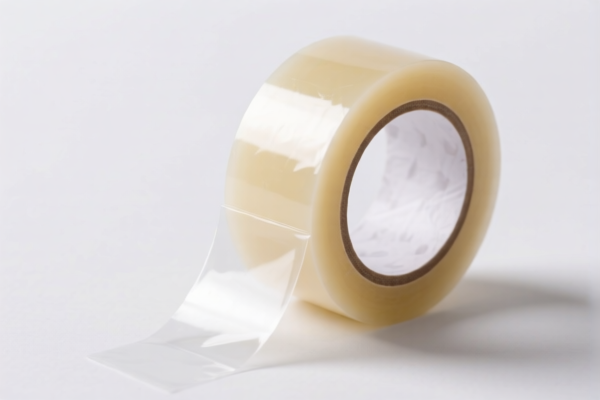
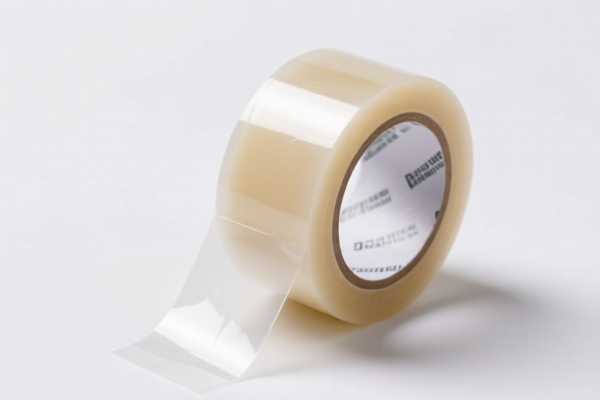
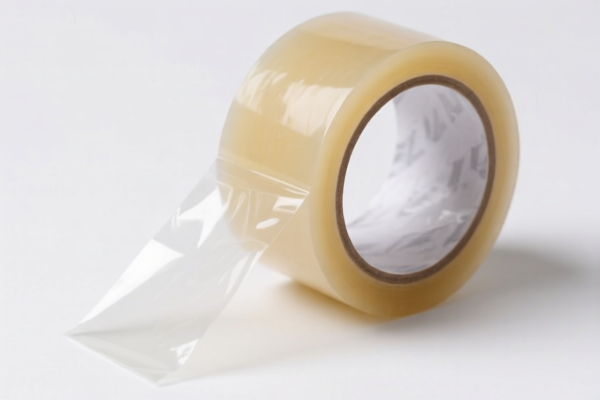
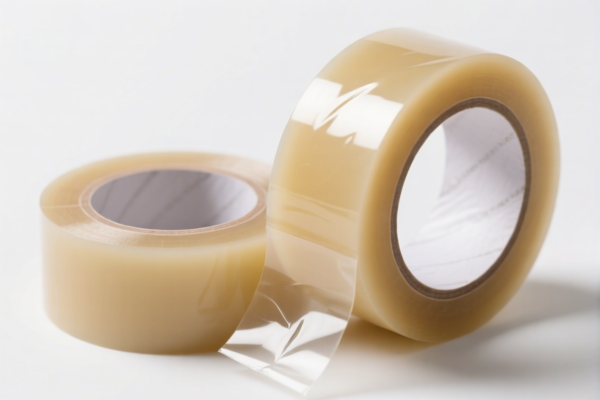
AI Analysis
🏷️ Plastic Self-Adhesive Label Tape: Ultimate HS Code Classification & Duty Breakdown (2026)
🌐 HS Code Reference & Customs Clearance Guide | 2026 Latest Tariff Analysis | Professional Logistics Strategy
📌 I. Product Definition: What Exactly is "Plastic Self-Adhesive Label Tape"?
In international trade, "Plastic Self-Adhesive Label Tape" is not a single, fixed entity. Its classification depends entirely on its material composition and physical form. The most common mistake in customs clearance is misidentifying the substrate (plastic vs. paper) or the binding agent, leading to significant duty discrepancies.
This guide strictly adheres to the provided source, covering the five possible HS Code classifications for this product type under current US trade regulations.
⚠️ Key Distinction Point:
- If the label is made of Plastic (PET, PVC, PP, etc.) → It falls under Chapter 39 (Plastics).
- If the label is made of Paper/Cardboard → It falls under Chapter 48 (Paper/Paperboard).
- If it is a Composite/Other Plastic Article → It may fall under Chapter 39 (Other) or Chapter 48 depending on specific manufacturing processes.
📦 II. HS Code Classification Details (2026 Latest Tariff Reference)
Based on the provided , here are the exact HS Codes, summaries, and tax structures.
| HS Code | Material/Feature Summary | Total Tax Rate | Tax Detail Breakdown |
|---|---|---|---|
3919.90.50.60 |
Plastic Self-Adhesive: Self-adhesive sheets/films/flat shapes. | 40.8% | Base: 5.8% + Section 301: 25.0% + 122 Clause: 10% |
3919.10.20.55 |
Plastic Self-Adhesive: Specific sub-category for self-adhesive plastic products. | 40.8% | Base: 5.8% + Section 301: 25.0% + 122 Clause: 10% |
3926.90.99.89 |
Other Plastic Articles: Labels made of plastic/composite, classified as "Other"制品. | 22.8% | Base: 5.3% + Section 301: 7.5% + 122 Clause: 10% |
4821.90.20.00 |
Paper Self-Adhesive: Inferred as paper/cardboard material, self-adhesive labels. | 35.0% | Base: 0.0% + Section 301: 25.0% + 122 Clause: 10% |
4821.10.20.00 |
Paper Labels: Specific classification for paper-based labels. | 35.0% | Base: 0.0% + Section 301: 25.0% + 122 Clause: 10% |
🔍 Critical Analysis:
- Plastic Labels (3919.xx.xx) are heavily taxed at 40.8%. This is the standard for most high-quality, durable plastic labels (PET/PVC).
- Paper Labels (4821.xx.xx) have a lower base duty (0%) but still face high Section 301 tariffs, totaling 35.0%.
- The "Other Plastic" Category (3926.90.99.89) offers a significant tax advantage at 22.8%, but it requires strict justification that the item is an "Other" plastic article rather than a standard self-adhesive sheet.
💰 III. Detailed Tariff Breakdown (2026 US Import from China)
All calculations below assume Origin: China (CN) and Destination: USA (US).
🎯 1. High-Tax Plastic Categories: 3919.90.50.60 & 3919.10.20.55
| Item | Value/Description |
|---|---|
| Product | Plastic Self-Adhesive Label Tape (Standard) |
| Base Duty | 5.8% |
| Section 301 (Trade War) | +25.0% |
| Section 122 (Additional) | +10.0% |
| Total Effective Duty | 40.8% |
| Calculation Example | On a $10,000 CIF shipment → $4,080 in duties |
| De Minimis Exemption | ❌ NOT Applicable (Deny De Minimis) |
| Legal Basis | Section 301 Tariffs + IEEPA 122 Clause |
📌 Why is it so high?
These HS codes classify the product as self-adhesive plastics. Under US trade policy, most plastic self-adhesive products from China are subject to the full 25% Section 301 tariff plus the additional 10% under recent trade clauses.
🎯 2. Mid-Tax Plastic Category: 3926.90.99.89
| Item | Value/Description |
|---|---|
| Product | Plastic/Composite Label (Other Article) |
| Base Duty | 5.3% |
| Section 301 (Trade War) | +7.5% |
| Section 122 (Additional) | +10.0% |
| Total Effective Duty | 22.8% |
| Calculation Example | On a $10,000 CIF shipment → $2,280 in duties |
| De Minimis Exemption | ❌ NOT Applicable |
| Legal Basis | Section 301 (Lower rate for "Other" plastics) + IEEPA 122 Clause |
📌 Strategic Advantage:
If your label is a composite material or does not fit the strict definition of "self-adhesive sheets" under 3919, it might be classified here. Savings: ~18% compared to standard plastic labels. However, this requires strong technical documentation to prove it is not a standard self-adhesive film.
🎯 3. Paper-Based Categories: 4821.90.20.00 & 4821.10.20.00
| Item | Value/Description |
|---|---|
| Product | Paper Self-Adhesive Labels |
| Base Duty | 0.0% |
| Section 301 (Trade War) | +25.0% |
| Section 122 (Additional) | +10.0% |
| Total Effective Duty | 35.0% |
| Calculation Example | On a $10,000 CIF shipment → $3,500 in duties |
| De Minimis Exemption | ❌ NOT Applicable |
| Legal Basis | Section 301 Tariffs + IEEPA 122 Clause |
📌 Paper vs. Plastic:
While paper labels have a 0% base duty, the Section 301 tariff is still 25%. This makes them cheaper than standard plastic labels (40.8%) but more expensive than the "Other Plastic" category (22.8%). Choose paper if cost is the primary driver, but ensure the material is truly paper-based.
🛠️ IV. Customs Clearance Practical Advice (Pitfall Avoidance)
✅ 1. Documentation Checklist (Mandatory)
| Document | Required? | Reason |
|---|---|---|
| ✅ Product Specifications | YES | Must clearly state Material (e.g., PET, PVC, Paper) and Adhesive Type. |
| ✅ Material Safety Data Sheet (MSDS) | YES | To confirm chemical composition, especially for plastic films. |
| ✅ Sample/Photo | YES | Clear photos showing the backing paper, adhesive side, and label surface. |
| ✅ Commercial Invoice | YES | Must accurately describe the item as "Plastic Self-Adhesive Label" or "Paper Label". |
| ✅ Packing List | YES | Weight and dimensions for duty calculation. |
✅ 2. Classification Strategy
| Scenario | Recommended HS Code | Reason |
|---|---|---|
| Standard PET/PVC Labels | 3919.90.50.60 |
Most accurate for common plastic labels. |
| Paper Labels | 4821.90.20.00 |
Correct for paper-based self-adhesives. |
| Complex Composite Labels | 3926.90.99.89 |
Only if the product is structurally distinct from standard self-adhesive films. |
⚠️ Warning: Do not misclassify Plastic Labels as Paper Labels to avoid the 5.8% base duty. CBP (Customs and Border Protection) is strict on material composition. If caught, you will face back duties + penalties.
✅ 3. Cost Optimization Tips
- Material Choice: If your application allows, Paper Labels (
4821...) save ~5.8% compared to Plastic Labels (3919...) in total duty. - Structural Design: If the label is not a simple "sheet/film" but a complex formed item, investigate eligibility for
3926.90.99.89(22.8%). This requires expert classification advice. - Origin Declaration: Ensure the country of origin is correctly declared. If re-exported from a third country, ensure no substantial transformation occurred to avoid China-origin tariffs.
🌍 V. Global Market Comparison (2026)
| Market | HS Code (Plastic) | HS Code (Paper) | Duty (China Origin) | Notes |
|---|---|---|---|---|
| 🇺🇸 USA | 3919.90.50.60 (40.8%) |
4821.90.20.00 (35.0%) |
High (35-41%) | Section 301 + 122 Clause apply. |
| 🇪🇺 EU | Generally 0-2% | Generally 0-2% | Low | No Section 301 equivalent. |
| 🇨🇳 China (Export) | N/A | N/A | N/A | China exports these goods; duty applies to importer. |
📌 Key Insight: The USA is one of the most expensive markets for Chinese-made labels due to Section 301 and 122 Clauses. Diversifying supply chain to Southeast Asia (Vietnam, Thailand) may offer tariff advantages if substantial transformation occurs.
📌 VI. Common Mistakes & Pitfalls
❌ Mistake 1: Using "Self-Adhesive Tape" generically without specifying material.
👉 Result: Customs may classify based on the highest-risk category or request additional info, causing delays.
❌ Mistake 2: Claiming Paper Labels are Plastic to avoid higher base duties (or vice versa).
👉 Result: CBP inspection will reveal the material mismatch. Seizure and fines are possible.
❌ Mistake 3: Ignoring Section 122 Clause.
👉 Result: Underestimating duty by 10%. The total tax is not just 5.8% + 25%, but +10% more.
✅ Correct Approach:
"Plastic Self-Adhesive Labels, PET Material, 50mm x 100mm, Clear, with Acrylic Adhesive."
Be specific, accurate, and consistent with your physical product.
🎯 VII. Conclusion: Professional Classification Saves Money
🎯 Key Takeaway:
- Plastic Labels: Expect 40.8% duty (
3919...) unless you can justify the 22.8% rate (3926...).- Paper Labels: Standard rate is 35.0% (
4821...).- No De Minimis Exemption: All shipments, regardless of value, are subject to these duties.
📌 Action Item:
📞 Consult a Licensed Customs Broker before shipping.
📄 Provide Material Test Reports to support your HS Code claim.
📉 Calculate Total Landed Cost including the 40.8% (or 22.8%/35%) duty to ensure profitability.
✨ Professional clearance starts with accurate classification!
💼 Every percentage point of duty saved is pure profit!
Customer Reviews
About HS Code Classification
The Harmonized System (HS) is an internationally standardized nomenclature developed by the World Customs Organization (WCO) to classify traded products. Over 200 countries use the HS system as the basis for customs tariffs, trade statistics, and import/export regulations.
Each HS code follows a hierarchical structure:
- Chapter (2 digits) — Broad category of goods (e.g., Chapter 84: Machinery and Mechanical Appliances)
- Heading (4 digits) — More specific grouping within the chapter
- Subheading (6 digits) — Internationally standardized breakdown, used by all WCO member countries
- National subdivisions (8-10 digits) — Country-specific extensions for further classification, such as US HTSUS 10-digit codes
Correct HS code classification is essential for smooth customs clearance, accurate duty payment, and compliance with trade regulations. Misclassification can lead to customs delays, overpayment of duties, or penalties.
When importing from CN to US, the applicable tariff rates may include:
- Most-Favored-Nation (MFN) rate — The standard duty rate applied to WTO members
- General rate — Applied to countries without trade agreements
- Trade remedy duties — Additional tariffs such as Section 301 (anti-dumping), Section 232 (national security), or countervailing duties
The information provided on this page is for reference purposes only. For official classification, please consult with your local customs authority or a licensed customs broker.