Plastic Self Adhesive Strip
CN → US| HS Code | Tariff Rate | Origin | Destination | Doc |
|---|---|---|---|---|
| 3919102055 | 40.8% | CN | US | Official Doc |
| 3919905060 | 40.8% | CN | US | Official Doc |
| 3920992000 | 39.2% | CN | US | Official Doc |
| 3920200015 | 39.2% | CN | US | Official Doc |
| 3926909989 | 22.8% | CN | US | Official Doc |
Product Images
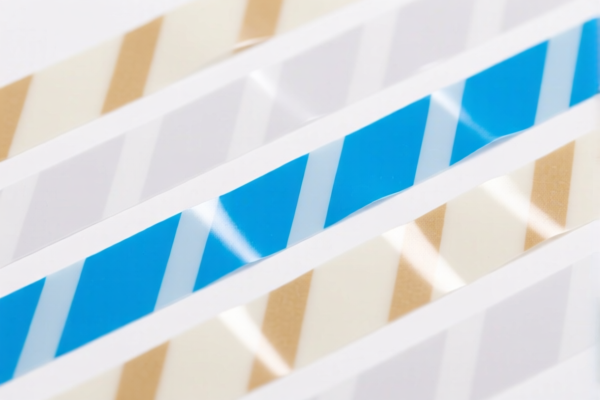
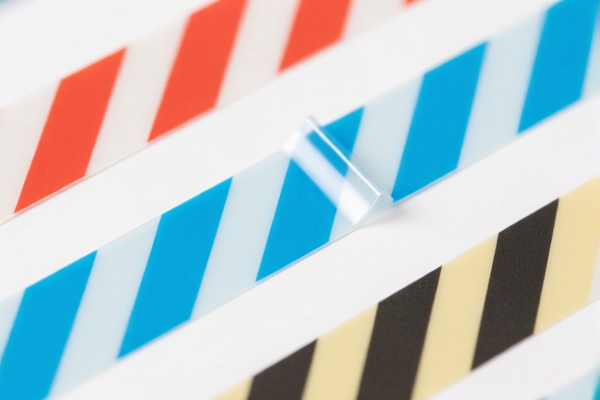
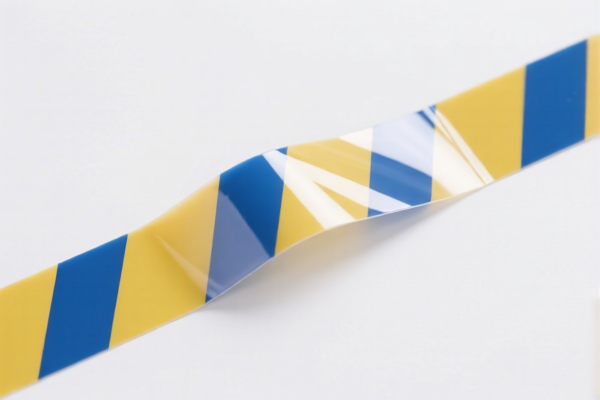
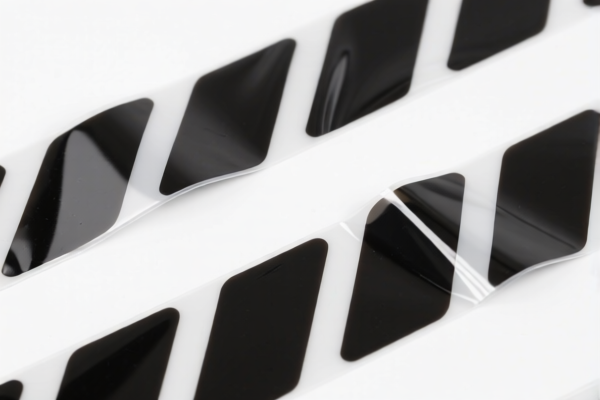
AI Analysis
🧩 Plastic Self-Adhesive Strip (塑料自粘条)
🌐 HS Code Reference & Customs Clearance Guide | 2026 Latest Tariff Analysis | Professional Clearance Strategy
📌 I. Product Definition & Classification: Do You Really Understand "Plastic Self-Adhesive Strips"?
Plastic self-adhesive strips are versatile sealing, mounting, and protective materials used in construction, automotive, packaging, and household applications. In international trade, they are classified based on their material composition, physical form (sheet/roll/strip), and presence of adhesive backing.
Key Classification Criteria: * Adhesive Form: If the strip is already backed with an adhesive suitable for immediate sticking without additional glue → Classified under Chapter 39 (Self-adhesive plates, sheets, film, foil, tape, strip and other flat shapes). * Material Type: PVC, PE, PP, Acrylic, etc., determine the specific sub-heading. * Form Factor: "Strip" or "tape" implies a flat shape, typically on rolls.
⚠️ Critical Distinction:
- If the product is a plastic sheet/strip with permanent adhesive backing → Chapter 39 (3919 or 3920)
- If the product is a generic plastic part not meeting the "self-adhesive sheet" definition or is a complex assembled item → Potential fallback to 3926.90 (Other塑料制品)
📦 II. HS Code Classification Details (2026 Latest Tariff Authority Comparison)
| HS Code | Product Description | Applicability Scenario | Key Reasoning |
|---|---|---|---|
3919.10.20.55 |
Self-adhesive plates, sheets, film, foil, tape, strip and other flat shapes, of plastics, in rolls of a width exceeding 20 cm, other | High-width plastic self-adhesive strips (≥20cm) | Matches "plastic material" and "self-adhesive strip form" perfectly |
3919.90.50.60 |
Other self-adhesive plates, sheets, film, foil, tape, strip and other flat shapes, of plastics | Other self-adhesive plastic strips (width ≤20cm or other forms) | Plastic strip form and material comply with classification requirements |
3920.99.20.00 |
Other plates, sheets, film, foil and strip, of plastics, non-self-adhesive | Non-adhesive plastic flexible strips OR misclassified adhesive items | Plastic material matches; self-adhesive strip is considered a "flexible band" (Note: If truly self-adhesive, 3919 is preferred; 3920 applies if adhesive layer is not the primary feature or for specific non-adhesive variants) |
3920.20.00.15 |
Plates, sheets, film, foil and strip, of polymers of ethylene | Ethylene-based (PE) plastic strips | Acrylic/ethylene polymer type matches plate/film/strip characteristics |
3926.90.99.89 |
Other articles of plastics and articles of other materials of headings 3901 to 3914 | Fallback classification for other plastic制品 | Plastic material; self-adhesive strip falls under "other plastic articles" catch-all |
🔍 Key Reminder:
- 3919 is the primary choice for products explicitly defined as "self-adhesive" (自带背胶). - 3920 applies to plastic strips that are not self-adhesive or where the adhesive is not the defining characteristic for classification purposes in certain contexts. - 3926.90.99.89 is a low-rate fallback but risky if the product clearly meets 3919/3920 criteria; misclassification can lead to penalties.
💰 III. 2026 Latest Tariff Rate Details (Including Surtaxes & Policy Additions)
✅ Applicable Country: USA (US)
✅ Country of Origin: China (CN)
✅ Effective Date: From November 10, 2025 (and subsequent imports)
🎯 1. 3919.10.20.55 —— Self-adhesive Plastic Strips (Width >20cm)
| Item | Content |
|---|---|
| Base Tariff | 5.8% (ad valorem) |
| Section 301 Surtax (USITC) | +25.0% |
| Section 122 Tariff (IEEPA) | +10.0% |
| Total Tariff | 40.8% |
| Tax Calculation | CIF Value × 40.8% |
| De Minimis Eligibility | ❌ No (deny_de_minimis) |
| Legal Basis Path | IEEPA:9903.01.25 → USITC:3919.10.20.55 → FOOTNOTE:3919.10 |
📌 Explanation:
- "Base Tariff 5.8%" is the standard MFN rate for self-adhesive plastic sheets/strips; - "Section 301 Surcharge 25%" applies to most Chinese-origin plastics under USITC lists; - "Section 122 Tariff 10%" is the additional levy on Chinese goods under IEEPA; - Total 40.8% is a high-cost item for importers.
🎯 2. 3919.90.50.60 —— Other Self-Adhesive Plastic Strips
| Item | Content |
|---|---|
| Base Tariff | 5.8% |
| Section 301 Surtax | +25.0% |
| Section 122 Tariff | +10.0% |
| Total Tariff | 40.8% |
| Tax Calculation | CIF Value × 40.8% |
| De Minimis Eligibility | ❌ No |
| Legal Basis Path | IEEPA:9903.01.25 → USITC:3919.90.50.60 → FOOTNOTE:3919.90 |
📌 Note:
- Same tariff structure as3919.10; applies to strips <20cm or other self-adhesive plastic flat shapes; - Even if the strip is narrow, if it is self-adhesive, it falls here.
🎯 3. 3920.99.20.00 —— Other Plastic Plates, Sheets, Film, Foil, and Strip
| Item | Content |
|---|---|
| Base Tariff | 4.2% |
| Section 301 Surtax | +25.0% |
| Section 122 Tariff | +10.0% |
| Total Tariff | 39.2% |
| Tax Calculation | CIF Value × 39.2% |
| De Minimis Eligibility | ❌ No |
| Legal Basis Path | IEEPA:9903.01.25 → USITC:3920.99.20.00 → FOOTNOTE:3920.99 |
📌 Explanation:
- If the product is classified here, it implies it is not primarily self-adhesive or fits the "flexible band" description for non-adhesive plastics; - Savings: 1.6% lower than 3919, but risky if customs verifies adhesive backing.
🎯 4. 3920.20.00.15 —— Plastic Strip of Ethylene Polymers (PE)
| Item | Content |
|---|---|
| Base Tariff | 4.2% |
| Section 301 Surtax | +25.0% |
| Section 122 Tariff | +10.0% |
| Total Tariff | 39.2% |
| Tax Calculation | CIF Value × 39.2% |
| De Minimis Eligibility | ❌ No |
| Legal Basis Path | IEEPA:9903.01.25 → USITC:3920.20.00.15 → FOOTNOTE:3920.20 |
📌 Note:
- Applies specifically to Polyethylene (PE) strips; - If your strip is PVC, PP, or Acrylic, this code does not apply; - Material must match "ethylene polymers".
🎯 5. 3926.90.99.89 —— Other Articles of Plastics (Fallback)
| Item | Content |
|---|---|
| Base Tariff | 5.3% |
| Section 301 Surtax | +7.5% (Note: Some 3926 items have lower 301 rates depending on specific list) |
| Section 122 Tariff | +10.0% |
| Total Tariff | 22.8% |
| Tax Calculation | CIF Value × 22.8% |
| De Minimis Eligibility | ❌ No |
| Legal Basis Path | IEEPA:9903.01.25 → USITC:3926.90.99.89 → FOOTNOTE:3926.90 |
📌 Critical Warning:
- This is the lowest tariff (22.8%), but it is a high-risk misclassification if the item is clearly a self-adhesive plastic strip (which belongs to 3919/3920). - Customs may reclassify and impose back taxes + penalties if evidence shows it is a self-adhesive strip. - Use only if the product is not a flat self-adhesive shape or is a complex assembled plastic part.
🛠️ IV. Customs Clearance Practical Advice (Actionable Pitfall Avoidance)
✅ 1. Documentation Checklist (Must-Have)
| Document | Mandatory? | Description |
|---|---|---|
| ✅ Product Spec Sheet | ✔️ | Include material (PVC/PE/PP), adhesive type (pressure-sensitive), width, thickness |
| ✅ Product Photos | ✔️ | Show roll, cut edge, adhesive side, and final application |
| ✅ Commercial Invoice | ✔️ | Clearly state "Plastic Self-Adhesive Strip" or "Self-Adhesive Plastic Tape" |
| ✅ HS Code Ruling (Optional) | ✔️ | Previous CBP ruling if available |
| ✅ Material Safety Data Sheet (MSDS) | ✔️ | If adhesive contains chemicals |
✅ 2. Declaration Tips (Key Mnemonic)
🔥 "Adhesive Defines HS, Width Matters, Material Confirms!"
| Scenario | Correct HS Code | Error Consequence |
|---|---|---|
| Self-adhesive, Width >20cm | 3919.10.20.55 |
Misclassifying as 3920 → Potential 1.6% overpayment or reclassification |
| Self-adhesive, Width ≤20cm | 3919.90.50.60 |
Misclassifying as 3926 → Risk of penalty for misdeclaration |
| Non-adhesive Plastic Strip | 3920.99.20.00 |
Claiming adhesive when none exists → Fraud |
| PE Strip (Non-adhesive) | 3920.20.00.15 |
Wrong material claim → Rejection |
| Complex Plastic Part (Not Strip) | 3926.90.99.89 |
Using for simple strip → High risk of audit & back taxes |
✅ 3. Special Cases
| Case | Handling Advice |
|---|---|
| OEM Custom Strips | Provide design drawings showing adhesive layer; specify width accurately |
| Multiple Materials | If strip has composite layers (e.g., paper + plastic + adhesive), declare as composite and use highest duty component or 3919 if plastic dominates |
| Sample Imports | Even samples are subject to full tariffs if value exceeds de minimis ($800); declare correctly |
| Re-exported Goods | If imported for re-export under foreign trade zones, apply for duty drawback programs |
🌍 V. Global Market Clearance Comparison (2026 Latest)
| Country/Region | Recommended HS Code | Tariff (CN Origin) | Certification Requirements | Notes |
|---|---|---|---|---|
| 🇺🇸 USA | 3919.10.20.55 / 3919.90.50.60 |
40.8% | None specific | High tariff due to Section 301 + 122 |
| 🇨🇳 China | 3919.10.20.55 |
5.8% | None | Low base tariff |
| 🇪🇺 EU | 3919.10.00 |
0% | REACH + RoHS | No major surcharges |
| 🇬🇧 UK | 3919.10.00 |
0% | UKCA | Post-Brexit rules apply |
| 🇦🇺 Australia | 3919.10.00 |
5% | AER | No major surcharges |
📌 Conclusion:
- USA has the highest total tariff (40.8%) for self-adhesive plastic strips from China; - EU and UK offer 0% duty, making them more attractive markets for pricing strategy; - Consider supply chain diversification (e.g., Vietnam, Thailand) if targeting the US to mitigate 301/122 tariffs.
📌 VI. Common Mistakes & Pitfall Guide (Blood-Learning Lessons)
❌ Mistake 1: Declaring self-adhesive strips as 3926.90.99.89 to save 18% in tariffs
👉 Consequence: Customs audit → Back taxes + 20% penalty → High risk!
❌ Mistake 2: Ignoring width specification
👉 Consequence: If width >20cm but declared as <20cm, reclassification to 3919.10 → Audit trigger
❌ Mistake 3: Using "Plastic Tape" generically without specifying adhesive
👉 Consequence: Ambiguity → Delayed clearance → Storage fees + Demurrage
❌ Mistake 4: Assuming "De Minimis" applies to all plastic strips
👉 Consequence: Self-adhesive plastic strips are NOT eligible for $800 de minimis exemption under current rules → Full duty applies
✅ Correct Approach:
"Self-Adhesive Plastic Strip, PVC Material, Pressure-Sensitive Adhesive, Roll Width: 25cm, Thickness: 1mm, No Adhesives Required for Application"
🎯 VII. Conclusion: Professional Declaration, Save Time & Money!
🎯 Remember the Mnemonic:
🔹 "Adhesive = 3919, Width Defines Sub-code, Material Confirms, 40.8% is the Cost!"
🔹 "HS Code Determines Life, 1.6% Difference Matters, Misdeclaration Costs Thousands!"
📌 Pro Tip:
If your plastic strips are originating from Vietnam, Mexico, or Thailand, you may qualify for IEEPA Exemption or lower Section 301 rates.
Recommend Advance Ruling (Pre-classification) with CBP to confirm HS Code and avoid post-clearance audits.
📣 Immediate Action:
📞 Contact a licensed customs broker + Provide product specs + Apply for HS Code Advance Ruling
🚀 Let your plastic strips clear smoothly, reduce costs, and boost profits!
✨ Professional Customs Clearance Starts with Accurate Classification!
💼 Every Cent of Your Cost Deserves Precise Calculation!
Customer Reviews
About HS Code Classification
The Harmonized System (HS) is an internationally standardized nomenclature developed by the World Customs Organization (WCO) to classify traded products. Over 200 countries use the HS system as the basis for customs tariffs, trade statistics, and import/export regulations.
Each HS code follows a hierarchical structure:
- Chapter (2 digits) — Broad category of goods (e.g., Chapter 84: Machinery and Mechanical Appliances)
- Heading (4 digits) — More specific grouping within the chapter
- Subheading (6 digits) — Internationally standardized breakdown, used by all WCO member countries
- National subdivisions (8-10 digits) — Country-specific extensions for further classification, such as US HTSUS 10-digit codes
Correct HS code classification is essential for smooth customs clearance, accurate duty payment, and compliance with trade regulations. Misclassification can lead to customs delays, overpayment of duties, or penalties.
When importing from CN to US, the applicable tariff rates may include:
- Most-Favored-Nation (MFN) rate — The standard duty rate applied to WTO members
- General rate — Applied to countries without trade agreements
- Trade remedy duties — Additional tariffs such as Section 301 (anti-dumping), Section 232 (national security), or countervailing duties
The information provided on this page is for reference purposes only. For official classification, please consult with your local customs authority or a licensed customs broker.