Plastic Self Adhesive Tape for Automotive Batteries
CN → US| HS Code | Tariff Rate | Origin | Destination | Doc |
|---|---|---|---|---|
| 3926305000 | 22.8% | CN | US | Official Doc |
| 3926909989 | 22.8% | CN | US | Official Doc |
| 3919102055 | 40.8% | CN | US | Official Doc |
| 5604909000 | 40.0% | CN | US | Official Doc |
| 3919905060 | 40.8% | CN | US | Official Doc |
Product Images
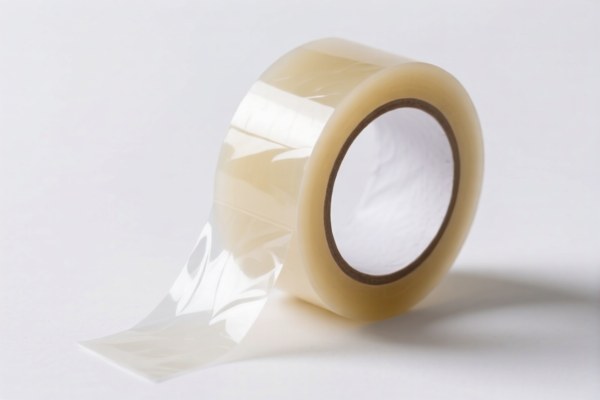
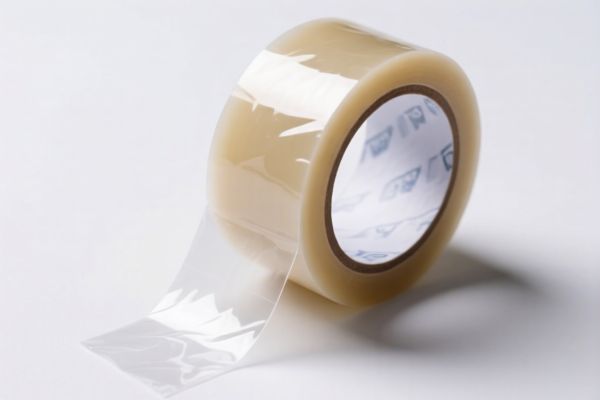


AI Analysis
🔋 Plastic Self-Adhesive Tape for Automotive Batteries
🌐 HS Code Reference & Customs Clearance Guide | 2026 Latest Tariff Analysis | Professional通关 Strategy
📌 Part 1: Product Definition & Classification: Do You Really Understand "Plastic Self-Adhesive Tape"?
Plastic Self-Adhesive Tape for Automotive Batteries is a specialized industrial material used in the automotive sector. It typically serves as: * Insulation & Protection: Protecting battery terminals, connectors, and surrounding components from vibration, moisture, and corrosion. * Fastening/Adhesive: Securing wiring harnesses or battery covers (often referred to as "connectors/adhesives" in the context of assembly). * Material: Explicitly Plastic (e.g., PVC, PE, PP, or rubber-modified plastic). * Form: Self-adhesive tape (flat, flexible, roll form).
⚠️ Key Classification Distinction:
- If classified as a general plastic fastener/adhesive component → 3926.30.50.00 (Lowest Duty).
- If classified as a plastic adhesive tape (3919 series) → 3919.10.20.55 or 3919.90.50.60 (High Duty due to Section 301).
- If classified as a plastic-coated textile/rubber tape → 5604.90.90.00 (High Duty).
- If classified as a general plastic article → 3926.90.99.89 (Moderate Duty).
📦 Part 2: HS Code Classification Details (2026 Latest Tariff Authority)
Based on the provided data, here are the 5 matched HS Codes with their specific reasoning and tax implications for US Imports from China.
| HS Code | Product Description | Matching Logic (Source Data) | Total Tax Rate |
|---|---|---|---|
| 3926.30.50.00 | Other articles of plastics, fittings (connectors/adhesives) | ✅ Best Match. Material: Plastic. Use: Automotive exterior/connection/fastening. Form: Plastic article. | 22.8% |
| 3926.90.99.89 | Other plastic articles (Misc.) | ✅ Match. Material: Plastic. Form: Tape (as a plastic product). No material conflict. | 22.8% |
| 3919.10.20.55 | Self-adhesive tapes of plastics, rolled in sheets/rolls | ✅ Match. Material: Plastic. Form: Self-adhesive tape. Explicitly matches "flat shape" and "material". | 40.8% |
| 5604.90.90.00 | Other threads, cords, ropes, and the like, impregnated/coated with plastic | ✅ Match. Material: Plastic-coated/impregnated. Form: Tape (strip/belt). | 40.0% |
| 3919.90.50.60 | Other self-adhesive tapes of plastics | ✅ Match. Material: Plastic. Form: Self-adhesive tape. Use: Automotive exterior. No conflict. | 40.8% |
🔍 Critical Analysis:
- 3926.30.50.00 and 3926.90.99.89 are significantly cheaper (22.8%) compared to the 3919 and 5604 categories (40-40.8%).
- The key differentiator is whether the tape is classified as a "tape" (3919/5604) or as a "plastic article/fittings" (3926).
- If the tape is used primarily for adhesive/fastening purposes in assembly, 3926 is a strong candidate for lower duty.
- If it is clearly marketed as a "tape" product, customs may insist on 3919, triggering higher tariffs.
💰 Part 3: 2026 Latest Tariff Rate Breakdown (Including Surcharges & Policy Add-ons)
✅ Applicable Country: United States (US)
✅ Origin: China (CN)
✅ Effective Date: 2025/2026 (Includes subsequent imports)
🎯 1. 3926.30.50.00 & 3926.90.99.89 — Plastic Articles / Fittings (Low Duty Group)
| Item | Content |
|---|---|
| Base Duty Rate | 5.3% (Ad Valorem) |
| Section 301 Surcharge | +7.5% (Additional Tariff under USITC Footnote) |
| IEEPA Surcharge (122 Clause) | +10% (Specific tariff clause for China-origin goods) |
| Total Duty Rate | 22.8% |
| Tax Calculation | CIF Value × 22.8% |
| De Minimis Eligibility | ❌ Not Eligible (Due to Section 301 & IEEPA surcharges) |
| Legal Path | Base: 5.3% → 301: 7.5% → IEEPA: 10% |
📌 Explanation:
- This is the most cost-effective classification if the tape can be argued as a "plastic fitting/adhesive component" rather than a "tape."
- The 7.5% Section 301 surcharge is standard for many plastic articles.
- The 10% IEEPA surcharge is additional for China-origin goods.
🎯 2. 3919.10.20.55 & 3919.90.50.60 — Self-Adhesive Tapes of Plastics (High Duty Group)
| Item | Content |
|---|---|
| Base Duty Rate | 5.8% (Ad Valorem) |
| Section 301 Surcharge | +25.0% (Significant Surcharge for Plastic Tapes) |
| IEEPA Surcharge (122 Clause) | +10% (Specific tariff clause for China-origin goods) |
| Total Duty Rate | 40.8% |
| Tax Calculation | CIF Value × 40.8% |
| De Minimis Eligibility | ❌ Not Eligible |
| Legal Path | Base: 5.8% → 301: 25.0% → IEEPA: 10% |
📌 Warning:
- If Customs classifies your product as "Self-Adhesive Tape" (3919), the Section 301 surcharge jumps from 7.5% to 25%.
- This is a 18% tax difference compared to the 3926 classification!
- Reason: Plastic tapes are subject to stricter trade remedy duties under Section 301.
🎯 3. 5604.90.90.00 — Plastic-Coated Other Textiles/Ropes (High Duty Group)
| Item | Content |
|---|---|
| Base Duty Rate | 5.0% (Ad Valorem) |
| Section 301 Surcharge | +25.0% |
| IEEPA Surcharge (122 Clause) | +10% |
| Total Duty Rate | 40.0% |
| Tax Calculation | CIF Value × 40.0% |
| De Minimis Eligibility | ❌ Not Eligible |
| Legal Path | Base: 5.0% → 301: 25.0% → IEEPA: 10% |
📌 Note:
- This classification applies if the tape is considered a plastic-coated substrate (e.g., fabric or rubber core with plastic coating).
- Still very high duty (40%), similar to the 3919 category.
🛠️ Part 4: Customs Clearance Practical Advice (Real-World Pitfall Avoidance)
✅ 1. Preparation Checklist (All Required)
| Document | Required? | Notes |
|---|---|---|
| Product Specification Sheet | ✅ Yes | Must specify: Material (Plastic type), Adhesive Type, Width, Length, Application (Automotive Battery). |
| Product Photos | ✅ Yes | Clear images showing: Roll form, adhesive side, packaging, and label. |
| Commercial Invoice | ✅ Yes | Must clearly state: "Plastic Self-Adhesive Tape for Automotive Battery" and HS Code. |
| Packing List | ✅ Yes | Include gross weight, net weight, dimensions. |
| Material Safety Data Sheet (MSDS) | ✅ Yes | If adhesive contains chemicals, MSDS may be required for transport compliance. |
| Origin Certificate | ✅ Yes | To prove China origin (triggers surcharges) or other origin for potential exemptions. |
✅ 2. Declaration Strategy (Key Keywords)
🔥 "Describe the Function, Not Just the Form!"
| Scenario | Recommended Declaration | Risk |
|---|---|---|
| Goal: Low Duty (22.8%) | "Plastic Adhesive Fittings for Automotive Battery Assembly" | Use terms like "Fittings," "Fasteners," "Connectors" to steer towards 3926. |
| Goal: High Duty (40.8%) | "Plastic Self-Adhesive Tape" | If you use "Tape," customs will likely use 3919 or 5604. |
| Correct Use Case | "Plastic Self-Adhesive Tape" | If the product is purely a tape, you must declare as such, but consider if it can be classified as a "plastic article" under 3926 if used as a fastener. |
⚠️ Critical Tip:
- If the tape is used as a fastener or adhesive component in the automotive assembly line, argue for 3926.30.50.00 (Plastic Articles/Fittings).
- If it is sold as a general-purpose tape, customs will default to 3919 (Tape).
✅ 3. Special Cases & Handling
| Case | Handling Advice |
|---|---|
| OEM Custom Tape | Provide customer order + design specs. If it’s a specific "battery protector," argue for 3926. |
| Multi-Layer Tape | If it has a fabric or rubber core, customs may classify it as 5604 (40%). Ensure material composition is clear. |
| Small Sample Shipments | No De Minimis Exemption! Even small shipments from China are subject to the full 22.8%-40.8% duty. |
| Pre-Ruling Application | Highly Recommended! Apply for an Advance Ruling from CBP to confirm if 3926 is acceptable for your specific product. |
🌍 Part 5: Global Market Comparison (2026 Latest)
| Country/Region | Recommended HS Code | Tariff Rate | Certification | Notes |
|---|---|---|---|---|
| 🇺🇸 USA | 3926.30.50.00 (Best) |
22.8% | None (General) | 40.8% if classified as Tape (3919). |
| 🇺🇸 USA | 3919.10.20.55 (Tape) |
40.8% | None | High risk of audit if misclassified. |
| 🇨🇳 China | 3919.10.00.00 |
5.0% | None | No Section 301 or IEEPA surcharges. |
| 🇪🇺 EU | 3919.10.00.00 |
0% - 6.5% | REACH, RoHS | No Section 301. Lower risk. |
| 🇯🇵 Japan | 3919.10.00.00 |
3.0% - 5.0% | JIS | No Section 301. |
📌 Conclusion:
- USA is the most challenging market due to Section 301 and IEEPA surcharges.
- Classification is critical: A 18% tax difference exists between 3926 (22.8%) and 3919 (40.8%).
- China, EU, and Japan have much lower or no surcharges, making it easier to pass.
📌 Part 6: Common Mistakes & Pitfalls (Lessons Learned)
❌ Mistake 1: Declaring as "Plastic Tape" when it’s actually a "Plastic Fastener"
👉 Result: Duty jumps from 22.8% to 40.8%.
👉 Fix: Use "Fittings" or "Adhesive Components" in declaration if functional.
❌ Mistake 2: Assuming De Minimis ($800) applies to China-origin goods
👉 Result: 100% Duty Charged on small shipments.
👉 Fix: Prepare for full duty payment regardless of value.
❌ Mistake 3: Using vague descriptions like "Plastic Adhesive"
👉 Result: Customs may assign a random HS Code with higher duty.
👉 Fix: Be specific: "Plastic Self-Adhesive Tape for Automotive Battery Insulation."
❌ Mistake 4: Ignoring the 122 Clause (IEEPA)
👉 Result: Underpayment of 10% additional duty.
👉 Fix: Always include 122 Clause surcharge in cost calculations for China-origin goods.
✅ Correct Approach:
"Plastic Self-Adhesive Tape for Automotive Battery Insulation, Roll Form, PVC Material, Model XYZ, Made in China"
→ Recommended HS Code:3926.30.50.00(Argue as Fittings/Components) or3919.10.20.55(If Tape is mandatory).
🎯 Part 7: Conclusion: Professional Declaration, Save Money, Ensure Compliance!
🎯 Key Takeaway:
🔹 "Function over Form" – If it acts as a fastener/fitting, argue for 3926 (22.8%).
🔹 "China Origin = Extra Tax" – Always budget for Section 301 + IEEPA.
🔹 "Pre-Ruling is Key" – Apply for an Advance Ruling to lock in the lower duty rate.
🔹 "No De Minimis" – Small shipments are not exempt.
📌 Pro Tip:
If your product is originally from Vietnam, Mexico, or Malaysia, you may avoid Section 301 and IEEPA surcharges.
However, for China-origin goods, the 22.8% vs. 40.8% decision is critical.
📣 Immediate Action:
📞 Contact a Customs Broker + Provide Product Photos + Apply for Advance Ruling.
🚀 Ensure smooth clearance, lower costs, and higher profits!
✨ Professional Clearance Starts with Accurate Classification!
💼 Every Percentage Point of Duty Counts!
Customer Reviews
About HS Code Classification
The Harmonized System (HS) is an internationally standardized nomenclature developed by the World Customs Organization (WCO) to classify traded products. Over 200 countries use the HS system as the basis for customs tariffs, trade statistics, and import/export regulations.
Each HS code follows a hierarchical structure:
- Chapter (2 digits) — Broad category of goods (e.g., Chapter 84: Machinery and Mechanical Appliances)
- Heading (4 digits) — More specific grouping within the chapter
- Subheading (6 digits) — Internationally standardized breakdown, used by all WCO member countries
- National subdivisions (8-10 digits) — Country-specific extensions for further classification, such as US HTSUS 10-digit codes
Correct HS code classification is essential for smooth customs clearance, accurate duty payment, and compliance with trade regulations. Misclassification can lead to customs delays, overpayment of duties, or penalties.
When importing from CN to US, the applicable tariff rates may include:
- Most-Favored-Nation (MFN) rate — The standard duty rate applied to WTO members
- General rate — Applied to countries without trade agreements
- Trade remedy duties — Additional tariffs such as Section 301 (anti-dumping), Section 232 (national security), or countervailing duties
The information provided on this page is for reference purposes only. For official classification, please consult with your local customs authority or a licensed customs broker.