Plastic Self Adhesive Tape for Automotive Exterior
CN → US| HS Code | Tariff Rate | Origin | Destination | Doc |
|---|---|---|---|---|
| 3926305000 | 22.8% | CN | US | Official Doc |
| 3926909989 | 22.8% | CN | US | Official Doc |
| 3919102055 | 40.8% | CN | US | Official Doc |
| 5604909000 | 40.0% | CN | US | Official Doc |
| 3919905060 | 40.8% | CN | US | Official Doc |
Product Images
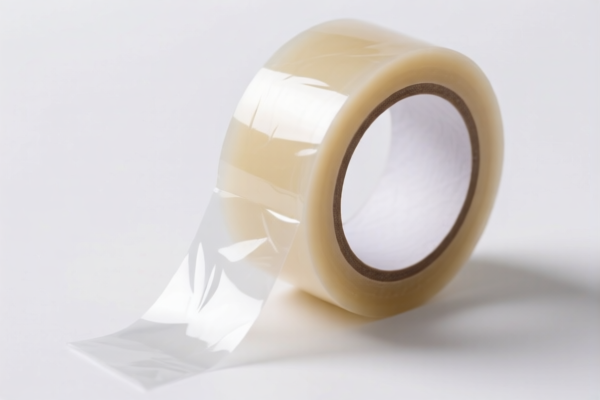
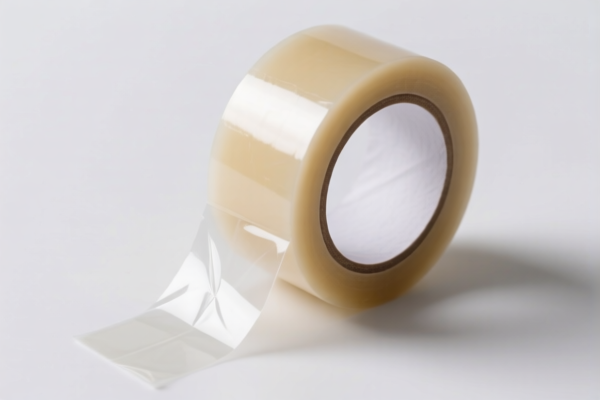
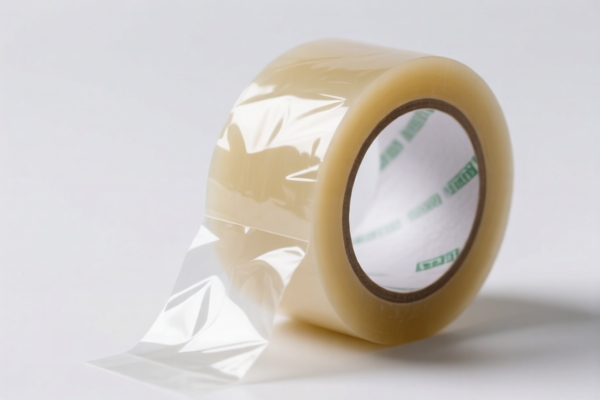

AI Analysis
🚗 Plastic Self-Adhesive Tape for Automotive Exterior (汽车外饰用塑料自粘胶带)
🌐 HS Code Reference & Customs Clearance Guide | 2026 Tariff Analysis for US Imports from China
📌 I. Product Definition & Classification: What Exactly Is This Tape?
"Plastic Self-Adhesive Tape for Automotive Exterior" is a versatile adhesive product used primarily for bonding, sealing, or aesthetic finishing on the exterior of vehicles. In international trade, its classification depends heavily on its physical form, material composition, and specific application. It is generally categorized under Chapter 39 (Plastics and Articles Thereof) or potentially Chapter 56 (Wadding, Felt and Nonwovens; Special Yarns...) if treated as a coated strip.
⚠️ Key Distinction Points:
- Is it a general plastic article for connection/adhesion? → Likely 3926.30.50.00 or 3926.90.99.89.
- Is it specifically a self-adhesive tape in a flat shape? → Likely 3919.10.20.55 or 3919.90.50.60.
- Is it a strip/band impregnated/coated with plastic? → Likely 5604.90.90.00.
📦 II. HS Code Classification Details (2026 Latest Tariff Authority Comparison)
| HS Code | Product Description | Applicable Scenario | Key Classification Logic |
|--------|----------|--------------------------|
| 3926.30.50.00 | Other plastic articles: Connectors/Adhesives | General plastic parts used for connecting/adhering in automotive exterior | ✅ Function-based: Classified as "Other Plastic Articles" for connection/adhesion. |
| 3926.90.99.89 | Other plastic articles: Tapes | Plastic items in the form of tape, not elsewhere specified | ✅ Form-based: Classified as "Other Plastic Articles" specifically because it is a tape. |
| 3919.10.20.55 | Self-adhesive tapes in rolls, of plastics | Self-adhesive tapes, flat shape, conforming to specific sub-heading requirements | ✅ Specific Form: Classified as "Self-adhesive tapes" due to self-adhesive nature and flat roll form. |
| 5604.90.90.00 | Strips and similar shapes, coated/impregnated | Strips/bands coated or covered with plastic | ✅ Material Process: Classified as a "Strip/Band" due to plastic impregnation/coating process. |
| 3919.90.50.60 | Other self-adhesive tapes of plastics | Self-adhesive tapes for automotive exterior use | ✅ General Self-Adhesive: Classified as "Other Self-Adhesive Tapes" when not fitting 3919.10 criteria. |
🔍 Critical Reminder:
- 3926 vs. 3919: If the tape is defined primarily as a plastic article for a specific function (connection), use 3926. If defined as a self-adhesive tape product, use 3919. - High Tariff Codes: Codes starting with 3919 and 5604 attract significantly higher tariffs (40%+) due to "Section 301" and "122 Clause" additional duties compared to 3926 codes (22.8%).
💰 III. 2026 Latest Tariff Rate Details (Including Additional Duties & Policy Surcharges)
✅ Applicable Country: United States (US)
✅ Origin: China (CN)
✅ Effective Time: Current rates apply (incl. Section 301 & 122 Clause surcharges)
🎯 1. 3926.30.50.00 & 3926.90.99.89 —— Plastic Articles (Lower Surcharge Tier)
| Item | Content |
|---|---|
| Basic Tariff | 5.3% (Ad Valorem) |
| Additional Duty (Sec. 301) | +7.5% |
| 122 Clause Duty | +10% |
| Total Tax Rate | 22.8% |
| Tax Calculation | CIF Value × 22.8% |
| De Minimis Exemption | ❌ Not Applicable (Subject to scrutiny) |
| Legal Basis Path | HTSUS:3926.30.50.00 / 3926.90.99.89 → Section 301: 7.5% → 122 Clause: 10% |
📌 Explanation:
- These codes classify the product as a plastic article rather than a specific tape type, attracting lower additional duties. - Total rate is 22.8%, which is significantly lower than the 40%+ rate for other tape classifications. - Strategy: If possible, argue for classification under 3926 to reduce duty burden.
🎯 2. 3919.10.20.55 & 3919.90.50.60 —— Self-Adhesive Tapes (Higher Surcharge Tier)
| Item | Content |
|---|---|
| Basic Tariff | 5.8% (Ad Valorem) |
| Additional Duty (Sec. 301) | +25.0% |
| 122 Clause Duty | +10% |
| Total Tax Rate | 40.8% |
| Tax Calculation | CIF Value × 40.8% |
| De Minimis Exemption | ❌ Not Applicable |
| Legal Basis Path | HTSUS:3919.10.20.55 / 3919.90.50.60 → Section 301: 25% → 122 Clause: 10% |
📌 Explanation:
- Classification as self-adhesive tape triggers the higher 25% Section 301 duty. - Total rate is 40.8%, making this a high-cost category. - Risk: Misclassification here can lead to significant duty overpayment or underpayment penalties.
🎯 3. 5604.90.90.00 —— Coated Strips/Bands (High Surcharge Tier)
| Item | Content |
|---|---|
| Basic Tariff | 5.0% (Ad Valorem) |
| Additional Duty (Sec. 301) | +25.0% |
| 122 Clause Duty | +10% |
| Total Tax Rate | 40.0% |
| Tax Calculation | CIF Value × 40.0% |
| De Minimis Exemption | ❌ Not Applicable |
| Legal Basis Path | HTSUS:5604.90.90.00 → Section 301: 25% → 122 Clause: 10% |
📌 Explanation:
- If the tape is considered a strip/band impregnated with plastic, it falls under Chapter 56. - Total rate is 40.0%, still very high due to Section 301 duties. - Note: This code is less common for standard automotive tapes unless they are industrial-grade coated strips.
🛠️ IV. Customs Clearance Practical Advice (Avoid Pitfalls)
✅ 1. Preparation Checklist (All Required)
| Document | Mandatory? | Description |
|---|---|---|
| ✅ Product Specification Sheet | ✔️ | Must detail material (plastic type), adhesive type, thickness, width, length. |
| ✅ Product Photos | ✔️ | Clear images showing roll form, adhesive side, and any automotive branding/application. |
| ✅ Commercial Invoice | ✔️ | Explicitly state "Plastic Self-Adhesive Tape for Automotive Exterior". |
| ✅ Packing List | ✔️ | Detail quantities, weights, and dimensions per package. |
| ✅ Certification | ✔️ | If applicable, provide RoHS, REACH, or automotive-specific certifications (e.g., ISO/TS 16949 compliance info). |
| ✅ Origin Certificate | ✔️ | Required for China origin verification to apply correct surcharges. |
✅ 2. Declaration Strategy (Key Tips)
🔥 "Form Determines Code, Code Determines Duty!"
| Scenario | Recommended HS Code | Duty Rate | Reason |
|---|---|---|---|
| General Plastic Adhesive Tape | 3926.30.50.00 |
22.8% | Classified as a plastic article for connection/adhesion. Lowest duty option. |
| Tape Form, Generic | 3926.90.99.89 |
22.8% | Classified as a plastic article in tape form. Lowest duty option. |
| Specific Self-Adhesive Tape (Rolls) | 3919.10.20.55 |
40.8% | Fits specific self-adhesive tape criteria. High duty. |
| Other Self-Adhesive Tape | 3919.90.50.60 |
40.8% | General self-adhesive tape. High duty. |
| Plastic-Coated Strip/Band | 5604.90.90.00 |
40.0% | Treated as a coated strip. High duty. |
📌 Warning:
- Do NOT misdeclare a3919product as3926to save taxes. Customs may audit and impose penalties. - However, if the product’s primary function is as a plastic connecting component rather than just an adhesive tape, argue for 3926.30.50.00.
✅ 3. Special Cases Handling
| Situation | Handling Advice |
|---|---|
| Multi-material Tape (e.g., plastic + foam + adhesive) | Clearly define the essential character. If plastic is dominant, use Chapter 39. |
| Automotive-Specific Custom Tape | Provide OEM part numbers and application drawings to justify specific use if appealing for 3926. |
| Small Sample Shipments | Even for samples, ensure correct HS Code. De Minimis ($800) may not apply if duties are high or origin is restricted. |
| Pre-Cutting vs. Rolls | If cut into specific shapes for assembly, argue for 3926.90.99.89 (Other plastic articles) rather than tape. |
🌍 V. Global Market Comparison (2026 Latest)
| Country/Region | Recommended HS Code | Tariff (China Origin) | Notes |
|---|---|---|---|
| 🇺🇸 USA | 3926.30.50.00 |
22.8% | Lowest duty if classified as plastic article. |
| 🇺🇸 USA | 3919.10.20.55 |
40.8% | High duty for self-adhesive tapes. |
| 🇨🇳 China | 3919.90.90.90 |
~6-9% | Domestic import/export duties differ. |
| 🇪🇺 EU | 3919.90 |
~6.5% | No Section 301 equivalent; lower duties. |
| 🇯🇵 Japan | 3919.90 |
~8-10% | Moderate duties; no major surcharges. |
📌 Conclusion:
- The USA imposes heavy additional duties on Chinese plastics, making classification critical. - Targeting3926codes can save ~18% in duties compared to3919or5604codes. - Always consult with a customs broker to confirm if your product fits the "Plastic Article" definition under 3926.
📌 VI. Common Mistakes & Pitfalls (Lessons Learned)
❌ Mistake 1: Declaring all tapes under 3919.10 (40.8%) without checking if 3926 applies.
👉 Consequence: Overpaying ~18% in duties unnecessarily.
❌ Mistake 2: Using vague descriptions like "Plastic Tape" on the invoice.
👉 Consequence: Customs delays, potential reclassification to highest duty code, and penalties.
❌ Mistake 3: Ignoring the "122 Clause" surcharge.
👉 Consequence: Unexpected tax bill at customs, cash flow issues.
❌ Mistake 4: Assuming "Self-Adhesive" automatically means 3919.
👉 Consequence: If the tape is a structural component or "other plastic article", 3926 may be more appropriate and cheaper.
✅ Correct Approach:
"Plastic Self-Adhesive Tape for Automotive Exterior, Material: PVC/PE, Form: Roll, Application: Bonding Seals, Model XYZ."
Argument: If the tape serves a structural or specific connection function, argue for 3926.30.50.00.
🎯 VII. Conclusion: Professional Declaration for Cost Savings
🎯 Remember the Golden Rule:
🔹 "Plastic Article (3926) = 22.8% Duty"
🔹 "Self-Adhesive Tape (3919) = 40.8% Duty"
🔹 "Coated Strip (5604) = 40.0% Duty"🔹 Strategic Advice:
- Review product specifications. Does it fit "Other Plastic Articles" (3926) better than "Self-Adhesive Tapes" (3919)?
- If yes, argue for 3926.30.50.00 or 3926.90.99.89 to save ~18% in duties.
- If no, ensure accurate declaration under 3919 or 5604 to avoid penalties.
📌 Pro Tip:
For high-volume imports, consider applying for an Advance Ruling from U.S. Customs and Border Protection (CBP) to officially determine the correct HS Code. This provides legal certainty and prevents disputes.
📣 Immediate Action:
📞 Engage a licensed customs broker to review product specs.
📄 Prepare detailed technical documents justifying the "Plastic Article" classification if applicable.
🚀 Optimize your supply chain costs by choosing the correct tariff code!
✨ Precision in Classification Saves Thousands!
💼 Every percentage point of duty matters!
Customer Reviews
About HS Code Classification
The Harmonized System (HS) is an internationally standardized nomenclature developed by the World Customs Organization (WCO) to classify traded products. Over 200 countries use the HS system as the basis for customs tariffs, trade statistics, and import/export regulations.
Each HS code follows a hierarchical structure:
- Chapter (2 digits) — Broad category of goods (e.g., Chapter 84: Machinery and Mechanical Appliances)
- Heading (4 digits) — More specific grouping within the chapter
- Subheading (6 digits) — Internationally standardized breakdown, used by all WCO member countries
- National subdivisions (8-10 digits) — Country-specific extensions for further classification, such as US HTSUS 10-digit codes
Correct HS code classification is essential for smooth customs clearance, accurate duty payment, and compliance with trade regulations. Misclassification can lead to customs delays, overpayment of duties, or penalties.
When importing from CN to US, the applicable tariff rates may include:
- Most-Favored-Nation (MFN) rate — The standard duty rate applied to WTO members
- General rate — Applied to countries without trade agreements
- Trade remedy duties — Additional tariffs such as Section 301 (anti-dumping), Section 232 (national security), or countervailing duties
The information provided on this page is for reference purposes only. For official classification, please consult with your local customs authority or a licensed customs broker.