Plastic Self Adhesive Tape for Automotive Lights
CN → US| HS Code | Tariff Rate | Origin | Destination | Doc |
|---|---|---|---|---|
| 3926305000 | 22.8% | CN | US | Official Doc |
| 3926909989 | 22.8% | CN | US | Official Doc |
| 3919102055 | 40.8% | CN | US | Official Doc |
| 5604909000 | 40.0% | CN | US | Official Doc |
| 3919905060 | 40.8% | CN | US | Official Doc |
Product Images
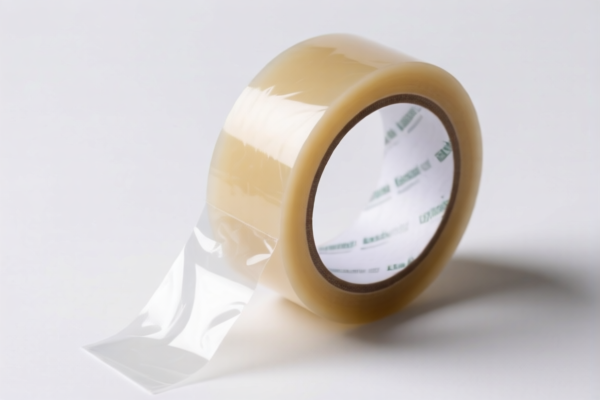
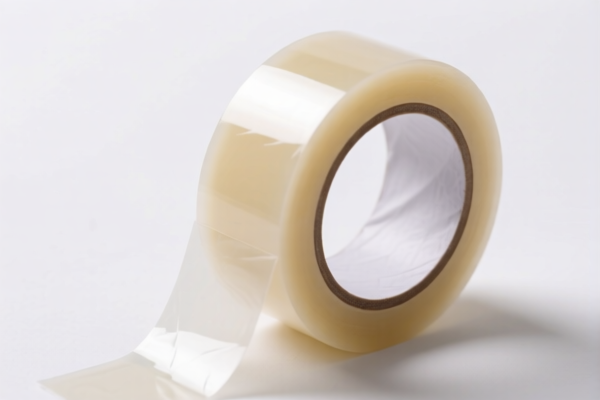

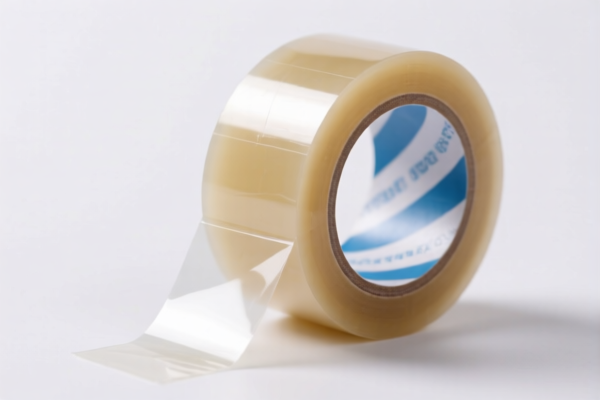
AI Analysis
🚗 Plastic Self Adhesive Tape for Automotive Lights (Automotive Exterior Trim)
🌐 HS Code Reference & Customs Clearance Guide | 2026 Latest Tariff Analysis | Professional Clearance Strategy
📌 I. Product Definition & Classification: Is Your Tape "General Purpose" or "Specialized"?
Plastic Self Adhesive Tape for Automotive Lights/Exteriors is a critical component in vehicle assembly, used for bonding, sealing, and decorative purposes. In international trade, the classification depends heavily on its physical form, material composition, and specific manufacturing process.
Misclassification can lead to massive tariff discrepancies (e.g., jumping from 22.8% to 40.8%).
⚠️ Key Distinction Points:
- General Plastic Articles vs. Self-Adhesive Rolls: Is it a generic plastic piece or a roll of tape?
- Coating Type: Is it just "self-adhesive" or is it "impregnated/coated" with plastic?
- Structure: Is it a flat sheet/film or a strip/band?
📦 II. HS Code Classification Details (2026 Latest Tariff Authority Match)
Based on the provided data for "Plastic Self Adhesive Tape for Automotive Lights", here are the 5 potential classifications with their specific tariff impacts.
| HS Code | Product Description Summary | Application Scenario | Key Characteristic | Total Tax Rate |
|---|---|---|---|---|
3926.30.50.00 |
Plastic self-adhesive tape, material: Plastic, use: Connecting/Adhesive parts, form: Other plastic products | General automotive exterior trim bonding | Classified broadly as "Other Plastic Products" | 22.8% |
3926.90.99.89 |
Plastic self-adhesive tape, material: Plastic, form: Tape, category: Other plastic articles | General purpose adhesive tape for car parts | Classified as "Other Articles of Plastics" | 22.8% |
3919.10.20.55 |
Plastic self-adhesive tape, material: Plastic, form: Self-adhesive tape, meets flat shape requirements | Standard flat roll adhesive tape | Classified under Self-Adhesive Plaster/Tape (Chapter 3919) | 40.8% |
5604.90.90.00 |
Plastic self-adhesive tape, material: Plastic, impregnated/coated with plastic, form: Strip/Band | Heavy-duty automotive strips | Classified under Textile/Non-woven impregnated (often treated as strip) | 40.0% |
3919.90.50.60 |
Plastic self-adhesive tape, material: Plastic, form: Self-adhesive tape, use: Automotive exterior | Specific automotive exterior use tape | Classified under Other Self-Adhesive Plates/Sheets/Film | 40.8% |
🔍 Critical Analysis:
- The lowest tariff (22.8%) applies if the tape is classified as a general "Plastic Product" (3926series).
- The higher tariffs (40.0% - 40.8%) apply if the tape is strictly classified as "Self-Adhesive Tape/Strip" (3919or5604), which often triggers higher USITC/Section 301 duties.
- Why the difference? Customs authorities scrutinize whether the product is primarily a "plastic article" (de minimis function) or a "tape" (primary function). For automotive lights, if it’s a complex pre-cut fixture,3926might be argued; if it’s a roll of tape,3919is more likely.
💰 III. 2026 Latest Tariff Rate Breakdown (Detailed Clause Explanation)
✅ Applicable Country: United States (US)
✅ Origin: China (CN)
✅ Effective Time: 2025-11-10 onwards (and subsequent imports)
🎯 1. The "Low-Tax" Route: General Plastic Articles (HS 3926 Series)
| Item | Content |
|---|---|
| HS Codes | 3926.30.50.00, 3926.90.99.89 |
| Basic Tariff | 5.3% |
| Section 301 (Add-on) | 7.5% |
| Section 122 (IEEPA) | 10% |
| Total Tariff Rate | 22.8% |
| Calculation Basis | CIF Value × 22.8% |
| De Minimis Exemption | ❌ Not Eligible (High value/complex origin usually blocks) |
📌 Explanation:
- Basic Tariff (5.3%): Standard MFN rate for plastic articles.
- Section 301 (7.5%): This is a significant increase over the standard 25% often seen in other categories, but still lower than the 40%+ bracket.
- Section 122 (10%): Specific additional duty under International Emergency Economic Powers Act (IEEPA) for Chinese goods.
- Strategy: Argue that the product is a "custom-molded plastic connecting part" rather than a generic "tape" to fit3926.
🎯 2. The "High-Tax" Route: Self-Adhesive Tapes & Strips (HS 3919 / 5604 Series)
| Item | Content |
|---|---|
| HS Codes | 3919.10.20.55, 3919.90.50.60, 5604.90.90.00 |
| Basic Tariff | 5.0% - 5.8% |
| Section 301 (Add-on) | 25.0% |
| Section 122 (IEEPA) | 10% |
| Total Tariff Rate | 40.0% - 40.8% |
| Calculation Basis | CIF Value × ~40.8% |
| De Minimis Exemption | ❌ Not Eligible |
📌 Explanation:
- Basic Tariff (~5%): Standard rate for adhesive tapes.
- Section 301 (25%): The maximum standard Section 301 add-on applies here.
- Section 122 (10%): Same IEEPA duty as above.
- Risk: If Customs determines your product is a standard "Self-Adhesive Tape" (Chapter 3919) or a "Plastic-Coated Strip" (Chapter 5604), you cannot use the 22.8% rate. This is a $18+/100 cost increase per unit compared to the lower bracket.
🛠️ IV. Customs Clearance Practical Advice (Pitfall Avoidance Guide)
✅ 1. Documentation Checklist (Non-Negotiable)
| Document | Required | Purpose |
|---|---|---|
| ✅ Product Specification Sheet | ✔️ | Must detail: Material (PP/PE/VCM?), Adhesive type, Thickness, Width, Backing material. |
| ✅ Technical Drawing | ✔️ | Show if it’s a roll (tape) or a pre-cut piece (part). Critical for 3926 vs 3919 argument. |
| ✅ High-Res Photos | ✔️ | Show the product in use on an automotive light assembly. Highlight "Automotive Exterior" application. |
| ✅ Commercial Invoice | ✔️ | Clearly state: "Plastic Adhesive Tape for Automotive Exterior Trim/Lights". Avoid vague terms like "Glue". |
| ✅ Certificate of Origin (CO) | ✔️ | Mandatory for proving China origin and applying correct Section 301/122 duties. |
| ✅ Import Security Filing (ISF) | ✔️ | File 10 days before loading. |
✅ 2. Classification Strategy & Declaration Tips
🔥 "Form Determines Fate: Roll is Tape, Cut is Part!"
| Scenario | Recommended HS Code | Argument/Declaration Tip |
|---|---|---|
| Sold in Rolls, Customer Cuts Own | 3919.10.20.55 / 3919.90.50.60 |
Declare as "Self-adhesive plastic tape, roll form". Accept 40.8% tax. |
| Pre-Cut, Custom-Shaped for Light Assembly | 3926.30.50.00 |
Declare as "Plastic connecting article, custom shaped for automotive lighting". Aim for 22.8%. |
| Fabric/Non-Woven Base + Plastic Coating | 5604.90.90.00 |
Declare as "Plastic-coated textile strip". Target 40.0% tax. |
| Mixed Shipment (Rolls + Pre-Cut) | Split Line Items | Never mix in one line item. Separate them to apply correct HS codes. |
⚠️ Warning:
Do NOT declare a roll of tape as "Plastic Parts" (3926) just to save tax. If the product is sold by the meter/roll, Customs will likely reject this and apply penalties + back taxes. Use this strategy only if the product is manufactured and sold as a finished component.
✅ 3. Special Handling for Automotive Industry
| Situation | Handling Advice |
|---|---|
| OEM Supply Chain | Provide PPAP (Production Part Approval Process) documents to prove the item is a custom-engineered part, supporting 3926 classification. |
| Aftermarket/Universal Tape | Use 3919 codes. Universal tapes are harder to classify as "custom parts." |
| Light-Sealing Tape | If it’s primarily for sealing (gasket function), emphasize "Sealing Article" in description, which may still fall under 3926 depending on USITC rulings. |
🌍 V. Global Market Comparison (2026 Outlook)
| Region | Recommended HS Code | Est. Total Duty | Key Requirement | Note |
|---|---|---|---|---|
| 🇺🇸 USA | 3926.30.50.00 (Best Case) |
22.8% | ISF + X-Pass | If classified as 3919, duty jumps to 40.8%. |
| 🇨🇳 China | 3919.10.20.55 |
Varies | CCC (if applicable) | Export duty usually 0%, focus on import duty in destination. |
| 🇪🇺 EU | 3919.10 / 3926.90 |
4% - 6.5% | CE/REACH | No Section 301/122. EU duties are generally lower and stable. |
| 🇲🇽 Mexico | 3919.10 / 3926.90 |
5% - 8% | USMCA Check | Potential for 0% under USMCA if local content rules met. |
📌 Conclusion:
The US market is the highest cost center due to Section 301 and Section 122 duties.
- Maximize Savings: Try to classify as3926(22.8%) if the product is custom-molded/prefabricated.
- Accept Reality: If it’s a standard roll, prepare for 40.8% and factor this into pricing.
📌 VI. Common Mistakes & Pitfall Guide (Blood Lessons)
❌ Mistake 1: Declaring "Plastic Tape" as "Glue" or "Adhesive" (HS 3506)
👉 Consequence: Wrong HS code, delayed clearance, potential fraud accusation. Tape is plastic, not a chemical mixture.
❌ Mistake 2: Using 3919 for a custom-molded pre-cut piece
👉 Consequence: Paying 40.8% instead of 22.8%. You lost 18% of your product value in duty.
❌ Mistake 3: Ignoring "Section 122" in tax calculations
👉 Consequence: Budgeting only for Section 301 (25%) but forgetting the additional 10% IEEPA duty. Total is 35%+.
❌ Mistake 4: Vague Invoice Description ("Tape for Car")
👉 Consequence: Customs officer has discretion to choose the highest applicable duty rate (3919 40.8%). Be specific: "Pre-cut Self-Adhesive Plastic Strip for Automotive Headlight Sealing".
✅ Correct Approach:
"Plastic Self-Adhesive Tape, Model XYZ, Pre-Cut to Dimensions AxB, for Automotive Exterior Light Assembly, Material: PVC/VCM, Backing: Adhesive Coated"
🎯 VII. Conclusion: Precision Classification Saves Money
🎯 Remember the Mantra:
🔹 "Rolls are Tape (40.8%), Custom Parts are Plastic (22.8%)."
🔹 "Section 301 + Section 122 = High Cost. Plan Ahead."
🔹 "Detailed Specs Win Customs Battles."
📌 Pro Tip:
If your volume is high, apply for a Binding Ruling (Advance Ruling) with US Customs and Border Protection (CBP) before your first shipment. This legally locks in your HS Code and duty rate, protecting you from retroactive audits.
📣 Take Action Now:
📞 Review your product form: Is it a roll or a pre-cut part?
📝 Update your Commercial Invoice: Ensure precise description.
🚀 Calculate Landed Cost: Include the 22.8% vs 40.8% difference in your margin analysis.
✨ Professional Clearance, From Accurate Classification!
💼 Your Profit Margin Depends on Your HS Code Choice!
Customer Reviews
About HS Code Classification
The Harmonized System (HS) is an internationally standardized nomenclature developed by the World Customs Organization (WCO) to classify traded products. Over 200 countries use the HS system as the basis for customs tariffs, trade statistics, and import/export regulations.
Each HS code follows a hierarchical structure:
- Chapter (2 digits) — Broad category of goods (e.g., Chapter 84: Machinery and Mechanical Appliances)
- Heading (4 digits) — More specific grouping within the chapter
- Subheading (6 digits) — Internationally standardized breakdown, used by all WCO member countries
- National subdivisions (8-10 digits) — Country-specific extensions for further classification, such as US HTSUS 10-digit codes
Correct HS code classification is essential for smooth customs clearance, accurate duty payment, and compliance with trade regulations. Misclassification can lead to customs delays, overpayment of duties, or penalties.
When importing from CN to US, the applicable tariff rates may include:
- Most-Favored-Nation (MFN) rate — The standard duty rate applied to WTO members
- General rate — Applied to countries without trade agreements
- Trade remedy duties — Additional tariffs such as Section 301 (anti-dumping), Section 232 (national security), or countervailing duties
The information provided on this page is for reference purposes only. For official classification, please consult with your local customs authority or a licensed customs broker.