Plastic Self Adhesive Tape for Marking
CN → US| HS Code | Tariff Rate | Origin | Destination | Doc |
|---|---|---|---|---|
| 3926305000 | 22.8% | CN | US | Official Doc |
| 3926909989 | 22.8% | CN | US | Official Doc |
| 3919102055 | 40.8% | CN | US | Official Doc |
| 5604909000 | 40.0% | CN | US | Official Doc |
| 3919905060 | 40.8% | CN | US | Official Doc |
Product Images
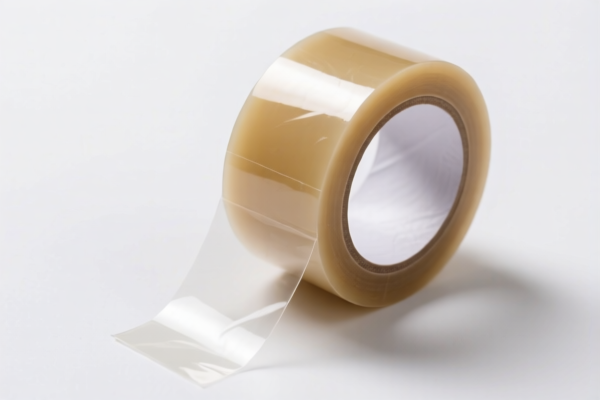

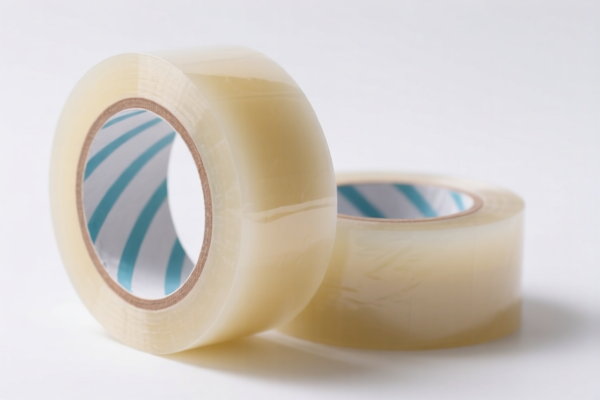
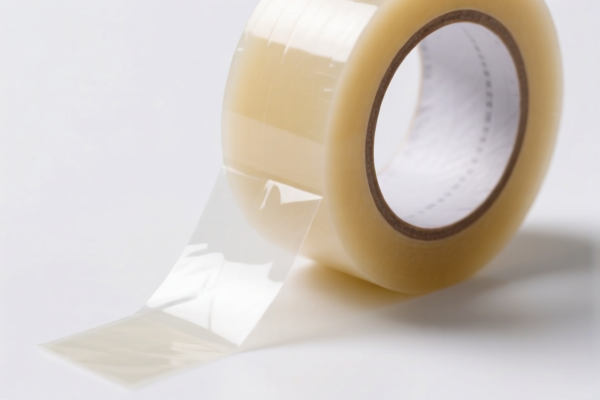
AI Analysis
🎨 Plastic Self Adhesive Tape for Marking (塑料自粘胶带,用于标记)
🌐 HS Code Reference & Customs Clearance Guide | 2026 Latest Tariff Analysis | Professional Entry Strategies
📌 Part I: Product Definition & Classification: What is "Plastic Self Adhesive Tape for Marking"?
Plastic self-adhesive tape for marking is a specialized industrial and consumer product used for labeling, identifying, or temporarily joining surfaces. In international trade, its classification is critical because it determines the tariff burden, which can vary significantly based on its physical form (flat vs. impregnated) and specific application (auto parts vs. general marking).
The key distinction lies in the composition and state: * Standard Pressure-Sensitive Tapes (PST): Flat, adhesive-backed plastic films (e.g., Mylar, Polypropylene). These usually fall under Chapter 39. * Impregnated/Coated Strips: If the plastic tape is heavily saturated with plastic resin or coated to a degree that it resembles a fabric or industrial strip, it may be misclassified. However, for pure marking tapes, Chapter 39 is the primary domain. * Application Specificity: Usage in "automotive exterior connections" might trigger different subheadings compared to general "marking" or "labeling."
⚠️ Critical Classification Point:
- If the tape is a flat, self-adhesive plastic film → Look at 3919 (Self-adhesive plates, sheets, film, foil, tape, strip and other flat shapes).
- If the tape is considered an "Other Plastic Article" not specifically provided for elsewhere (e.g., complex shapes or non-flat) → Look at 3926.
- If the tape is impregnated/coated to resemble a strip or band of plastic material rather than a standard pressure-sensitive tape → Look at 5604.
📦 Part II: HS Code Classification Details (2026 Latest Tariff Authority Comparison)
Based on the provided data, here are the possible HS Codes for "Plastic Self Adhesive Tape for Marking," categorized by their specific characteristics and associated tax rates.
| HS Code | Product Description (Summary) | Physical State / Key Feature | Applicable Tax Rate (Total) |
|---|---|---|---|
3919.10.20.55 |
Plastic self-adhesive tape, flat shape, no material conflict | Flat shape (Standard tape form) | 40.8% |
3919.90.50.60 |
Plastic self-adhesive tape, for automotive exterior use, no conflicting category | Specific Use (Auto Exterior) | 40.8% |
3926.30.50.00 |
Plastic self-adhesive tape for automotive exterior connection/adhesion | Functional (Connection/Adhesion in Auto) | 22.8% |
3926.90.99.89 |
Plastic self-adhesive tape, other plastic articles, no material conflict | Other Plastic Article (General/Catch-all) | 22.8% |
5604.90.90.00 |
Plastic self-adhesive tape, impregnated/coated with plastic, strip/band form | Impregnated/Coated (Strip/Band) | 40.0% |
🔍 Important Note:
-3919Codes are generally for pressure-sensitive tapes (like masking tape, electrical tape, marking tape).
-3926Codes are for other plastic articles that may include adhesive items if they don't fit the strict definition of Chapter 39 tapes, or if they are specifically for industrial assembly (like auto exterior bonding).
-5604is a trap category. If the tape is heavily plastic-impregnated, it might be seen as a "textile strip coated with plastic" or similar, but for pure plastic marking tape, this is less common unless the substrate is fabric-like. The description explicitly mentions "impregnated/coated," so if your product is purely plastic film, avoid 5604.
💰 Part III: 2026 Latest Tariff Rate Breakdown (Including Surcharges & Policy Add-ons)
✅ Applicable Country: United States (US)
✅ Country of Origin: China (CN)
✅ Effective Date: November 10, 2025 (including subsequent imports)
🎯 1. 3919.10.20.55 & 3919.90.50.60 – Flat/Specific Use Self-Adhesive Tapes
| Item | Content |
|---|---|
| Base Rate | 5.8% (ad valorem) |
| Section 301 Surcharge | +25.0% (from USITC Footnote 9903.88.01) |
| IEEPA Surcharge | +10.0% (For products from China/HK, effective Nov 10, 2025) |
| Total Tax Rate | 40.8% |
| Tax Calculation | CIF Value × 40.8% |
| De Minimis Exemption | ❌ Not Eligible (deny_de_minimis) |
| Legal Basis Path | IEEPA:9903.01.25 → IEEPA:9903.01.24 → USITC:3919.10.20.55 / 3919.90.50.60 → FOOTNOTE:9903.88.01 |
📌 Explanation:
- The 25% Section 301 tariff applies to most plastic self-adhesive tapes from China.
- The 10% IEEPA tariff is a new add-on for Chinese-origin goods under specific emergency powers.
- Total 40.8% is a high tariff, making this product expensive to import. Proper classification is vital to avoid overpayment or penalties.
🎯 2. 3926.30.50.00 & 3926.90.99.89 – Other Plastic Articles (Auto Exterior / General)
| Item | Content |
|---|---|
| Base Rate | 5.3% (ad valorem) |
| Section 301 Surcharge | +7.5% (Note: Lower Section 301 rate for these specific subheadings) |
| IEEPA Surcharge | +10.0% |
| Total Tax Rate | 22.8% |
| Tax Calculation | CIF Value × 22.8% |
| De Minimis Exemption | ❌ Not Eligible (deny_de_minimis) |
| Legal Basis Path | IEEPA:9903.01.25 → IEEPA:9903.01.24 → USITC:3926.30.50.00 / 3926.90.99.89 → FOOTNOTE:9903.88.01 |
📌 Explanation:
- These codes offer a significantly lower total rate (22.8%) compared to the 40.8% for standard self-adhesive tapes.
- Why? The Section 301 surcharge is only 7.5% for these "other plastic articles" subheadings, not the standard 25%.
- Strategy: If your "marking tape" can be justified as an "other plastic article" (e.g., for automotive exterior bonding/connection rather than just surface marking), this classification saves 18% in taxes!
- ⚠️ Caution: You must provide evidence that the product is used for connection/adhesion in automotive exteriors (for3926.30.50.00) or is a general plastic article not fitting Chapter 39's strict "tape" definition.
🎯 3. 5604.90.90.00 – Impregnated/Coated Plastic Strips
| Item | Content |
|---|---|
| Base Rate | 5.0% (ad valorem) |
| Section 301 Surcharge | +25.0% |
| IEEPA Surcharge | +10.0% |
| Total Tax Rate | 40.0% |
| Tax Calculation | CIF Value × 40.0% |
| De Minimis Exemption | ❌ Not Eligible (deny_de_minimis) |
| Legal Basis Path | IEEPA:9903.01.25 → IEEPA:9903.01.24 → USITC:5604.90.90.00 → FOOTNOTE:9903.88.01 |
📌 Explanation:
- This category applies only if the tape is impregnated or coated with plastic to the extent it becomes a "strip or band."
- The tax rate is 40.0%, slightly better than the 40.8% for self-adhesive tapes, but the physical description must match. If your product is a standard adhesive film, do not use this code, as it may be considered misdeclaration.
🛠️ Part IV: Customs Clearance Practical Advice (Battle-Tested Pitfall Guide)
✅ 1. Documentation Checklist (Non-negotiable)
| Document | Mandatory? | Description |
|---|---|---|
| ✅ Product Specification Sheet | ✔️ | Must detail material (e.g., PVC, PET, PP), thickness, adhesive type, and exact use (e.g., "Marking," "Bonding," "Auto Exterior Assembly"). |
| ✅ Product Photos | ✔️ | Clear images of the tape roll, cut edge, and adhesive side. Show if it’s flat or coated. |
| ✅ Commercial Invoice | ✔️ | Clearly state the HS Code and product description. Example: "Plastic Self-Adhesive Tape, HS 3926.90.99.89, for Automotive Exterior Assembly." |
| ✅ Certificate of Origin | ✔️ | Required to prove CN origin and apply correct surcharges. |
| ✅ Packing List | ✔️ | List net/gross weight, quantity, and package dimensions. |
| ✅ Declaration Statement | ✔️ | Explicitly state if the product is "Impregnated/Coated" (for 5604) or "Standard Self-Adhesive" (for 3919). |
✅ 2. Classification Strategy (Key Mnemonic)
🔥 “Auto Bonding Saves Taxes, Flat Tape Pays More!”
| Scenario | Recommended HS Code | Total Tax | Why? |
|---|---|---|---|
| Standard Marking Tape (Flat, adhesive, general use) | 3919.10.20.55 or 3919.90.50.60 |
40.8% | High Section 301 surcharge (25%). |
| Auto Exterior Connection/Bonding | 3926.30.50.00 |
22.8% | Lower Section 301 surcharge (7.5%). Best Option if eligible! |
| General Plastic Article (No specific use) | 3926.90.99.89 |
22.8% | Same benefit as above, easier to justify if "Auto" is not applicable. |
| Impregnated/Coated Strip | 5604.90.90.00 |
40.0% | Only if physically impregnated. Otherwise, risk of misclassification. |
📌 Key Insight:
- If your "marking tape" is used for marking only, you may be forced into the 40.8% bracket.
- However, if it is used for bonding or connecting automotive exterior parts (even if it has marking properties), you can argue for3926.30.50.00to save 18% in taxes.
- Supporting Evidence: Provide OEM specifications, engineering drawings, or user manuals showing the tape’s structural/bonding function.
✅ 3. Special Case Handling
| Situation | Handling Advice |
|---|---|
| OEM Custom Tape | Provide customer order and design specs to justify "Auto Exterior" use for lower tax. |
| Tape with Fabric Backing | If it has a fabric backing and is plastic-coated, it might fall under 5604. Ensure physical description matches. |
| Multiple Uses | If the tape is used for both marking and bonding, declare it for its primary structural function (bonding) to qualify for lower tax, provided you have proof. |
| Small Samples (De Minimis) | ❌ Not Eligible. All these HS codes are subject to deny_de_minimis. Even small shipments are taxed. |
🌍 Part V: Global Market Customs Comparison (2026 Latest)
| Country/Region | Recommended HS Code | Tariff (China Origin) | Certification Requirements | Remarks |
|---|---|---|---|---|
| 🇺🇸 USA | 3926.90.99.89 |
22.8% | FCC (if electronic), RoHS (if applicable) | Best Rate for plastic articles. Avoid 3919 unless necessary. |
| 🇨🇳 China | 3919.10.20.55 |
5% | CCC (if applicable) | Low tariff. No surcharges. |
| 🇪🇺 EU | 3919.10.20.55 |
6.5% | REACH, RoHS | No Section 301/IEEPA. Standard EU duty. |
| 🇬🇧 UK | 3919.10.20.55 |
6.5% | UKCA, REACH | Post-Brexit alignment with EU. |
| 🇦🇺 Australia | 3919.10.20.55 |
5% | RCM | No additional surcharges. |
📌 Conclusion:
- USA is the most challenging market due to high surcharges.
- Optimizing HS Code classification (choosing 3926 over 3919 where possible) is the most effective cost-saving strategy for US imports.
- For other markets, standard duties apply, and classification is less critical for tax savings but important for compliance.
📌 Part VI: Common Errors & Pitfall Guide (Lessons Learned)
❌ Error 1: Classifying Auto Exterior Bonding Tape as 3919.10.20.55
👉 Consequence: Paying 40.8% tax instead of 22.8% → Lost Profit!
👉 Solution: Provide documentation showing the tape’s role in connection/adhesion for automotive parts.
❌ Error 2: Declaring Standard Marking Tape as 3926.90.99.89
👉 Consequence: Customs may reject the declaration for misclassification, leading to delays, audits, or penalties.
👉 Solution: Only use 3926 if the product is not a standard pressure-sensitive tape or has a specific "other plastic article" function.
❌ Error 3: Ignoring IEEPA 10% Surcharge
👉 Consequence: Under-declaring total tax liability → Back taxes + Interest.
👉 Solution: Always add 10% IEEPA + Section 301 to the base rate for Chinese-origin goods.
❌ Error 4: Using De Minimis for Small Shipments
👉 Consequence: Seizure of goods, as deny_de_minimis applies.
👉 Solution: Always declare and pay duties, regardless of shipment size.
✅ Correct Practice:
"Plastic Self-Adhesive Tape, PVC Material, for Automotive Exterior Panel Bonding and Marking, HS 3926.30.50.00, Origin: China"
🎯 Part VII: Conclusion: Smart Classification, Lower Costs, Smooth Clearance!
🎯 Remember the Mantra:
🔹 “Auto Bonding = 22.8%, Flat Tape = 40.8%.”
🔹 “Document the Function, Not Just the Form.”
🔹 “No De Minimis for China, Pay Up or Risk It All.”
📌 Pro Tip:
- If your product is originating from Vietnam, Mexico, Thailand, or Malaysia, you may apply for IEEPA Exemptions, reducing the total tax to 0%~5%.
- Always apply for a Pre-Ruling (Advance Ruling) with US Customs if you are unsure about the classification. It provides legal certainty and avoids surprise bills.
📣 Immediate Action:
📞 Consult a licensed customs broker + Provide product specs + Apply for HS Code Pre-Ruling
🚀 Ensure your Plastic Self Adhesive Tape clears customs efficiently, compliantly, and profitably!
✨ Professional Clearance Starts with Precise Classification!
💼 Every Percent Saved is Pure Profit!
Customer Reviews
About HS Code Classification
The Harmonized System (HS) is an internationally standardized nomenclature developed by the World Customs Organization (WCO) to classify traded products. Over 200 countries use the HS system as the basis for customs tariffs, trade statistics, and import/export regulations.
Each HS code follows a hierarchical structure:
- Chapter (2 digits) — Broad category of goods (e.g., Chapter 84: Machinery and Mechanical Appliances)
- Heading (4 digits) — More specific grouping within the chapter
- Subheading (6 digits) — Internationally standardized breakdown, used by all WCO member countries
- National subdivisions (8-10 digits) — Country-specific extensions for further classification, such as US HTSUS 10-digit codes
Correct HS code classification is essential for smooth customs clearance, accurate duty payment, and compliance with trade regulations. Misclassification can lead to customs delays, overpayment of duties, or penalties.
When importing from CN to US, the applicable tariff rates may include:
- Most-Favored-Nation (MFN) rate — The standard duty rate applied to WTO members
- General rate — Applied to countries without trade agreements
- Trade remedy duties — Additional tariffs such as Section 301 (anti-dumping), Section 232 (national security), or countervailing duties
The information provided on this page is for reference purposes only. For official classification, please consult with your local customs authority or a licensed customs broker.