Plastic Sheet Wallet
CN → US| HS Code | Tariff Rate | Origin | Destination | Doc |
|---|---|---|---|---|
| 3923900080 | 38.0% | CN | US | Official Doc |
| 3923109000 | 38.0% | CN | US | Official Doc |
| 4202322000 | 55.0% | CN | US | Official Doc |
| 4202321000 | 0.0% | CN | US | Official Doc |
Product Images
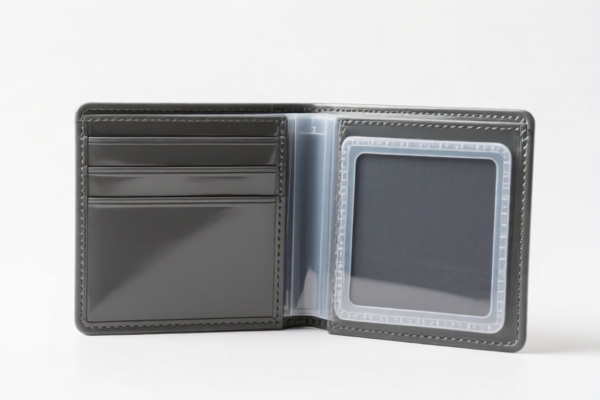
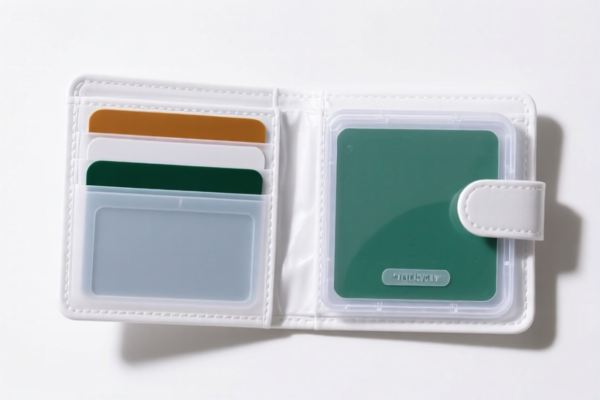
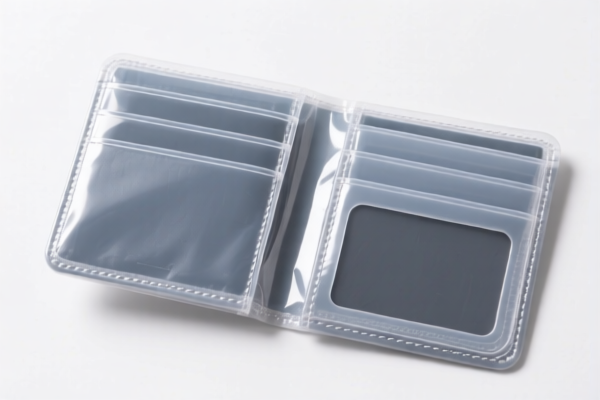
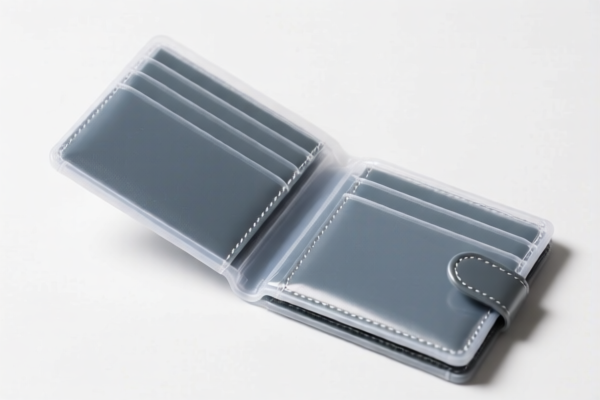
AI Analysis
👛 Plastic Sheet Wallet (Plastic Sheet Wallets)
🌐 HS Code Reference & Customs Clearance Guide | 2026 Latest Tariff Analysis | Professional Clearance Strategy
📌 I. Product Definition & Classification: What Exactly is a "Plastic Sheet Wallet"?
A Plastic Sheet Wallet is a small, portable container typically used for holding currency, credit cards, and identification documents. In international trade, its classification depends heavily on how it is constructed and what it is considered to be (a piece of packaging vs. a finished article of travel goods).
The key distinction lies in whether the item is viewed as: 1. Packaging/Casing: A simple sleeve or protective cover intended to package other goods (e.g., a wallet inside a box, or a sleeve for a product). 2. Finished Travel Good: An individual article of use, such as a personal wallet or coin purse, made from specific materials like plastic laminates or sheets.
⚠️ Critical Distinction Point:
- If the item is a simple sleeve primarily serving as packaging or a protective casing for retail, it may fall under Chapter 39 (Plastics and Articles Thereof).
- If the item is a finished consumer product (a personal wallet) made from plastic sheets or laminated plastic, it is classified under Chapter 42 (Articles of Leather; Travel Goods, Handbags...), similar to leather wallets.
📦 II. HS Code Classification Details (2026 Latest Tariff Authority Comparison)
| HS Code | Product Description | Applicable Scenario | Material/Construction |
|---|---|---|---|
3923.90.00.80 |
Other packing supplies | Simple plastic sleeves, retail packaging wraps, protective cases not designed for long-term personal use | Pure plastic sheet/sleeve, no lining or complex structure |
3923.10.90.00 |
Other articles for the conveyance or packing of goods | Plastic pouches, bags, or wallets used specifically for packing/transporting other goods | Functional packaging item, lightweight plastic |
4202.32.20.00 |
Wallets with outer surface of plastic sheeting | Personal wallets, billfolds made directly from plastic sheets (PVC, PET, etc.) | Finished consumer good, outer layer is plastic sheet |
4202.32.10.00 |
Pocket wallets of reinforced/laminated plastic | Durable personal wallets made from layered or laminated plastic materials | Finished consumer good, multi-layer or laminated plastic structure |
🔍 Key Reminder:
- Items classified under 4202 are considered "Travel Goods" or "Personal Accessories." They generally attract higher tariffs because they are finished consumer goods. - Items classified under 3923 are considered "Packing Materials." They are often subject to lower base tariffs but may still face additional levies if deemed as imports from certain regions (like China). - Do not misdeclare: A personal wallet sold in a retail store as a consumer item must be declared under Chapter 42. Declaring it as "packing material" (3923) to lower duties is a high-risk customs violation.
💰 III. 2026 Latest Tariff Rate Breakdown (Including Surcharges & Policy Add-ons)
✅ Applicable Country: United States (US)
✅ Country of Origin: China (CN)
✅ Effective Date: Current (Includes Section 301 and Section 122 measures)
🎯 1. 3923.90.00.80 — Other Packing Supplies
| Item | Content |
|---|---|
| Base Duty Rate | 3.0% (ad valorem) |
| Section 301 Surcharge | +25.0% (Trade Act of 1974, Section 301) |
| Section 122 Surcharge | +10.0% (Specific to certain plastic articles/cases under recent enforcement) |
| Total Tax Rate | 38.0% |
| Tax Calculation | CIF Value × 38% |
| De Minimis Eligibility | ❌ No (Denied for Section 301/122 goods) |
| Legal Basis Path | USITC:3923.90.00.80 → SEC301:Footnote 3 → SEC122:Enforcement List |
📌 Explanation:
- 3.0% Base: Standard MFN duty for plastic packing articles. - 25.0% Section 301: Standard punitive tariff on Chinese goods in Chapter 39. - 10.0% Section 122: A specific additional tariff applied to certain plastic-related imports, often enforced to protect domestic manufacturing. - Total 38%: Significant cost increase. Not suitable for de minimis (Section 321) entry for Chinese origin.
🎯 2. 3923.10.90.00 — Other Packing/Carry Items
| Item | Content |
|---|---|
| Base Duty Rate | 3.0% (ad valorem) |
| Section 301 Surcharge | +25.0% |
| Section 122 Surcharge | +10.0% |
| Total Tax Rate | 38.0% |
| Tax Calculation | CIF Value × 38% |
| De Minimis Eligibility | ❌ No |
| Legal Basis Path | USITC:3923.10.90.00 → SEC301:Footnote 3 → SEC122:Enforcement List |
📌 Note:
- This code covers plastic pouches/bags. The tax structure is identical to3923.90.00.80. - If the "wallet" is simply a plastic bag-like sleeve for packaging, this code applies, but the 38% total tax makes it expensive.
🎯 3. 4202.32.20.00 — Wallets with Outer Surface of Plastic Sheeting
| Item | Content |
|---|---|
| Base Duty Rate | 20.0% (ad valorem) |
| Section 301 Surcharge | +25.0% |
| Section 122 Surcharge | +10.0% |
| Total Tax Rate | 55.0% |
| Tax Calculation | CIF Value × 55% |
| De Minimis Eligibility | ❌ No |
| Legal Basis Path | USITC:4202.32.20.00 → SEC301:Footnote 3 → SEC122:Enforcement List |
📌 Explanation:
- 20.0% Base: Higher base duty because it is classified as a travel good (Chapter 42) rather than packaging. - Total 55%: This is the highest risk category for cost. Personal wallets made of plastic sheets are heavily taxed. - Common Mistake: Importers often try to declare these as "packing material" (38%) to save money. However, if Customs inspects the goods and sees they are finished wallets, they will reclassify them, leading to penalties and back taxes.
🎯 4. 4202.32.10.00 — Pocket Wallets of Reinforced/Laminated Plastic
| Item | Content |
|---|---|
| Base Duty Rate | 12.1¢/kg + 4.6% (ad valorem) |
| Section 301 Surcharge | +25.0% |
| Section 122 Surcharge | +10.0% |
| Total Tax Rate | 12.1¢/kg + 39.6% (approx. total effective rate) |
| Tax Calculation | (12.1¢/kg × Weight) + (CIF Value × 39.6%) |
| De Minimis Eligibility | ❌ No |
| Legal Basis Path | USITC:4202.32.10.00 → SEC301:Footnote 3 → SEC122:Enforcement List |
📌 Note:
- This code applies to laminated or reinforced plastic wallets (more durable, multi-layer). - The base duty is compound (specific + ad valorem). - Total Effective Rate: The ad valorem portion adds up to 39.6% (4.6% + 25% + 10%), plus the specific duty of 12.1 cents per kilogram. - For lightweight wallets, the specific duty may be negligible, but the 39.6% ad valorem tax is still substantial.
🛠️ IV. Customs Clearance Practical Advice (Avoiding Pitfalls)
✅ 1. Preparation Checklist (Mandatory)
| Document | Required | Description |
|---|---|---|
| ✅ Product Specifications | ✔️ | Detail material (e.g., PVC, PET, TPU), dimensions, weight, number of compartments |
| ✅ Material Composition Proof | ✔️ | Certificate showing if it is "plain plastic sheet" vs. "laminated/reinforced" |
| ✅ Product Photos | ✔️ | Clear images showing the item is a finished wallet (not a raw plastic sheet or a package) |
| ✅ Commercial Invoice | ✔️ | Must describe as "Plastic Wallet" or "Travel Accessory," NOT "Plastic Sleeve for Packaging" |
| ✅ Packing List | ✔️ | Total weight (critical for 4202.32.10.00 specific duty calculation) |
✅ 2. Declaration Strategy (Key Rules)
🔥 “Finish Goods in Ch42, Packing in Ch39. Don’t Mix Them!”
| Scenario | Correct Declaration | Risk if Incorrect |
|---|---|---|
| Retail Wallet (sold to consumers) | 4202.32.20.00 or 4202.32.10.00 |
Declaring as 3923 to save tax → Penalty + Back Taxes + Seizure |
| Plain Plastic Sleeve (for packaging electronics) | 3923.90.00.80 |
N/A |
| Laminated Plastic Wallet | 4202.32.10.00 |
Misdeclaring as plain sheet (3923) → Lower tax declared, higher tax due |
| Plastic Pouch for Transport | 3923.10.90.00 |
N/A |
📌 Critical Advice:
- If the wallet has slots, buttons, zippers, or lining, it is almost certainly a Chapter 42 item. - If the wallet is just a thin plastic sheet folded over, it might be Chapter 39, but you must prove it is not a finished consumer good. - Section 122 applies to many plastic items from China. Ensure your supplier confirms if the item is subject to this specific surcharge.
✅ 3. Special Cases & Cost Optimization
| Situation | Recommendation |
|---|---|
| High-Value Luxury Plastic Wallets | Consider if the base value justifies the 55% tax. May be cost-prohibitive for low-margin items. |
| Small Qty Samples | If under $800, check if De Minimis (Section 321) applies. However, Section 301/122 goods are often EXCLUDED from De Minimis. Verify latest CBP rulings. |
| Laminated vs. Sheet | If your wallet is thin and simple, aim for 4202.32.20.00 (55%). If it's thick/laminated, 4202.32.10.00 might have a lower ad valorem component (39.6% + 12.1¢/kg), which could be cheaper for heavy items but more expensive for light ones. Calculate both! |
🌍 V. Global Market Comparison (2026 Latest)
| Country/Region | Recommended HS Code | Estimated Tax (China Origin) | Certification | Notes |
|---|---|---|---|---|
| 🇺🇸 USA | 4202.32.20.00 |
55% (20% + 25% + 10%) | No special certs required | High tariffs due to Sec 301 & 122 |
| 🇺🇸 USA | 3923.90.00.80 |
38% (3% + 25% + 10%) | No special certs required | Only for true packing materials |
| 🇨🇳 China | 4202.32.00.00 |
~5-10% (Import Duty) | N/A | Lower base duty, no US surcharges |
| 🇪🇺 EU | 4202.32.00.00 |
~12% (Standard Duty) | CE (if applicable) | No Section 301/122 equivalents |
| 🇬🇧 UK | 4202.32.00.00 |
~12% (Standard Duty) | UKCA (if applicable) | Post-Brexit tariffs |
📌 Conclusion:
- USA is the most expensive market for plastic wallets from China due to the 55% total rate for finished goods. - Chapter 39 (Packaging) has a lower rate (38%) but is risky to use for finished wallets. - For other markets (EU, UK, Asia), tariffs are significantly lower (10-12%).
📌 VI. Common Mistakes & Pitfalls (Lessons Learned)
❌ Mistake 1: Declaring a finished plastic wallet as "Plastic Packaging" (3923) to get 38% instead of 55%.
👉 Consequence: Customs audits find the item is a consumer good. Back taxes + 5-10% penalty + potential bond revocation.
❌ Mistake 2: Ignoring the 12.1¢/kg duty for laminated wallets (4202.32.10.00).
👉 Consequence: If you have 10,000 kg of wallets, that’s $121,000 in specific duties missed! Always calculate total cost.
❌ Mistake 3: Assuming De Minimis ($800) applies.
👉 Consequence: Section 301 and Section 122 goods are generally NOT eligible for de minimis entry. Even small shipments will be taxed.
❌ Mistake 4: Not specifying "Plastic Sheet" vs. "Laminated Plastic" in the invoice.
👉 Consequence: Customs may guess, leading to the highest applicable duty (4202.32.20.00 at 55%) if they assume it's not laminated but also not simple packaging.
✅ Correct Approach:
"Plastic Wallet, PVC Material, 3 Compartments, No Lining, Model XYZ"
OR
"Laminated Plastic Wallet, Waterproof, Multi-layer, Model ABC"
🎯 VII. Conclusion: Professional Declaration, Cost Efficiency!
🎯 Remember the Rules:
🔹 "Finished Wallet = Ch42 (High Tax), Packing = Ch39 (Lower Tax but Risky)."
🔹 "Sec 301 (25%) + Sec 122 (10%) = Non-Negotiable for China."
🔹 "Calculate Specific Duty (12.1¢/kg) for Laminated Goods!"
📌 Pro Tip:
If you are importing large volumes of plastic wallets to the US, consult a customs broker to determine if your product qualifies for a Section 301 Exclusion (though currently rare for general plastic wallets). Alternatively, consider warehousing in a free trade zone to defer duty payments until final sale.
📣 Immediate Action:
📞 Contact a Licensed Customs Broker + Provide Product Photos + Confirm Material Composition
🚀 Ensure Compliance, Avoid Penalties, and Maximize Profit Margins!
✨ Professional Customs Clearance Starts with Accurate Classification!
💼 Every Percentage Point of Duty Affects Your Bottom Line!
Customer Reviews
About HS Code Classification
The Harmonized System (HS) is an internationally standardized nomenclature developed by the World Customs Organization (WCO) to classify traded products. Over 200 countries use the HS system as the basis for customs tariffs, trade statistics, and import/export regulations.
Each HS code follows a hierarchical structure:
- Chapter (2 digits) — Broad category of goods (e.g., Chapter 84: Machinery and Mechanical Appliances)
- Heading (4 digits) — More specific grouping within the chapter
- Subheading (6 digits) — Internationally standardized breakdown, used by all WCO member countries
- National subdivisions (8-10 digits) — Country-specific extensions for further classification, such as US HTSUS 10-digit codes
Correct HS code classification is essential for smooth customs clearance, accurate duty payment, and compliance with trade regulations. Misclassification can lead to customs delays, overpayment of duties, or penalties.
When importing from CN to US, the applicable tariff rates may include:
- Most-Favored-Nation (MFN) rate — The standard duty rate applied to WTO members
- General rate — Applied to countries without trade agreements
- Trade remedy duties — Additional tariffs such as Section 301 (anti-dumping), Section 232 (national security), or countervailing duties
The information provided on this page is for reference purposes only. For official classification, please consult with your local customs authority or a licensed customs broker.