Plastic Sheeting Cosmetic Bags
CN → US| HS Code | Tariff Rate | Origin | Destination | Doc |
|---|---|---|---|---|
| 4202221500 | 51.0% | CN | US | Official Doc |
| 4202929700 | 52.6% | CN | US | Official Doc |
| 3923210030 | 38.0% | CN | US | Official Doc |
Product Images
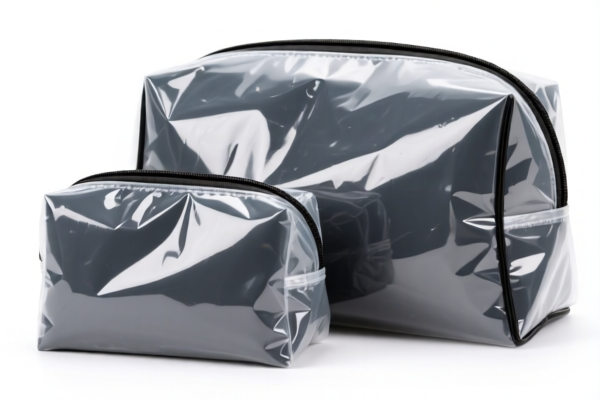
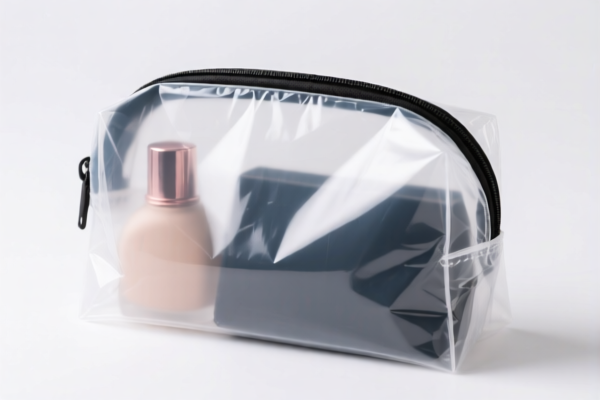
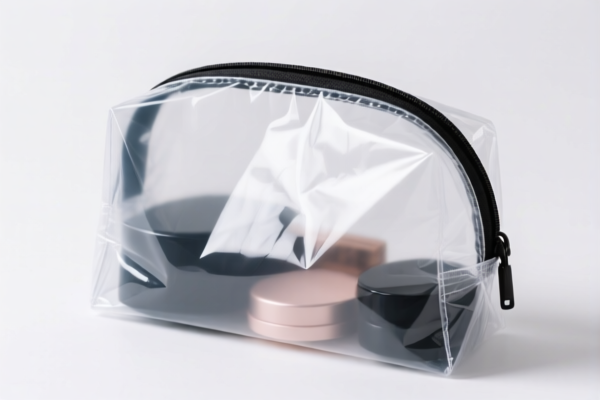
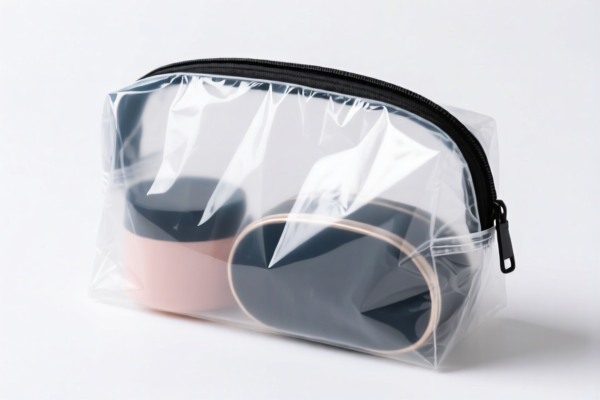
AI Analysis
🛍️ Plastic Sheeting Cosmetic Bags: HS Code Classification & US Import Guide (2026)
🌐 HS Code Reference & Customs Clearance Guide | 2026 Latest Tariff Analysis | Professional Strategy for Plastic Cosmetic Packaging
📌 I. Product Definition & Classification: What Exactly Are "Plastic Cosmetic Bags"?
Plastic Sheeting Cosmetic Bags are flexible containers made primarily from plastic materials (such as PVC, PE, PP, or other plastic sheets/films), designed for holding cosmetics, toiletries, or small personal items. In international trade, their classification depends heavily on material composition, structure, and intended use.
According to the provided data, there are three potential HS Code classifications based on specific structural and material nuances:
⚠️ Key Distinction Points:
- Structure: Are they rigid "bags" with handles (like shopping bags) or flexible "pouches" sealed at the edges?
- Material: Is the outer surface strictly "plastic sheet" or a mix?
- Closure: Is the closure method specified? If not, it may fall under "Other" provisions.
📦 II. HS Code Classification Details (2026 Latest Tariff Authority对照)
| HS Code | Product Description | Applicable Scenario | Material/Structure Basis |
|---|---|---|---|
4202.22.15.00 |
Travel goods, handbags, shopping bags, with outer surface of plastic sheeting | Structured "bags" (e.g., tote bags, shopping bags) made of plastic sheets | ✅ Outer surface is plastic sheeting |
4202.92.97.00 |
Other made up articles of plastic sheeting (including shopping bags, bottle bags, and similar containers) | Flexible "pouches" or unstructured "bags" made of plastic sheets | ✅ Made of plastic sheeting |
3923.21.00.30 |
Sacks and bags, of polymers of ethylene (e.g., PE bags, sachets) | Flexible plastic bags/pouches, specifically if made of ethylene polymers | ✅ Plastic/ethylene polymer + bag/pouch form |
🔍 Critical Note:
-4202.22.15.00is for structured bags (like reusable shopping bags) with an outer surface of plastic sheeting.
-4202.92.97.00is for other plastic sheet articles (like flexible cosmetic pouches, bottle bags) that don't fit the "handbag" category.
-3923.21.00.30is a fallback for ethylene polymer bags (common for sachets/foils) when the closure method is unspecified, using the "Other" category principle.
💰 III. 2026 Latest Tariff Rate Breakdown (Including Surtaxes & Policy Add-ons)
✅ Applicable Country: United States (US)
✅ Country of Origin: China (CN)
✅ Effective Date: From November 10, 2025 (including subsequent imports)
🎯 1. 4202.22.15.00 —— Travel/Shopping Bags with Plastic Outer Surface
| Item | Details |
|---|---|
| Base Tariff Rate | 16.0% |
| Section 301 Surtax | +25.0% |
| 122 Clause Tariff | +10.0% |
| Total Effective Rate | 51.0% |
| Tax Calculation | CIF Value × 51.0% |
| De Minimis Eligibility | ❌ No (High tax rate excludes low-value exemption) |
| Legal Basis Path | Section 301 → 122 Clause → USITC:4202.22.15.00 |
📌 Explanation:
- This category attracts the highest tax burden among the three options due to the Section 301 and 122 Clause surcharges applied to structured plastic bags.
- Total 51% makes this the most expensive option for importers.
🎯 2. 4202.92.97.00 —— Other Plastic Sheet Articles (Cosmetic Pouches/Bags)
| Item | Details |
|---|---|
| Base Tariff Rate | 17.6% |
| Section 301 Surtax | +25.0% |
| 122 Clause Tariff | +10.0% |
| Total Effective Rate | 52.6% |
| Tax Calculation | CIF Value × 52.6% |
| De Minimis Eligibility | ❌ No |
| Legal Basis Path | Section 301 → 122 Clause → USITC:4202.92.97.00 |
📌 Note:
- This is the highest tariff rate among all three options.
- It applies to generic "plastic sheet articles" that are not classified as handbags or shopping bags.
- Not recommended for cost-sensitive imports unless no other classification fits.
🎯 3. 3923.21.00.30 —— Sacks/Bags of Ethylene Polymers (e.g., PE Pouches)
| Item | Details |
|---|---|
| Base Tariff Rate | 3.0% |
| Section 301 Surtax | +25.0% |
| 122 Clause Tariff | +10.0% |
| Total Effective Rate | 38.0% |
| Tax Calculation | CIF Value × 38.0% |
| De Minimis Eligibility | ❌ No (High tax rate excludes low-value exemption) |
| Legal Basis Path | Section 301 → 122 Clause → USITC:3923.21.00.30 |
📌 Advantage:
- This is the most cost-effective option with a 38% total rate.
- It relies on the product being made of ethylene polymers (like PE) and classified under "bags/pouches" where the closure method is unspecified.
- Recommended if the product structure allows (i.e., flexible plastic pouches rather than structured bags).
🛠️ IV. Customs Clearance Practical Advice (Real-World Pitfall Guide)
✅ 1. Required Documentation Checklist (Non-Negotiable)
| Document | Mandatory | Description |
|---|---|---|
| ✅ Product Specification Sheet | ✔️ | Must detail material (e.g., PE, PVC), thickness, closure type (zipper, heat-sealed) |
| ✅ Product Photos | ✔️ | Clear images showing the "bag" structure, outer material, and any handles |
| ✅ Commercial Invoice | ✔️ | Must state "Plastic Cosmetic Bag" or "Plastic Pouch," not generic "Gift Bag" |
| ✅ Bill of Lading/Air Waybill | ✔️ | Ensure weight and volume match invoice |
| ✅ Origin Certificate (CO) | ✔️ | Required for US origin verification (China origin triggers surtaxes) |
✅ 2. Declaration Strategy (Key Mnemonics)
🔥 “Material First, Structure Second, Closure Unspecified = Lower Tax!”
| Scenario | Correct Declaration | Wrong Practice |
|---|---|---|
| Structured tote bag with handle | 4202.22.15.00 (51%) |
Claiming as "pouch" to avoid tax → Audit Risk |
| Flexible PE cosmetic pouch | 3923.21.00.30 (38%) |
Declaring as "plastic sheet article" → 52.6% Tax |
| PVC rigid bag with zipper | 4202.92.97.00 (52.6%) |
Trying to classify as "textile bag" → Rejection |
✅ 3. Special Cases Handling
| Situation | Handling Advice |
|---|---|
| Mixed Material Bags (e.g., Plastic + Fabric) | If plastic is the outer surface, use 4202.22.15.00. If fabric dominates, it may fall under Chapter 62 (different tax rules). |
| Unspecified Closure | Use 3923.21.00.30 if made of ethylene polymers and closure is not a defining feature. This leverages the "Other" category for lower tax. |
| OEM Custom Bags | Provide client order + design files to prove "cosmetic bag" usage, avoiding classification as "general-purpose container." |
🌍 V. Global Market Clearance Comparison (2026 Latest)
| Country/Region | Recommended HS Code | Tariff | Certification Required | Notes |
|---|---|---|---|---|
| 🇺🇸 USA | 3923.21.00.30 |
38% (China) | None specific | Best option for flexible bags |
| 🇨🇳 China | 3923.21.00.00 |
5-7% | None | No surtaxes |
| 🇪🇺 EU | 3923.29.89 |
4-6% | REACH (if chemicals present) | No US-style surtaxes |
| 🇬🇧 UK | 3923.29.89 |
4-6% | UKCA Mark (if applicable) | Post-Brexit rules apply |
| 🇦🇺 Australia | 3923.29.00 |
5% | None | Free Trade Agreement benefits may apply |
📌 Conclusion:
- The US imposes high surtaxes on all plastic bags from China.
- Choosing3923.21.00.30saves 13-14.6% compared to other classifications.
- Consider supply chain adjustments (e.g., assembly in Vietnam) if costs are prohibitive.
📌 VI. Common Mistakes & Pitfalls (Lessons Learned)
❌ Mistake 1: Declaring structured tote bags as "flexible pouches"
👉 Consequence: Customs audit, classification change to 4202.22.15.00 (51%), back taxes + penalties.
❌ Mistake 2: Ignoring the "Closure Method"
👉 Consequence: If closure is unspecified, you can use the more favorable 3923.21.00.30. But if you explicitly state "zipper closure," you may be forced into 4202.92.97.00 (52.6%).
❌ Mistake 3: Using "Cosmetic Bag" as the only description
👉 Consequence: Too vague. Must specify material (Plastic/PE/PVC) and structure (Bag/Pouch/Sachet).
✅ Correct Declaration Example:
"Plastic Cosmetic Pouch, 100% Polyethylene, Heat-Sealed, for Cosmetics, No Zipper, Model XYZ"
🎯 VII. Conclusion: Professional Classification, Cost Optimization
🎯 Remember the Golden Rule:
🔹 "Flexible + PE + Unspecified Closure = 38% Tax!"
🔹 "Structured + Plastic Outer = 51-52.6% Tax!"
🔹 "Classify correctly, save 14% tax, avoid customs nightmares!"
📌 Pro Tip:
If your product is made in China, the US surtaxes are unavoidable. However, choosing the right HS Code (3923.21.00.30) can save significant costs.
Consider Advance Ruling from US Customs if your product structure is ambiguous.
📣 Immediate Action:
📞 Contact a licensed customs broker + Provide product photos + Apply for HS Code pre-classification
🚀 Optimize your supply chain, reduce costs, and ensure smooth US customs clearance!
✨ Professional Classification Starts with Precision!
💼 Every percent of tax saved is pure profit!
Customer Reviews
About HS Code Classification
The Harmonized System (HS) is an internationally standardized nomenclature developed by the World Customs Organization (WCO) to classify traded products. Over 200 countries use the HS system as the basis for customs tariffs, trade statistics, and import/export regulations.
Each HS code follows a hierarchical structure:
- Chapter (2 digits) — Broad category of goods (e.g., Chapter 84: Machinery and Mechanical Appliances)
- Heading (4 digits) — More specific grouping within the chapter
- Subheading (6 digits) — Internationally standardized breakdown, used by all WCO member countries
- National subdivisions (8-10 digits) — Country-specific extensions for further classification, such as US HTSUS 10-digit codes
Correct HS code classification is essential for smooth customs clearance, accurate duty payment, and compliance with trade regulations. Misclassification can lead to customs delays, overpayment of duties, or penalties.
When importing from CN to US, the applicable tariff rates may include:
- Most-Favored-Nation (MFN) rate — The standard duty rate applied to WTO members
- General rate — Applied to countries without trade agreements
- Trade remedy duties — Additional tariffs such as Section 301 (anti-dumping), Section 232 (national security), or countervailing duties
The information provided on this page is for reference purposes only. For official classification, please consult with your local customs authority or a licensed customs broker.