Plastic Sheeting Wallets
CN → US| HS Code | Tariff Rate | Origin | Destination | Doc |
|---|---|---|---|---|
| 4202221500 | 51.0% | CN | US | Official Doc |
| 4202929700 | 52.6% | CN | US | Official Doc |
| 3923210030 | 38.0% | CN | US | Official Doc |
| 3923109000 | 38.0% | CN | US | Official Doc |
| 3924104000 | 13.4% | CN | US | Official Doc |
Product Images
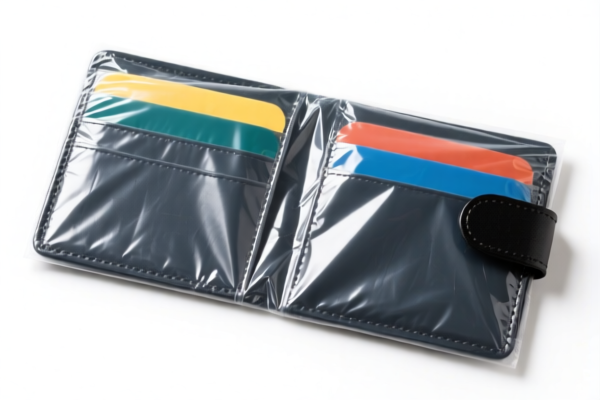
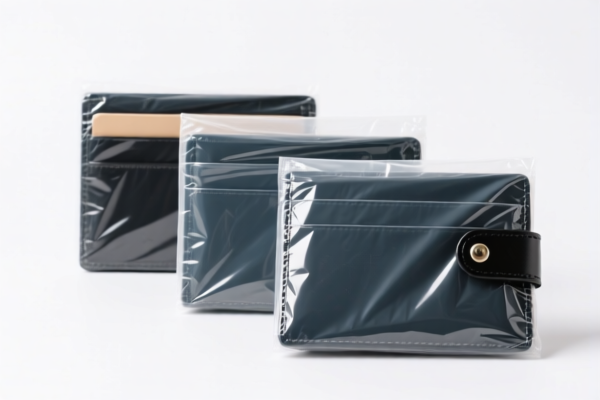
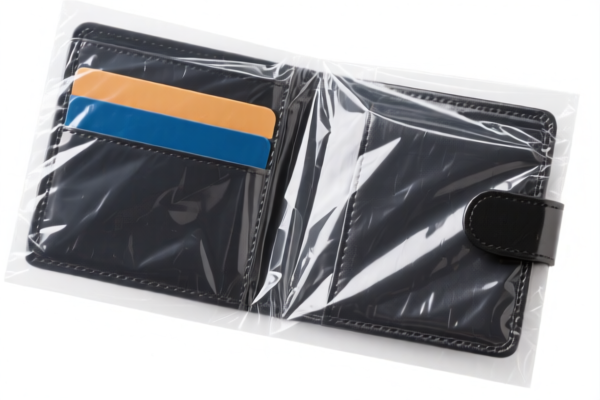
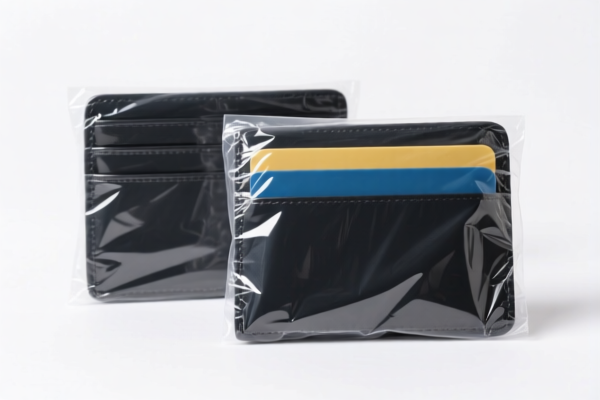
AI Analysis
🛍️ Plastic Sheeting Wallets (HS Code Classification & Clearance Guide)
🌐 HS Code Reference & Customs Clearance Guide | 2026 Latest Tariff Analysis | Professional Strategy for "Plastic Sheeting Wallets"
📌 Part I: Product Definition & Classification Logic
Plastic Sheeting Wallets are packaging or storage items primarily composed of plastic sheets, designed to hold documents, photos, or small merchandise. In international trade, their classification hinges on Material Composition (Plastic) and Form/Function (Bag, Container, or Sheet).
⚠️ Critical Classification Distinction:
- If the item is a handbag, pocketbook, or shopping bag with a plastic surface →归入 Chapter 42 (Articles of Leather; Travelling Goods).
- If the item is a pouch, envelope, or bag of plastics used for storage/packaging → 归入 Chapter 39 (Plastics and Articles Thereof).
- Key Determinant: Does it have handles/straps like a purse? → Yes = Ch. 42. No (just a foldable sheet/pouch) = Ch. 39.
📦 Part II: HS Code Classification Details (Based on Provided Data)
| HS Code | Product Description | Application Scenario | Classification Logic |
|---|---|---|---|
4202.22.15.00 |
Articles of Leather; Travelling Goods | Handbags, pocketbooks, shopping bags | Material: Outer surface is plastic sheets. Form: Fits "Bag" attribute. Logic: Treated as a fashion/purse-like item. |
4202.92.97.00 |
Other Articles of Leather/Plastics | Shopping bags, bottle bags, similar containers | Material: Made of plastic sheets. Form: "Bag" or "Container". Logic: General-purpose plastic bag/carry case. |
3923.21.00.30 |
Sacs and Pouches, of Plastics | Storage pouches, document sleeves | Material: Plastic/Vinyl. Form: Bag/Pouch (囊袋). Logic: "Other" category fallback for plastic pouches. |
3923.10.90.00 |
Boxes, Cases, Crates of Plastics | Storage baskets, rigid holders | Material: Plastic. Form: Storage basket/box. Logic: Classified as "Boxes/Crates" rather than flexible bags. |
3924.10.40.00 |
Household Articles of Plastic | Household plastic hanging baskets | Material: Plastic. Function: Household item. Logic: Specifically for home use (e.g., hanging storage). |
🔍 Important Note:
- Ch. 42 Codes (4202...) are generally for carrying items (like purses or shopping totes).
- Ch. 39 Codes (3923...,3924...) are for packaging/storage items (like file folders, pouches, or bins).
- Misclassification Risk: Declaring a rigid storage basket as a "bag" (4202) may trigger higher duties and customs scrutiny.
💰 Part III: 2026 Latest Tariff Rate Breakdown (Including Surtaxes)
✅ Applicable Country: United States (US)
✅ Origin: China (CN)
✅ Effective Date: 2025/2026 (Including imports under current trade policies)
🎯 1. 4202.22.15.00 & 4202.92.97.00 — High-Tax "Bag" Classification
Applicable if classified as handbags/shopping bags.
| Item | Content |
|---|---|
| Base Tariff | 16.0% - 17.6% (Ad Valorem) |
| Section 301 Surtax | +25.0% (From USITC Footnote) |
| 122 Clause Surtax | +10.0% (Specific China-related provision) |
| Total Tariff Rate | 51.0% - 52.6% |
| Calculation | CIF Value × (51.0% ~ 52.6%) |
| De Minimis Exemption | ❌ Not Applicable (High risk of seizure/audit) |
| Legal Basis | Base Tariff + 301 Tariff + 122 Clause |
📌 Explanation:
- These codes carry the highest tax burden due to the combination of base tariffs and two layers of附加税.
- 51-52.6% is extremely high. Importers must verify if the product truly qualifies as a "bag" (with handles) rather than a simple pouch.
🎯 2. 3923.21.00.30 & 3923.10.90.00 — Medium-Tax "Plastic Container" Classification
Applicable for pouches, bags, or baskets made of plastic.
| Item | Content |
|---|---|
| Base Tariff | 3.0% (Ad Valorem) |
| Section 301 Surtax | +25.0% |
| 122 Clause Surtax | +10.0% |
| Total Tariff Rate | 38.0% |
| Calculation | CIF Value × 38.0% |
| De Minimis Exemption | ❌ Not Applicable |
| Legal Basis | Base Tariff + 301 Tariff + 122 Clause |
📌 Explanation:
- Lower base tariff (3%) reduces the overall burden compared to Ch. 42.
- Still significant due to the 35% total additional taxes (25% + 10%).
🎯 3. 3924.10.40.00 — Low-Tax "Household Plastic Item" Classification
Applicable for household storage baskets/hanging organizers.
| Item | Content |
|---|---|
| Base Tariff | 3.4% (Ad Valorem) |
| Section 301 Surtax | 0.0% (Exempted or not applicable under this specific subheading) |
| 122 Clause Surtax | +10.0% |
| Total Tariff Rate | 13.4% |
| Calculation | CIF Value × 13.4% |
| De Minimis Exemption | ❌ Not Applicable (But lowest overall rate) |
| Legal Basis | Base Tariff + 122 Clause |
📌 Explanation:
- 13.4% is the most cost-effective classification among the provided options.
- Crucial Condition: The product must be clearly a household storage item (e.g., plastic hanging basket), not a fashion bag or general packaging.
🛠️ Part IV: Customs Clearance Practical Advice (Pitfall Avoidance Guide)
✅ 1. Preparation Checklist (Essential Documents)
| Document | Required | Explanation |
|---|---|---|
| ✅ Product Specifications | ✔️ | Material (PP/PE/PVC?), Thickness, Closure type (Zipper/Foldable). |
| ✅ Product Photos | ✔️ | Must show shape clearly: Does it have handles? Is it rigid (basket) or flexible (pouch)? |
| ✅ Commercial Invoice | ✔️ | Description should match HS code logic (e.g., "Plastic Storage Basket" vs. "Plastic Handbag"). |
| ✅ Packing List | ✔️ | Weight and dimensions to determine volume/weight ratio. |
| ✅ Origin Certificate | ✔️ | To prove China origin (for surtax calculation). |
✅ 2. Declaration Strategy (Key Tips)
🔥 Golden Rule: "Function Dictates HS; Handles Dictate Chapter!"
| Scenario | Recommended HS Code | Reason |
|---|---|---|
| Fashionable Tote with Handles | 4202.22.15.00 |
Looks like a purse/bag. High tax (51%). |
| Shopping Bag with Handles | 4202.92.97.00 |
General bag utility. High tax (52.6%). |
| Plain Plastic Pouch/Sleeve | 3923.21.00.30 |
No handles, flexible. Medium tax (38%). |
| Rigid Plastic Storage Basket | 3923.10.90.00 |
Box/Crate shape. Medium tax (38%). |
| Household Hanging Basket | 3924.10.40.00 |
Household use, plastic. Low Tax (13.4%). |
⚠️ Warning:
- Do NOT misdeclare a "Plastic Handbag" as "Household Basket" (3924) to save tax. Customs may inspect, find handles/fashion design, and reclassify to4202, resulting in back taxes + penalties.
- Do NOT misdeclare a "File Folder" as a "Handbag".
✅ 3. Special Considerations
| Situation | Advice |
|---|---|
| Product Has Both Plastic and Fabric | If plastic is the dominant outer material, it may still go to 4202 if it looks like a bag. Check "Chief Weight" rule. |
| Customs Audit Risk | High-value items under 4202 attract more scrutiny. Provide clear photos showing handles, zippers, and interior lining. |
| 122 Clause Impact | The 10% surtax applies to most plastic goods from China. Even the "low tax" code (3924) includes this 10%. |
🌍 Part V: Global Market Comparison (Brief)
| Market | Preferred HS Code | Est. Total Duty | Notes |
|---|---|---|---|
| 🇺🇸 USA | 3924.10.40.00 |
13.4% | Best rate if classified as household item. |
| 🇺🇸 USA | 4202.22.15.00 |
51.0% | Highest rate. Avoid unless it's a fashion bag. |
| 🇨🇳 China (Export) | Various | Varies | Depends on export rebate policies. |
| 🇪🇺 EU | 3923.21 |
~6-9% | No Section 301. Lower overall cost. |
📌 Conclusion:
- For US Imports, the difference between 13.4% and 52.6% is massive.
- Strategic Recommendation: If the product is a simple storage pouch or basket, ensure the description and photos align with Household/Storage (3923/3924) rather than Fashion/Bag (4202).
📌 Part VI: Common Mistakes & Pitfalls
❌ Mistake 1: Using "Plastic Bag" as a generic name without specifying form.
👉 Result: Customs may choose the worst-case scenario or demand manual classification.
✅ Fix: Use precise terms: "Plastic Hanging Storage Basket" or "Plastic Document Pouch".
❌ Mistake 2: Ignoring the "Handles" factor.
👉 Result: If it has handles, it’s likely 4202. Misdeclaring it as 3923 leads to penalties.
✅ Fix: Check design. Handles = 4202. No Handles = 3923/3924.
❌ Mistake 3: Assuming all plastic goods are low tax.
👉 Result: 4202 codes have high base tariffs.
✅ Fix: Always calculate Total Tax (Base + 301 + 122), not just base.
🎯 Part VII: Conclusion & Action Plan
🎯 Remember:
🔹 "Handles make it a Bag (High Tax); Household use makes it Plastic (Low Tax)."
🔹 "13.4% vs 52.6% – The difference is in the details."
📌 Action Steps for Importers:
1. Analyze Product Design: Does it look like a purse or a storage bin?
2. Select HS Code:
- Fashion/Shopping Bag → 4202 (Prepare for ~51% tax).
- Storage Pouch/Basket → 3923/3924 (Aim for 13.4%-38%).
3. Documentation: Ensure photos clearly show the shape and function.
4. Pre-Ruling: If unsure, apply for a Customs Ruling before shipping to avoid delays.
✨ Professional Clearance Starts with Accurate Classification!
💼 Every percentage point saved is pure profit!
Customer Reviews
About HS Code Classification
The Harmonized System (HS) is an internationally standardized nomenclature developed by the World Customs Organization (WCO) to classify traded products. Over 200 countries use the HS system as the basis for customs tariffs, trade statistics, and import/export regulations.
Each HS code follows a hierarchical structure:
- Chapter (2 digits) — Broad category of goods (e.g., Chapter 84: Machinery and Mechanical Appliances)
- Heading (4 digits) — More specific grouping within the chapter
- Subheading (6 digits) — Internationally standardized breakdown, used by all WCO member countries
- National subdivisions (8-10 digits) — Country-specific extensions for further classification, such as US HTSUS 10-digit codes
Correct HS code classification is essential for smooth customs clearance, accurate duty payment, and compliance with trade regulations. Misclassification can lead to customs delays, overpayment of duties, or penalties.
When importing from CN to US, the applicable tariff rates may include:
- Most-Favored-Nation (MFN) rate — The standard duty rate applied to WTO members
- General rate — Applied to countries without trade agreements
- Trade remedy duties — Additional tariffs such as Section 301 (anti-dumping), Section 232 (national security), or countervailing duties
The information provided on this page is for reference purposes only. For official classification, please consult with your local customs authority or a licensed customs broker.