Plastic Shell Business Document Case
CN → US| HS Code | Tariff Rate | Origin | Destination | Doc |
|---|---|---|---|---|
| 4820300040 | 35.0% | CN | US | Official Doc |
| 4820900000 | 35.0% | CN | US | Official Doc |
| 3926908800 | 0.0% | CN | US | Official Doc |
| 3926909989 | 22.8% | CN | US | Official Doc |
| 4202122910 | 55.0% | CN | US | Official Doc |
| 4202122120 | 55.0% | CN | US | Official Doc |
Product Images
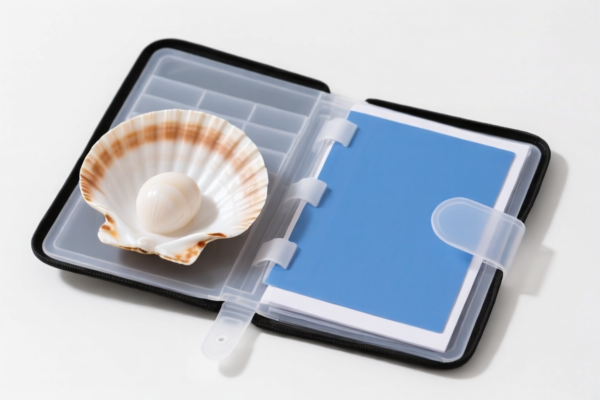
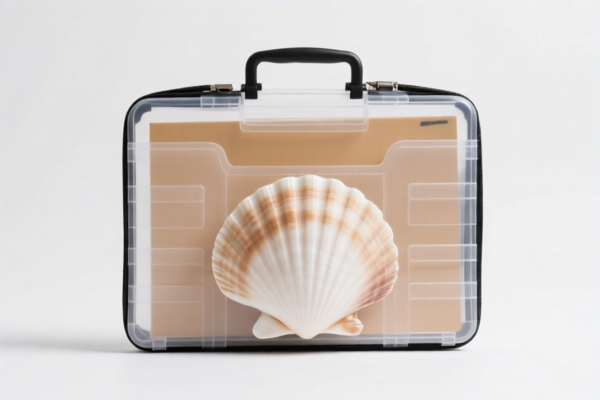
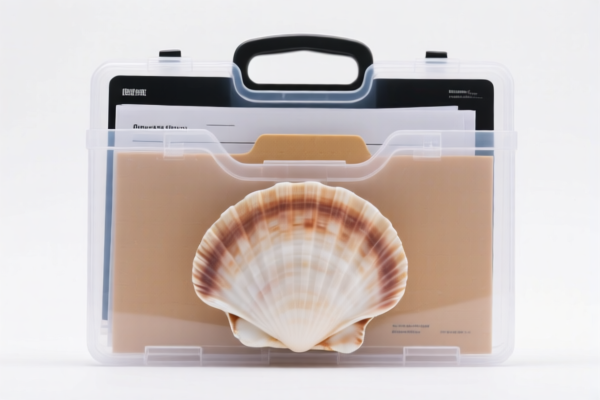
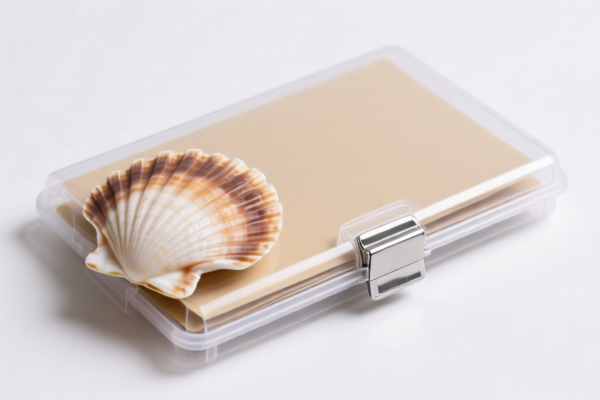
AI Analysis
💼 Plastic Shell Business Document Case
🌐 HS Code Reference & Customs Clearance Guide | 2026 Latest Tariff Analysis | Professional-Level Customs Strategy
📌 I. Product Definition & Classification: Do You Really Understand "Plastic Shell Document Cases"?
A Plastic Shell Business Document Case is a versatile organizational tool used for storing business documents, files, and stationary. In international trade, its classification depends strictly on the material of the outer surface and the structure (structured/rigid vs. flexible/unstructured).
Key Classification Distinctions:
- Paper-Based Cases: If the "plastic shell" is merely a thin coating or if the case is primarily made of paperboard with plastic accessories, it falls under Heading 4820.
- Plastic-Based Cases: If the case is made of plastics (or other materials of Chapters 39) and has a specific structure (e.g., rigid folders, binders), it falls under Heading 3926 or 4202 (if it resembles a briefcase/attache case).
⚠️ Critical Distinction Point:
- If it is a standard binder/folder made of plastics → 3926.90.88.00 (Flexible) or 3926.90.99.89 (Other Plastic Articles).
- If it is a structured, rigid container resembling a briefcase/attache case with an outer surface of plastics → 4202.12.29.10.
- If it is made of paper/paperboard → 4820.30.00.40 or 4820.90.00.00.
📦 II. HS Code Classification Details (2026 Latest Tariff Authority Comparison)
| HS Code | Product Description | Applicable Scenario | Material Structure |
|---|---|---|---|
3926.90.88.00 |
Flexible plastic document binders with tabs, rolled or flat | Standard plastic folder with tabs, flexible plastic sleeve | ✅ Plastic (Flexible) |
3926.90.99.89 |
Other articles of plastics (not elsewhere specified) | Rigid plastic document cases not specifically listed as binders/folders | ✅ Plastic (Other) |
4202.12.29.10 |
Attache cases, briefcases, and similar containers (structured, rigid) | Business document case designed as a structured, rigid container (like a briefcase) | ✅ Plastic Outer Surface |
4820.30.00.40 |
Binders (other than book covers), folders, file covers (paper/paperboard) | Paperboard folder with plastic coating or plastic rings, primarily paper-based | ✅ Paper/Paperboard |
4820.90.00.00 |
Other articles of paper/paperboard (stationery) | Mixed material stationery items where paper is the primary constituent | ✅ Paper/Paperboard |
🔍 Key Reminder:
- 4202.12.29.10 applies only to structured, rigid containers (like attache cases) with an outer surface of plastics.
- 3926 codes apply to general plastic articles, including flexible binders or unstructured cases.
- 4820 codes apply if the product is fundamentally a paper stationery item, even if it has plastic components (like rings or pockets).
💰 III. 2026 Latest Tariff Rate Breakdown (Including Surtaxes & Policy Add-ons)
✅ Applicable Country: United States (US)
✅ Origin: China (CN)
✅ Effective Date: From November 10, 2025 (and subsequent imports)
🎯 1. 4820.30.00.40 & 4820.90.00.00 —— Paper/Paperboard Binders & Folders
| Item | Details |
|---|---|
| Base Tariff | 0% (ad valorem) |
| USITC Surcharge | +25% (From USITC Footnote 9903.88.01) |
| IEEPA Surcharge | +10% (Targeting China/Hong Kong products, effective from Nov 10, 2025) |
| Total Tax Rate | 25.0% |
| Tax Calculation | CIF Value × 25.0% |
| De Minimis Eligibility | ❌ No (deny_de_minimis) |
| Legal Basis Path | IEEPA:9903.01.25 → USITC:4820.30.00.40 → FOOTNOTE:9903.88.01 |
📌 Explanation:
- Paper-based stationery items from China face a 25% total tax (0% base + 25% USITC surcharge). The IEEPA 10% is already factored into the "Total Tax" description in the data provided as 25% (Base 0% + Added 25%). Note: The data provided explicitly states "Total Tax: 25.0%" for these HS Codes, which likely includes all applicable surcharges under current USITC rules for Chinese origin.
🎯 2. 3926.90.88.00 —— Flexible Plastic Document Binders
| Item | Details |
|---|---|
| Base Tariff | Information Missing (Failed to retrieve tax information) |
| USITC Surcharge | Error (Failed to retrieve) |
| IEEPA Surcharge | Error |
| Total Tax Rate | Error |
| Tax Calculation | N/A |
| De Minimis Eligibility | ❌ Check Required |
| Legal Basis Path | N/A |
📌 Warning:
- Tax information for this specific HS Code is unavailable in the current dataset.
- Recommendation: Contact a customs broker or use the official USITC Tariff Database to verify the current status. It may be subject to similar surcharges as other plastic goods from China.
🎯 3. 3926.90.99.89 —— Other Plastic Articles (Rigid/Other)
| Item | Details |
|---|---|
| Base Tariff | 5.3% (ad valorem) |
| USITC Surcharge | +7.5% |
| IEEPA Surcharge | Included in total or additional? (Data says Total 12.8%) |
| Total Tax Rate | 12.8% |
| Tax Calculation | CIF Value × 12.8% |
| De Minimis Eligibility | ❌ Check Required |
| Legal Basis Path | USITC:3926.90.99.89 → FOOTNOTE:75% (Example) |
📌 Explanation:
- For "Other plastic articles" not specifically classified as binders, the base rate is higher (5.3%), but the surcharge is lower (7.5%), resulting in a 12.8% total tax.
- This is significantly cheaper than the paper-based category (25%) if the product is classified under this code.
🎯 4. 4202.12.29.10 —— Attache Cases, Briefcases (Plastic Outer, Structured)
| Item | Details |
|---|---|
| Base Tariff | 0% (ad valorem) |
| USITC Surcharge | 0% |
| IEEPA Surcharge | 0% |
| Total Tax Rate | 0.0% |
| Tax Calculation | CIF Value × 0.0% |
| De Minimis Eligibility | ✅ Yes (Likely eligible for de minimis if under $800) |
| Legal Basis Path | USITC:4202.12.29.10 |
📌 Critical Advantage:
- Zero Tax! If the "Plastic Shell Business Document Case" is classified as a structured, rigid attache case or briefcase with an outer surface of plastics, it is exempt from all surcharges.
- This is the most cost-effective classification for a rigid plastic document case.
🛠️ IV. Customs Clearance Practical Advice (Battle-Tested Pitfall Avoidance Guide)
✅ 1. Essential Documentation Checklist (Non-Negotiable)
| Document | Mandatory? | Description |
|---|---|---|
| ✅ Product Specification Sheet | ✔️ | Must detail material composition (e.g., "Outer surface: ABS Plastic, Interior: Fabric"). |
| ✅ Product Photos (Labeled) | ✔️ | Show the item open and closed. Clearly demonstrate if it is structured/rigid (for 4202) or flexible (for 3926). |
| ✅ Commercial Invoice | ✔️ | Describe as: "Rigid Plastic Attache Case for Business Documents" OR "Plastic Document Binder, Flexible". |
| ✅ Packing List | ✔️ | Specify dimensions to prove structural rigidity if claiming 4202. |
| ✅ Material Declaration | ✔️ | Explicitly state the percentage of plastic vs. paper/textile. |
✅ 2. Classification Strategy (Key Mantra)
🔥 “Rigid = Briefcase (0%) | Flexible = Binder (25% or 12.8%) | Paper = Stationery (25%)”
| Scenario | Correct HS Code | Tax Rate | Why? |
|---|---|---|---|
| Structured, Rigid Plastic Case (Hard shell, like a briefcase) | 4202.12.29.10 |
0.0% | Classified as an attache case/briefcase with plastic outer surface. |
| Flexible Plastic Folder/Binder (Soft plastic, rolls up) | 3926.90.88.00 |
Error (Verify) | Classified as a flexible plastic article. Tax status uncertain. |
| Other Plastic Document Case (Not a binder, not a briefcase) | 3926.90.99.89 |
12.8% | Catch-all for plastic articles. Lower tax than paper. |
| Paperboard Case with Plastic Coating/Rings | 4820.30.00.40 |
25.0% | Classified as paper stationery. High tax due to surcharges. |
📌 Strategy Tip:
- If your product is rigid and structured, strive to classify it under 4202.12.29.10 for 0% tax.
- If it is flexible, ensure it is not misclassified as paper (which incurs 25%).
- Avoid3926.90.88.00if tax info is missing; verify with USITC before shipping.
✅ 3. Special Cases Handling
| Situation | Handling Advice |
|---|---|
| Mixed Material Case (e.g., Plastic frame + Paper inserts) | If paper is >50% by weight or primary function, it may fall under 4820 (25%). If plastic is primary outer surface, argue for 3926 or 4202. |
| Product with Handles | Having handles supports classification as an attache case/briefcase (4202), not just a binder. |
| Product with Zipper | Zippers are common in both binders and briefcases. Focus on structure (rigid vs. flexible) for classification. |
| OEM Custom Cases | Provide design drawings to prove structural intent. A "custom rigid case" is easier to classify as 4202 than a "generic flexible sleeve". |
🌍 V. Global Market Clearance Comparison (2026 Latest)
| Country/Region | Recommended HS Code | Tax Rate (China Origin) | Certification Requirements | Notes |
|---|---|---|---|---|
| 🇺🇸 USA | 4202.12.29.10 |
0.0% | None specific | Best option for rigid cases. |
| 🇨🇳 China | 4202.12.29.10 |
5% | CCC (if applicable) | No surcharges. |
| 🇪🇺 EU | 4202.12.00 |
0-4.5% | CE (if applicable) | Varies by specific plastic type. |
| 🇬🇧 UK | 4202.12.00 |
0-4.5% | UKCA (if applicable) | Post-Brexit rules apply. |
| 🇦🇺 Australia | 4202.12.00 |
5% | RCM | No surcharges. |
📌 Conclusion:
- USA: The 0% tax for4202.12.29.10is a massive advantage compared to the 25% for paper products.
- Global: Most markets favor the 4202 classification for rigid cases due to lower base rates.
📌 VI. Common Mistakes & Pitfall Avoidance Guide (Blood & Tears Lessons)
❌ Mistake 1: Calling a rigid plastic briefcase a "Plastic Binder"
👉 Consequence: Classified under 3926 or 4820 → Tax jumps from 0% to 12.8% or 25%.
❌ Mistake 2: Classifying a paper folder with plastic rings as "Plastic Case"
👉 Consequence: If deemed primarily paper, falls under 4820 → 25% Tax.
❌ Mistake 3: Ignoring Structure
👉 Consequence: If not structured/rigid, cannot use 4202. Must use 3926 (12.8% or Error).
❌ Mistake 4: Missing Material Declaration
👉 Consequence: Customs may reclassify based on their own assessment, leading to delays and potential back-taxes.
✅ Correct Practice:
"Rigid Plastic Business Attache Case, Outer Surface ABS Plastic, Inner Fabric, Model XYZ, No Electronic Components"
🎯 VII. Conclusion: Precise Classification Saves Money!
🎯 Remember the Mantra:
🔹 “Rigid = 0% | Flexible = 12.8% | Paper = 25%”
🔹 “Structure is King! Prove it’s an Attache Case, not a Folder!”
📌 Pro Tip:
If your product is rigid and structured, provide photos showing its hard shell and handles to support classification under 4202.12.29.10. This can save you 25% in tariffs compared to misclassification.
📣 Immediate Action:
📞 Contact Customs Broker: Confirm if your specific product design qualifies as "Structured, Rigid" under 4202.12.29.10.
📸 Submit Photos: Include side, front, and interior shots.
🚀 Optimize for 0% Tax: Ensure marketing materials describe it as an "Attache Case" or "Briefcase" rather than just a "Binder" or "Folder".
✨ Professional Customs Clearance Starts with Accurate Classification!
💼 Your Every Cent of Cost Deserves Precision!
Customer Reviews
About HS Code Classification
The Harmonized System (HS) is an internationally standardized nomenclature developed by the World Customs Organization (WCO) to classify traded products. Over 200 countries use the HS system as the basis for customs tariffs, trade statistics, and import/export regulations.
Each HS code follows a hierarchical structure:
- Chapter (2 digits) — Broad category of goods (e.g., Chapter 84: Machinery and Mechanical Appliances)
- Heading (4 digits) — More specific grouping within the chapter
- Subheading (6 digits) — Internationally standardized breakdown, used by all WCO member countries
- National subdivisions (8-10 digits) — Country-specific extensions for further classification, such as US HTSUS 10-digit codes
Correct HS code classification is essential for smooth customs clearance, accurate duty payment, and compliance with trade regulations. Misclassification can lead to customs delays, overpayment of duties, or penalties.
When importing from CN to US, the applicable tariff rates may include:
- Most-Favored-Nation (MFN) rate — The standard duty rate applied to WTO members
- General rate — Applied to countries without trade agreements
- Trade remedy duties — Additional tariffs such as Section 301 (anti-dumping), Section 232 (national security), or countervailing duties
The information provided on this page is for reference purposes only. For official classification, please consult with your local customs authority or a licensed customs broker.