Plastic Shell Luggage Case
CN → US| HS Code | Tariff Rate | Origin | Destination | Doc |
|---|---|---|---|---|
| 3923900080 | 38.0% | CN | US | Official Doc |
| 3926305000 | 22.8% | CN | US | Official Doc |
| 3926909989 | 22.8% | CN | US | Official Doc |
| 4202122150 | 55.0% | CN | US | Official Doc |
| 4202122120 | 55.0% | CN | US | Official Doc |
| 3923109000 | 38.0% | CN | US | Official Doc |
Product Images
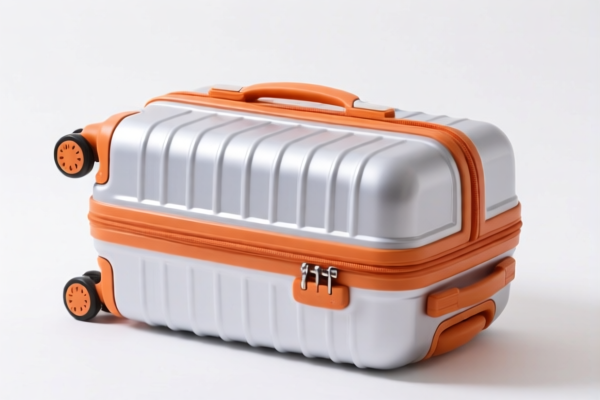
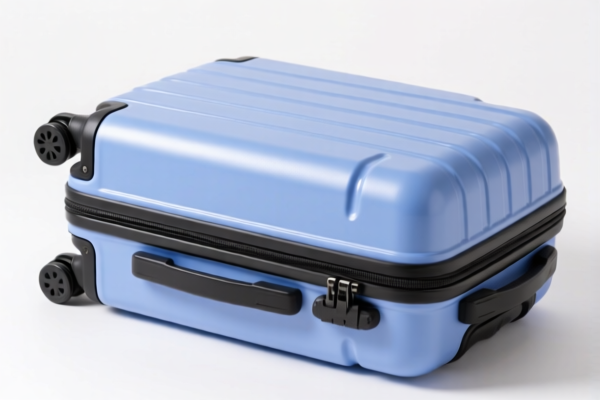
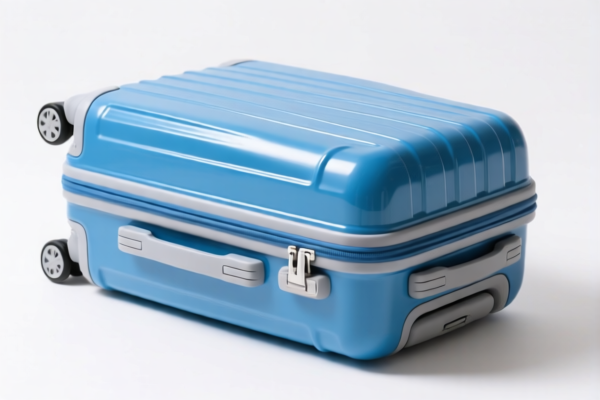
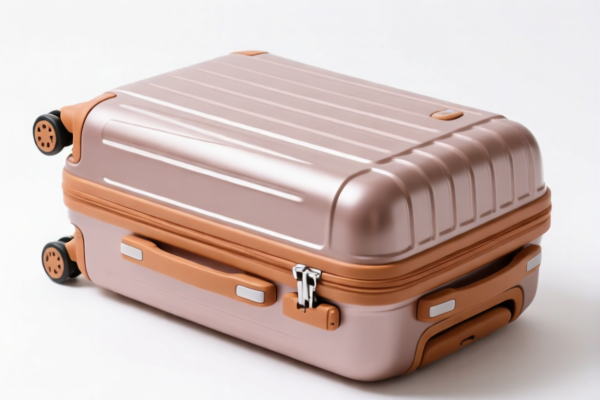
AI Analysis
🧳 Plastic Shell Luggage Case (Hard-Sided Suitcases)
🌐 HS Code Reference & Customs Clearance Guide | 2024/2025 Tariff Analysis | Strategic Classification for US Imports
📌 I. Product Definition & Classification: What Exactly Is a "Plastic Shell Luggage Case"?
A Plastic Shell Luggage Case (commonly known as a hard-sided suitcase or carry-on) is a container designed for carrying personal effects during travel. In international trade and US Customs (CBP) classification, the key differentiator is not just the material, but the specific legal definition of "luggage" vs. generic "boxes" or "plastic articles."
Two Main Classification Paths:
- Specific Luggage Heading (Chapter 42): If the item is explicitly recognized as "suitcases," "trunks," "handbags," or "travel bags," it falls under Heading 4202. This is the most common and often most favorable route for finished luggage products, unless the tax burden is prohibitively high due to specific trade remedies.
- Generic Plastic Article/Box Heading (Chapter 39): If the item is deemed a "box," "case," or generic "plastic article" without the specific characteristics of travel luggage (or if the importer prefers a lower duty rate despite potential scrutiny), it may fall under Heading 3923 (Boxes, cases, crates...) or Heading 3926 (Other plastic articles).
⚠️ Critical Distinction:
- If it is a finished, ready-to-use suitcase with handles, wheels, and locking mechanisms → 4202 is the technical correct HS Code.
- If it is a component part (e.g., a plastic shell without hardware) or a generic container not primarily designed as luggage → 3923 or 3926 may apply.
- Note on Trade Policy: The data provided shows significantly higher tariffs for Chapter 42 codes compared to Chapter 39 codes for plastic materials. This suggests a potential strategy where importers might argue for Chapter 39 classification to reduce duty, however, this carries high risk of reclassification by CBP.
📦 II. HS Code Classification Details (Based on Provided Data)
| HS Code | Product Description | Application Scenario | Key Classification Criteria |
|---|---|---|---|
4202.12.21.50 |
Plastic material, suitcases, trunks, and handbags | Finished hard-sided luggage, carry-ons, checked bags | ✅ Specific Luggage: Defined as "suitcases" under Chapter 42. |
4202.12.21.20 |
Outer surface is plastic, belonging to the category of boxes/suitcases | Similar to above, potentially different sub-classification within 4202 | ✅ Specific Luggage: Explicitly categorized as luggage/box in Chapter 42. |
3923.90.00.80 |
Plastic material, used for cargo transport/packaging supplies | Cases deemed as "packaging" or "transport supplies" rather than consumer luggage | ❌ Generic Box/Case: Classified as a plastic box/case for packaging. |
3923.10.90.00 |
Plastic material, other boxes/cases category | Generic plastic containers, not specifically "luggage" | ❌ Generic Box/Case: "Other" category in plastic boxes. |
3926.30.50.00 |
Plastic material, fittings or extended application plastic products | Plastic parts, connectors, or non-luggage plastic articles | ❌ Plastic Article: Viewed as a component or general plastic good. |
3926.90.99.89 |
Plastic material, other plastic products category | Miscellaneous plastic items, fallback category | ❌ Plastic Article: General residual category for plastic goods. |
🔍 Key Insight:
- Chapter 42 (4202.12.21.xx) has a Total Tax Rate of 55.0% (Base 20% + Section 301/122 tariffs).
- Chapter 39 (3923/3926) has Total Tax Rates of 22.8% or 38.0%.
- Strategic Dilemma: While 4202 is the technically correct code for finished luggage, the 38% or 22.8% rates under 3923/3926 are significantly lower. Importers often seek these codes to save costs, but must justify why the item is not "luggage" under Chapter 42.
💰 III. 2024/2025 Tariff Rate Breakdown (Including Additional Duties)
✅ Applicable Market: United States (US)
✅ Origin: China (CN) (Implied by "Section 122" and high US tariffs in data)
✅ Effective Time: Current trade policies (Section 301/122)
🎯 1. Chapter 42: The "Luggage" Classification (High Risk, High Duty)
HS Codes: 4202.12.21.50, 4202.12.21.20
| Item | Detail |
|---|---|
| Base Duty Rate | 20.0% (Ad Valorem) |
| Section 301 / Additional Tariff | 25.0% |
| Section 122 Tariff | 10.0% |
| Total Effective Tax Rate | 55.0% |
| Tax Calculation | CIF Value × 55% |
| De Minimis Exemption | ❌ Not Applicable (Section 321 threshold does not cover Section 301/122 duties) |
| Legal Basis | HTSUS 4202.12.21 + Section 301 Footnotes + Section 122 Order |
📌 Explanation:
- This is the standard duty for finished plastic luggage from China.
- The 55% total rate makes this category extremely expensive.
- CBP Stance: CBP consistently classifies finished suitcases with handles/wheels under 4202. Challenging this requires strong evidence that the item is not primarily for travel.
🎯 2. Chapter 39: The "Plastic Box/Case" Classification (Lower Duty, Higher Risk)
HS Codes: 3923.90.00.80, 3923.10.90.00
| Item | Detail |
|---|---|
| Base Duty Rate | 3.0% (Ad Valorem) |
| Section 301 / Additional Tariff | 25.0% |
| Section 122 Tariff | 10.0% |
| Total Effective Tax Rate | 38.0% |
| Tax Calculation | CIF Value × 38% |
| De Minimis Exemption | ❌ Not Applicable |
| Legal Basis | HTSUS 3923.xx + Section 301 Footnotes + Section 122 Order |
📌 Explanation:
- Savings: 17% lower than Chapter 42 (55% - 38% = 17% difference).
- Risk: High risk of reclassification by CBP if the item clearly functions as luggage. Requires robust documentation proving the item is a "packaging box" or "transport case," not a "suitcase."
🎯 3. Chapter 39: Other Plastic Articles (Specific Fittings/Miscellaneous)
HS Codes: 3926.30.50.00, 3926.90.99.89
| Item | Detail |
|---|---|
| Base Duty Rate | 5.3% (Ad Valorem) |
| Section 301 / Additional Tariff | 7.5% |
| Section 122 Tariff | 10.0% |
| Total Effective Tax Rate | 22.8% |
| Tax Calculation | CIF Value × 22.8% |
| De Minimis Exemption | ❌ Not Applicable |
| Legal Basis | HTSUS 3926.xx + Section 301 Footnotes + Section 122 Order |
📌 Explanation:
- Lowest Duty Rate in the dataset (22.8%).
- Applicability: Only if the item is NOT a complete case/box/luggage but rather parts, fittings, or miscellaneous plastic items.
- Risk: EXTREMELY HIGH. Attempting to classify a finished suitcase as "plastic fittings" (3926.30) or "other plastic articles" (3926.99) is almost certain to result in a CBP seizure, reclassification, and penalty. This code is likely for components (e.g., plastic hinges, latches, or unformed shells), not the final product.
🛠️ IV. Customs Clearance Practical Advice (Avoiding Pitfalls)
✅ 1. Documentation Checklist (Must-Haves)
| Document | Required? | Description |
|---|---|---|
| ✅ Product Specification Sheet | ✔️ | Must detail dimensions, weight, material (e.g., 100% Polycarbonate), and function. |
| ✅ Product Photos | ✔️ | Show all angles: handles, wheels, zippers, locks, interior lining. Proves it's "luggage." |
| ✅ Commercial Invoice | ✔️ | Description must be precise. Avoid vague terms like "Plastic Case." Use "Hard-Sided Travel Suitcase." |
| ✅ Packing List | ✔️ | Ensure no loose components are declared separately unless they are truly parts. |
| ✅ Proof of Non-Luggage Use (If claiming 3923/3926) | ⚠️ | Only if applying for lower duty. Must prove item is for cargo/industrial storage, not personal travel. |
✅ 2. Classification Strategy & Tips
🔥 "Function Over Form: If it walks like a suitcase, CBP taxes it like a suitcase!"
| Scenario | Recommended HS Code | Duty Rate | Reasoning |
|---|---|---|---|
| Finished Suitcase (with wheels, handle, lock) | 4202.12.21.xx |
55.0% | Correct legal classification. Low risk of audit. |
| Empty Plastic Shell (no hardware, for customization) | 3923.90.00.80 or 3926.90.99.89 |
38.0% or 22.8% | Argue as "plastic container" or "part." High risk. |
| Plastic Luggage Parts (e.g., replacement wheels, handles) | 3926.30.50.00 |
22.8% | Correct for parts. Not for finished goods. |
| Industrial Plastic Crate (for shipping goods, not travel) | 3923.90.00.80 |
38.0% | Correct for industrial use. |
📌 Critical Warning:
- Do NOT misclassify a finished suitcase as3926.30.50.00or3926.90.99.89to save duty. CBP has sophisticated AI and manual reviews for luggage. Penalties can include 100% duty back-payment + fraud penalties.
- If you are an OEM supplier, ensure your client's description matches the HS Code. If they specify "Luggage," you must use 4202.
✅ 3. Special Circumstances
| Situation | Handling Advice |
|---|---|
| Dropshipping / De Minimis | Section 321 ($800) does NOT apply to goods subject to Section 301 or 122 tariffs. All duties must be paid. |
| Hybrid Materials | If the shell is plastic but the frame is metal, check if it retains "luggage" character. Usually, yes → 4202. |
| Pre-shipment Ruling | For large volumes, apply for a CBP Advance Ruling. This legally binds CBP to your classification, protecting against future audits. |
🌍 V. Global Market Comparison (2024/2025)
| Market | Recommended HS Code | Estimated Duty (China Origin) | Notes |
|---|---|---|---|
| 🇺🇸 USA | 4202.12.21.xx |
55.0% | High tariffs due to Section 301 & 122. |
| 🇺🇸 USA (If misclassified as 3923) | 3923.90.00.80 |
38.0% | High Audit Risk. |
| 🇪🇺 EU | 4202.12.90 |
~4.0% | No Section 301/122. Standard MFN rate. |
| 🇨🇳 China (Export) | 4202.12.21.xx |
0% (Export Duty) | No export duty, but needs VAT rebate docs. |
📌 Conclusion for US Importers:
- The 55% duty is a major cost factor.
- Mitigation Strategy: Consider supply chain diversification (e.g., manufacturing in Vietnam or Mexico if eligible for lower duties) or product redesign to change the primary material or function (e.g., soft-sided luggage might have different tariff implications, though often still 4202).
- Do not rely on 3926/3926 codes for finished luggage unless you have legal counsel confirming the item does not meet the definition of "suitcase" under HTSUS Note 2 to Chapter 42.
📌 VI. Common Mistakes & Pitfalls (Lessons Learned)
❌ Mistake 1: Declaring a finished suitcase as "Plastic Storage Container" (3923.90.00.80) to save 17%.
👉 Consequence: CBP reclassifies it to 4202.12.21.xx, charges 55%, plus interest and penalties. Loss: 38% + Penalties.
❌ Mistake 2: Using 3926.30.50.00 for a complete suitcase.
👉 Consequence: Immediate flag for "Misclassification." CBP assumes intent to evade duty. High risk of audit.
❌ Mistake 3: Ignoring Section 122 Tariffs.
👉 Consequence: Failing to include the 10% Section 122 in cost calculations leads to underpayment and hold-ups.
✅ Correct Approach:
"Hard-Sided Travel Suitcase, Polycarbonate, with Wheels and Telescopic Handle, Model XYZ" → 4202.12.21.50
Declare Truthfully: If it's luggage, pay the 55%. It’s the safest path.
🎯 VII. Conclusion: Professional Classification Saves Money
🎯 Remember the Rule:
🔹 "If it travels with you, it’s Chapter 42."
🔹 "If it ships goods, it’s Chapter 39."
🔹 "Don’t trick CBP; they’re smarter than you."
📌 Pro Tip:
For high-volume imports, always request a Letter of Ruling from CBP. The small fee for a ruling is insignificant compared to the potential cost of a 55% duty back-claim.
📣 Take Action Now:
📞 Consult a Licensed Customs Broker to review your product specs.
📄 Prepare accurate invoices that reflect the true nature of the goods.
🚀 Plan for the 55% duty in your pricing strategy to avoid margin erosion.
✨ Professional Clearance, Starts with Accurate Classification!
💼 Every Percent of Duty Saved is Pure Profit, But Only If It’s Legal!
Customer Reviews
About HS Code Classification
The Harmonized System (HS) is an internationally standardized nomenclature developed by the World Customs Organization (WCO) to classify traded products. Over 200 countries use the HS system as the basis for customs tariffs, trade statistics, and import/export regulations.
Each HS code follows a hierarchical structure:
- Chapter (2 digits) — Broad category of goods (e.g., Chapter 84: Machinery and Mechanical Appliances)
- Heading (4 digits) — More specific grouping within the chapter
- Subheading (6 digits) — Internationally standardized breakdown, used by all WCO member countries
- National subdivisions (8-10 digits) — Country-specific extensions for further classification, such as US HTSUS 10-digit codes
Correct HS code classification is essential for smooth customs clearance, accurate duty payment, and compliance with trade regulations. Misclassification can lead to customs delays, overpayment of duties, or penalties.
When importing from CN to US, the applicable tariff rates may include:
- Most-Favored-Nation (MFN) rate — The standard duty rate applied to WTO members
- General rate — Applied to countries without trade agreements
- Trade remedy duties — Additional tariffs such as Section 301 (anti-dumping), Section 232 (national security), or countervailing duties
The information provided on this page is for reference purposes only. For official classification, please consult with your local customs authority or a licensed customs broker.