Plastic Shell Suitcase
CN → US| HS Code | Tariff Rate | Origin | Destination | Doc |
|---|---|---|---|---|
| 3923109000 | 38.0% | CN | US | Official Doc |
| 4202122150 | 55.0% | CN | US | Official Doc |
| 3926305000 | 22.8% | CN | US | Official Doc |
| 4202122120 | 55.0% | CN | US | Official Doc |
| 3923900080 | 38.0% | CN | US | Official Doc |
| 3926909989 | 22.8% | CN | US | Official Doc |
Product Images
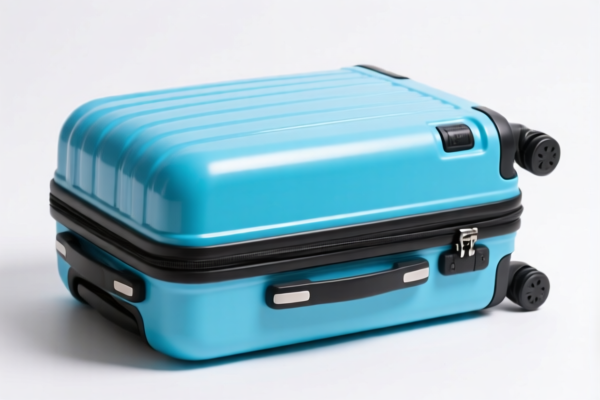
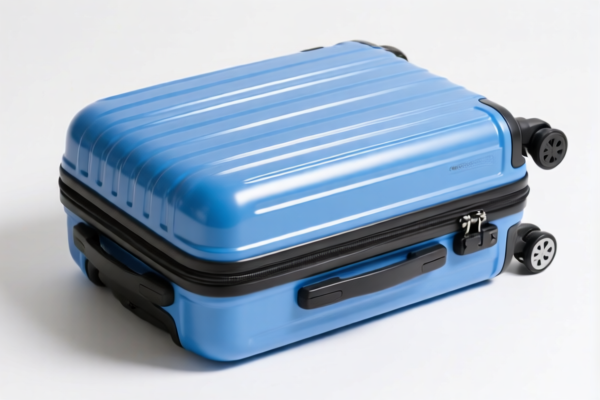
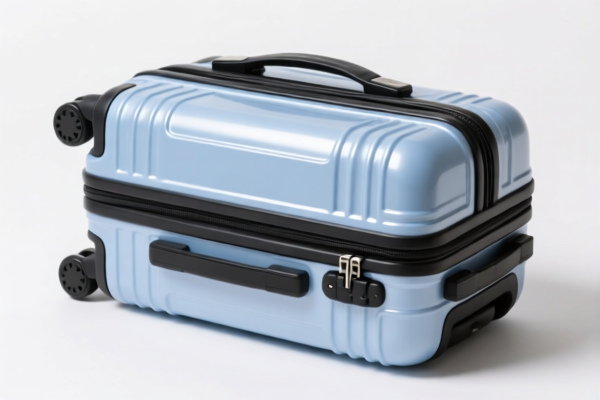
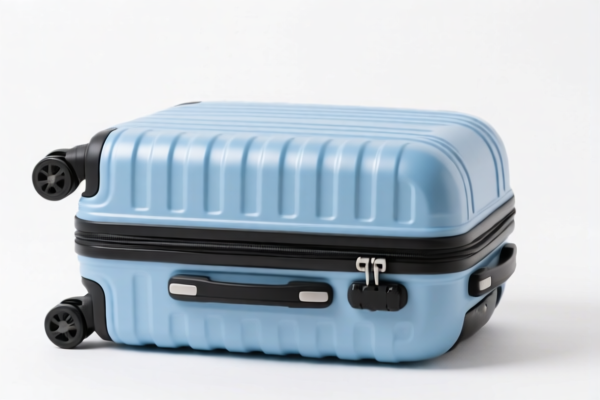
AI Analysis
🧳 Plastic Shell Suitcase (Hard-Shell Luggage)
🌐 HS Code Reference & Customs Clearance Guide | 2026 Latest Tariff Breakdown | Professional Strategy for US Imports
📌 I. Product Definition & Classification: Is Your "Suitcase" Really a "Suitcase"?
Plastic hard-shell suitcases are ubiquitous in global travel, but in international trade, their classification depends heavily on their primary use and structural integrity. Are they finished goods for consumers, or components for packaging?
1. Finished Luggage (Travel Suitcases):
Hard-shell cases designed for carrying personal belongings during travel. They have handles, wheels, and locking mechanisms.
Key Feature: Designed for personal use, rigid structure.
Likely Classification: 4202.12 (Trunks, suitcases, vanity cases, etc.).
2. Plastic Containers/Boxes (Packaging/Transport):
Plastic boxes used for shipping, storage, or industrial packaging (e.g., plastic totes, crates).
Key Feature: No handles/wheels designed for personal carrying; often stackable for logistics.
Likely Classification: 3923.10 (Plastic boxes, cases, crates).
3. Plastic Parts (Components):
Handles, wheels, latches, or panels not yet assembled into a suitcase.
Key Feature: Individual parts, not a complete article.
Likely Classification: 3926.90 (Other plastic articles) or 3926.30 (Fittings/Accessories).
⚠️ Critical Distinction Point:
- If it has wheels, telescopic handles, and a lock for personal travel → 4202.12
- If it is a generic plastic box without travel features → 3923.10
- If it is a part (e.g., just the shell or just the handle) → 3926.90
📦 II. HS Code Classification Details (2026 Latest Tariff Authority Mapping)
Below are the specific HS Codes from your data, mapped to their logical product descriptions and tax implications.
| HS Code | Product Description | Application Scenario | Key Features |
|---|---|---|---|
4202.12.21.50 |
Plastic Hard-Shell Suitcase | Consumer travel luggage | Plastic exterior, complete suitcase (wheels/handles), fits definition of "Trunks, suitcases". |
4202.12.21.20 |
Plastic Hard-Shell Suitcase | Consumer travel luggage | Similar to above; plastic surface, container for personal items. |
3923.10.90.00 |
Plastic Transport/Packaging Box | Industrial/Logistics packaging | Plastic box for goods transport, not for personal travel. |
3923.90.00.80 |
Other Plastic Transport/Package Goods | General plastic containers | Other plastic articles for transport/packaging, not specifically "boxes". |
3926.30.50.00 |
Plastic Fittings/Accessories | Luggage parts (e.g., latches, casters) | Plastic components used in luggage manufacturing. |
3926.90.99.89 |
Other Plastic Articles | Unassembled shells or miscellaneous plastic parts | Plastic parts not elsewhere specified, including suitcase shells if not classified as luggage. |
🔍 Focus Note:
- For finished suitcases, the duty rate is significantly higher due to Section 301 tariffs.
- For packaging boxes, the base duty is low, but Section 301 still applies.
- For parts, the duty structure is different, often lower base rate but still subject to additional levies.
💰 III. 2026 Latest Tariff Rate Breakdown (Including Additional Duties & Policies)
✅ Applicable Country: United States (US)
✅ Origin: China (CN)
✅ Effective Date: Current trade policy (2024-2026 context)
🎯 1. Finished Suitcases: 4202.12.21.50 & 4202.12.21.20
These are classified as Luggage. They face the highest combined tariff burden.
| Item | Content |
|---|---|
| Base Duty Rate | 20.0% (Standard MFN rate for plastic luggage) |
| Section 301 Additional Duty | +25.0% (Retaliatory tariff on Chinese goods) |
| Section 301 (122 Clause) Additional Duty | +10.0% (Specific additional tariff on certain consumer goods) |
| Total Effective Duty Rate | 55.0% |
| Tax Calculation | CIF Value × 55% |
| De Minimis Exemption Eligible? | ❌ No (deny_de_minimis). Section 301 tariffs apply even to low-value shipments. |
| Legal Basis Path | USITC:4202.12.21.50 → SECTION301:9903.88.01 → SECTION301_122:9903.01.25 |
📌 Explanation:
- The 20% is the standard duty for hard-shell luggage under HTS 4202.12.
- The 25% is the standard Section 301 tariff on Chinese-origin goods.
- The 10% is a specific additional levy on certain plastic articles/consumer goods (122 Clause).
- Total: 55%. This is a very high cost factor. Profit margins must account for this.
🎯 2. Plastic Packaging Boxes: 3923.10.90.00 & 3923.90.00.80
These are classified as Plastic Containers/Packaging. They have a lower base duty but still face additional tariffs.
| Item | Content |
|---|---|
| Base Duty Rate | 3.0% (Low base rate for plastic packaging) |
| Section 301 Additional Duty | +25.0% (Standard Section 301) |
| Section 301 (122 Clause) Additional Duty | +10.0% |
| Total Effective Duty Rate | 38.0% |
| Tax Calculation | CIF Value × 38% |
| De Minimis Exemption Eligible? | ❌ No (deny_de_minimis). |
| Legal Basis Path | USITC:3923.10.90.00 → SECTION301:9903.88.01 → SECTION301_122:9903.01.25 |
📌 Note:
- While the total rate (38%) is lower than luggage (55%), it is still substantial.
- Do not misdeclare luggage as "packaging boxes" to save duties. Customs will inspect for wheels/handles and penalize.
🎯 3. Plastic Parts/Fittings: 3926.30.50.00 & 3926.90.99.89
These are classified as Plastic Articles/Components. Lower base duty, but additional tariffs still apply.
| Item | Content |
|---|---|
| Base Duty Rate | 5.3% (Standard rate for other plastic articles) |
| Section 301 Additional Duty | +7.5% (Reduced Section 301 rate for some plastic items) |
| Section 301 (122 Clause) Additional Duty | +10.0% |
| Total Effective Duty Rate | 22.8% |
| Tax Calculation | CIF Value × 22.8% |
| De Minimis Exemption Eligible? | ❌ No (deny_de_minimis). |
| Legal Basis Path | USITC:3926.90.99.89 → SECTION301:9903.88.01 → SECTION301_122:9903.01.25 |
📌 Note:
- This is the lowest effective rate (22.8%) among the options.
- However, this only applies if you are importing parts (e.g., empty shells, handles, wheels) separately, not finished suitcases.
- Assembling them in the US may still require careful duty drawback or processing claims, but the import duty is lower.
🛠️ IV. Customs Clearance Practical Advice (Pitfall Avoidance Guide)
✅ 1. Documentation Checklist (Non-negotiable)
| Document | Required | Details |
|---|---|---|
| ✅ Product Photos | ✔️ | Clear images showing wheels, handles, locks, and interior. Must prove it's a "suitcase" or "box". |
| ✅ Commercial Invoice | ✔️ | Accurate description: "Hard Shell Plastic Suitcase" or "Plastic Storage Box". Avoid vague terms like "Plastic Container". |
| ✅ Packing List | ✔️ | Detail contents. If importing parts, list each component (shell, wheel, handle) separately. |
| ✅ Material Declaration | ✔️ | Confirm material is 100% plastic (e.g., ABS, Polycarbonate). |
| ✅ Country of Origin | ✔️ | Must be marked "Made in China". |
✅ 2. Declaration Strategy (Key Mantras)
🔥 "Wheels & Handles = Suitcase (55%); No Wheels = Box (38%); Parts = Components (22.8%)"
| Scenario | Correct HS Code | Wrong Declaration | Consequence |
|---|---|---|---|
| Finished Suitcase (wheels/handles) | 4202.12.21.50 |
Declare as "Plastic Box" (3923.10) |
Customs Rejection + Penalty. Duties will be recalculated to 55%. |
| Plastic Storage Crate (no travel features) | 3923.10.90.00 |
Declare as "Suitcase" (4202.12) |
Overpayment. You paid 55% instead of 38%. |
| Plastic Shell Only (no wheels/handles) | 3926.90.99.89 |
Declare as "Suitcase" (4202.12) |
Incorrect Classification. It's a part, not a finished article. |
| Mix of Suitcases and Boxes | Split Declaration | Mixed Invoice | Audit Risk. Always separate finished goods from packaging. |
✅ 3. Special Situations
| Situation | Handling Advice |
|---|---|
| OEM Custom Suitcases | Provide design specs. Ensure "Plastic Exterior" is clear. If it has fabric lining but plastic shell, it's still 4202.12. |
| Suitcase with Wheels Sold Separately | Risk! If wheels and shell are imported together, it's a suitcase. If imported separately, declare as parts (3926.90). |
| Drop-in Wheels/Handles | If sold as accessories, declare as 3926.30 or 3926.90. |
| Plastic "Luggage" for Pets | If designed for pets, it may still be 4202.12. If it's a plastic crate, it might be 3923.10. Clarify intent. |
🌍 V. Global Market Comparison (2026 Update)
| Country/Region | Recommended HS Code | Duty Rate (CN Origin) | Notes |
|---|---|---|---|
| 🇺🇸 USA | 4202.12.21.50 (Suitcase) |
55% (20% + 25% + 10%) | Highest Cost. Section 301 + 122 Clause. |
| 🇨🇳 China | 4202.12.21.50 |
5% | No additional Section 301 tariffs. |
| 🇪🇺 EU | 4202.12.21.50 |
4% + VAT | No Section 301. Standard MFN rate. |
| 🇬🇧 UK | 4202.12.21.50 |
4% + VAT | No Section 301. |
| 🇨🇦 Canada | 4202.12.21.50 |
0% (CPTPP) or 5% | Check preferential agreements. |
📌 Conclusion:
- The US market is uniquely expensive for Chinese plastic suitcases due to the 55% combined duty rate.
- Competitors shipping from Vietnam, India, or Mexico (if applicable) may have 0-10% duty rates, giving them a significant price advantage.
- Strategy: Consider shifting assembly to a third country (e.g., Vietnam) to avoid Section 301 tariffs, or market high-value brands to absorb the 55% cost.
📌 VI. Common Errors & Pitfalls (Lessons Learned)
❌ Error 1: Declaring a finished suitcase as "Plastic Box" to save duties.
👉 Result: Customs inspects the package, sees wheels/handles, reclassifies to 4202.12, and charges 17% more (38% vs 55% difference is not the issue, but the penalty for misdeclaration is huge). Plus, you still pay 55% because the correct rate is higher.
❌ Error 2: Importing suitcase shells and wheels separately as "Plastic Articles" to get 22.8%.
👉 Result: If they arrive in the same shipment and are clearly identifiable as parts of a suitcase, customs may aggregate them into a "Suitcase" classification (55%). Keep parts in separate shipments or clearly document as unassembled components.
❌ Error 3: Ignoring the 122 Clause (10%).
👉 Result: Many importers forget this. It applies to all plastic luggage and packaging from China. Your total rate is not 25% + 20% = 45%. It is 55%.
✅ Correct Declaration Example:
"Hard Shell ABS Plastic Suitcase, 24-inch, with Telescopic Handle and 4-Wheel Spinner, Black, Model XYZ, Made in China"
🎯 VII. Conclusion: Professional Declaration, Cost Optimization!
🎯 Remember the Mantras:
🔹 "Wheels = Suitcase (55%); No Wheels = Box (38%); Parts = Components (22.8%)."
🔹 "55% Duty is Brutal for US Market. Plan Margin Accordingly."
🔹 "Never Misdeclare Finished Goods as Packaging. Penalties Are Severe."
📌 Pro Tip:
If you are importing large volumes, consider applying for a Section 301 Exclusion (if available for specific items) or restructuring your supply chain to include assembly in a non-China country (e.g., Vietnam, Thailand) to reduce the duty rate to 0-10%.
📣 Immediate Action:
📞 Consult a Customs Broker to pre-classify your specific product.
📸 Provide Photos of wheels, handles, and interior to prove classification.
🚀 Calculate Landed Cost including the 55% Duty to ensure profitability.
✨ Professional Clearance Starts with Accurate Classification!
💼 Your Every Dollar Saved Starts with the Right HS Code!
Customer Reviews
About HS Code Classification
The Harmonized System (HS) is an internationally standardized nomenclature developed by the World Customs Organization (WCO) to classify traded products. Over 200 countries use the HS system as the basis for customs tariffs, trade statistics, and import/export regulations.
Each HS code follows a hierarchical structure:
- Chapter (2 digits) — Broad category of goods (e.g., Chapter 84: Machinery and Mechanical Appliances)
- Heading (4 digits) — More specific grouping within the chapter
- Subheading (6 digits) — Internationally standardized breakdown, used by all WCO member countries
- National subdivisions (8-10 digits) — Country-specific extensions for further classification, such as US HTSUS 10-digit codes
Correct HS code classification is essential for smooth customs clearance, accurate duty payment, and compliance with trade regulations. Misclassification can lead to customs delays, overpayment of duties, or penalties.
When importing from CN to US, the applicable tariff rates may include:
- Most-Favored-Nation (MFN) rate — The standard duty rate applied to WTO members
- General rate — Applied to countries without trade agreements
- Trade remedy duties — Additional tariffs such as Section 301 (anti-dumping), Section 232 (national security), or countervailing duties
The information provided on this page is for reference purposes only. For official classification, please consult with your local customs authority or a licensed customs broker.