Plastic Shell Vanity Case
CN → US| HS Code | Tariff Rate | Origin | Destination | Doc |
|---|---|---|---|---|
| 3926100000 | 15.3% | CN | US | Official Doc |
| 3926909989 | 22.8% | CN | US | Official Doc |
| 3924905650 | 20.9% | CN | US | Official Doc |
| 3924104000 | 13.4% | CN | US | Official Doc |
| 3923300010 | 38.0% | CN | US | Official Doc |
Product Images
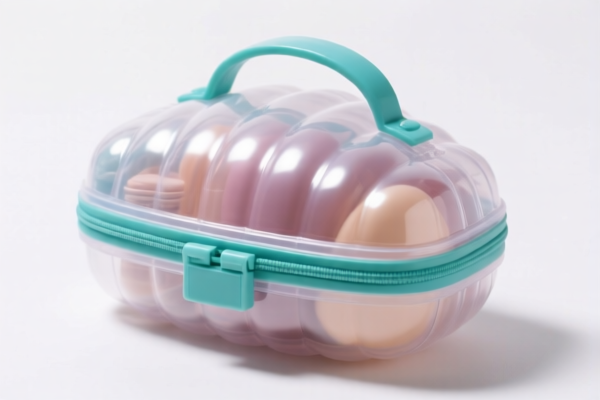
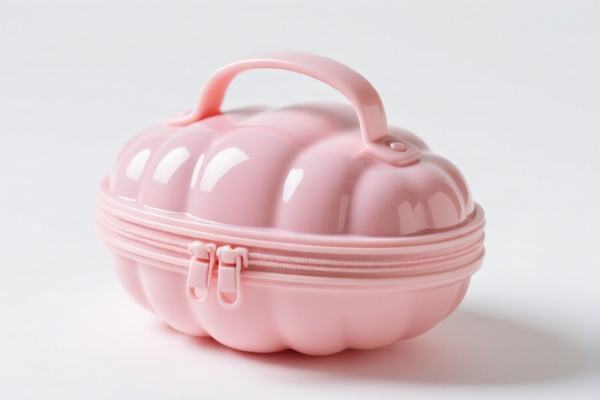
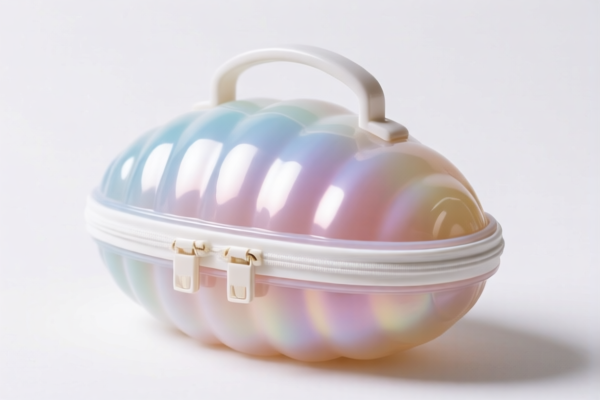
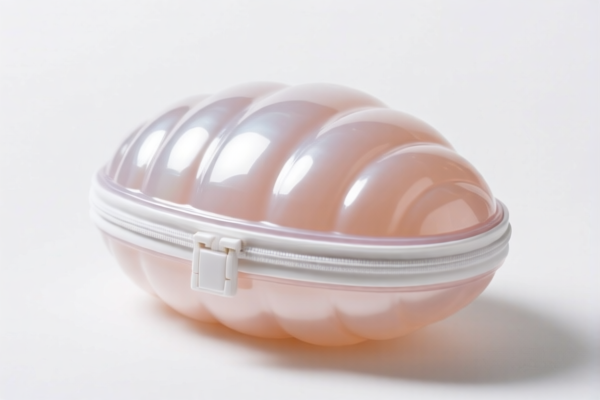
AI Analysis
🎀 Plastic Shell Vanity Case: The Ultimate Guide to HS Code Classification & US Tariff Strategy (2026)
🌐 HS Code Reference & Customs Clearance Guide | 2026 Latest Tariff Analysis | Professional Clearance Strategy
📌 I. Product Definition & Classification: Do You Truly Understand the "Vanity Case"?
A Plastic Shell Vanity Case is a versatile container used for storing cosmetics, toiletries, jewelry, or personal care items. In international trade, its classification is highly sensitive to its structure, intended use, and specific attributes. It is not a single HS code but a category that spans multiple chapters, primarily Chapter 39 (Plastics) and Chapter 96 (Miscellaneous Manufactured Articles).
Key Distinction Criteria: 1. Form Factor: Is it a rigid box/case, or a bottle/jar? 2. Primary Function: Is it for general packaging, home decoration, or specific hygiene/toilet use? 3. Material Composition: Is it 100% plastic, or does it have significant metal/mirror components that might shift classification?
⚠️ Critical Warning:
- If it’s a rigid box → Likely Chapter 39 (Plastics).
- If it’s a bottle/jar → Likely Chapter 39 (Plastics, but different heading).
- If it’s for hygiene/toilet use → Might fall under 3924 (Household Articles).
- Misclassification Risk: High. A "vanity case" misclassified as a "bottle" or vice versa can lead to significant tariff differences (e.g., 13.4% vs. 38.0%).
📦 II. HS Code Classification Matrix (2026 Latest Tariff Data)
Based on the provided dataset, here are the five possible HS Codes for a "Plastic Shell Vanity Case" and the rationale for each:
| HS Code | Product Description & Rationale | Application Scenario | Key Differentiator |
|---|---|---|---|
| 3926.10.00.00 | Other Plastic Articles: Rigid plastic vanity case, classified as "other plastic goods." | General-purpose plastic storage box with no specific "toilet" or "packaging" primary function. | Form: Rigid Case. Use: General Storage. |
| 3926.90.99.89 | Other Plastic Articles: Rigid plastic vanity case, classified as "other plastic goods" (fallback category). | Similar to 3926.10 but potentially with different structural nuances or if 3926.10 is excluded by specific notes. | Form: Rigid Case. Use: General/Other. |
| 3924.90.56.50 | Other Household Articles: Rigid plastic vanity case, specifically categorized as "household articles." | If the case is deemed primarily for home/household use rather than pure packaging or transit. | Use: Household/Home. Form: Rigid. |
| 3924.10.40.00 | Household Articles: Rigid plastic vanity case OR plastic bottles for toilet/hygiene use. | If the vanity case is interpreted as a hygiene/toilet-related container (e.g., for bathroom storage). | Use: Toilet/Hygiene. Form: Rigid Case OR Bottle. |
| 3923.30.00.10 | Art of Transport or Packaging: Plastic bottles for packing purposes. | If the "vanity case" is actually a plastic bottle (e.g., for creams, liquids) used for packaging/transport, not just a box. | Form: Bottle. Use: Packaging/Transport. |
🔍 Key Insight:
- 3926.10 / 3926.90: Focus on the material and form (Plastic Case).
- 3924.10 / 3924.90: Focus on the end-use (Household/Toilet).
- 3923.30: Focus on packaging function (Bottles for transport/packaging).
💰 III. 2026 US Tariff Rate Breakdown (Detailed Analysis)
✅ Applicable Country: United States (US)
✅ Origin: China (CN)
✅ Effective Date: Post-November 2025 (Includes Section 301 & IEEPA tariffs)
🎯 1. 3926.10.00.00 – Other Plastic Articles (Rigid Case)
| Item | Detail |
|---|---|
| Base Tariff | 5.3% |
| Section 301 (Additional) | 0.0% |
| Section 122 (IEEPA) | 10.0% |
| Total Tariff Rate | 15.3% |
| Legal Basis | IEEPA:9903.01.24 + USITC:3926.10.00.00 |
📌 Explanation:
- This is the most favorable option among rigid cases.
- No Section 301 tariff applies here (0%), which is a significant advantage over many other plastic goods.
- Only the 10% IEEPA tariff applies.
🎯 2. 3926.90.99.89 – Other Plastic Articles (Fallback Category)
| Item | Detail |
|---|---|
| Base Tariff | 5.3% |
| Section 301 (Additional) | 7.5% |
| Section 122 (IEEPA) | 10.0% |
| Total Tariff Rate | 22.8% |
| Legal Basis | IEEPA:9903.01.24 + USITC:3926.90.99.89 |
📌 Explanation:
- If the product doesn’t fit 3926.10 precisely, it falls here.
- Higher tariff due to the addition of 7.5% Section 301.
- Still better than household/packaging categories.
🎯 3. 3924.90.56.50 – Household Articles (Rigid Case)
| Item | Detail |
|---|---|
| Base Tariff | 3.4% |
| Section 301 (Additional) | 7.5% |
| Section 122 (IEEPA) | 10.0% |
| Total Tariff Rate | 20.9% |
| Legal Basis | IEEPA:9903.01.24 + USITC:3924.90.56.50 |
📌 Explanation:
- Lower base rate (3.4%) but hit by 7.5% Section 301.
- Total 20.9% – higher than 3926.10 but lower than 3926.90.
🎯 4. 3924.10.40.00 – Household/Toilet Articles (Case or Bottle)
| Item | Detail |
|---|---|
| Base Tariff | 3.4% |
| Section 301 (Additional) | 0.0% |
| Section 122 (IEEPA) | 10.0% |
| Total Tariff Rate | 13.4% |
| Legal Basis | IEEPA:9903.01.24 + USITC:3924.10.40.00 |
📌 Explanation:
- Lowest Total Rate (13.4%)!
- No Section 301 tariff (0%).
- Strategy: If your "vanity case" can be argued as a toilet/hygiene article (e.g., for bathroom storage), this is the optimal code. However, it is risky if customs disagrees on the "toilet" classification.
🎯 5. 3923.30.00.10 – Plastic Bottles for Packaging
| Item | Detail |
|---|---|
| Base Tariff | 3.0% |
| Section 301 (Additional) | 25.0% |
| Section 122 (IEEPA) | 10.0% |
| Total Tariff Rate | 38.0% |
| Legal Basis | IEEPA:9903.01.24 + USITC:3923.30.00.10 |
📌 Explanation:
- Highest Tariff (38.0%).
- Avoid this code unless your product is unequivocally a plastic bottle intended for packaging/transport of liquids/creams.
- The 25% Section 301 tariff makes this extremely costly.
🛠️ IV. Customs Clearance Practical Advice (Risk Mitigation)
✅ 1. Optimal Classification Strategy
| Goal | Recommended HS Code | Total Tariff | Risk Level |
|---|---|---|---|
| Lowest Risk & Competitive Rate | 3926.10.00.00 | 15.3% | 🟢 Low |
| Lowest Possible Rate (Aggressive) | 3924.10.40.00 | 13.4% | 🟡 Medium (Requires justification as "toilet/hygiene") |
| Fallback for Rigid Cases | 3926.90.99.89 | 22.8% | 🟢 Low |
| Household Use Cases | 3924.90.56.50 | 20.9% | 🟢 Low |
| Bottles for Packaging | 3923.30.00.10 | 38.0% | 🟢 Low (but costly) |
💡 Recommendation:
- Primary Choice: 3926.10.00.00 (15.3%) – It’s a standard, defensible classification for rigid plastic vanity cases with no Section 301 tariff.
- Secondary Choice: 3924.10.40.00 (13.4%) – Only if you can clearly demonstrate the case is used for toilet/hygiene purposes (e.g., bathroom storage, toiletry organization).
✅ 2. Required Documentation for Clearance
| Document | Purpose | Notes |
|---|---|---|
| Product Photos | Prove form (case vs. bottle) | Must show rigid structure, hinges, compartments. |
| Product Description | Justify use | Use terms like "Toiletry Organizer," "Bathroom Storage Case," or "Cosmetic Storage Box." |
| Bill of Materials (BOM) | Confirm material | Must state 100% plastic or primary plastic component. |
| Commercial Invoice | Declare value | Ensure HTS code is correct on invoice. |
| Packing List | Show contents | If including mirrors, metal frames, etc., disclose them. |
✅ 3. Common Pitfalls & Avoidance Tips
❌ Pitfall 1: Classifying a rigid case as a bottle (3923.30)
👉 Result: 38% tariff vs. 15.3%. Avoid this unless it’s truly a bottle.
❌ Pitfall 2: Claiming Household/Toilet use (3924.10) for a general makeup case
👉 Result: Customs may challenge the "toilet" classification, leading to audits or reclassification to 3926.10/3926.90.
✅ Mitigation: If using 3924.10, ensure the marketing and use case clearly align with bathroom/hygiene storage.
❌ Pitfall 3: Ignoring Section 301 Tariffs
👉 Result: Underpaying duties by assuming 0% additional tariffs.
✅ Mitigation: Always check if the HS code is subject to 7.5% or 25% Section 301. 3926.10 and 3924.10 are exempt (0%), which is a major advantage.
🌍 V. Global Market Comparison (2026)
| Market | Recommended HS Code | Estimated Total Tariff (China Origin) | Notes |
|---|---|---|---|
| 🇺🇸 USA | 3926.10.00.00 | 15.3% | Best balance of low tariff and low risk. |
| 🇪🇺 EU | 3926.10.00.00 | ~6.5% | No Section 301; standard EU tariff. |
| 🇨🇳 China (Import) | 3926.10.00.00 | ~5.3% | No additional tariffs. |
| 🇬🇧 UK | 3926.10.00.00 | ~6.0% | Post-Brexit tariff structure. |
📌 Conclusion:
- The USA is the most complex market due to Section 301 and IEEPA tariffs.
- 3926.10.00.00 is the safest and most cost-effective choice for rigid plastic vanity cases in the US.
- 3924.10.40.00 offers the lowest tariff (13.4%) but requires careful justification to avoid customs disputes.
📌 VI. Final Checklist for Importers
- Verify Form: Is it a rigid case or a bottle?
- Define Use: General storage, household, or toilet/hygiene?
- Select HS Code:
- ✅ 3926.10.00.00 (15.3%) – Recommended
- ✅ 3924.10.40.00 (13.4%) – If Toilet/Hygiene Justified
- ❌ 3923.30.00.10 (38.0%) – Avoid Unless Bottle/Packaging
- Prepare Docs: Photos, BOM, Clear Description.
- Consult Customs Broker: For pre-classification ruling if unsure.
✨ Professional Clearance, Start with Precise Classification!
💼 Every 1% of tariff difference is profit – or loss!
Customer Reviews
About HS Code Classification
The Harmonized System (HS) is an internationally standardized nomenclature developed by the World Customs Organization (WCO) to classify traded products. Over 200 countries use the HS system as the basis for customs tariffs, trade statistics, and import/export regulations.
Each HS code follows a hierarchical structure:
- Chapter (2 digits) — Broad category of goods (e.g., Chapter 84: Machinery and Mechanical Appliances)
- Heading (4 digits) — More specific grouping within the chapter
- Subheading (6 digits) — Internationally standardized breakdown, used by all WCO member countries
- National subdivisions (8-10 digits) — Country-specific extensions for further classification, such as US HTSUS 10-digit codes
Correct HS code classification is essential for smooth customs clearance, accurate duty payment, and compliance with trade regulations. Misclassification can lead to customs delays, overpayment of duties, or penalties.
When importing from CN to US, the applicable tariff rates may include:
- Most-Favored-Nation (MFN) rate — The standard duty rate applied to WTO members
- General rate — Applied to countries without trade agreements
- Trade remedy duties — Additional tariffs such as Section 301 (anti-dumping), Section 232 (national security), or countervailing duties
The information provided on this page is for reference purposes only. For official classification, please consult with your local customs authority or a licensed customs broker.