Plastic Shielding Film
CN → US| HS Code | Tariff Rate | Origin | Destination | Doc |
|---|---|---|---|---|
| 3921905050 | 39.8% | CN | US | Official Doc |
| 3920100000 | 39.2% | CN | US | Official Doc |
| 3919905040 | 40.8% | CN | US | Official Doc |
| 3920992000 | 39.2% | CN | US | Official Doc |
| 3919905060 | 40.8% | CN | US | Official Doc |
| 3921904090 | 39.2% | CN | US | Official Doc |
Product Images
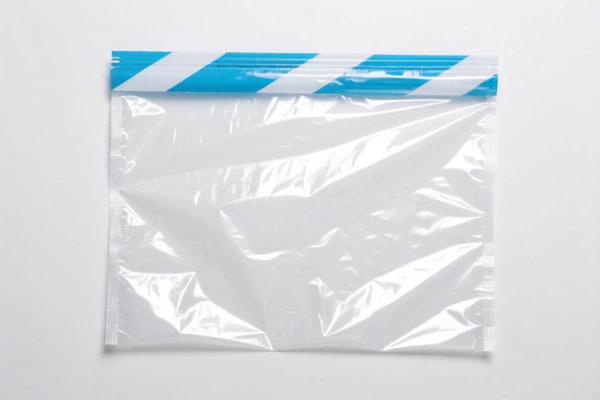
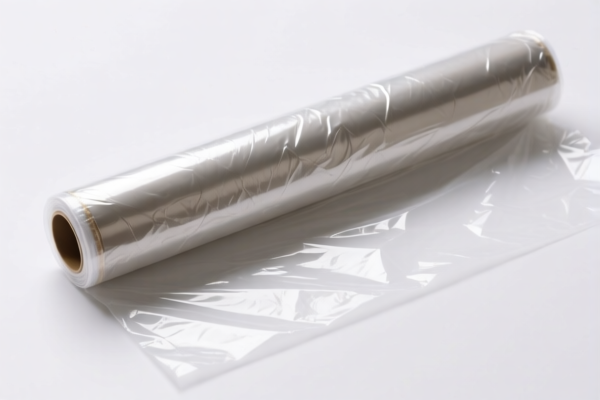
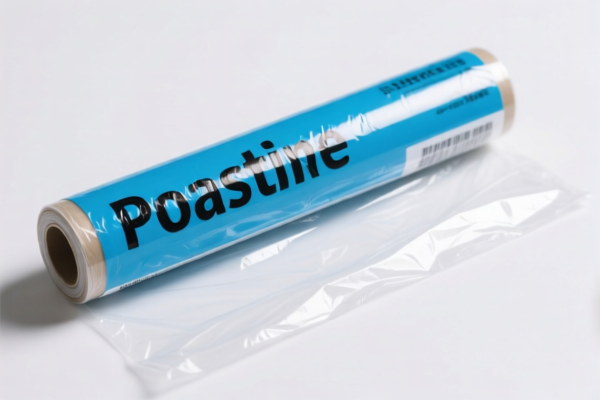
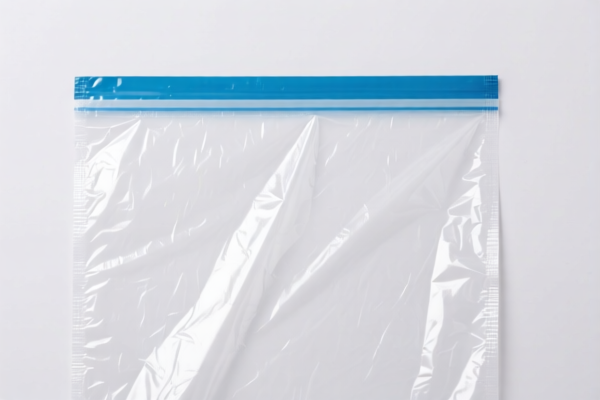
AI Analysis
🛡️ Plastic Shielding Film (Plastic Wrapping/Stretch Film)
🌐 HS Code Reference & Customs Clearance Guide | 2026 Latest Tariff Breakdown | Professional Strategy for International Trade
📌 Product Identity & Classification: What Exactly is "Plastic Shielding Film"?
Plastic Shielding Film (often referred to as stretch wrap, shrink film, or packaging film) is a flexible polymer sheet used for securing, protecting, and bundling goods during logistics. In the eyes of global customs, it falls squarely under Chapter 39 (Plastics and Articles Thereof), specifically within the sub-categories of films, sheets, or strips.
⚠️ Key Classification Logic:
- Material: Must be defined as a specific polymer (e.g., Polyethylene/Ethylene Polymer) or generic "Plastic".
- Form: Must be a flat sheet, strip, or roll (not woven or mesh).
- Function: Whether "shielding," "wrapping," "self-adhesive," or "non-adhesive" impacts the sub-heading but keeps the product within 3919, 3920, or 3921.
📦 II. Detailed HS Code Breakdown (2026 Official Tariff Reference)
Based strictly on the provided data profile for Plastic Shielding Film.
| HS Code | Product Description | Specific Characteristics | Tax Rate Profile |
|---|---|---|---|
| 3921.90.50.50 | Plastic Shielding Film (General Plastic Sheets/Films) | Material: Plastic. Form: Film. Matches the definition of Plastic plates, sheets, film, foil, and strip. | 39.8% (Base 4.8% + 25% Add-on + 10% Sec. 122) |
| 3920.10.00.00 | Plastic Shielding Film (Ethylene Polymer Focus) | Material: Ethylene Polymer. Form: Film/Strip. No material/form conflicts. | 39.2% (Base 4.2% + 25% Add-on + 10% Sec. 122) |
| 3919.90.50.40 | Plastic Shielding Film (Self-Adhesive Type) | Material: Plastic. Form: Film. Classified as Self-adhesive plastic film. | 40.8% (Base 5.8% + 25% Add-on + 10% Sec. 122) |
| 3920.99.20.00 | Plastic Shielding Film (Non-cellular, Non-reinforced) | Material: Plastic. Form: Film. Belongs to Non-cellular, non-reinforced flexible film category. | 39.2% (Base 4.2% + 25% Add-on + 10% Sec. 122) |
| 3919.90.50.60 | Plastic Shielding Film (Flat/Adhesive Shape) | Material: Plastic. Form: Thin Film. Fits the scope of Plastic self-adhesive / flat shapes. | 40.8% (Base 5.8% + 25% Add-on + 10% Sec. 122) |
| 3921.90.40.90 | Plastic Shielding Film (General Plastic Plate/Film) | Material: Plastic. Form: Film. Fully conforms to the definition of plastic plates, sheets, films, foils, and strips. | 39.2% (Base 4.2% + 25% Add-on + 10% Sec. 122) |
🔍 Critical Observation:
- The Base Tariff ranges from 4.2% to 5.8% depending on the specific sub-category (self-adhesive vs. general polymer).
- All variants attract two mandatory additional surcharges:
1. 25.0% Add-on Tariff (Section 301/Trade War measures).
2. 10% "122 Clause" Tariff (Specific Section 122 surcharge).
- Total Effective Duty: Fluctuates between 39.2% and 40.8%.
💰 III. 2026 Tariff Structure Deep Dive
✅ Applicable Country: China (Export) / United States (Import)
✅ Target Product: Plastic Shielding Film (All variants listed above)
✅ Effective Date: 2025-11-10 (Current & Future Imports)
🎯 The "Triple Tax" Formula
| Component | Rate | Source of Charge | Application |
|---|---|---|---|
| 1. Base Tariff | 4.2% – 5.8% | Standard MFN Rate (Most Favored Nation) | Applied to all 6 HS Codes listed above. |
| 2. Section 301 Add-on | + 25.0% | Trade Remedies / Section 301 | Mandatory surcharge for Chinese-origin plastic films. |
| 3. Section 122 Clause | + 10.0% | Specific Legislative Clause (122) | Mandatory additional levy for this product category. |
| TOTAL DUTY | 39.2% – 40.8% | Sum of above | High-Cost Entry Barrier |
📌 Calculation Example:
If your shipment value (CIF) is $10,000 and classified under 3920.10.00.00:
- Base Tax: $420 (4.2%)
- Add-on Tax: $2,500 (25%)
- Section 122 Tax: $1,000 (10%)
- Total Duty Payable: $3,920 (39.2% of $10,000).⚠️ De Minimis Exemption:
❌ NO EXEMPTION.
Most small-value shipments are DENIED de minimis treatment for these specific HS Codes due to the aggressive trade restrictions.
🛠️ IV. Customs Clearance Strategy & Operational Advice
✅ 1. Documentation Checklist (Must-Haves)
| Document | Requirement | Why It Matters |
|---|---|---|
| ✅ Technical Spec Sheet | ✔️ Mandatory | Must explicitly state: Material Composition (e.g., "100% Polyethylene" vs. "Mixed Plastic") and Form (Roll/Sheet). |
| ✅ Material Declaration | ✔️ Critical | Differentiates between "Ethylene Polymer" (3920.10) vs. "Other Plastic" (3921.90). Wrong label = Wrong Tax Rate. |
| ✅ Product Photos | ✔️ Required | Show if the film is Self-Adhesive (3919.90) or Non-Adhesive (3920/3921). This changes the tax base! |
| ✅ Commercial Invoice | ✔️ Must Match HS | Description must align with HS Code (e.g., "Self-Adhesive Stretch Film" for 3919.90.50). |
| ✅ Packing List | ✔️ Required | Weight breakdown to verify "Rolls" vs. "Sheets". |
✅ 2. Classification "Golden Rules" (Avoid Costly Errors)
🔥 Rule of Thumb: "Material First, Adhesion Second, Form Third"
| Scenario | Recommended HS Code | Risk if Misclassified |
|---|---|---|
| Standard Stretch Wrap (Non-adhesive, Polyethylene) | 3920.10.00.00 or 3920.99.20.00 |
If misclassified as 3919 (Self-adhesive) → Tax jumps to 40.8% |
| Self-Adhesive Tape/Film (Has glue on one side) | 3919.90.50.40 or 3919.90.50.60 |
If misclassified as 3920 → Underpayment → Audits & Penalties |
| General Plastic Film (Unknown polymer mix) | 3921.90.50.50 or 3921.90.40.90 |
If claimed as "Ethylene" but actually PVC → Seizure |
📌 Warning:
- Do NOT try to split a shipment of "Self-Adhesive Film" into "Non-Adhesive" to save tax. Customs will reject based on the product's physical adhesive nature.
- "Shielding" is a functional term; do not use it as the primary description. Use "Plastic Film," "Stretch Film," or "Adhesive Film."
✅ 3. Special Scenarios & Workarounds
| Situation | Strategic Advice |
|---|---|
| Mixed Material Shipment | Separate shipments! Do not declare a mix of Ethylene and PVC in one line item. |
| Low-Value Samples | Do not rely on de minimis. Even small samples attract the 39.2%+ tax if declared correctly. |
| Re-Export/Transshipment | If the film is processed in Vietnam/Mexico before entering the US, verify Rules of Origin. If it's "substantially transformed," Section 301 might be bypassed. |
| OEM/Custom Orders | Provide the Customer's Technical Drawing showing adhesive layers. This proves classification under 3919 (Self-adhesive). |
🌍 V. Global Market Comparison (Plastic Film)
| Market | Typical HS Code | Base Tariff | Add-ons | Total Effective Rate |
|---|---|---|---|---|
| 🇺🇸 USA | 3920.10 / 3919.90 |
4.2% - 5.8% | +25% + 10% | 39.2% - 40.8% |
| 🇪🇺 EU | 3920.10 / 3921.90 |
~6.0% | None (Generally) | ~6.0% |
| 🇨🇦 Canada | 3920.10 |
~2.5% | None | ~2.5% |
| 🇦🇺 Australia | 3920.10 |
~5.0% | None | ~5.0% |
| 🇯🇵 Japan | 3920.10 |
~3.5% | None | ~3.5% |
📌 Conclusion:
- The US Market is the ONLY high-tariff zone for this product due to the Section 301 + Section 122 double hit.
- Strategy: If shipping to the US, price in the product to absorb the 40% duty, or re-route via a non-tariffed third country (subject to strict origin rules).
📌 VI. Common Pitfalls & "Red Flags"
❌ Pitfall 1: Calling it "Protective Film" instead of "Plastic Film"
👉 Result: Customs may delay to verify if it's a "Metal Foil" (different tariff).
✅ Fix: Always use "Plastic Film" in the commercial invoice.
❌ Pitfall 2: Ignoring the Adhesive Layer
👉 Result: Classifying self-adhesive film as 3920 (saving ~1.6% base tax) triggers Section 122 audits.
✅ Fix: Declare based on physical properties, not just function.
❌ Pitfall 3: Assuming "Rolls" are exempt from "Sheet/Film" definitions
👉 Result: Rolls of film are still "Plastic Sheets/Films" under Chapter 39. No exemption.
✅ Fix: Ensure all rolls are declared as films, not "machinery parts".
🎯 VII. Final Verdict: Action Plan
🎯 The Golden Formula:
"Check Material + Check Adhesion = Pick Exact HS Code = Pay 39.2%~40.8% (USA)"
- Step 1: Identify if the film is Self-Adhesive (Glue on side) or Non-Adhesive.
- Step 2: Identify the Primary Polymer (Ethylene vs. Other Plastic).
- Step 3: Select the Exact HS Code from the table above.
- Step 4: Budget 40% of the product value for duties.
- Step 5: Apply for Pre-Ruling (Optional but Recommended) if the product is complex.
📌 Pro Tip:
If you are shipping Ethylene-based film (3920.10.00.00), the tax is 39.2%.
If you are shipping Adhesive film (3919.90.50.40), the tax is 40.8%.
The 1.6% difference is NOT worth the risk of misclassification. Be precise!
📣 Call to Action:
🚀 Don't let the 40% Tariff eat your margin!
- Contact a licensed customs broker before shipping.
- Verify your material composition with your factory.
- Pre-arrange payment for duties to avoid storage fees at port.
✨ Smart Trade Starts with Precision!
💼 Every cent counts in the 39.8% tax bracket!
Customer Reviews
About HS Code Classification
The Harmonized System (HS) is an internationally standardized nomenclature developed by the World Customs Organization (WCO) to classify traded products. Over 200 countries use the HS system as the basis for customs tariffs, trade statistics, and import/export regulations.
Each HS code follows a hierarchical structure:
- Chapter (2 digits) — Broad category of goods (e.g., Chapter 84: Machinery and Mechanical Appliances)
- Heading (4 digits) — More specific grouping within the chapter
- Subheading (6 digits) — Internationally standardized breakdown, used by all WCO member countries
- National subdivisions (8-10 digits) — Country-specific extensions for further classification, such as US HTSUS 10-digit codes
Correct HS code classification is essential for smooth customs clearance, accurate duty payment, and compliance with trade regulations. Misclassification can lead to customs delays, overpayment of duties, or penalties.
When importing from CN to US, the applicable tariff rates may include:
- Most-Favored-Nation (MFN) rate — The standard duty rate applied to WTO members
- General rate — Applied to countries without trade agreements
- Trade remedy duties — Additional tariffs such as Section 301 (anti-dumping), Section 232 (national security), or countervailing duties
The information provided on this page is for reference purposes only. For official classification, please consult with your local customs authority or a licensed customs broker.