Plastic Short Boots with Metal Toe Caps
CN → USProduct Images
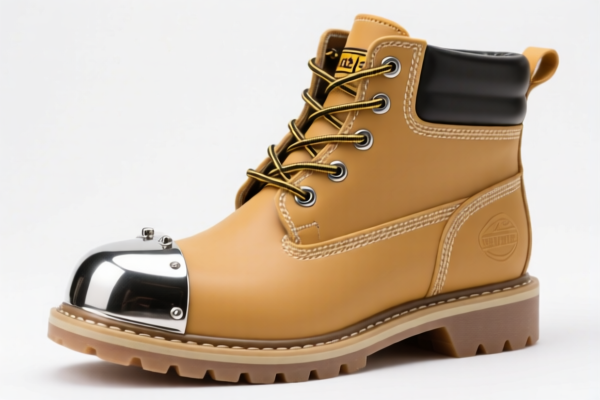
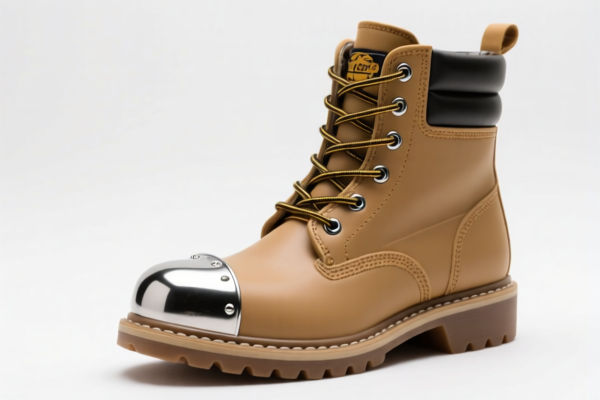
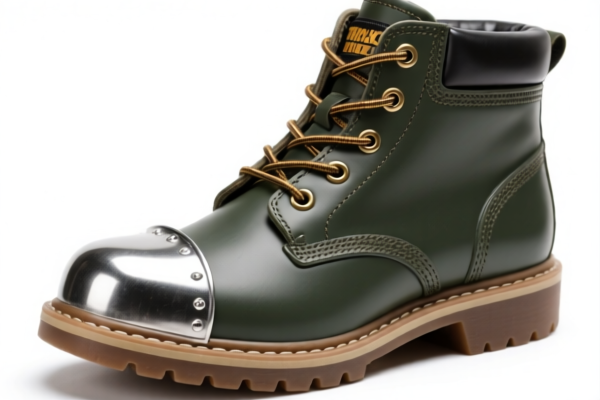
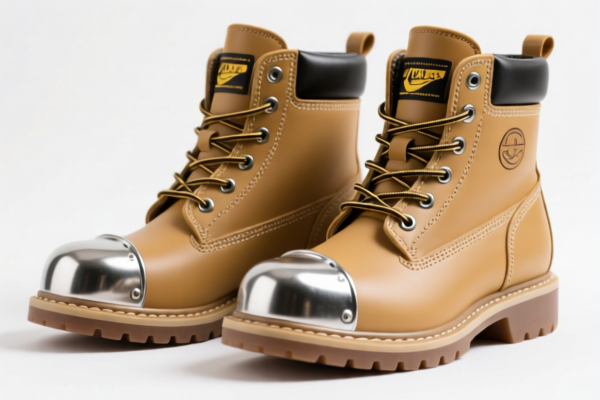
AI Analysis
👢 Plastic Short Boots with Metal Toe Caps (Industrial Safety Footwear)
🌐 HS Code Reference & Customs Clearance Guide | 2026 Latest Tariff Analysis | Professional Compliance Strategy
📌 I. Product Definition & Classification: Do You Really Know "Safety Boots"?
Plastic short boots with metal toe caps are a specialized category of Personal Protective Equipment (PPE) designed for industrial, construction, and hazardous environments. They combine waterproof plastic uppers (typically PVC or PU) with reinforced metal toe caps to protect against impact and compression.
In international trade, these boots are strictly categorized under Footwear. The critical distinction lies in the upper material and the safety features. Unlike standard fashion footwear, these are regulated as safety equipment.
⚠️ Key Distinction:
- If the upper is primarily rubber or plastic (e.g., PVC, PU, EVA) → Classified under Chapter 64 (Rubber/Plastic Footwear);
- If the upper is primarily leather → Classified under 6403;
- If the upper is primarily textile → Classified under 6404.Note: The presence of a metal toe cap does not move the item to "metal articles" (Chapter 73). It remains footwear, but the material composition determines the exact heading.
📦 II. HS Code Classification Details (2026 Latest Tariff Authority)
| HS Code | Product Description | Application Scenario | Upper Material | Toe Cap Type |
|---|---|---|---|---|
6402.91.00.00 |
Other footwear with outer soles of rubber/plastics and uppers of rubber/plastics, with metal toe caps | Industrial PVC/PU boots, chemical-resistant safety boots | ✅ Rubber/Plastic | ✅ Metal |
6402.99.00.00 |
Other footwear with outer soles of rubber/plastics and uppers of rubber/plastics, without metal toe caps | Standard rain boots, fashion PVC boots | ✅ Rubber/Plastic | ❌ None |
6403.51.00.00 |
Footwear with leather uppers, sports footwear (e.g., tennis shoes) | Leather safety boots (if leather is primary) | ✅ Leather | ❌ Usually plastic/composite |
6403.99.00.00 |
Other footwear with leather uppers | Leather work boots, casual leather shoes | ✅ Leather | ❌ None |
6404.11.00.00 |
Footwear with textile uppers, sports footwear | Canvas sneakers, textile safety shoes | ✅ Textile | ❌ Usually plastic/composite |
🔍 Critical Reminder:
- Plastic Short Boots (PVC/PU) with Metal Toe Caps MUST be classified under6402.91.00.00.
- Do not classify them under6402.99.00.00(plain plastic boots) as this will trigger customs audits for misdeclaration.
- The "metal toe cap" is considered an accessory to the footwear, not a separate product.
💰 III. 2026 Latest Tariff Rate Details (Including Surtaxes & Policy Add-ons)
✅ Target Market: United States (US)
✅ Country of Origin: China (CN)
✅ Effective Date: November 10, 2025 (including subsequent imports)
🎯 1. 6402.91.00.00 —— Plastic/Rubber Footwear with Metal Toe Caps (China Origin)
| Item | Details |
|---|---|
| Base Tariff Rate | 35.7% ad valorem (General MFN Rate) |
| USITC Surtax (Section 301) | +25% (Under Footnote 9903.88.01 for certain footwear) |
| IEEPA Surtax | +10% (对华加征关税, effective Nov 10, 2025) |
| Total Tariff Rate | 70.7% |
| Tax Calculation | CIF Value × 70.7% |
| De Minimis Exemption | ❌ Not Eligible (Section 321 de minimis is suspended for Chinese footwear under certain conditions) |
| Legal Authority Path | IEEPA:9903.01.25 → USITC:6402.91.00.00 → FOOTNOTE:9903.88.01 |
📌 Explanation:
- The 35.7% is the standard US MFN duty for rubber/plastic footwear.
- The 25% is the Section 301 surtax applied to many footwear items from China.
- The 10% is the new IEEPA surtax.
- Total: 70.7%. This is an extremely high tariff, significantly impacting profitability.
🎯 2. 6402.99.00.00 —— Plain Plastic/Rubber Boots (No Metal Toe Cap)
| Item | Details |
|---|---|
| Base Tariff Rate | 35.7% |
| USITC Surtax (Section 301) | +25% |
| IEEPA Surtax | +10% |
| Total Tariff Rate | 70.7% |
| De Minimis Exemption | ❌ Not Eligible |
📌 Note:
- Even without metal toe caps, plastic boots from China face the same high tariff structure.
- No significant tariff advantage by removing the metal cap.
🛠️ IV. Customs Clearance Practical Advice (Avoid Pitfalls)
✅ 1. Required Documentation Checklist
| Document | Mandatory? | Details |
|---|---|---|
| ✅ Product Specification Sheet | ✔️ | Must specify upper material (PVC/PU), sole material, toe cap material (steel/alloy), and safety standards (ASTM F2413, ISO 20345). |
| ✅ Photos (Clear View) | ✔️ | Show the boot from side, front, and close-up of the toe cap if visible. |
| ✅ Safety Certification | ✔️ | ASTM F2413-18, ISO 20345:2022, or CE Marking. Critical for customs to verify "safety footwear" claim. |
| ✅ Commercial Invoice | ✔️ | Clearly state: "Plastic Safety Boots with Metal Toe Cap, HS Code 6402.91.00.00" |
| ✅ Packing List | ✔️ | Detail pairs per box, gross weight, net weight. |
| ✅ Country of Origin Certificate | ✔️ | Confirm China origin (or exemption if applicable). |
✅ 2. Declaration Tips (Key Mantra)
🔥 "Material is King, Toe Cap is Detail, Safety Standard is Proof!"
| Scenario | Correct Declaration | Wrong Practice |
|---|---|---|
| PVC/PU Boots with Metal Toe Cap | 6402.91.00.00 |
Misdeclare as 6402.99.00.00 (no toe cap) → Risk of penalty for under-declaration. |
| Leather Boots with Metal Toe Cap | 6403.99.00.00 |
Misdeclare as plastic → Higher scrutiny, potential fines. |
| Mixed Materials (e.g., Leather upper + Rubber sole) | Check primary material | Incorrect material classification → Delayed clearance. |
| "Unbranded" or "Generic" Boots | Provide Brand/Model | Lack of brand info → Customs may classify under higher duty rates. |
✅ 3. Special Cases Handling
| Scenario | Handling Advice |
|---|---|
| OEM Custom Boots | Provide client order + design specs. Ensure "Safety" label is on product to justify HS Code. |
| Boots with Composite Toe Caps | Classify under 6402.99.00.00 (if non-metal) or 6402.91.00.00 (if metal). Composite toes are not metal. |
| Boots for Medical Use | Still classified as footwear (6402), not medical devices. |
| Boots from Vietnam/Mexico | Check for IEEPA Exemption. If non-China origin, tariff may be 0-5%. |
🌍 V. Global Market Clearance Comparison (2026 Latest)
| Country/Region | Recommended HS Code | Tariff (China Origin) | Certification Required | Notes |
|---|---|---|---|---|
| 🇺🇸 USA | 6402.91.00.00 |
70.7% | ASTM F2413, Labeling | High tariff; consider supply chain relocation. |
| 🇨🇳 China | 6402.91.00.00 |
8% (Import) | CCC (if applicable) | No surtax. |
| 🇪🇺 EU | 6402.91.00.00 |
8.6% + VAT | CE Marking, REACH | Moderate tariff; strict chemical limits. |
| 🇦🇺 Australia | 6402.91.00.00 |
5% + GST | RCM, AS/NZS 2210.3 | Moderate tariff; safety standards critical. |
| 🇯🇵 Japan | 6402.91.00.00 |
16.8% | PSE (if electrical, not applicable) | High tariff; no surtax. |
📌 Conclusion:
- USA is the most challenging market due to 70.7% combined tariff.
- EU, Australia, Japan have moderate tariffs but strict safety/chemical certifications.
- China-origin boots in the US face significant cost pressure. Consider Mexico/Vietnam origin for IEEPA exemptions.
📌 VI. Common Mistakes & Pitfalls (Blood Lessons)
❌ Mistake 1: Declaring "Plastic Boots" as 6402.99.00.00 (no toe cap) to avoid scrutiny
👉 Consequence: Customs inspection reveals metal toe cap → Penalty + Back Payment of 25% surtax.
❌ Mistake 2: Failing to provide ASTM/ISO Certification
👉 Consequence: Customs may reclassify as "non-safety footwear" or demand additional testing, causing delays.
❌ Mistake 3: Misdeclaring upper material (e.g., saying "Plastic" when it's Rubber)
👉 Consequence: HS Code error → Potential fines and detention.
❌ Mistake 4: Ignoring "Country of Origin" for IEEPA Surtax
👉 Consequence: If from China, pay 70.7%. If from Vietnam, may pay 0%. Incorrect declaration = Fraud risk.
✅ Correct Practice:
"PVC Safety Boots, Short, with Steel Toe Cap, ASTM F2413-18 Compliant, Made in China, HS 6402.91.00.00"
🎯 VII. Conclusion: Precise Classification Saves Millions!
🎯 Remember:
🔹 "Metal Toe Cap = 6402.91, No Toe Cap = 6402.99"
🔹 "China Origin + US Market = 70.7% Tariff"
🔹 "Safety Certification is Non-Negotiable"
📌 Pro Tip:
If your boots are made in Vietnam, Mexico, or Thailand, you may qualify for IEEPA Exemption, reducing the tariff to 0-5%.
Recommend Advance Ruling for large shipments to avoid clearance risks.
📣 Act Now:
📞 Contact professional customs broker + Provide Product Specs + Apply for Advance Ruling
🚀 Ensure your safety boots clear customs smoothly, reduce costs, and boost profits!
✨ Professional Clearance, Starting with Accurate Classification!
💼 Every Cent of Cost Matters!
Customer Reviews
About HS Code Classification
The Harmonized System (HS) is an internationally standardized nomenclature developed by the World Customs Organization (WCO) to classify traded products. Over 200 countries use the HS system as the basis for customs tariffs, trade statistics, and import/export regulations.
Each HS code follows a hierarchical structure:
- Chapter (2 digits) — Broad category of goods (e.g., Chapter 84: Machinery and Mechanical Appliances)
- Heading (4 digits) — More specific grouping within the chapter
- Subheading (6 digits) — Internationally standardized breakdown, used by all WCO member countries
- National subdivisions (8-10 digits) — Country-specific extensions for further classification, such as US HTSUS 10-digit codes
Correct HS code classification is essential for smooth customs clearance, accurate duty payment, and compliance with trade regulations. Misclassification can lead to customs delays, overpayment of duties, or penalties.
When importing from CN to US, the applicable tariff rates may include:
- Most-Favored-Nation (MFN) rate — The standard duty rate applied to WTO members
- General rate — Applied to countries without trade agreements
- Trade remedy duties — Additional tariffs such as Section 301 (anti-dumping), Section 232 (national security), or countervailing duties
The information provided on this page is for reference purposes only. For official classification, please consult with your local customs authority or a licensed customs broker.