Plastic Short Wallet
CN → US| HS Code | Tariff Rate | Origin | Destination | Doc |
|---|---|---|---|---|
| 3923900080 | 38.0% | CN | US | Official Doc |
| 4202322000 | 55.0% | CN | US | Official Doc |
| 4202321000 | 0.0% | CN | US | Official Doc |
| 3923109000 | 38.0% | CN | US | Official Doc |
| 3916903000 | 41.5% | CN | US | Official Doc |
Product Images
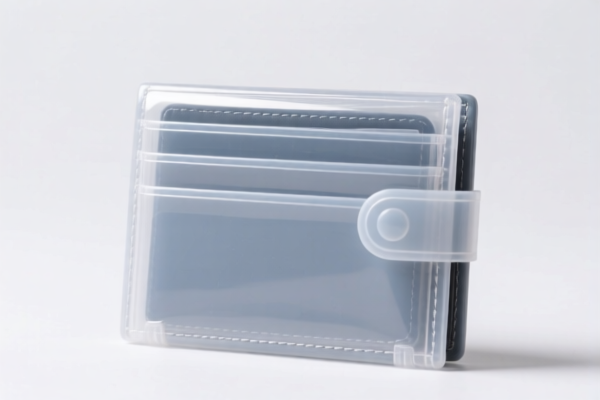
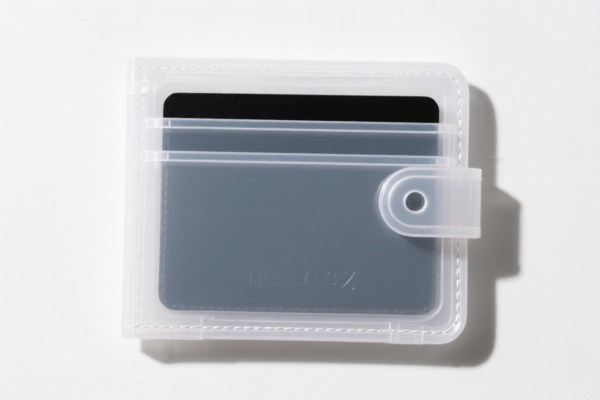

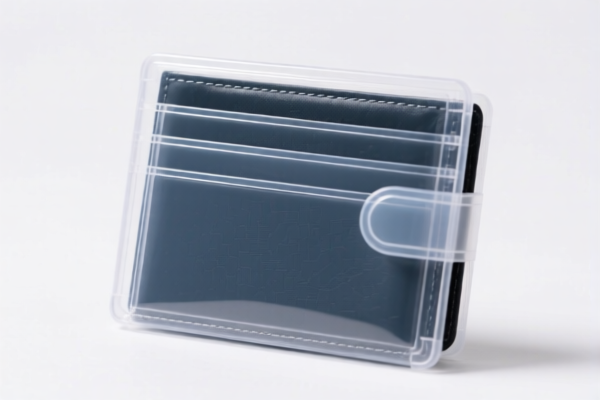
AI Analysis
👜 Plastic Short Wallets (Bifold & Trifold Cards)
🌐 HS Code Reference & Customs Clearance Guide | 2026 Latest Tariff Structure | Professional Entry Strategy
📌 I. Product Definition & Classification: What is a "Plastic Short Wallet"?
A "Plastic Short Wallet" typically refers to compact wallet styles (such as bifold, trifold, or card holders) where the outer surface or main body material is composed of plastic, laminated plastic, or other plastic packaging materials. In international trade, the classification hinges on whether the item is considered a "container for carrying goods" (Chapter 39) or a "personal accessory of leather/plastic (Chapter 42)".
Key Distinction: * Chapter 39 (Plastics & Articles Thereof): If the wallet is primarily used as a packaging item or is made of simple plastic sheets/tubes not intended for personal long-term use as an accessory, it may fall under Chapter 39. * Chapter 42 (Articles of Leather; Saddle and Harness): If the wallet is a finished personal accessory, especially with features like pockets for cards/cash, it generally falls under Chapter 42, specifically under "Articles of plastics" or "Laminated plastics."
⚠️ Critical Note:
- If the wallet is made of laminated or reinforced plastic designed for personal carrying, it is often classified under 4202.32.
- If it is a simple plastic packaging sleeve or non-durable plastic item, it may fall under 3923 or 3916.
- Misclassification Risk: Declaring a durable personal wallet as "plastic packaging" (Chapter 39) to avoid higher Chapter 42 tariffs is a common audit trigger.
📦 II. HS Code Classification Details (Based on Provided Data)
| HS Code | Product Description | Summary from Data | Total Tax Rate |
|---|---|---|---|
| 3923.90.00.80 | Plastic Material Wallet, classified as other packaging supplies | "Plastic material wallet, classified as other packaging supplies" | 38.0% |
| 4202.32.20.00 | Wallet with outer surface made of plastic sheets | "Wallet with outer surface made of plastic sheets" | 55.0% |
| 4202.32.10.00 | Portable wallet made of reinforced or laminated plastic | "Reinforced or laminated plastic material portable wallet" | 12.1¢/kg + 4.6% + 35.0% |
| 3923.10.90.00 | Other articles of plastic for packaging or carrying | "Plastic material for packaging or carrying other categories" | 38.0% |
| 3916.90.30.00 | Plastic short tubes/items, classified as other rods/profiles | "Plastic short tube items, classified as other rods or profiles" | 41.5% |
🔍 Key Observation:
- 4202.32.20.00 has the highest ad valorem rate (55%).
- 4202.32.10.00 has a mixed rate (specific duty + ad valorem + additional tariffs).
- 3923 codes are generally lower (38-41.5%) but may be scrutinized if the product is clearly a personal accessory.
💰 III. 2026 Latest Tariff Rate Breakdown (Including Additional Duties & Policy Surcharges)
✅ Applicable Country: United States (US)
✅ Origin: China (CN)
✅ Effective Date: From Nov 10, 2025 (for subsequent imports)
🎯 1. 3923.90.00.80 & 3923.10.90.00 – Plastic Packaging/Carrying Articles
| Item | Content |
|---|---|
| Base Tariff | 3.0% |
| Section 301 Additional Tariff | +25.0% |
| Section 122 Tariff (IEEPA) | +10.0% |
| Total Effective Rate | 38.0% |
| Tax Calculation | CIF Value × 38% |
| De Minimis Eligibility | ❌ No (deny_de_minimis) |
| Legal Basis Path | USITC:3923.90.00.80 → Section 301: Footnote 9903.88.01 → IEEPA:9903.01.25 |
📌 Explanation:
- The 3.0% is the standard Most Favored Nation (MFN) rate for plastic packaging articles.
- The 25% is the Section 301 tariff on Chinese goods.
- The 10% is the Section 122 tariff imposed under IEEPA.
- Total: 38%. This rate is significantly lower than the Chapter 42 accessory rates but requires the item to be convincingly classified as "packaging" rather than a "personal accessory."
🎯 2. 4202.32.20.00 – Wallet with Outer Surface of Plastic Sheets
| Item | Content |
|---|---|
| Base Tariff | 20.0% |
| Section 301 Additional Tariff | +25.0% |
| Section 122 Tariff (IEEPA) | +10.0% |
| Total Effective Rate | 55.0% |
| Tax Calculation | CIF Value × 55% |
| De Minimis Eligibility | ❌ No (deny_de_minimis) |
| Legal Basis Path | USITC:4202.32.20.00 → Section 301: Footnote 9903.88.01 → IEEPA:9903.01.25 |
📌 Explanation:
- The 20% base rate is high for Chapter 42 articles.
- Adding 25% and 10% results in a 55% total tax burden.
- This is the most expensive classification in the provided data.
- Risk: If you declare this as3923.90.00.80(38%) but the product is clearly a personal wallet, you risk customs penalties, retroactive duties, and shipment delays.
🎯 3. 4202.32.10.00 – Reinforced/Laminated Plastic Portable Wallet
| Item | Content |
|---|---|
| Specific Duty | 12.1¢/kg |
| Ad Valorem Base Tariff | 4.6% |
| Section 301 Additional Tariff | +25.0% |
| Section 122 Tariff (IEEPA) | +10.0% |
| Total Effective Rate | 12.1¢/kg + 39.6% (4.6% + 25% + 10%) |
| Tax Calculation | (Weight × 0.121) + (CIF Value × 0.396) |
| De Minimis Eligibility | ❌ No (deny_de_minimis) |
| Legal Basis Path | USITC:4202.32.10.00 → Section 301: Footnote 9903.88.01 → IEEPA:9903.01.25 |
📌 Explanation:
- This is a mixed tariff.
- The 12.1¢/kg applies to the total weight.
- The ad valorem portion is 39.6% (4.6% base + 35% additional).
- Note: The "35.0%" in the summary likely combines the 25% (Sec 301) and 10% (Sec 122).
- Complexity: Requires accurate weight declaration and cost basis calculation.
🎯 4. 3916.90.30.00 – Plastic Short Tubes/Rods (Misclassification Risk)
| Item | Content |
|---|---|
| Base Tariff | 6.5% |
| Section 301 Additional Tariff | +25.0% |
| Section 122 Tariff (IEEPA) | +10.0% |
| Total Effective Rate | 41.5% |
| Tax Calculation | CIF Value × 41.5% |
| De Minimis Eligibility | ❌ No (deny_de_minimis) |
| Legal Basis Path | USITC:3916.90.30.00 → Section 301: Footnote 9903.88.01 → IEEPA:9903.01.25 |
📌 Explanation:
- This HS Code is for "Plastic short tubes, rods, profiles."
- WARNING: Using this code for a wallet is likely a misclassification. It should only be used if the product is literally a plastic tube or profile, not a formed wallet.
- Total rate is 41.5%.
🛠️ IV. Customs Clearance Practical Advice (Avoid Pitfalls)
✅ 1. Document Preparation Checklist (Mandatory)
| Document | Required | Notes |
|---|---|---|
| ✅ Product Specification Sheet | ✔️ | Must detail material composition (e.g., "100% PVC," "Laminated Polyester"), dimensions, and intended use. |
| ✅ Product Photos (Clear & Detailed) | ✔️ | Show front, back, interior pockets, and any branding. Must clearly show it is a wallet. |
| ✅ Commercial Invoice | ✔️ | Description must match HS Code. E.g., "Plastic Card Holder" vs. "Plastic Wallet." |
| ✅ Packing List | ✔️ | Include net weight (critical for 4202.32.10.00) and gross weight. |
| ✅ Proof of Origin | ✔️ | Required for determining additional tariffs. |
| ✅ Third-Party Test Reports | ✔️ | If claiming eco-friendly or specific material properties. |
✅ 2. Classification Strategy (Key Tips)
🔥 "Match Description to HS: Don't Force Low Rates!"
| Scenario | Recommended HS Code | Why? |
|---|---|---|
| Simple Plastic Card Sleeve (No pockets, just a holder) | 3923.90.00.80 |
Fits "packaging/carried items" definition. Lower tax (38%). |
| Standard Bifold Wallet (Plastic exterior, card slots) | 4202.32.20.00 |
Fits "wallet with plastic outer surface." Higher tax (55%). |
| Reinforced/Laminated Wallet (Durable, layered plastic) | 4202.32.10.00 |
Fits "reinforced/laminated plastic." Mixed tax (39.6% + weight duty). |
| Plastic Tube/Profile (Not a wallet) | 3916.90.30.00 |
Only if it's a raw material or tube, not a finished wallet. |
⚠️ Critical Warning:
- Do not classify a finished personal wallet as3923or3916to save on taxes. CBP (U.S. Customs) frequently audits wallets and may reclassify them as4202.32, leading to back duties, penalties, and interest.
- If the wallet has laminated or reinforced plastic, it strongly points to4202.32.10.00.
✅ 3. Special Situations
| Situation | Advice |
|---|---|
| OEM Custom Wallets | Provide design files and material specs. Ensure the description on the invoice matches the HS Code exactly. |
| Mixed Materials (e.g., Plastic exterior + Fabric interior) | Generally, the outer surface material determines Chapter 42 classification. If outer is plastic, it’s 4202.32.xxxx. |
| De Minimis Shipment | ❌ Not Eligible. All listed HS Codes have deny_de_minimis. Even small shipments will incur duties. |
| Weight Declaration | For 4202.32.10.00, accurate weight is crucial. Under-declaring weight can lead to audits. |
🌍 V. Global Market Comparison (2026)
| Market | Recommended HS Code | Estimated Duty (China Origin) | Key Certification |
|---|---|---|---|
| 🇺🇸 USA | 4202.32.20.00 / 4202.32.10.00 |
55% or 39.6% + Weight | No specific tech cert, but customs accuracy is key. |
| 🇪🇺 EU | 4202.32 |
~4-6% (No Sec 301/122) | CE (if applicable), REACH compliance. |
| 🇨🇳 China | 4202.32 |
~10-12% | CCC (if electronics involved, but usually not for wallets). |
| 🇬🇧 UK | 4202.32 |
~4-6% | UKCA marking (if applicable). |
📌 Conclusion:
- USA is the most expensive market due to Section 301 (25%) and Section 122 (10%) tariffs.
- EU and UK do not have these punitive tariffs, making them more attractive for plastic wallets.
- Strategy: Consider supply chain diversification if targeting the US market with high-value plastic wallets.
📌 VI. Common Mistakes & Pitfalls (Lessons Learned)
❌ Mistake 1: Classifying a finished wallet as 3923.90.00.80 (Packaging) to save 17%.
👉 Consequence: CBP may reclassify to 4202.32.20.00 (55%), resulting in huge back duties and penalties.
❌ Mistake 2: Ignoring the 12.1¢/kg duty for 4202.32.10.00.
👉 Consequence: If your shipment is heavy, the specific duty adds up significantly. Failing to declare weight accurately leads to delays.
❌ Mistake 3: Using vague descriptions like "Plastic Goods" on the invoice.
👉 Consequence: Customs cannot determine the correct HS Code, leading to holds and inspections.
❌ Mistake 4: Assuming De Minimis applies.
👉 Consequence: All listed codes are denied de minimis. Even a single wallet will incur duties. Plan for full duty payment.
✅ Correct Approach:
"Be Precise: 'Bifold Wallet, PVC Exterior, Card Slots, Laminated Plastic'"
Match the description to4202.32.20.00or4202.32.10.00based on material structure.
Accept the higher duty if the product is a personal accessory.
🎯 VII. Conclusion: Professional Classification Saves Money & Time
🎯 Key Takeaway:
🔹 "Personal Accessory = Chapter 42. Packaging = Chapter 39."
🔹 "Don't fight the classification: If it's a wallet, it's likely 4202.32."
🔹 "Total Tax for Wallets: 38% (Packaging) to 55% (Accessory)."
📌 Pro Tip:
- If you are importing small quantities for testing, consider the 55% rate for 4202.32.20.00 if it's a standard wallet.
- For high-volume shipments, consult a customs broker to see if 4202.32.10.00 (with weight duty) is more cost-effective based on your product's weight-to-value ratio.
📣 Action Item:
📞 Contact a licensed customs broker to verify the HS Code based on your specific product design.
📄 Prepare clear photos and specifications to support your classification.
🚀 Avoid misclassification penalties by being transparent and accurate.
✨ Accurate Classification, Smooth Clearance, Higher Profits!
💼 Every Duty Percent Counts!
Customer Reviews
About HS Code Classification
The Harmonized System (HS) is an internationally standardized nomenclature developed by the World Customs Organization (WCO) to classify traded products. Over 200 countries use the HS system as the basis for customs tariffs, trade statistics, and import/export regulations.
Each HS code follows a hierarchical structure:
- Chapter (2 digits) — Broad category of goods (e.g., Chapter 84: Machinery and Mechanical Appliances)
- Heading (4 digits) — More specific grouping within the chapter
- Subheading (6 digits) — Internationally standardized breakdown, used by all WCO member countries
- National subdivisions (8-10 digits) — Country-specific extensions for further classification, such as US HTSUS 10-digit codes
Correct HS code classification is essential for smooth customs clearance, accurate duty payment, and compliance with trade regulations. Misclassification can lead to customs delays, overpayment of duties, or penalties.
When importing from CN to US, the applicable tariff rates may include:
- Most-Favored-Nation (MFN) rate — The standard duty rate applied to WTO members
- General rate — Applied to countries without trade agreements
- Trade remedy duties — Additional tariffs such as Section 301 (anti-dumping), Section 232 (national security), or countervailing duties
The information provided on this page is for reference purposes only. For official classification, please consult with your local customs authority or a licensed customs broker.