Plastic Shower Base
CN → US| HS Code | Tariff Rate | Origin | Destination | Doc |
|---|---|---|---|---|
| 3922900000 | 41.3% | CN | US | Official Doc |
| 3916200091 | 40.8% | CN | US | Official Doc |
| 3916905000 | 40.8% | CN | US | Official Doc |
| 3917400080 | 40.3% | CN | US | Official Doc |
| 3917400050 | 40.3% | CN | US | Official Doc |
Product Images
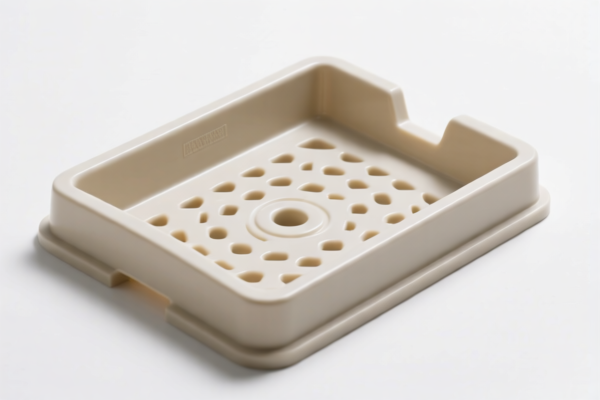
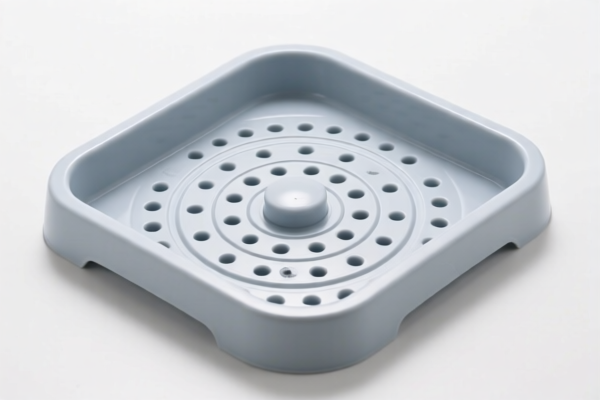
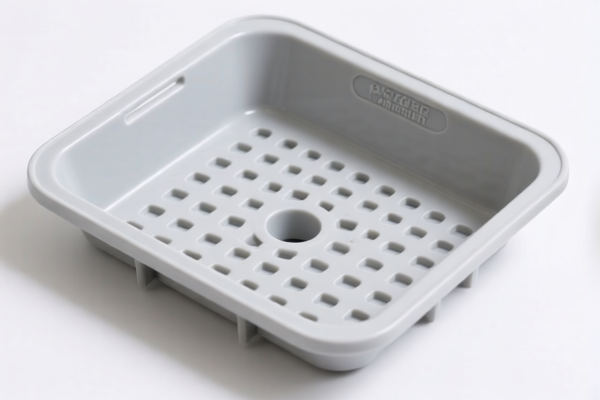
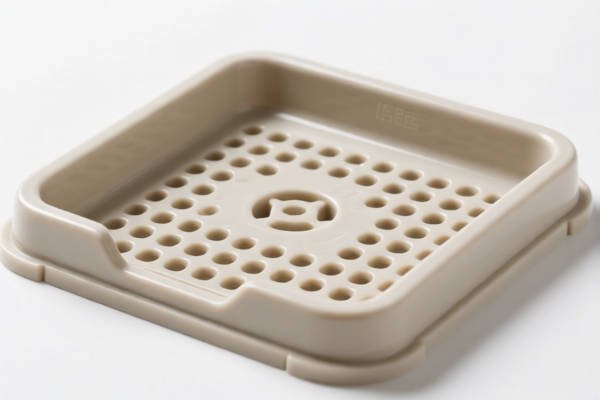
AI Analysis
🚿 Plastic Shower Base (Plastic Shower Edges/Trays)
🌐 HS Code Reference & Customs Clearance Guide | 2026 Latest Tariff Analysis | Professional Clearance Strategy
📌 I. Product Definition & Classification: What Exactly is a "Plastic Shower Base"?
A Plastic Shower Base (often referred to in trade data as "Shower Edges," "Trays," or "Bases") is a critical component of bathroom sanitary ware. In international trade, its classification depends heavily on its physical form and functional description. It is generally treated as either a sanitary article or a plastic structural profile/pipe fitting, depending on how it is manufactured and marketed.
⚠️ Key Distinction:
- If defined broadly as a "part of sanitary ware" (used in showers/bathrooms) → Classified under 3922
- If defined by its physical shape as a profile, bar, or strip → Classified under 3916
- If defined by its connection function as a pipe attachment/joint → Classified under 3917
📦 II. HS Code Classification Details (2026 Latest Tariff Authority Comparison)
Based on the provided data, the "Plastic Shower Base" can fall into five specific HS Codes. Here is the breakdown:
| HS Code | Product Description (Summary) | Physical/Functional Form | Classification Category |
|---|---|---|---|
3922.90.00.00 |
Plastic shower edge; material: plastic; Use: Shower-related component / Sanitary ware category | Sanitary Component | Other Items (Sanitary) |
3916.20.00.91 |
Plastic shower edge; Material: Plastic; Form: Profile / Strip-like | Profile / Strip | Other Items |
3916.90.50.00 |
Plastic shower edge; Material: Plastic; Form: Profile or Rod / Strip-like | Profile / Rod / Strip | Other Items |
3917.40.00.80 |
Plastic shower edge; Material: Plastic; Form: Edge/Joint type in pipe fittings | Pipe Fitting Accessory | Other Items |
3917.40.00.50 |
Plastic shower edge; Material: Plastic; Form: Edge structure of pipe/attachment | Pipe/Attachment Edge | Other Items |
🔍 Critical Insight:
- The duty rate varies slightly based on the specific HS Code chosen (ranging from 40.3% to 41.3%).
- 3922 is the most "functional" classification (Sanitary Ware).
- 3916 is the most "material/shape" classification (Plastic Profiles).
- 3917 is the most "structural" classification (Pipe Fittings).
💰 III. 2026 Latest Tariff Rate Breakdown (Including Surcharge & Policy Add-ons)
✅ Applicable Country: United States (US)
✅ Origin: China (CN)
✅ Effective Date: 2025/2026 (Current Trade War Context)
🎯 1. 3922.90.00.00 — Plastic Shower Base (Sanitary Ware Category)
| Item | Content |
|---|---|
| Basic Tariff | 6.3% (Ad Valorem) |
| Section 301 Surcharge | +25.0% |
| Section 122 Tariff | +10.0% |
| Total Tax Rate | 41.3% |
| Tax Calculation | CIF Value × 41.3% |
| De Minimis Exemption | ❌ Not Eligible (Subject to high duties) |
| Legal Path | Base Tariff 6.3% → Section 301: +25% → Section 122: +10% |
📌 Explanation:
- This classification treats the item as a general sanitary plastic good.
- It carries the highest total tax rate (41.3%) among the options due to the specific 6.3% base rate combined with mandatory surcharges.
🎯 2. 3916.20.00.91 & 3916.90.50.00 — Plastic Profiles/Strips
| Item | Content |
|---|---|
| Basic Tariff | 5.8% (Ad Valorem) |
| Section 301 Surcharge | +25.0% |
| Section 122 Tariff | +10.0% |
| Total Tax Rate | 40.8% |
| Tax Calculation | CIF Value × 40.8% |
| De Minimis Exemption | ❌ Not Eligible |
| Legal Path | Base Tariff 5.8% → Section 301: +25% → Section 122: +10% |
📌 Note:
- Slightly cheaper than3922because the base tariff is lower (5.8% vs 6.3%).
- Applicable if the shower base is marketed as a "plastic profile" or "edge strip" rather than a finished sanitary part.
🎯 3. 3917.40.00.80 & 3917.40.00.50 — Pipe Fittings/Accessories
| Item | Content |
|---|---|
| Basic Tariff | 5.3% (Ad Valorem) |
| Section 301 Surcharge | +25.0% |
| Section 122 Tariff | +10.0% |
| Total Tax Rate | 40.3% |
| Tax Calculation | CIF Value × 40.3% |
| De Minimis Exemption | ❌ Not Eligible |
| Legal Path | Base Tariff 5.3% → Section 301: +25% → Section 122: +10% |
📌 Note:
- This offers the lowest total tax rate (40.3%).
- Applicable if the shower edge/base is structurally defined as a joint, connector, or accessory to plumbing pipes.
🛠️ IV. Customs Clearance Practical Advice (Pitfall Avoidance Guide)
✅ 1. Document Preparation Checklist (Mandatory)
| Document | Required | Explanation |
|---|---|---|
| ✅ Product Specification Sheet | ✔️ | Must detail material (e.g., ABS, PVC), dimensions, and whether it includes non-plastic parts. |
| ✅ Photos (Clear & Labeled) | ✔️ | Show the product as a whole. Highlight if it looks like a "tray," "edge," or "pipe joint." |
| ✅ Commercial Invoice | ✔️ | Describe the product accurately. Avoid vague terms like "Plastic Part." Use the specific HS-aligned description. |
| ✅ Packing List | ✔️ | Ensure quantities match the invoice. |
| ✅ Certificate of Origin | ✔️ | Confirm origin is China to verify surcharge applicability. |
✅ 2. Classification Strategy (Key Mnemonic)
🔥 “Shape Defines Duty, Function Defines Code, Lower Base Rate Wins!”
| Scenario | Recommended HS Code | Why? |
|---|---|---|
| Finished Sanitary Tray | 3922.90.00.00 |
Most accurate for "Shower Base" as a sanitary item. |
| Edge Strip/Profile | 3916.20.00.91 |
If it’s a long strip used to seal edges. |
| Joint/Connector Style | 3917.40.00.80 |
If it connects pipes or has fitting structures. |
⚠️ Warning:
- Do NOT split one shipment into multiple HS codes to avoid scrutiny.
- Do NOT declare as "Plastic Bag" or "Other Plastic" (e.g.,3926.90) to evade tariffs — this is customs fraud and will lead to seizures.
✅ 3. Special Considerations
| Situation | Handling Advice |
|---|---|
| Multi-material Products | If the base has metal clips or rubber seals, ensure the plastic constitutes the essential character. If not, it may be classified under metal/rubber codes with different duties. |
| OEM/White Label | Provide the end-user manual or design drawings to prove intended use as "shower component." |
| Kit vs. Single Unit | If sold as a "Shower Kit" (base + wall panels + faucet), the entire kit may be classified under the main component (usually the sanitary base 3922). |
🌍 V. Global Market Comparison (2026 Latest)
| Country/Region | Recommended HS Code | Estimated Total Duty | Notes |
|---|---|---|---|
| 🇺🇸 USA | 3922.90.00.00 |
41.3% | Highest duty due to base 6.3% + 301 + 122. |
| 🇺🇸 USA | 3917.40.00.80 |
40.3% | Lowest duty among options if structurally a fitting. |
| 🇨🇳 China | 3922.90.00.00 |
~5-6% | Export duty low, but focus on import duty for US market. |
| 🇪🇺 EU | 3922.10.00 |
0% (MFN) | No Section 301/122 equivalents. Check local VAT. |
📌 Conclusion:
- The US market imposes heavy tariffs on Chinese plastic sanitary ware.
- Choosing the correct HS Code (3917vs3922) can save 1.0% of the CIF value, which is significant for high-volume shipments.
📌 VI. Common Mistakes & Pitfall Guide (Blood & Tears Lessons)
❌ Mistake 1: Declaring as "Plastic Sheet" (3920)
👉 Consequence: Misclassification. Customs will reclassify to 3922 or 3917 and charge back taxes + penalties.
❌ Mistake 2: Ignoring the "122 Clause"
👉 Consequence: The 10% Section 122 tariff is mandatory for many plastic imports from China. Forgetting it leads to underpayment.
❌ Mistake 3: Vague Description "Shower Part"
👉 Consequence: Customs will assign the highest possible duty rate or delay clearance for further review.
👉 Fix: Use precise language: "Plastic Shower Base Tray, ABS Material, Model XYZ."
✅ Correct Approach:
"Plastic Shower Base, Material: ABS, Form: Tray/Edge, Intended Use: Bathroom Sanitary Ware, Origin: China."
🎯 VII. Conclusion: Professional Declaration, Cost Optimization!
🎯 Remember the Mantra:
🔹 "Sanitary Base: 41.3% | Profile: 40.8% | Fitting: 40.3%"
🔹 "Base Rate Matters: 5.3% wins over 6.3%"
🔹 "Total Duty = Base + 25% (301) + 10% (122)"
📌 Pro Tip:
If your product is strictly a pipe joint/edge and not a full sanitary tray, consider declaring under 3917.40.00.80 to save 1.0% in total duty. However, ensure the physical product truly resembles a fitting/profile to avoid audit risks.
📣 Immediate Action:
📞 Consult a licensed customs broker to confirm the essential character of your product.
🚀 Accurate HS Code = Predictable Costs + Smooth Clearance!
✨ Professional Clearance Starts with Precise Classification!
💼 Every 0.1% in duty rate adds up to thousands in savings!
Customer Reviews
About HS Code Classification
The Harmonized System (HS) is an internationally standardized nomenclature developed by the World Customs Organization (WCO) to classify traded products. Over 200 countries use the HS system as the basis for customs tariffs, trade statistics, and import/export regulations.
Each HS code follows a hierarchical structure:
- Chapter (2 digits) — Broad category of goods (e.g., Chapter 84: Machinery and Mechanical Appliances)
- Heading (4 digits) — More specific grouping within the chapter
- Subheading (6 digits) — Internationally standardized breakdown, used by all WCO member countries
- National subdivisions (8-10 digits) — Country-specific extensions for further classification, such as US HTSUS 10-digit codes
Correct HS code classification is essential for smooth customs clearance, accurate duty payment, and compliance with trade regulations. Misclassification can lead to customs delays, overpayment of duties, or penalties.
When importing from CN to US, the applicable tariff rates may include:
- Most-Favored-Nation (MFN) rate — The standard duty rate applied to WTO members
- General rate — Applied to countries without trade agreements
- Trade remedy duties — Additional tariffs such as Section 301 (anti-dumping), Section 232 (national security), or countervailing duties
The information provided on this page is for reference purposes only. For official classification, please consult with your local customs authority or a licensed customs broker.