Plastic Simple Curtain
CN → US| HS Code | Tariff Rate | Origin | Destination | Doc |
|---|---|---|---|---|
| 3920995000 | 40.8% | CN | US | Official Doc |
| 5903102090 | 35.0% | CN | US | Official Doc |
| 3926909989 | 22.8% | CN | US | Official Doc |
| 3926909987 | 22.8% | CN | US | Official Doc |
| 3920991000 | 41.0% | CN | US | Official Doc |
Product Images
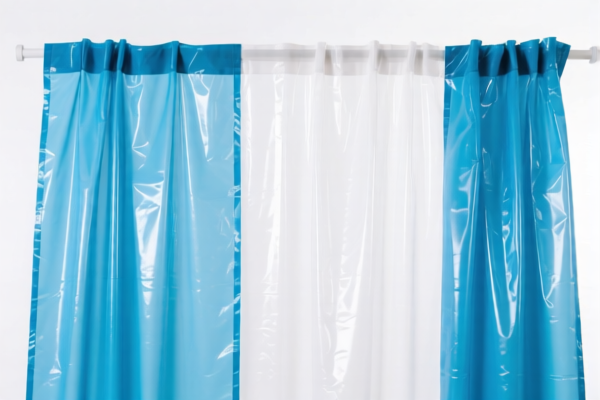

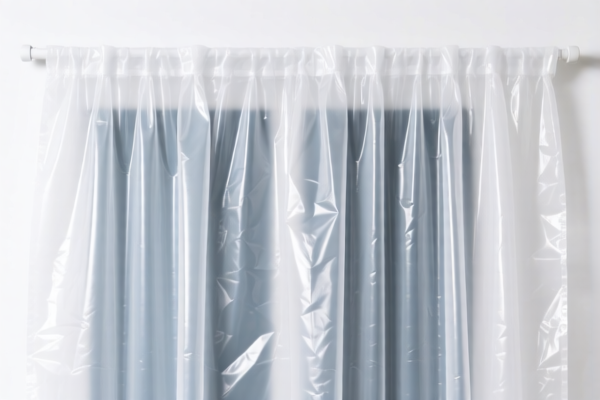
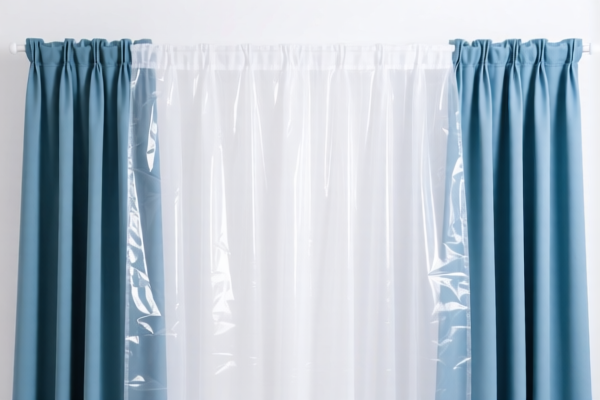
AI Analysis
🪟 Plastic Simple Curtain (塑料简易窗帘)
🌐 HS Code Reference & Customs Clearance Guide | 2026 Latest Tariff Analysis | Specialized Clearance Strategy
📌 I. Product Definition & Classification: Is It a "Curtain" or "Plastic Sheet"?
A "Plastic Simple Curtain" is a versatile home or commercial item. However, in international trade, the HS Code classification depends entirely on its physical form and function. Misclassification leads to severe tariff penalties (up to 41% vs. 22.8%).
The product falls into two distinct categories: 1. Sheet/Membrane Form: If the curtain is made of plastic sheets, films, or strips connected together (e.g., plastic strip curtains, blinds made of rigid/flexible plastic sheets), it is classified under Chapter 39 (Plastics and Articles Thereof). 2. Textile Form: If the curtain is made of fabric (textile) that has been coated or impregnated with plastic (e.g., vinyl-coated polyester curtains), it is classified under Chapter 59 (Man-Made Fibers, Coated/Impregnated).
⚠️ Key Distinction Point:
- If it looks like rigid/flexible plastic strips, blinds, or sheets → Go to HS 3920 / 3926 (Plastic Articles).
- If it looks like fabric/cloth but feels waterproof/plastic-coated → Go to HS 5903 (Coated Textiles).
📦 II. HS Code Classification Details (2026 Latest Tariff Authority Match)
Based on your provided data, here are the specific HS Codes for "Plastic Simple Curtain" and why they apply:
| HS Code | Product Description | Application Scenario | Tax Rate (China to US) |
|---|---|---|---|
3920.99.50.00 |
Plastic Sheets/Films: Plastic material, in the form of plates, sheets, films, foil, and strips. Other plastics. | Plastic Strip Curtains: Clear PVC strip curtains for doors; or curtains made of connected plastic sheets/films. | 40.8% |
3926.90.99.89 |
Other Plastic Articles: Explicitly plastic material, specific application items of plastic products. | Plastic Blinds/Curtains: Pre-formed plastic blind slats, or specific plastic curtain accessories/hardware that are finished goods. | 22.8% |
3926.90.99.87 |
Other Plastic Articles (Catch-all): Plastic material, specific application form, catch-all category for plastic products. | Generic Plastic Curtain Parts: If the curtain is a complex plastic assembly that doesn't fit the "sheet" definition but is a finished plastic good. | 22.8% |
5903.10.20.90 |
Coated Textiles: Curtain form, fabric coated or impregnated with plastic, other types of applications. | Vinyl/Laminated Fabric Curtains: Fabric curtains with a plastic coating (waterproof) or lamination. NOT pure plastic. | 35.0% |
3920.99.10.00 |
Plastic Sheets Extended Form: Plastic material, blinds belong to the extended form of plates, sheets, films, foils, and strips. | Blinds/Louvers: Specifically identified as "Blind Curtains" made of plastic strips/slats. | 41.0% |
🔍 Critical Insight:
- Cheapest Route (22.8%): If you can classify your product as a "Finished Plastic Article" (3926.90.99.89/87) rather than a "Sheet/Membrane" (3920), you save ~18% in duties. This often requires the item to be a specific "article" (like a pre-assembled blind) rather than a roll of film. - Most Common Route (40-41%): Most "plastic curtains" (like PVC strip curtains or plastic blinds) fall under 3920 or 3920.99.10, resulting in high tariffs. - Fabric Route (35%): If you switch from "plastic sheet" to "plastic-coated fabric," the rate drops to 35%, but you must prove it is textile-based.
💰 III. 2026 Latest Tariff Rate Breakdown (Including Surcharges & Policy Add-ons)
✅ Applicable Country: United States (US)
✅ Country of Origin: China (CN)
✅ Effective Date: From November 10, 2025 onwards (including subsequent imports)
🎯 1. 3920.99.50.00 & 3920.99.10.00 —— Plastic Sheets/Films/Blinds (High Tariff Zone)
| Item | Content |
|---|---|
| Base Duty | 5.8% - 6.0% (ad valorem) |
| Section 301 Surcharge | +25.0% (USITC Footnote) |
| Section 122 Surcharge | +10.0% (Specific 122 Clause Tariff) |
| Total Effective Rate | 40.8% - 41.0% |
| Tax Calculation | CIF Value × 40.8%~41.0% |
| De Minimis Exemption | ❌ DENIED (Section 301/122 goods are explicitly excluded from Section 321 de minimis) |
| Legal Basis Path | Section 301: 9903.88.01 → Section 122: 9903.01.25 → USITC: 3920.99.50.00 / 3920.99.10.00 |
📌 Explanation:
- The 25% comes from Section 301 tariffs on Chinese goods.
- The 10% is the "Section 122" tariff (often associated with specific trade remedy measures).
- Base Duty varies slightly between 5.8% and 6.0% depending on the exact sub-heading.
- Total: ~41%. This is a very high tariff. Do not use Parcel Express (de minimis) for these codes; they will be seized or taxed.
🎯 2. 5903.10.20.90 —— Coated Textile Curtains (Medium Tariff Zone)
| Item | Content |
|---|---|
| Base Duty | 0.0% |
| Section 301 Surcharge | +25.0% |
| Section 122 Surcharge | +10.0% |
| Total Effective Rate | 35.0% |
| Tax Calculation | CIF Value × 35.0% |
| De Minimis Exemption | ❌ DENIED |
| Legal Basis Path | Section 301: 9903.88.01 → Section 122: 9903.01.25 → USITC: 5903.10.20.90 |
📌 Note:
- Base duty is 0% for this specific coated textile sub-category, making the total 35%.
- This is 6% cheaper than the plastic sheet classification.
- Condition: You MUST prove the substrate is textile (e.g., polyester, nylon) and not just a plastic film with a fabric backing that is actually classified as plastic.
🎯 3. 3926.90.99.89 & 3926.90.99.87 —— Other Plastic Articles (Lowest Tariff Zone)
| Item | Content |
|---|---|
| Base Duty | 5.3% |
| Section 301 Surcharge | +7.5% (Note: Data shows 7.5% surcharge, likely due to specific exclusions or different 301 list section) |
| Section 122 Surcharge | +10.0% |
| Total Effective Rate | 22.8% |
| Tax Calculation | CIF Value × 22.8% |
| De Minimis Exemption | ❌ DENIED |
| Legal Basis Path | Section 301: [Specific Footnote] → Section 122: 9903.01.25 → USITC: 3926.90.99.89 / 87 |
📌 Crucial Strategy:
- Total: 22.8%. This is the most cost-effective classification if your product is considered a "finished plastic article" (e.g., a molded plastic blind) rather than a "sheet or film."
- Risk: Customs may reclassify it as3920(40.8%) if they view it as merely a cut sheet of plastic. You need strong product documentation (e.g., "Pre-assembled Blind Slats") to support3926.
🛠️ IV. Customs Clearance Practical Advice (Battle-Tested Pitfall Guide)
✅ 1. Preparation Checklist (Mandatory)
| Document | Required | Description |
|---|---|---|
| ✅ Product Spec Sheet | ✔️ | Must specify: Material composition (100% PVC? Polyester + PVC coating?), Dimensions, Form (Sheet vs. Finished Good). |
| ✅ Product Photos | ✔️ | Clear images showing: 1. Close-up of material texture. 2. Finished product (if applicable). 3. Label/Tag. |
| ✅ Commercial Invoice | ✔️ | CRITICAL: Do NOT just write "Curtain". Use precise HS-aligned description: - For 3920: "PVC Plastic Strip Curtain, Roll Form"- For 3926: "Pre-fabricated Plastic Blind Slats, Finished Article"- For 5903: "Polyester Fabric Curtain with PVC Coating" |
| ✅ Composition Proof | ✔️ | Lab test report or mill certificate showing percentage of plastic vs. textile fiber. Essential for 5903 vs 3920 dispute. |
| ✅ Packing List | ✔️ | Detail net/gross weight. Ensure no mixing of goods with different HS codes. |
✅ 2. Declaration Strategy (Key Mantra)
🔥 "Form Defines Code, Code Defines Cost!"
| Scenario | Correct Declaration | Wrong Declaration | Consequence |
|---|---|---|---|
| PVC Strip Curtain (Rolls) | 3920.99.50.00 |
"Curtain" | High Tax (40.8%) |
| Plastic Blinds (Pre-cut slats) | 3926.90.99.89 |
"Plastic Sheet" | Save 18%! (22.8% vs 40.8%) |
| Vinyl Fabric Curtain | 5903.10.20.90 |
"Plastic Curtain" | Medium Tax (35%) |
| Any of the above | Do NOT use "De Minimis" (800.32) | Using Parcel Express for B2B/Bulk | Seizure/Back Taxes |
📌 Note on Section 122: The data indicates a 10% Section 122 tariff for ALL listed codes. This applies to most Chinese plastic/textile goods entering the US. Ensure your broker applies this correctly; it is often overlooked in software defaults.
✅ 3. Special Situation Handling
| Situation | Advice |
|---|---|
| Trying to Lower Tax from 40.8% to 22.8% | Argue that the product is a "Finished Article" (3926) because it is pre-cut, pre-perforated, and ready for immediate installation (e.g., blinds), rather than a raw "sheet or film" (3920). Provide assembly instructions. |
| Switching from Plastic to Fabric | If you can source polyester fabric with PVC coating instead of 100% PVC film, you move to 5903 (35%). This is easier to justify if the fabric backing is visible. |
| OEM Custom Curtains | Provide customer design specs. If the design involves specific plastic molding, it supports 3926. If it is just cut from a roll, it supports 3920. |
🌍 V. Global Market Clearance Comparison (2026 Update)
| Country/Region | Recommended HS Code | Tariff (CN Origin) | Certification | Remarks |
|---|---|---|---|---|
| 🇺🇸 USA | 3926.90.99.89 (Best Case) |
22.8% (or 40.8% if misclassified) | No specific agency, but strict customs valuation | High Risk: 122 Clause applies. |
| 🇨🇳 China | 3920.99.10.00 |
5-6% | N/A | Low import duty, but export dynamics apply. |
| 🇪🇺 EU | 3920.99.90 / 5903.10 |
6.5% (Plastic) / 4% (Coated Textile) | CE (if for machinery), REACH | No Section 301/122. Much lower cost. |
| 🇬🇧 UK | 3920.99.90 |
6.5% | UKCA | Post-Brexit rules apply. |
📌 Conclusion:
- The US market is the most punitive for plastic curtains due to Section 301 (25%) and Section 122 (10%).
- EU/UK are significantly cheaper (~6.5%). Consider if diversion of supply chain to non-China origins (e.g., Vietnam) can mitigate US tariffs (IEEPA exemptions may apply for certain goods, but plastic curtains are often excluded).
📌 VI. Common Errors & Pitfalls (Blood & Tears Lessons)
❌ Mistake 1: Declaring "Plastic Curtain" under 3926 when it is clearly a roll of plastic film (3920).
👉 Result: Customs reclassification + penalty. You lose the tax benefit and pay the difference.
👉 Fix: Only use 3926 for finished articles (e.g., pre-assembled blinds). For rolls/sheets, use 3920.
❌ Mistake 2: Using "Curtain" as the product name without specifying material form.
👉 Result: Customs ambiguity → Delays → Demurrage fees.
👉 Fix: Be specific: "PVC Strip Curtain (3920)" or "Coated Polyester Curtain (5903)".
❌ Mistake 3: Ignoring the 10% Section 122 Tariff.
👉 Result: Underpayment of duty. Customs issues a bill later.
👉 Fix: Ensure your HTS entry includes the Supplemental Unit 2 / Section 122 code for a 10% additional duty.
🎯 VII. Conclusion: Professional Declaration, Cost Saving!
🎯 Remember the Mantra:
🔹 "Sheet vs. Article: Know the difference. 40% vs 22% is a huge gap!"
🔹 "Fabric + Plastic = Coated Textile (35%). Pure Plastic = High Tax (40-41%)."
🔹 "Section 122 is 10% extra. Don't forget it!"
📌 Pro Tip:
If you are importing large volumes, consider applying for an HTS Exclusion (if available) or restructuring your product to be a "Finished Plastic Article" (3926) to enjoy the 22.8% rate instead of 40.8%. This requires strong product engineering (e.g., pre-cut, pre-perforated blinds) and robust documentation.
📣 Immediate Action:
📞 Consult your customs broker with product samples/photos.
📄 Prepare a "Product Composition Report" to justify3926(Finished) vs3920(Sheet).
🚀 Accurate HS Code = Profit Preservation!
✨ Professional Clearance Starts with Precise Classification!
💼 Every Percentage Point Saved is Pure Profit!
Customer Reviews
About HS Code Classification
The Harmonized System (HS) is an internationally standardized nomenclature developed by the World Customs Organization (WCO) to classify traded products. Over 200 countries use the HS system as the basis for customs tariffs, trade statistics, and import/export regulations.
Each HS code follows a hierarchical structure:
- Chapter (2 digits) — Broad category of goods (e.g., Chapter 84: Machinery and Mechanical Appliances)
- Heading (4 digits) — More specific grouping within the chapter
- Subheading (6 digits) — Internationally standardized breakdown, used by all WCO member countries
- National subdivisions (8-10 digits) — Country-specific extensions for further classification, such as US HTSUS 10-digit codes
Correct HS code classification is essential for smooth customs clearance, accurate duty payment, and compliance with trade regulations. Misclassification can lead to customs delays, overpayment of duties, or penalties.
When importing from CN to US, the applicable tariff rates may include:
- Most-Favored-Nation (MFN) rate — The standard duty rate applied to WTO members
- General rate — Applied to countries without trade agreements
- Trade remedy duties — Additional tariffs such as Section 301 (anti-dumping), Section 232 (national security), or countervailing duties
The information provided on this page is for reference purposes only. For official classification, please consult with your local customs authority or a licensed customs broker.