Plastic Softener Compound
CN → US| HS Code | Tariff Rate | Origin | Destination | Doc |
|---|---|---|---|---|
| 3901905501 | 41.5% | CN | US | Official Doc |
| 3901909000 | 41.5% | CN | US | Official Doc |
| 2942003500 | 41.5% | CN | US | Official Doc |
| 2942005000 | 38.7% | CN | US | Official Doc |
| 3824992900 | 41.5% | CN | US | Official Doc |
Product Images
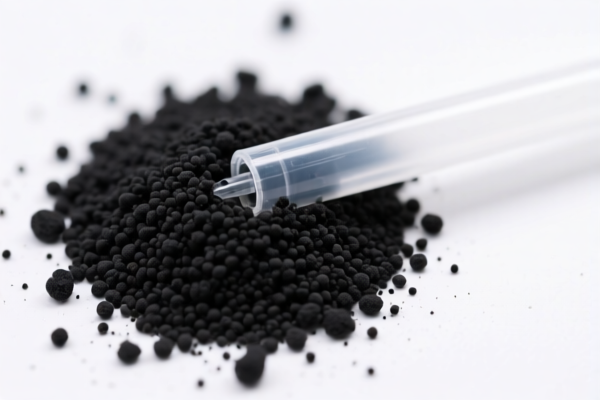
AI Analysis
🧪 Plastic Softener Compound (Plastic Stabilizer Complex)
🌐 HS Code Reference & Customs Clearance Guide | 2026 Latest Tariff Analysis | Professional Clearance Strategy
📌 Part 1: Product Definition & Classification: Do You Really Understand "Plastic Softener Compound"?
Plastic Softener Compounds (often referred to as Plastic Stabilizer Complexes or Compounds) are chemical additives used in the polymer industry to improve the stability, flexibility, and durability of plastics (such as PVC, PE, PP) during processing and use. In international trade, the classification depends heavily on whether the product is viewed as a polymer precursor, a mixed chemical product, or a specific organic compound.
⚠️ Key Classification Distinction:
- If the product acts primarily as a polymer base or monomer mixture → Classified under Chapter 39 (Plastics).
- If the product is a specific chemical molecule not elsewhere specified → Classified under Chapter 29 (Organic Chemicals).
- If the product is a mixed formulation/compound for industrial use → Classified under Chapter 38 (Miscellaneous Chemical Products).
📦 Part 2: HS Code Classification Details (2026 Latest Tariff Authority Comparison)
| HS Code | Product Description | Application Scenario | Classification Logic |
|---|---|---|---|
3901.90.55.01 |
Ethylene Copolymers – Plastic stabilizer compounds classified as ethylene copolymers, meeting the characteristics of primary forms of polymers | Polymer raw materials, compound base resins | ✅ Polymer Primary Form |
3901.90.90.00 |
Other Ethylene Polymers – Classified as other categories of ethylene polymers, belonging to added raw materials | General plastic additives, modified resin blends | ✅ Polymer Additive |
2942.00.35.00 |
Other Organic Compounds – Classified as other organic compounds, fitting the attributes of chemical additives | Pure chemical stabilizers, specific organic additives | ✅ Chemical Additive |
2942.00.50.00 |
Other Organic Compounds – Classified as other organic compounds, fitting the nature of chemical raw materials | Bulk organic chemical intermediates | ✅ Chemical Raw Material |
3824.99.29.00 |
Other Chemical Products and Preparations – Classified as other chemical industrial products, fitting the attributes of chemical industry products | Complex mixed formulations, industrial preparations | ✅ Mixed Preparation |
🔍 Important Reminder:
- Chapter 39 Codes (3901...) apply if the product is fundamentally a polymer or contains a significant polymer base acting as the primary vehicle.
- Chapter 29 Codes (2942...) apply if the product is a distinct chemical compound (organic) not specifically named in Chapter 29.
- Chapter 38 Code (3824...) applies if the product is a mixture/compound designed for a specific industrial function (stabilization) rather than being a pure chemical or polymer.
💰 Part 3: 2026 Latest Tariff Rate Details (Including Surcharges & Policy Add-ons)
✅ Applicable Country: United States (US)
✅ Origin: China (CN)
✅ Effective Date: November 10, 2025 onwards (including subsequent imports)
🎯 1. 3901.90.55.01 —— Ethylene Copolymers (Polymer Classification)
| Item | Content |
|---|---|
| Basic Tariff | 6.5% (ad valorem) |
| Section 301 Surcharge | +25.0% |
| Section 122 Tariff | +10.0% |
| Total Tariff Rate | 41.5% |
| Tax Calculation | CIF Value × 41.5% |
| De Minimis Exemption | ❌ Not Available (deny_de_minimis) |
| Legal Basis Path | Section 301:3901.90.55.01 → Section 122:3901.90.55.01 |
📌 Explanation:
- "Basic Tariff 6.5%": Standard US Most Favored Nation (MFN) rate for ethylene copolymers.
- "Section 301 Surcharge 25%": Additional tariff imposed by the USTR on Chinese goods under Trade Act Section 301.
- "Section 122 Tariff 10%": Additional tariff under Section 122 of the Trade Expansion Act (national security/international economic emergency).
- Total 41.5%: This is a high-cost classification for polymer-based stabilizers.
🎯 2. 3901.90.90.00 —— Other Ethylene Polymers (Polymer Classification)
| Item | Content |
|---|---|
| Basic Tariff | 6.5% |
| Section 301 Surcharge | +25.0% |
| Section 122 Tariff | +10.0% |
| Total Tariff Rate | 41.5% |
| Tax Calculation | CIF Value × 41.5% |
| De Minimis Exemption | ❌ Not Available |
| Legal Basis Path | Section 301:3901.90.90.00 → Section 122:3901.90.90.00 |
📌 Note:
- Same tax burden as3901.90.55.01.
- Applies to ethylene polymers not specifically listed elsewhere. If your compound is primarily an ethylene-based polymer mix, this applies.
🎯 3. 2942.00.35.00 —— Other Organic Compounds (Chemical Additive)
| Item | Content |
|---|---|
| Basic Tariff | 6.5% |
| Section 301 Surcharge | +25.0% |
| Section 122 Tariff | +10.0% |
| Total Tariff Rate | 41.5% |
| Tax Calculation | CIF Value × 41.5% |
| De Minimis Exemption | ❌ Not Available |
| Legal Basis Path | Section 301:2942.00.35.00 → Section 122:2942.00.35.00 |
📌 Explanation:
- Classified as a "Chemical Additive."
- The tax structure is identical to Chapter 39 codes due to the broad application of Section 301 and Section 122 on Chinese chemical/polymers.
🎯 4. 2942.00.50.00 —— Other Organic Compounds (Chemical Raw Material)
| Item | Content |
|---|---|
| Basic Tariff | 3.7% |
| Section 301 Surcharge | +25.0% |
| Section 122 Tariff | +10.0% |
| Total Tariff Rate | 38.7% |
| Tax Calculation | CIF Value × 38.7% |
| De Minimis Exemption | ❌ Not Available |
| Legal Basis Path | Section 301:2942.00.50.00 → Section 122:2942.00.50.00 |
📌 Note:
- Cost-Saving Opportunity: This code has a lower base rate (3.7% vs 6.5%).
- Total rate is 38.7%, which is 2.8% lower than the 41.5% rate.
- Only applicable if the product is strictly defined as an "Other Organic Compound" (raw material nature) rather than a specialized additive or polymer.
🎯 5. 3824.99.29.00 —— Other Chemical Products & Preparations (Mixed Formulation)
| Item | Content |
|---|---|
| Basic Tariff | 6.5% |
| Section 301 Surcharge | +25.0% |
| Section 122 Tariff | +10.0% |
| Total Tariff Rate | 41.5% |
| Tax Calculation | CIF Value × 41.5% |
| De Minimis Exemption | ❌ Not Available |
| Legal Basis Path | Section 301:3824.99.29.00 → Section 122:3824.99.29.00 |
📌 Explanation:
- Most Common for Compounds: If the "Plastic Softener" is a blend/mixture of various chemicals (not a single pure compound or polymer), this is the most accurate classification.
- Tax rate is 41.5%. No savings compared to Chapter 39/29.35, but legally safer for mixed formulations.
🛠️ Part 4: Customs Clearance Practical Advice (Battlefield Avoidance Guide)
✅ 1. Required Documentation Checklist (Non-negotiable)
| Document | Must Provide | Description |
|---|---|---|
| ✅ Product Specification Sheet | ✔️ | Detailed composition (CAS numbers, percentages), physical state, intended use. |
| ✅ Certificate of Analysis (COA) | ✔️ | Proves chemical purity or compound nature. Critical for distinguishing between 2942 (pure) and 3824 (mixture). |
| ✅ Structure Diagram / Formula | ✔️ | For Chapter 29 codes, showing the specific organic structure. |
| ✅ Product Photos | ✔️ | Clear images of label, packaging, and container. |
| ✅ Commercial Invoice | ✔️ | Must clearly state "Plastic Stabilizer Compound" and HS Code. |
| ✅ Origin Certificate | ✔️ | If not China-origin, to avoid Section 122/301. |
| ✅ Packing List | ✔️ | Weight/volume details. |
✅ 2. Declaration Tips (Key Mantra)
🔥 "Pure Chemicals vs. Mixed Blends: One defines 29, One defines 38. Polymer base goes to 39. Don't mix them up!"
| Scenario | Correct Declaration | Wrong Practice |
|---|---|---|
| Single Chemical Compound (e.g., a specific ester) | 2942.00.35.00 or 2942.00.50.00 |
Misdeclare as 3824 → Higher scrutiny, potential penalty. |
| Mixed Stabilizer Compound (Blend of multiple additives) | 3824.99.29.00 |
Misdeclare as 2942 → Rejected because it's not a single compound. |
| Polymer-based Stabilizer (Ethylene copolymer mix) | 3901.90.55.01 or 3901.90.90.00 |
Misdeclare as 3824 → Loss of classification accuracy. |
| Bulk Raw Material | 2942.00.50.00 |
Misdeclare as 3824 → Miss potential 2.8% tax saving. |
✅ 3. Special Handling Cases
| Scenario | Handling Advice |
|---|---|
| OEM Custom Compound | Provide formulation details (without revealing trade secrets if possible, but enough for HS classification) to justify 3824 over 2942. |
| High Purity vs. Industrial Grade | High purity (technical grade) may qualify for Chapter 29; industrial grade mixtures often fall under Chapter 38. |
| Re-imports or Returned Goods | Ensure proper documentation to avoid double taxation. |
| Section 301 Exclusions | Check if your specific HS Code was ever excluded. (Note: As of 2026 data, most chemical/plastic categories are not excluded from Section 301/122). |
🌍 Part 5: Global Market Clearance Comparison (2026 Latest)
| Country/Region | Recommended HS Code | Tariff (China Origin) | Certification Requirements | Remarks |
|---|---|---|---|---|
| 🇺🇸 USA | 3824.99.29.00 / 3901... / 2942... |
38.7% ~ 41.5% | None specific for customs, but TSCA compliance needed | Highest Tariff due to Section 301 + 122 |
| 🇨🇳 China | 3824.99.29.00 |
~5-7% (Varies) | Chemical Registration | Lower base rate, no US surcharges |
| 🇪🇺 EU | 3824.99.97 |
0-2% (Often 0%) | REACH Registration | REACH is Critical. No Section 301. |
| 🇬🇧 UK | 3824.99.97 |
0-2% | UK REACH | Post-Brexit rules apply. |
| 🇯🇵 Japan | 3824.99.00 |
0-3% | PRTR Act | Low tariff, focus on environmental compliance. |
📌 Conclusion:
- The US is the most expensive market for Plastic Softener Compounds due to the cumulative effect of Base Tariff + Section 301 (25%) + Section 122 (10%).
- Chapter 29 Code2942.00.50.00offers the lowest US tariff (38.7%) but requires strict proof of "organic compound" nature.
- Chapter 38 Code3824.99.29.00is the safest for mixed compounds but costs 41.5%.
- European and Asian markets have significantly lower tariffs but require strict REACH/PRTR compliance.
📌 Part 6: Common Mistakes & Pitfalls (Blood & Tears Lessons)
❌ Mistake 1: Declaring a mixed compound as a single chemical (2942)
👉 Consequence: Customs may reject the declaration, demand additional testing, or impose penalties for misclassification.
👉 Result: Delayed clearance + potential fines.
❌ Mistake 2: Assuming "Softener" = Plastic and always using Chapter 39
👉 Consequence: If it's a chemical additive blend, it should be Chapter 38. Misclassification leads to audit risks.
👉 Result: Retroactive tax adjustments.
❌ Mistake 3: Ignoring Section 122
👉 Consequence: Even if Section 301 is challenged, Section 122 (10%) is often upheld.
👉 Result: Underestimating total landed cost by 10%.
✅ Correct Approach:
"Plastic Stabilizer Compound, Mixture of Organic Salts and Esters, for PVC Processing, HS Code 3824.99.29.00, Origin: China, Subject to Sec 301 & 122 Tariffs."
🎯 Part 7: Conclusion: Professional Declaration, Save Cost & Time!
🎯 Remember the Mantra:
🔹 "Pure Chemical to 29, Mixed Blend to 38, Polymer Base to 39."
🔹 "Total Tariff = Base + 25% (301) + 10% (122). No Exemptions for China."
🔹 "Check COA for 2942.50 to save 2.8%!"
📌 Pro Tip:
- If your product is a strictly defined organic compound (not a mixture), fight for 2942.00.50.00 to achieve the 38.7% rate.
- If it is a mixture, accept 3824.99.29.00 at 41.5% but ensure your documentation (COA, SDS) clearly supports the "preparation" nature.
- Always apply for an Advance Ruling from US Customs (CBP) if the product is novel or complex, to mitigate risk.
📣 Immediate Action:
📞 Contact a licensed customs broker.
📄 Provide SDS and COA.
🚀 Accurate classification is your best defense against US tariffs!
✨ Professional Customs Clearance Starts with Precise Classification!
💼 Every cent of cost is worth calculating precisely!
Customer Reviews
About HS Code Classification
The Harmonized System (HS) is an internationally standardized nomenclature developed by the World Customs Organization (WCO) to classify traded products. Over 200 countries use the HS system as the basis for customs tariffs, trade statistics, and import/export regulations.
Each HS code follows a hierarchical structure:
- Chapter (2 digits) — Broad category of goods (e.g., Chapter 84: Machinery and Mechanical Appliances)
- Heading (4 digits) — More specific grouping within the chapter
- Subheading (6 digits) — Internationally standardized breakdown, used by all WCO member countries
- National subdivisions (8-10 digits) — Country-specific extensions for further classification, such as US HTSUS 10-digit codes
Correct HS code classification is essential for smooth customs clearance, accurate duty payment, and compliance with trade regulations. Misclassification can lead to customs delays, overpayment of duties, or penalties.
When importing from CN to US, the applicable tariff rates may include:
- Most-Favored-Nation (MFN) rate — The standard duty rate applied to WTO members
- General rate — Applied to countries without trade agreements
- Trade remedy duties — Additional tariffs such as Section 301 (anti-dumping), Section 232 (national security), or countervailing duties
The information provided on this page is for reference purposes only. For official classification, please consult with your local customs authority or a licensed customs broker.