Plastic Sole Metal Toe Cap Safety Shoes
CN → US| HS Code | Tariff Rate | Origin | Destination | Doc |
|---|---|---|---|---|
| 6403406000 | 18.5% | CN | US | Official Doc |
| 6403403090 | 15.0% | CN | US | Official Doc |
| 6401929030 | 55.0% | CN | US | Official Doc |
| 6402910500 | 16.0% | CN | US | Official Doc |
Product Images

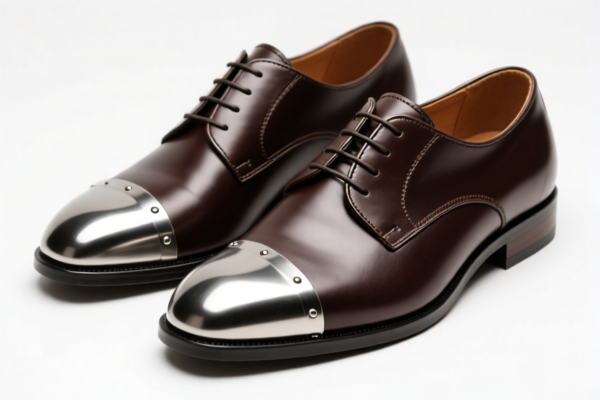
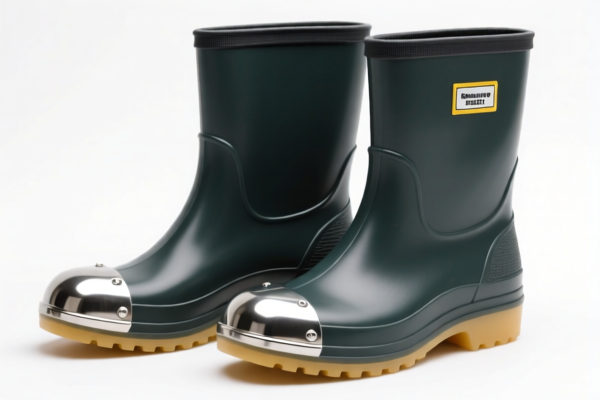
AI Analysis
👞 Plastic Sole Metal Toe Cap Safety Shoes: Global Trade & Customs Decoded
🌐 HS Code Classification & Tax Strategy Guide | 2026 Customs Clearance | Professional Compliance Protocol
📌 I. Product Definition & Critical Distinction: Why This Shoe?
Plastic Sole Metal Toe Cap Safety Shoes are industrial protective footwear designed to withstand harsh environments. Their classification hinges on two key variables: 1. Material Composition: The Plastic Sole (often combined with rubber or synthetic uppers) vs. Leather/Rubber uppers. 2. Safety Feature: The Metal Toe Cap (Steel Toe) which defines them as "Safety Footwear" rather than standard fashion footwear.
⚠️ Critical Logic: * The "Sole" Trap: If the sole is primarily Plastic, it often shifts the classification away from standard rubber/leather shoe categories (6403/6404) toward Plastic/Rubber footwear (6401/6402). * The "Toe" Factor: The presence of a Steel Toe Cap mandates a specific sub-heading for "Safety Footwear with Metal Toe Cap" regardless of the upper material (unless the upper is specifically rubberized leather). * Tariff Shock: Depending on how "Plastic" is interpreted (Plastic vs. Rubber vs. Leather), the duty rate can swing from 18.5% to a staggering 55.0% due to Section 301/China-specific surcharges.
📦 II. HS Code Classification Matrix (2026 Customs Logic)
Based on the specific product attributes (Plastic Sole + Metal Toe Cap), here are the four potential classifications derived from the data analysis, ranging from lowest to highest risk.
| HS Code | Product Description | Key Matching Criteria | Tax Risk Level |
|---|---|---|---|
| 6403.40.60.00 | Safety Footwear (Steel Toe) Leather/Rubber uppers with plastic/rubber soles |
Logic: Focuses on the "Steel Toe" as the primary safety component. If the upper is deemed "Other" (e.g., leather-like), this is the base case. | 🟢 Low (18.5%) |
| 6403.40.30.90 | Safety Footwear (Plastic Upper Inferred) Plastic sole + Steel Toe, "Other" category |
Logic: Matches "Metal Toe Cap" + "Plastic Description" by inference. Used if the upper is synthetic/plastic. | 🟡 Medium (15.0%) |
| 6402.91.05.00 | Plastic/Rubber Safety Shoes Plastic sole + Metal Toe + Plastic/Rubber Upper |
Logic: Explicitly matches "Plastic Material" + "Metal Toe Cap" + "Plastic/Rubber Sole". Most Accurate for "Plastic Sole". | 🟠 Medium (16.0%) |
| 6401.92.90.30 | Impermeable/Plastic Safety Boots Plastic Sole + Steel Toe + Plastic Upper |
Logic: Interprets the shoe as "Waterproof/Plastic" based on "Plastic Safety Shoe Laces" or heavy plastic construction. Highest Risk. | 🔴 High (55.0%) |
🔍 Deep Dive on Classification Logic: * 6403 Series: Generally for footwear with leather uppers or non-rubber/non-plastic specific soles. * 6402 Series: Specifically for footwear with rubber, plastic, or synthetic uppers and soles. * The "Plastic Sole" Dilemma: Customs may classify a shoe with a "Plastic Sole" and "Plastic Upper" under 6401 (Waterproof/Plastic) if the construction is deemed fully impermeable, triggering the 55.0% rate. * The "Metal Toe" Requirement: All codes above include the 10% "Section 122" Tariff specifically for safety footwear with metal toe caps (China origin).
💰 III. 2026 Tax Rate Breakdown & Surcharge Analysis
✅ Origin: China (CN) ✅ Destination: USA (US) ✅ Applicable Tariff Structure: Base Rate + Section 301 (Additional) + Section 122 (Safety Shoe Surcharge)
🎯 Scenario A: 6403.40.60.00 (Lowest Rate - Leather/Other Upper)
Assumption: The product is treated primarily as a standard safety shoe with a steel toe.
| Tax Component | Rate | Legal Basis |
|---|---|---|
| Base Duty | 8.5% | Standard MFN Rate |
| Section 301 (Add-on) | 0.0% | Note: Data indicates 0% for this specific subheading |
| Section 122 (Safety Toe) | 10.0% | Mandatory surcharge for metal toe caps |
| TOTAL EFFECTIVE RATE | 18.5% | Lowest Risk |
📌 Explanation: This is the ideal scenario if the upper material can be classified as "Leather" or "Other" rather than pure plastic.
🎯 Scenario B: 6403.40.30.90 (Medium Rate - Plastic/Other)
Assumption: "Plastic" description is used, but the classification stays in 6403.
| Tax Component | Rate | Legal Basis |
|---|---|---|
| Base Duty | 5.0% | Lower base rate for "Other" footwear |
| Section 301 (Add-on) | 0.0% | Data indicates 0% |
| Section 122 (Safety Toe) | 10.0% | Mandatory surcharge |
| TOTAL EFFECTIVE RATE | 15.0% | Best Rate if Plastic Upper |
📌 Explanation: Interestingly, this code offers a lower total rate (15%) than the leather-based code (18.5%) because the base tariff is lower, despite the plastic material.
🎯 Scenario C: 6402.91.05.00 (Medium Rate - Plastic/Rubber Specific)
Assumption: Explicitly "Plastic/Rubber" sole and upper with metal toe.
| Tax Component | Rate | Legal Basis |
|---|---|---|
| Base Duty | 6.0% | Standard for Plastic/Rubber safety shoes |
| Section 301 (Add-on) | 0.0% | Data indicates 0% |
| Section 122 (Safety Toe) | 10.0% | Mandatory surcharge |
| TOTAL EFFECTIVE RATE | 16.0% | Realistic for "Plastic Sole" |
📌 Explanation: This is likely the most accurate classification for "Plastic Sole" shoes. It balances a low base rate with the mandatory safety surcharge.
🎯 Scenario D: 6401.92.90.30 (HIGH RISK - Fully Plastic/Impermeable)
Assumption: Customs views the shoe as "Impermeable Plastic Boots" (Waterproof).
| Tax Component | Rate | Legal Basis |
|---|---|---|
| Base Duty | 37.5% | High base rate for rubber/plastic waterproof footwear |
| Section 301 (Add-on) | 7.5% | Heavy Section 301 Surcharge |
| Section 122 (Safety Toe) | 10.0% | Mandatory surcharge |
| TOTAL EFFECTIVE RATE | 55.0% | CATASTROPHIC for Profit Margins |
📌 Explanation: AVOID THIS CLASSIFICATION AT ALL COSTS. If your shoe has "Plastic" written on the tag, but the customs officer deems it "Impermeable Plastic," the tax jumps to 55%. The 7.5% Section 301 surcharge makes this unviable.
🛠️ IV. Customs Clearance Strategy & Actionable Advice
✅ 1. Material Declaration (The "Plastic" vs. "Rubber" War)
Strategy: Do NOT simply declare "Plastic" on the commercial invoice if you can avoid it. * If the sole is EVA or Thermoplastic Rubber (TPR): Declare as "Rubber/Plastic Composite" or "Synthetic Rubber". This favors 6402.91.05.00 (16%) over 6401.92.90.30 (55%). * If the upper is Synthetic Leather: Avoid using the word "Plastic" for the upper. Use "Synthetic Leather" or "PU". This helps anchor the classification in 6403 or 6402 rather than the high-duty 6401 category.
✅ 2. Structure & Packaging
Strategy: Ensure the product photos clearly show the Steel Toe Cap (via X-ray or cutaway if possible) to prove the "Safety" nature, but ensure the Sole does not look like a solid block of PVC (which triggers 6401). * Recommendation: If the sole has a textured pattern (non-uniform), it is easier to argue it is "Rubber/Composite" (6402) rather than "Impermeable Plastic" (6401).
✅ 3. Section 122 Compliance
Strategy: All four codes above include the 10% Section 122 surcharge for Metal Toe Caps. * Action: You cannot avoid this. Your pricing model must account for +10% tax specifically for the safety feature. Do not try to hide the toe cap; it is required for the safety classification.
✅ 4. The "Plastic Laces" Trap
Reference Data: The dataset mentions "Plastic safety shoe laces" as a trigger for 6401.92.90.30. * Pitfall: If your shoes have fully plastic (PVC) laces and a plastic sole, Customs will likely classify the entire shoe as "Plastic/PVC" (6401). * Fix: Use Nylon or Cotton laces. This is a small design change that can save you 39% in taxes (dropping from 55% to 16%).
🌍 V. Global Market Comparison (2026 Projection)
| Market | Recommended HS Code | Est. Total Tax (China Origin) | Key Constraint |
|---|---|---|---|
| 🇺🇸 USA | 6402.91.05.00 | 16.0% | Must prove sole is not "Impermeable Plastic". |
| 🇨🇳 China | 6402.91.05.00 | ~5-10% | Lower base rates, no Section 301/122 (if exported). |
| 🇪🇺 EU | 6402.91 | ~10% | CE Marking required. No Section 122 equivalent. |
| 🇯🇵 Japan | 6402.91 | ~10% | JIS Safety Standard required. |
📌 Conclusion: The USA is the most dangerous market for this product due to the Section 122 surcharge (10%) and the Section 301 risk (7.5%) if misclassified as pure plastic (6401).
📌 VI. Common Mistakes & How to Fix Them
❌ Mistake 1: Labeling the product as "PVC Safety Shoes" on the invoice. 👉 Result: Automatic 55.0% tax (6401.92.90.30). ✅ Fix: Label as "Synthetic Rubber Safety Footwear" or "EVA Sole Safety Shoes".
❌ Mistake 2: Using all-plastic laces. 👉 Result: Customs argues the whole shoe is "Plastic/PVC" (6401). ✅ Fix: Switch to Nylon/Cotton Laces.
❌ Mistake 3: Declaring "Plastic Sole" without specifying the material composition. 👉 Result: Customs assumes worst-case (PVC). ✅ Fix: Specify "Thermoplastic Rubber (TPR)" or "Polyurethane (PU)" on the spec sheet.
🎯 VII. Final Verdict: The Winning Strategy
Target HS Code:
6402.91.05.00Target Tax: 16.0% (Base 6% + Section 122 10%)
The "Golden Rule" for Clearance:
"Don't say 'Plastic', say 'Synthetic' or 'Rubber Composite'. Don't use plastic laces. Ensure the sole is textured, not a solid block."
By carefully managing the material description and component design, you can avoid the 55% "Plastic Boot" trap and secure the 16% classification, saving your customer thousands of dollars in import duties.
🚀 Ready to Ship?
📄 Checklist: 1. Commercial Invoice: Use "Synthetic Rubber/Plastic Composite". 2. Technical Spec: Highlight "TPR Sole" or "PU Sole" (Not pure PVC). 3. Accessories: Nylon Laces only. 4. Labeling: Clearly mark "Steel Toe Cap" for Section 122 compliance.
Your Profit Margin is saved by your HS Code! 💰👞
Customer Reviews
About HS Code Classification
The Harmonized System (HS) is an internationally standardized nomenclature developed by the World Customs Organization (WCO) to classify traded products. Over 200 countries use the HS system as the basis for customs tariffs, trade statistics, and import/export regulations.
Each HS code follows a hierarchical structure:
- Chapter (2 digits) — Broad category of goods (e.g., Chapter 84: Machinery and Mechanical Appliances)
- Heading (4 digits) — More specific grouping within the chapter
- Subheading (6 digits) — Internationally standardized breakdown, used by all WCO member countries
- National subdivisions (8-10 digits) — Country-specific extensions for further classification, such as US HTSUS 10-digit codes
Correct HS code classification is essential for smooth customs clearance, accurate duty payment, and compliance with trade regulations. Misclassification can lead to customs delays, overpayment of duties, or penalties.
When importing from CN to US, the applicable tariff rates may include:
- Most-Favored-Nation (MFN) rate — The standard duty rate applied to WTO members
- General rate — Applied to countries without trade agreements
- Trade remedy duties — Additional tariffs such as Section 301 (anti-dumping), Section 232 (national security), or countervailing duties
The information provided on this page is for reference purposes only. For official classification, please consult with your local customs authority or a licensed customs broker.