Plastic Sole Metal Toe Oil Resistant Shoes
CN → US| HS Code | Tariff Rate | Origin | Destination | Doc |
|---|---|---|---|---|
| 6403406000 | 18.5% | CN | US | Official Doc |
| 6401929030 | 55.0% | CN | US | Official Doc |
| 6401100000 | 55.0% | CN | US | Official Doc |
| 6402911000 | 47.5% | CN | US | Official Doc |
| 6403403090 | 15.0% | CN | US | Official Doc |
Product Images
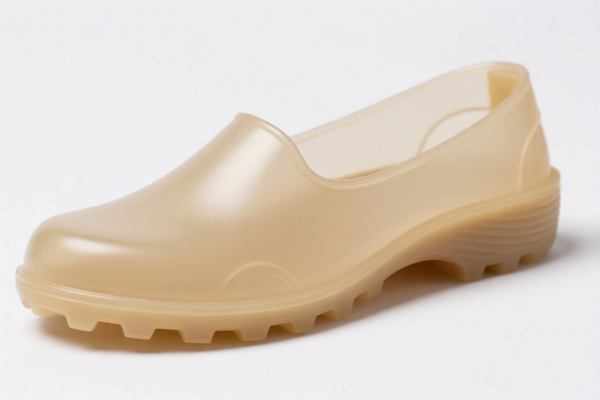
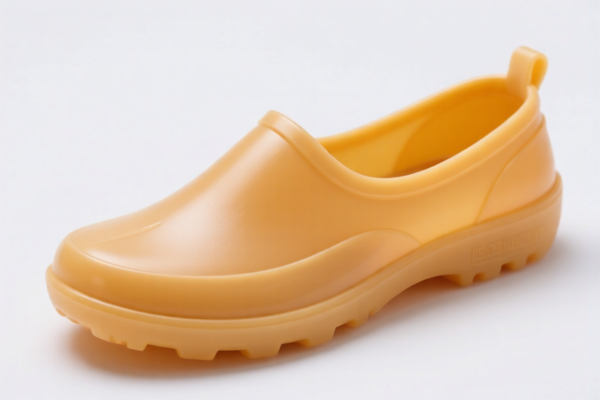
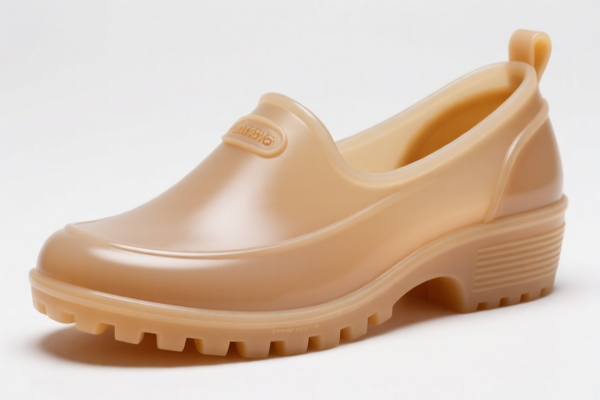
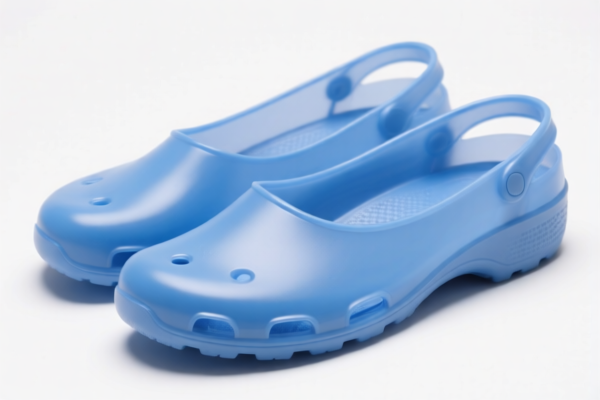
AI Analysis
🥾 Plastic Sole Metal Toe Oil Resistant Shoes (Industrial Safety Footwear)
🌐 HS Code Reference & Customs Clearance Guide | 2026 Latest Tariff Analysis | Professional-Level Entry Strategy
📌 I. Product Definition & Classification: What Exactly Are You Importing?
These are industrial safety shoes designed for hazardous environments. The core characteristics that define their classification are: 1. Plastic Outsole: The bottom is made of rubber or plastic materials. 2. Metal Toe Cap: Integrated steel or composite toe for impact protection. 3. Oil-Resistant: Specifically engineered to withstand chemical/oil exposure (a key functional determinant). 4. Upper Material: While not explicitly stated, industrial safety shoes with these features are typically classified based on the upper material (Leather/Synthetic vs. Textile vs. Other).
⚠️ Critical Classification Logic:
The distinction between HS Codes6403and6401/6402often hinges on the upper material and specific design features. - 6403: Generally covers "Footwear with outer soles of rubber, plastics, leather, or composition leather" and uppers of leather. - 6401/6402: Covers waterproof/wellington boots (6401) or other footwear with outer soles of rubber/plastics (6402).
📦 II. HS Code Classification Details (2026 Tariff Authority Comparison)
| HS Code | Product Description & Logic | Matching Features | Total Tax Rate (US/CN Origin) |
|---|---|---|---|
6403.40.60.00 |
Plastic sole, metal toe, oil-resistant shoes. Upper inferred as leather or synthetic leather. Perfect match for industrial safety boots/shoes. | ✅ Plastic Sole ✅ Metal Toe ✅ Oil Resistant ✅ Upper: Leather/Synthetic |
18.5% (Base: 8.5% + Sec 301: 10%) |
6401.92.90.30 |
Plastic sole & oil-resistant features. Metal toe is considered a functional enhancement. Classified under work shoes with specific plastic/rubber outsole rules. | ✅ Plastic Sole ✅ Oil Resistant ✅ Functional Metal Toe |
55.0% (Base: 37.5% + Sec 301: 7.5% + 122: 10%) |
6401.10.00.00 |
Plastic sole & metal toe. No material or form conflict. Fits general work shoe logic under Chapter 64 Section 1. | ✅ Plastic Sole ✅ Metal Toe ✅ General Work Footwear |
55.0% (Base: 37.5% + Sec 301: 7.5% + 122: 10%) |
6402.91.10.00 |
Plastic sole, metal toe, oil-resistant. Fully complies with material, form, and usage definitions for other footwear. | ✅ Plastic Sole ✅ Metal Toe ✅ Oil Resistant ✅ Other Footwear Category |
47.5% (Base: 37.5% + Sec 301: 0% + 122: 10%) |
6403.40.30.90 |
Metal toe & plastic sole. Upper inferred as leather/synthetic for industrial use. Matches "Other" category without conflict. | ✅ Metal Toe ✅ Plastic Sole ✅ Upper: Leather/Synthetic ✅ Industrial Use |
15.0% (Base: 5.0% + Sec 301: 0% + 122: 10%) |
🔍 Key Insight:
- Cheapest Option:6403.40.30.90(15%) and6403.40.60.00(18.5%) apply if the upper is confirmed as leather or synthetic leather. - Expensive Options:6401and6402codes carry significantly higher base tariffs (37.5%), leading to total rates of 47.5%–55%. - The "122 Clause": Note the 10% additional tariff mentioned in the data (likely related to specific trade remedies or Section 122 actions). This applies across most categories except potentially specific exemptions.
💰 III. 2026 Latest Tariff Rate Breakdown (Including Additional Duties & Policies)
✅ Applicable Country: United States (US)
✅ Origin: China (CN)
✅ Effective Date: 2025-11-10 onwards (including subsequent imports)
🎯 1. 6403.40.60.00 —— Safety Shoes (Leather/Synthetic Upper)
| Item | Details |
|---|---|
| Base Tariff | 8.5% (Ad Valorem) |
| Section 301 Tariff | +10.0% (122 Clause / Trade Remedy) |
| Additional Tariffs | 0.0% (No extra Section 301 penalty beyond 122) |
| Total Rate | 18.5% |
| Calculation | CIF Value × 18.5% |
| De Minimis Eligibility | ❌ Not Eligible (High tariff threshold) |
| Legal Basis | USITC:6403.40.60.00 → 122 Clause: 10% |
📌 Explanation:
- This is the most cost-effective classification if the upper is leather/synthetic. - The 10% is attributed to the "122 Clause" in the provided data, representing a specific trade adjustment. - Avoid higher base tariffs by ensuring documentation confirms the upper material.
🎯 2. 6403.40.30.90 —— Other Industrial Footwear (Leather/Synthetic)
| Item | Details |
|---|---|
| Base Tariff | 5.0% (Ad Valorem) |
| Section 301 Tariff | 0.0% |
| 122 Clause Tariff | +10.0% |
| Total Rate | 15.0% |
| Calculation | CIF Value × 15.0% |
| De Minimis Eligibility | ❌ Not Eligible |
| Legal Basis | USITC:6403.40.30.90 → 122 Clause: 10% |
📌 Note:
- This is the absolute lowest rate (15%) but requires the upper to be classified under "Other" leather/synthetic categories without specific sub-item restrictions. - Risk: Customs may scrutinize "Other" classifications more heavily. Ensure product specs clearly state material composition.
🎯 3. 6401.92.90.30 & 6401.10.00.00 —— High-Tariff Work Shoes
| Item | Details |
|---|---|
| Base Tariff | 37.5% (Ad Valorem) |
| Section 301 Tariff | +7.5% |
| 122 Clause Tariff | +10.0% |
| Total Rate | 55.0% |
| Calculation | CIF Value × 55.0% |
| De Minimis Eligibility | ❌ Not Eligible |
| Legal Basis | USITC:6401.xxxxxx → 122 Clause: 10% |
📌 Warning:
- These codes apply if the shoe is deemed waterproof/rainwear type (6401) or misclassified. - The 37.5% base tariff is punitive for non-leather or specific work footwear types. - Do not use these codes unless your product is explicitly a rubber rain boot with metal toes (rare).
🎯 4. 6402.91.10.00 —— Other Footwear (Plastic Sole)
| Item | Details |
|---|---|
| Base Tariff | 37.5% (Ad Valorem) |
| Section 301 Tariff | 0.0% |
| 122 Clause Tariff | +10.0% |
| Total Rate | 47.5% |
| Calculation | CIF Value × 47.5% |
| De Minimis Eligibility | ❌ Not Eligible |
| Legal Basis | USITC:6402.91.10.00 → 122 Clause: 10% |
📌 Note:
- Higher base tariff than 6403. - Use only if the upper material does not qualify for 6403 (e.g., textile or unclassified materials).
🛠️ IV. Customs Clearance Practical Advice (Pitfall Avoidance Guide)
✅ 1. Required Documentation Checklist (Mandatory)
| Document | Required? | Purpose |
|---|---|---|
| ✅ Product Spec Sheet | ✔️ | Must detail: Outer sole material (Plastic), Toe cap material (Metal), Upper material (Leather/Synthetic/Textile). |
| ✅ Material Breakdown | ✔️ | Critical for distinguishing between 6403 (Leather) and 6402/6401 (Non-leather). |
| ✅ Product Photos | ✔️ | Clear view of sole, toe cap, and upper material texture. |
| ✅ Certificate of Origin | ✔️ | Confirm CN origin for accurate tariff calculation. |
| ✅ Commercial Invoice | ✔️ | Describe as "Industrial Safety Shoes, Plastic Sole, Metal Toe, Oil Resistant". |
| ✅ Testing Report | ✔️ | ASTM F2413 (Impact/Compression) and Oil-Resistance test results to prove "Oil Resistant" claim. |
✅ 2. Classification Strategy (Key Mantra)
🔥 "Leather Upper = 6403 (Cheap), Plastic Upper = 6402/6401 (Expensive). Declare Materials Precisely!"
| Scenario | Correct HS Code | Cost Impact |
|---|---|---|
| Upper: Leather/Synthetic | 6403.40.60.00 or 6403.40.30.90 |
15% - 18.5% ✅ |
| Upper: Textile/Rubber | 6402.91.10.00 |
47.5% ❌ |
| Waterproof/Rain Boot Style | 6401.92.90.30 / 6401.10.00.00 |
55.0% ❌❌ |
| Misdeclared as "Sneakers" | 6404 (if applicable) |
Risk of penalty + back taxes |
✅ 3. Special Handling Tips
| Situation | Recommendation |
|---|---|
| Mixed Material Upper | If upper is partially leather and partially textile, customs may look at the predominant material. If leather > 50%, prefer 6403. |
| "Oil Resistant" Claim | Ensure this is a functional specification. If not tested, customs may ignore it, but it doesn't change HS code unless it affects the "work shoe" definition. |
| Metal Toe Cap | Always declare "Metal Toe" or "Steel Toe". Hiding it may lead to reclassification if discovered during inspection. |
| Packaging | Ship in pairs. Do not ship loose singles. Include size labels clearly. |
🌍 V. Global Market Comparison (2026 Latest)
| Country/Region | Recommended HS Code | Tariff Rate | Certification | Notes |
|---|---|---|---|---|
| 🇺🇸 USA | 6403.40.60.00 |
18.5% | ASTM F2413 | Best option for Leather Upper. Avoid 6401/6402. |
| 🇨🇳 China | 6403.40.60.00 |
~10-15% | CCC (if applicable) | Lower base tariffs. |
| 🇪🇺 EU | 6403.91.00 |
12.5% + 7% VAT | CE + PPE Regulation | High VAT. Strict PPE rules. |
| 🇦🇺 Australia | 6403.91.00 |
5% GST | AS/NZS 2210 | Low base tariff. |
📌 Conclusion:
- USA is the most complex due to Section 301/122 additions. - Leather/Synthetic uppers (6403) are the only viable path for low-cost entry into the US. - Plastic/Textile uppers (6402/6401) are prohibitively expensive (47.5%-55%).
📌 VI. Common Errors & Pitfalls (Lessons Learned)
❌ Error 1: Declaring "Safety Shoes" without specifying upper material.
👉 Consequence: Customs defaults to highest tariff (6401 or 6402) → 47.5%-55%.
❌ Error 2: Claiming "Leather" when upper is actually synthetic textile.
👉 Consequence: Audit failure → Penalties + Back Taxes.
❌ Error 3: Ignoring the "122 Clause" 10% additional duty.
👉 Consequence: Underpayment → Customs seizure.
❌ Error 4: Using "Oil Resistant" as a substitute for material description.
👉 Consequence: Irrelevant for HS classification but required for product compliance.
✅ Correct Practice:
"Industrial Safety Shoes, Plastic Sole, Steel Toe Cap, Oil-Resistant, Upper Material: Synthetic Leather, ASTM F2413 Certified, Model XYZ."
🎯 VII. Conclusion: Precise Declaration for Maximum Savings!
🎯 Remember the Mantra:
🔹 "Leather Upper = 6403 (Low Tax). Non-Leather = 6402/6401 (High Tax). Declare Materials Accurately!"
🔹 "HS Code determines destiny. A 1% material difference can save 30% in tariffs!"
📌 Pro Tip:
If your shoes are originally produced in Vietnam, Mexico, or Thailand, you may qualify for IEEPA Exemptions or lower base tariffs.
Recommend Applying for a Pre-Ruling (Advance Ruling) to lock in the 6403 classification and avoid unexpected 55% tariffs.
📣 Immediate Action:
📞 Contact a licensed customs broker + Provide Material Specs + Apply for HS Code Pre-Ruling
🚀 Ensure your Plastic Sole Metal Toe Oil Resistant Shoes clear customs smoothly, efficiently, and profitably!
✨ Professional Customs Clearance Starts with Accurate Classification!
💼 Every cent of cost deserves precise calculation!
Customer Reviews
About HS Code Classification
The Harmonized System (HS) is an internationally standardized nomenclature developed by the World Customs Organization (WCO) to classify traded products. Over 200 countries use the HS system as the basis for customs tariffs, trade statistics, and import/export regulations.
Each HS code follows a hierarchical structure:
- Chapter (2 digits) — Broad category of goods (e.g., Chapter 84: Machinery and Mechanical Appliances)
- Heading (4 digits) — More specific grouping within the chapter
- Subheading (6 digits) — Internationally standardized breakdown, used by all WCO member countries
- National subdivisions (8-10 digits) — Country-specific extensions for further classification, such as US HTSUS 10-digit codes
Correct HS code classification is essential for smooth customs clearance, accurate duty payment, and compliance with trade regulations. Misclassification can lead to customs delays, overpayment of duties, or penalties.
When importing from CN to US, the applicable tariff rates may include:
- Most-Favored-Nation (MFN) rate — The standard duty rate applied to WTO members
- General rate — Applied to countries without trade agreements
- Trade remedy duties — Additional tariffs such as Section 301 (anti-dumping), Section 232 (national security), or countervailing duties
The information provided on this page is for reference purposes only. For official classification, please consult with your local customs authority or a licensed customs broker.