Plastic Sole Sports Shoes
CN → US| HS Code | Tariff Rate | Origin | Destination | Doc |
|---|---|---|---|---|
| 6404112030 | 20.5% | CN | US | Official Doc |
| 6402999005 | 37.5% | CN | US | Official Doc |
| 6402919005 | 30.0% | CN | US | Official Doc |
| 6404112060 | 20.5% | CN | US | Official Doc |
| 6403916040 | 18.5% | CN | US | Official Doc |
| 6403996040 | 18.5% | CN | US | Official Doc |
Product Images


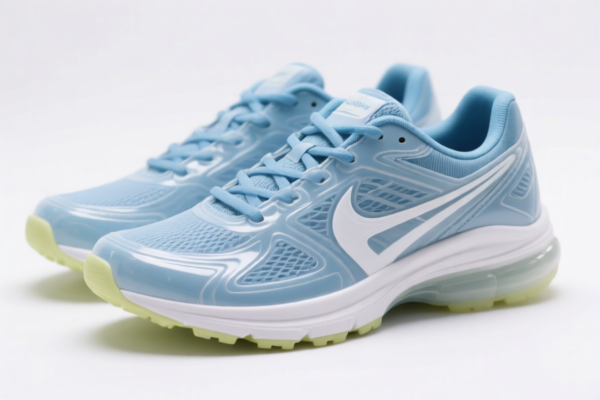
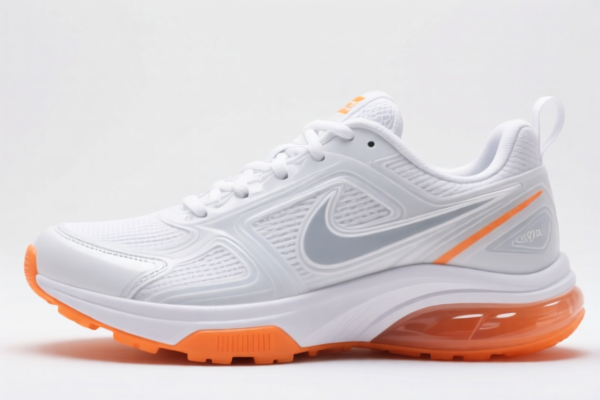
AI Analysis
👟 Plastic Sole Sports Shoes (Basketball Shoes)
🌐 HS Code Reference & Customs Clearance Guide | 2026 Tariff Breakdown | Professional Clearance Strategy
📌 I. Product Definition & Classification: What Are "Plastic Sole Sports Shoes"?
Plastic sole sports shoes, specifically Basketball Shoes, are athletic footwear designed for court performance. In international trade, the classification hinges on two critical factors: 1. Outer Sole Material: Must be rubber or plastic. 2. Upper Material: Can be textile, leather, or other materials.
⚠️ Key Classification Distinction:
- If the upper is predominantly textile/material and the sole is plastic/rubber → Often falls under 6404 (Footwear with outer sole of rubber/plastic).
- If the classification requires specific sport definitions or lacks textile priority → May fall under 6402 (Rubber/Plastic outer soles).
- The 122 Clause (Section 301/IEEPA) imposes a flat 10% additional tariff on most Chinese-origin footwear, significantly impacting the final landed cost regardless of the base HS code.
📦 II. HS Code Classification Details (2026 Latest Tariff Authority Match)
Based on the provided data, here are the precise HS codes for Plastic Sole Basketball Shoes and their corresponding tax structures.
| HS Code | Product Description | Tax Detail Breakdown | Total Tax Rate |
|---|---|---|---|
| 6404.11.20.30 | Plastic sole basketball shoes; outer sole rubber/plastic; upper inferred as textile material | Base: 10.5% Add'l: 0.0% 122-Clause: 10% |
20.5% |
| 6402.99.90.05 | Plastic sole basketball shoes; fully compliant with rubber/plastic sole & specific sports use | Base: 20.0% Add'l: 7.5% 122-Clause: 10% |
37.5% |
| 6402.91.90.05 | Plastic sole basketball shoes; explicitly includes plastic material & basketball purpose | Base: 20.0% Add'l: 0.0% 122-Clause: 10% |
30.0% |
| 6404.11.20.60 | Plastic sole basketball shoes; outer sole plastic; upper may contain leather or textile | Base: 10.5% Add'l: 0.0% 122-Clause: 10% |
20.5% |
| 6403.91.60.40 | Plastic sole basketball shoes; purpose: Basketball; outer sole: Rubber/Plastic | Base: 8.5% Add'l: 0.0% 122-Clause: 10% |
18.5% |
| 6403.99.60.40 | Plastic sole basketball shoes; outer sole plastic; "Catch-all" category with no material conflict | Base: 8.5% Add'l: 0.0% 122-Clause: 10% |
18.5% |
🔍 重点提醒 (Key Takeaway):
- Lowest Tax Bracket:6403.91.60.40and6403.99.60.40offer the lowest total tax rate of 18.5%.
- Highest Tax Bracket:6402.99.90.05carries the highest burden at 37.5% due to a higher base + additional duties.
- 122 Clause Impact: All items listed are subject to the 10% Section 122 tariff. This is mandatory for Chinese-origin goods in this category.
💰 III. 2026 Latest Tariff Rate Breakdown (Including Add-ons)
✅ Applicable Country: United States (US)
✅ Origin: China (CN)
✅ Effective Time: Current Trade Policy (Section 301/122 Clauses Active)
🎯 1. 6404.11.20.30 & 6404.11.20.60 —— Textile/Leather Upper, Plastic Sole
Optimal for Shoes with Textile or Mixed Upper Materials
| Item | Content |
|---|---|
| Base Tariff | 10.5% (Ad Valorem) |
| USITC Add-on | 0.0% |
| Section 122 Add-on | +10% (China Origin) |
| Total Effective Rate | 20.5% |
| Calculation | CIF Value × 20.5% |
| De Minimis Exemption | ❌ Not Eligible (De minimis does not apply to Section 122/301 duties) |
📌 Explanation:
- This code is favorable if the shoe upper is textile (6404.11.20.30) or a mix including leather (6404.11.20.60).
- The base duty is lower than the6402category.
🎯 2. 6402.99.90.05 —— Generic Rubber/Plastic Sole Sports Shoe
Highest Risk Category
| Item | Content |
|---|---|
| Base Tariff | 20.0% |
| USITC Add-on | +7.5% |
| Section 122 Add-on | +10% |
| Total Effective Rate | 37.5% |
| Calculation | CIF Value × 37.5% |
| De Minimis Exemption | ❌ Not Eligible |
📌 Warning:
- This code applies if the product definition strictly forces it into6402(Rubber/Plastic outer sole) without the specific "Basketball" or "Textile" exemptions found in6403or6404.
- Cost Implication: This is nearly double the tax of the6403codes. Avoid this classification if possible.
🎯 3. 6402.91.90.05 —— Plastic Material Specific
Mid-Range Option
| Item | Content |
|---|---|
| Base Tariff | 20.0% |
| USITC Add-on | 0.0% |
| Section 122 Add-on | +10% |
| Total Effective Rate | 30.0% |
| Calculation | CIF Value × 30.0% |
📌 Note:
- If the plastic material definition triggers this code, it is cheaper than6402.99.90.05but still more expensive than6403codes.
🎯 4. 6403.91.60.40 & 6403.99.60.40 —— Basketball Specific / Catch-All
Lowest Tax Opportunity
| Item | Content |
|---|---|
| Base Tariff | 8.5% |
| USITC Add-on | 0.0% |
| Section 122 Add-on | +10% |
| Total Effective Rate | 18.5% |
| Calculation | CIF Value × 18.5% |
| De Minimis Exemption | ❌ Not Eligible |
📌 Advantage:
- These codes offer the lowest total tax rate (18.5%).
-6403.91.60.40explicitly mentions "Basketball" purpose.
-6403.99.60.40is a "catch-all" for plastic soles with no material conflict.
- Strategy: If your product description can legitimately fit "Basketball Shoes" with a rubber/plastic sole, prioritize these codes to save ~20% compared to the worst-case scenario.
🛠️ IV. Customs Clearance Practical Advice (Avoid Pitfalls)
✅ 1. Required Documentation Checklist
| Document | Required? | Notes |
|---|---|---|
| ✅ Product Specification Sheet | ✔️ | Must clearly state: "Plastic Sole," "Basketball Use," Upper Material (Textile/Leather). |
| ✅ Photos (Outsole & Upper) | ✔️ | Clear images of the sole pattern and upper material texture. |
| ✅ Commercial Invoice | ✔️ | Description must match HS Code logic (e.g., "Basketball Shoes, Plastic Sole"). |
| ✅ Material Breakdown | ✔️ | Crucial for distinguishing between 6403, 6404, and 6402. |
| ✅ Country of Origin Certificate | ✔️ | Confirms China origin → Triggers 122 Clause. |
✅ 2. Classification Strategy (Key Mantra)
🔥 "Material Defines Code, Purpose Lowers Duty!"
| Scenario | Recommended HS Code | Reason |
|---|---|---|
| Upper is Textile + Plastic Sole | 6404.11.20.30 |
Textile upper shifts to Chapter 6404. |
| Upper is Leather/Mix + Plastic Sole | 6404.11.20.60 |
Mixed/Leather upper in 6404. |
| Explicitly Basketball + Plastic Sole | 6403.91.60.40 |
Specific sport category often has lower base rates. |
| Generic Plastic Sole (No Textile/Leather priority) | 6403.99.60.40 |
Catch-all for plastic soles in 6403. |
| AVOID | 6402.99.90.05 |
Highest tax (37.5%). Only use if other codes are factually incorrect. |
✅ 3. Special Cases
- OEM Custom Shoes: Provide design sketches showing the "Basketball" intent (e.g., ankle support, court tread pattern) to justify
6403codes. - Mixed Materials: If the upper is 60% leather, 40% textile, clarify the predominant material. However,
6404often favors textile-heavy constructions. - De Minimis (Section 321): NOT APPLICABLE. The 10% Section 122 tariff prevents the use of de minimis thresholds for these goods. Always file formal entry.
🌍 V. Global Market Comparison (2026)
| Market | Recommended HS Code | Total Tax Rate (China Origin) | Notes |
|---|---|---|---|
| 🇺🇸 USA | 6403.99.60.40 |
18.5% | Includes 10% Section 122. |
| 🇺🇸 USA | 6402.99.90.05 |
37.5% | High risk if misclassified. |
| 🇪🇺 EU | N/A (Different System) | Varies | EU does not have "Section 122." Standard MFN rates apply (approx. 12-17%). |
| 🇨🇳 China | N/A (Import) | Varies | China imports footwear; duties vary by free trade agreements (RCEP, etc.). |
📌 Conclusion for US Market:
- The 10% Section 122 Tariff is unavoidable for Chinese goods.
- The battle is between Base Tariffs (8.5% vs 10.5% vs 20%).
- Savings Potential: Classifying under6403(18.5%) instead of6402(37.5%) saves 19% of the CIF value. For a $100,000 shipment, this is a $19,000 difference.
📌 VI. Common Errors & Pitfalls
❌ Error 1: Calling all plastic-soled shoes "Sports Shoes" without specifying "Basketball."
👉 Consequence: May be pushed to 6402.99.90.05 (37.5%) due to lack of specific sport classification.
👉 Fix: Always specify "Basketball Shoes" in the commercial invoice and packing list.
❌ Error 2: Misidentifying the Upper Material.
👉 Consequence: If you claim "Leather" but it's Textile, you risk misclassification penalties.
👉 Fix: Ensure photos and material specs match the HS code chosen.
❌ Error 3: Assuming De Minimis applies.
👉 Consequence: Packages held at border because Section 122 duties are due on all values.
👉 Fix: Plan for formal entry and duty payment for all shipments.
✅ Correct Declaration Example:
"Men's Basketball Shoes, Outer Sole: Plastic/Rubber, Upper: Textile/Mesh, Model: AirCourt X, Made in China"
🎯 VII. Conclusion: Professional Classification, Cost Savings!
🎯 Remember the Mantra:
🔹 "Textile/Mix Upper? Go 6404 (20.5%)."
🔹 "Basketball Specific? Go 6403 (18.5%)."
🔹 "Generic Plastic? Avoid 6402 (37.5%)."
🔹 "122 Clause is 10% Flat."
📌 Pro Tip:
Apply for an Advance Ruling (Pre-classification) from US CBP before shipping large volumes. This locks in the HS code (preferably 6403.99.60.40) and avoids post-import audits.
📣 Immediate Action:
📞 Consult a licensed customs broker with your product photos and material composition.
🚀 Optimize your HS Code, Save 19%, and Clear Customs Smoothly!
✨ Professional Clearance Starts with Accurate Classification!
💼 Every Percent Saved is Pure Profit!
Customer Reviews
About HS Code Classification
The Harmonized System (HS) is an internationally standardized nomenclature developed by the World Customs Organization (WCO) to classify traded products. Over 200 countries use the HS system as the basis for customs tariffs, trade statistics, and import/export regulations.
Each HS code follows a hierarchical structure:
- Chapter (2 digits) — Broad category of goods (e.g., Chapter 84: Machinery and Mechanical Appliances)
- Heading (4 digits) — More specific grouping within the chapter
- Subheading (6 digits) — Internationally standardized breakdown, used by all WCO member countries
- National subdivisions (8-10 digits) — Country-specific extensions for further classification, such as US HTSUS 10-digit codes
Correct HS code classification is essential for smooth customs clearance, accurate duty payment, and compliance with trade regulations. Misclassification can lead to customs delays, overpayment of duties, or penalties.
When importing from CN to US, the applicable tariff rates may include:
- Most-Favored-Nation (MFN) rate — The standard duty rate applied to WTO members
- General rate — Applied to countries without trade agreements
- Trade remedy duties — Additional tariffs such as Section 301 (anti-dumping), Section 232 (national security), or countervailing duties
The information provided on this page is for reference purposes only. For official classification, please consult with your local customs authority or a licensed customs broker.