Plastic Sole Summer Sandals
CN → US| HS Code | Tariff Rate | Origin | Destination | Doc |
|---|---|---|---|---|
| 6405100090 | 27.5% | CN | US | Official Doc |
| 6405909060 | 22.5% | CN | US | Official Doc |
| 6402992790 | 20.5% | CN | US | Official Doc |
| 6402994980 | 55.0% | CN | US | Official Doc |
| 6404193940 | 47.5% | CN | US | Official Doc |
Product Images
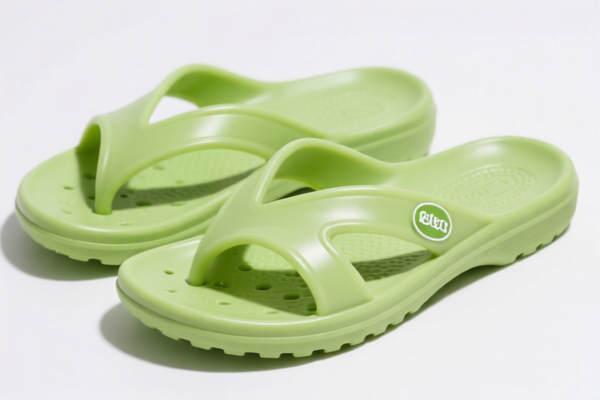
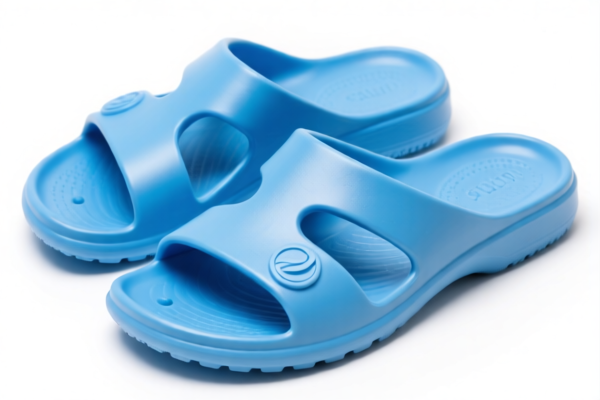
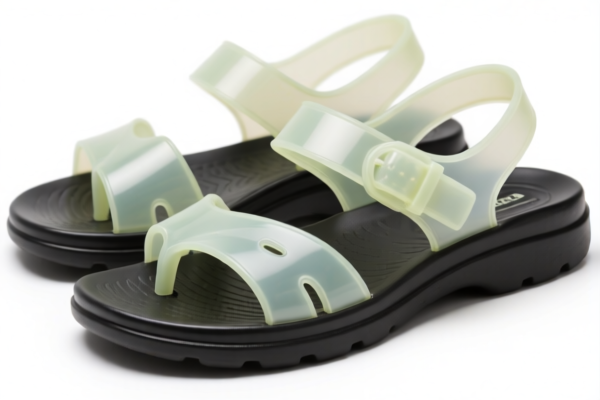

AI Analysis
👡 Plastic Sole Summer Sandals (Footwear)
🌐 HS Code Reference & Customs Clearance Guide | 2024/2025 Tariff Schedule Analysis | Strategic Import Strategies
📌 I. Product Definition & Classification: Do You Truly Understand "Plastic Sole Sandals"?
Summer sandals with plastic soles are a high-volume import category, yet they are notoriously difficult to classify correctly due to the specific material compositions and manufacturing processes involved. In international trade, they are generally categorized under Chapter 64 (Footwear), but the specific subheading depends entirely on: 1. Outer Sole Material: Is it strictly plastic, rubber, or a mix? 2. Upper Material: Leather, textile, or other? 3. Construction Method: Is it a simple slip-on, or is it molded/integrated?
⚠️ Critical Distinction Point:
- If the sole is rigid plastic and the shoe is considered a "general purpose" sandal → Often 6405 or 6402.
- If the shoe is molded in one piece (injection molded) → 6402.99.27.
- If the sole is classified as "Other" under rubber/plastic rules → 6402.99.49.
📦 II. HS Code Classification Matrix (Latest Tariff Data)
| HS Code | Product Description | Key Characteristics | Applicable Scenario |
|---|---|---|---|
6405.10.00.90 |
Other footwear, with outer soles of plastics | General plastic sole sandals | Standard summer sandals, fashion styles |
6405.90.90.60 |
Other footwear, other materials, not specified | Non-specific material sandals | Ambiguous material composition, generic imports |
6402.99.27.90 |
Other footwear, other, with outer soles of rubber or plastics; other: other: other | Integrated/Molded plastic sandals | Injection-molded sandals, clog-style, uniform plastic construction |
6402.99.49.80 |
Other footwear, other, with outer soles of rubber or plastics; other: other: other | "Other" Rubber/Plastic Sole | Complex soles, mixed materials, non-standard constructions |
6404.19.39.40 |
Sports footwear, with upper of textiles, other | Plastic/Rubber sole, Textile Upper | Sport sandals, canvas uppers with plastic/rubber outsoles |
🔍 Key Warning:
- 6405 is for "Other footwear" not elsewhere specified, often used for simple plastic-soled casual wear.
- 6402 covers rubber/plastic-soled footwear, but requires strict adherence to "other" definitions.
- 6404 is strictly for Textile Uppers. If your sandal has a leather or synthetic leather upper, do not use 6404.
💰 III. 2024/2025 Tariff Rate Breakdown (Detailed Tax Analysis)
✅ Applicable Country: United States (US)
✅ Origin: China (CN)
✅ Effective Time: Current Trade Policies (Section 301 & 122 Clause)
🎯 1. 6405.10.00.90 —— Plastic Sole Casual Sandals (General Category)
| Item | Details |
|---|---|
| Base Tariff | 10.0% |
| Additional Tariff (Section 301) | +7.5% |
| Clause 122 Tariff | +10.0% |
| Total Tariff Rate | 27.5% |
| Tax Calculation | CIF Value × 27.5% |
| De Minimis Exemption | ❌ Not Eligible (Deny de minimis) |
| Legal Basis Path | USITC:6405.10.00.90 → IEEPA:9903.01.25 (301 Tariff) + Clause 122 |
📌 Explanation:
- This is a mid-tier tariff option.
- The "Clause 122" tariff is a specific additional duty often applied to certain Chinese goods to boost domestic production.
- Total Cost Impact: High. Importers must budget for nearly 30% of the product value in duties alone.
🎯 2. 6405.90.90.60 —— Plastic Sole Sandals (Non-Specific Material)
| Item | Details |
|---|---|
| Base Tariff | 12.5% |
| Additional Tariff (Section 301) | 0.0% |
| Clause 122 Tariff | +10.0% |
| Total Tariff Rate | 22.5% |
| Tax Calculation | CIF Value × 22.5% |
| De Minimis Exemption | ❌ Not Eligible |
| Legal Basis Path | USITC:6405.90.90.60 → IEEPA:9903.01.25 (301 Tariff, 0%) + Clause 122 |
📌 Explanation:
- Lower Total Rate: Despite a higher base tariff (12.5%), the 0% Section 301 tariff makes this category cheaper than6405.10.00.90.
- Strategy: If your product description allows for this classification (i.e., it doesn't fit the strict "plastic sole" definition of 6405.10), this is the most cost-effective option.
🎯 3. 6402.99.27.90 —— Molded/Integrated Plastic Sandals
| Item | Details |
|---|---|
| Base Tariff | 3.0% |
| Additional Tariff (Section 301) | +7.5% |
| Clause 122 Tariff | +10.0% |
| Total Tariff Rate | 20.5% |
| Tax Calculation | CIF Value × 20.5% |
| De Minimis Exemption | ❌ Not Eligible |
| Legal Basis Path | USITC:6402.99.27.90 → IEEPA:9903.01.25 + Clause 122 |
📌 Explanation:
- Lowest Base Rate: Only 3.0%.
- Best for Injection-Molded: If your sandals are made from a single piece of plastic (like Crocs or cheap flip-flops), this is the optimal HS Code.
- Total Cost: 20.5%, the lowest among all listed options.
🎯 4. 6402.99.49.80 —— "Other" Rubber/Plastic Sole Footwear
| Item | Details |
|---|---|
| Base Tariff | 37.5% |
| Additional Tariff (Section 301) | +7.5% |
| Clause 122 Tariff | +10.0% |
| Total Tariff Rate | 55.0% |
| Tax Calculation | CIF Value × 55.0% |
| De Minimis Exemption | ❌ Not Eligible |
| Legal Basis Path | USITC:6402.99.49.80 → IEEPA:9903.01.25 + Clause 122 |
📌 Warning:
- Highest Tariff: 55.0% is extremely burdensome.
- Avoid Unless Necessary: Only use this if the product strictly falls into the "other" category and cannot be classified under 6405 or 6402.99.27.
- Risk: Misclassifying a standard sandal here will lead to massive overpayment and potential audits.
🎯 5. 6404.19.39.40 —— Textile Upper Sports Sandals (Plastic/Rubber Sole)
| Item | Details |
|---|---|
| Base Tariff | 37.5% |
| Additional Tariff (Section 301) | 0.0% |
| Clause 122 Tariff | +10.0% |
| Total Tariff Rate | 47.5% |
| Tax Calculation | CIF Value × 47.5% |
| De Minimis Exemption | ❌ Not Eligible |
| Legal Basis Path | USITC:6404.19.39.40 → IEEPA:9903.01.25 (0%) + Clause 122 |
📌 Explanation:
- High Base, No 301: Although the base tariff is high (37.5%), the 0% Section 301 saves you 7.5% compared to6402.99.49.80.
- Textile Upper Requirement: The upper MUST be textile (canvas, mesh, etc.). If the upper is synthetic leather or PVC, this code is incorrect.
🛠️ IV. Customs Clearance Practical Advice (Risk Mitigation)
✅ 1. Documentation Checklist (Mandatory)
| Document | Must Provide | Description |
|---|---|---|
| ✅ Product Specification Sheet | ✔️ | Detailed material breakdown: Upper (Leather/Textile/Synthetic), Sole (Plastic/Rubber/EVA), Insole. |
| ✅ Construction Diagram | ✔️ | Show if the sole is attached (cemented, stitched) or molded (one-piece). |
| ✅ Product Photos | ✔️ | Clear shots of the sole tread, upper material, and branding. |
| ✅ Commercial Invoice | ✔️ | Must match HS Code description exactly (e.g., "Plastic Sole Sandals" vs. "Sports Footwear"). |
| ✅ Bill of Lading | ✔️ | Ensure weight and quantity match invoice. |
| ✅ Country of Origin Certificate | ✔️ | Crucial for verifying China origin and applying correct tariffs. |
✅ 2. Classification Strategy (Key Rules of Thumb)
🔥 “Material First, Construction Second, Name Last!”
| Scenario | Correct HS Code | Why? |
|---|---|---|
| Simple Plastic Flip-Flops | 6405.10.00.90 or 6405.90.90.60 |
Simple construction, plastic sole. Check if 6405.90 applies for lower tax. |
| One-Piece Molded Sandals | 6402.99.27.90 |
"Integrated" construction qualifies for lower base tariff (3%). |
| Sports Sandals with Canvas | 6404.19.39.40 |
Textile upper is the key. Even if sole is plastic, the upper dictates Chapter 6404. |
| Complex Mixed-Material Sandals | 6402.99.49.80 |
Last resort. High tax, use only if no other category fits. |
⚠️ Critical Tip:
- Do NOT use6404if the upper is PVC or synthetic leather. It must be textile.
- Do NOT use6405if the sole is clearly rubber. It must be plastic.
✅ 3. Special Case Handling
| Situation | Advice |
|---|---|
| OEM Custom Sandals | Provide design specs showing material composition. Avoid vague terms like "synthetic." |
| EVA Soles | EVA is often considered plastic. Classify under 6405 or 6402 depending on construction. |
| Wooden/Cork Soles | Do NOT use plastic codes. Use 6403 or 6404 (if textile upper) or 6405 (if other). |
| Children’s Sandals | Same rules apply. No special tariff breaks for children’s footwear in this context. |
🌍 V. Global Market Comparison (2024/2025)
| Country/Region | Recommended HS Code | Base Tariff (China) | Additional Duties | Notes |
|---|---|---|---|---|
| 🇺🇸 USA | 6405.10.00.90 |
10% | +17.5% (301 + 122) | 27.5% Total. High barrier. |
| 🇨🇳 China | 6405.10.00.90 |
20% | 0% | No additional duties. |
| 🇪🇺 EU | 6402.99.27 |
~10% | 0% | No Section 301 equivalent. |
| 🇬🇧 UK | 6402.99.27 |
~10% | 0% | Post-Brexit, standard tariffs apply. |
| 🇦🇺 Australia | 6402.99.27 |
5% | 0% | Low tariff, GST applies separately. |
📌 Conclusion:
- USA is the most expensive market for Chinese plastic sandals due to Section 301 and Clause 122 tariffs.
- Strategy: Consider sourcing from Vietnam, India, or Indonesia to avoid US-China additional tariffs.
📌 VI. Common Mistakes & Pitfalls (Lessons Learned)
❌ Mistake 1: Using 6404 for sandals with PVC/Uppers
👉 Result: Customs rejection, fines, and forced reclassification to 6405/6402 (higher tax).
👉 Fix: Ensure upper is Textile (Canvas, Mesh, Fabric) for 6404.
❌ Mistake 2: Ignoring Clause 122
👉 Result: Unexpected 10% additional tax.
👉 Fix: Always calculate total tax as Base + 301 + 122.
❌ Mistake 3: Misclassifying Molded Sandals as 6405
👉 Result: Paying 27.5% instead of 20.5%.
👉 Fix: If one-piece molded, use 6402.99.27.90.
❌ Mistake 4: Vague Description "Plastic Shoes"
👉 Result: Customs delays, manual classification, potential 20% audit risk.
👉 Fix: Use precise terms: "Women's Plastic Sole Casual Sandals, Injection Molded."
✅ Correct Declaration Example:
"Women's Summer Sandals, Outer Sole: Plastic, Upper: Synthetic Leather, Construction: Cemented, Model XYZ, Made in China."
🎯 VII. Conclusion: Precise Classification Saves Money!
🎯 Key Takeaways:
🔹 Molded Sandals = 6402.99.27.90 (20.5%) – Best for One-Piece
🔹 General Plastic Sandals = 6405.90.90.60 (22.5%) – Best for General Use
🔹 Textile Upper Sandals = 6404.19.39.40 (47.5%) – Use Only for Canvas/Textile
🔹 Avoid 6402.99.49.80 (55%) – Too Expensive🔹 "HS Code Dictates Profit. A 7% difference is thousands of dollars!"
📌 Pro Tip:
If your products are molded in one piece, always push for 6402.99.27.90. It offers the lowest base tariff (3%) and lowest total rate (20.5%).
For standard casual sandals, 6405.90.90.60 is safer and cheaper than 6405.10.00.90.
📣 Action Plan:
📞 Step 1: Analyze your product materials (Upper & Sole).
📞 Step 2: Determine construction (Molded vs. Cemented).
📞 Step 3: Select HS Code based on the matrix above.
📞 Step 4: Apply for Advance Ruling if unsure.
✨ Professional Customs Clearance Starts with Accurate Classification!
💼 Optimize Your Supply Chain. Minimize Your Duties. Maximize Your Profit!
Customer Reviews
About HS Code Classification
The Harmonized System (HS) is an internationally standardized nomenclature developed by the World Customs Organization (WCO) to classify traded products. Over 200 countries use the HS system as the basis for customs tariffs, trade statistics, and import/export regulations.
Each HS code follows a hierarchical structure:
- Chapter (2 digits) — Broad category of goods (e.g., Chapter 84: Machinery and Mechanical Appliances)
- Heading (4 digits) — More specific grouping within the chapter
- Subheading (6 digits) — Internationally standardized breakdown, used by all WCO member countries
- National subdivisions (8-10 digits) — Country-specific extensions for further classification, such as US HTSUS 10-digit codes
Correct HS code classification is essential for smooth customs clearance, accurate duty payment, and compliance with trade regulations. Misclassification can lead to customs delays, overpayment of duties, or penalties.
When importing from CN to US, the applicable tariff rates may include:
- Most-Favored-Nation (MFN) rate — The standard duty rate applied to WTO members
- General rate — Applied to countries without trade agreements
- Trade remedy duties — Additional tariffs such as Section 301 (anti-dumping), Section 232 (national security), or countervailing duties
The information provided on this page is for reference purposes only. For official classification, please consult with your local customs authority or a licensed customs broker.