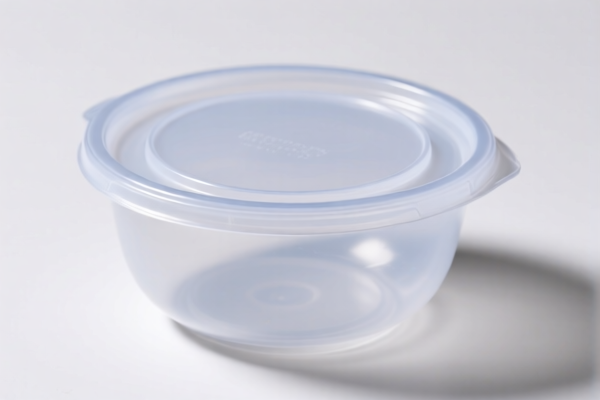
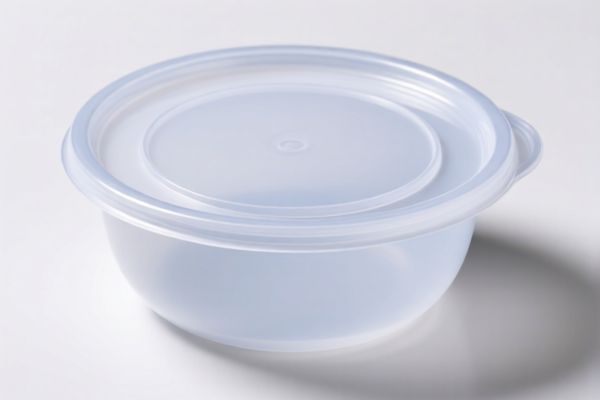
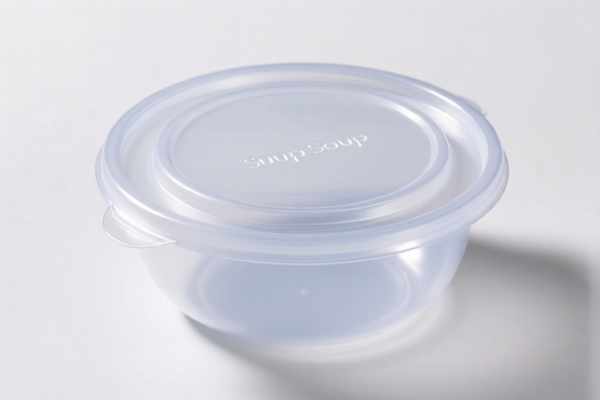
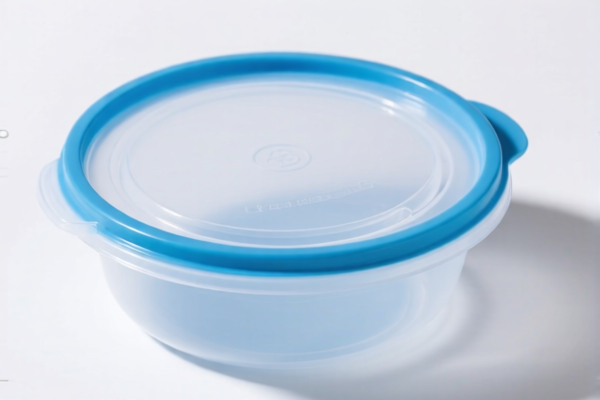
Plastic Soup Bowl with Lid
CN → US| HS Code | Tariff Rate | Origin | Destination | Doc |
|---|---|---|---|---|
| 3923900014 | 38.0% | CN | US | Official Doc |
| 3924104000 | 13.4% | CN | US | Official Doc |
| 3924905650 | 20.9% | CN | US | Official Doc |
| 3923900012 | 38.0% | CN | US | Official Doc |
| 3926901000 | 20.9% | CN | US | Official Doc |
Product Images
AI Analysis
🥣 Plastic Soup Bowl with Lid
🌐 HS Code Reference & Customs Clearance Guide | 2026 Latest Tariff Analysis | Professional Clearance Strategy
📌 I. Product Definition & Classification: What Exactly Is a "Plastic Soup Bowl with Lid"?
A Plastic Soup Bowl with Lid is a versatile food-service item used for takeout, catering, or home storage. In international trade, its classification hinges on two key factors:
1. Function & Form: Is it a "tableware" item for direct consumption (eating/drinking) or a "container" for storage/transport?
2. Closure Type: Does it have a separate, fitted lid intended for sealing and storage, or is it merely a serving bowl?
⚠️ Key Classification Distinction:
- Tableware Category (Ch. 3924): If the item is primarily designed for serving and eating soups (e.g., restaurant takeout), it falls under "Plastic Tableware."
- Container/Package Category (Ch. 3923): If the item is primarily designed for storage, transport, or sealing (e.g., a Tupperware-style soup container for home storage), it falls under "Plastic Packages/Containers."
📦 II. HS Code Classification Details (2026 Latest Tariff Authority Mapping)
Based on the provided data, here are the potential HS Codes for Plastic Soup Bowls with Lids, categorized by their primary function and specific design features.
| HS Code | Product Description | Application Scenario | Key Characteristics | Total Tax Rate |
|---|---|---|---|---|
3924.10.40.00 |
Plastic Tableware & Household Articles | Direct Consumption: Restaurant takeout soup bowls, disposable dining sets | Designed for eating/serving; lid may be loosely fitted or for immediate service | 13.4% |
3926.90.10.00 |
Other Plastic Articles (Bowl-shaped) | General Household/Storage: Reusable soup storage containers, general-purpose plastic bowls | Classified as "Other plastic articles"; 3901-3914 chapter requirement | 20.9% |
3923.90.00.14 |
Plastic Containers with Lids (Barrel/Drum Type) | Industrial/Large Storage: Large capacity soup containers, bulk storage buckets with tight-fitting lids | Sealed container; "Bucket/Barrel" shape; emphasis on closure and containment | 38.0% |
3923.90.00.12 |
Plastic Containers with Lids (Other) | Transport/Protection: Protective packaging for soups, transport containers | Similar to above; focuses on packaging/transport utility | 38.0% |
3924.90.56.50 |
Other Plastic Household Articles | Fallback/General Household: Plastic soup bowls that don't fit specific "tableware" or "container" definitions | Catch-all for plastic household items; often used if specific tableware/box criteria aren't met | 20.9% |
🔍 Critical Analysis:
- Lowest Tax (13.4%): If the bowl is marketed as "Tableware" (e.g., "Soup Bowl for Dining"), use3924.10.40.00.
- Medium Tax (20.9%): If the bowl is for general household use or storage but not strictly "tableware" or "sealed containers," use3926.90.10.00or3924.90.56.50.
- Highest Tax (38.0%): If the product is classified as a "Container" or "Package" (e.g., bulk storage, sealed transport), it triggers the 25% Section 301 tariff, leading to a total of 38.0%.
💰 III. 2026 Latest Tariff Rate Breakdown (Including Additional Taxes & Policy Surcharges)
✅ Applicable Country: United States (US)
✅ Origin: China (CN)
✅ Effective Date: November 10, 2025 (and subsequent imports)
🎯 1. 3924.10.40.00 – Plastic Tableware (Lowest Risk)
| Item | Details |
|---|---|
| Base Tariff | 3.4% (ad valorem) |
| USITC Section 301 Surcharge | +0.0% |
| IEEPA Surcharge (Section 122/301) | +10.0% |
| Total Tax Rate | 13.4% |
| Tax Calculation | CIF Value × 13.4% |
| De Minimis Eligibility | ❌ Not Applicable (For commercial shipments; de minimis ($800) may apply for personal parcels, but commercial imports are subject to full duty) |
| Legal Path | IEEPA:9903.01.25 → USITC:3924.10.40.00 |
📌 Explanation:
- This is the most favorable classification for soup bowls with lids if they are considered tableware.
- The 0% Section 301 surcharge on certain plastic tableware items (depending on specific sub-headings and historical exclusions) significantly reduces the burden.
- The 10% IEEPA tax is standard for Chinese plastic goods.
🎯 2. 3926.90.10.00 – Other Plastic Articles (Medium Risk)
| Item | Details |
|---|---|
| Base Tariff | 3.4% |
| USITC Section 301 Surcharge | +7.5% |
| IEEPA Surcharge | +10.0% |
| Total Tax Rate | 20.9% |
| Tax Calculation | CIF Value × 20.9% |
| De Minimis Eligibility | ❌ No |
| Legal Path | IEEPA:9901.25 → USITC:3926.90.10.00 |
📌 Explanation:
- Classified as "Other plastic articles."
- Subject to 7.5% Section 301 surcharge (lower than the 25% for containers).
- Suitable if the product is reusable, not strictly "tableware," and not a "sealed container."
🎯 3. 3924.90.56.50 – Other Plastic Household Articles (Fallback)
| Item | Details |
|---|---|
| Base Tariff | 3.4% |
| USITC Section 301 Surcharge | +7.5% |
| IEEPA Surcharge | +10.0% |
| Total Tax Rate | 20.9% |
| Tax Calculation | CIF Value × 20.9% |
| Legal Path | IEEPA:9901.25 → USITC:3924.90.56.50 |
📌 Explanation:
- Similar tax rate to3926.90.10.00.
- Use if the product doesn't fit neatly into "tableware" but is clearly for household use.
🎯 4. 3923.90.00.14 & 3923.90.00.12 – Plastic Containers/Packages (Highest Risk)
| Item | Details |
|---|---|
| Base Tariff | 3.0% |
| USITC Section 301 Surcharge | +25.0% |
| IEEPA Surcharge | +10.0% |
| Total Tax Rate | 38.0% |
| Tax Calculation | CIF Value × 38.0% |
| Legal Path | IEEPA:9903.01.25 → USITC:3923.90.00.14 |
📌 Explanation:
- AVOID THIS IF POSSIBLE for small soup bowls.
- These codes classify the item as a container/package for transport or storage, triggering the full 25% Section 301 tariff.
- Only use if the product is explicitly marketed as bulk storage containers (e.g., "5-gallon soup bucket for catering transport").
🛠️ IV. Customs Clearance Practical Advice (Battle-Tested Pitfall Avoidance)
✅ 1. Documentation Checklist (Non-Negotiable)
| Document | Must Provide | Purpose |
|---|---|---|
| ✅ Product Catalog/Photos | ✔️ | To prove tableware use (e.g., showing soup served in the bowl, not stacked in a warehouse). |
| ✅ Material Specification | ✔️ | Confirm 100% Plastic (PP, PE, etc.) to avoid misclassification. |
| ✅ Commercial Invoice | ✔️ | Must describe item as "Plastic Soup Bowl with Lid, for Tableware Use". Avoid words like "Container," "Bucket," or "Package." |
| ✅ Packing List | ✔️ | Show individual packaging; avoid bulk pallets that suggest "industrial storage." |
| ✅ FCC/CE/RoHS Certs | ✔️ | Optional but helpful to prove compliance and quality. |
✅ 2. Declaration Strategy (Key Mnemonic)
🔥 "Call it Tableware, Not Container; Lid is for Serving, Not Sealing!"
| Scenario | Recommended HS Code | Why? |
|---|---|---|
| Takeout Soup Bowl (Restaurant style) | 3924.10.40.00 |
13.4%: Clearly tableware. |
| Reusable Storage Bowl (Home use, not sealed) | 3926.90.10.00 |
20.9%: Household article, not tableware. |
| Large Bulk Storage Bucket | 3923.90.00.14 |
38.0%: Industrial container. |
| Ambiguous "Plastic Bowl with Lid" | 3924.90.56.50 |
20.9%: Safe fallback if "tableware" proof is weak. |
✅ 3. Special Cases & Mitigation
| Situation | Advice |
|---|---|
| OEM for Restaurant Chains | Provide contracts or invoices showing sales to restaurants. This proves tableware use. |
| Bowl with Vacuum-Seal Lid | If the lid is designed for long-term storage, customs may classify it as a container (3923). To avoid this, emphasize serving functionality. |
| Set with Spoon/Fork | If sold as a set, classify the entire set as tableware (3924.10.40.00) if the bowl is the essential component. |
| Material: Biodegradable Plastic | No change in HS Code, but may qualify for green trade benefits in some markets. |
🌍 V. Global Market Comparison (2026 Update)
| Market | Recommended HS Code | Tariff (China Origin) | Notes |
|---|---|---|---|
| 🇺🇸 USA | 3924.10.40.00 |
13.4% | Best rate. Avoid 3923 codes (38%). |
| 🇨🇳 China | 3924.10.40.00 |
5% | Low duty. Import-friendly. |
| 🇪🇺 EU | 3924.10.40.00 |
0% | If CE compliant. No Section 301 equivalent. |
| 🇬🇧 UK | 3924.10.40.00 |
0% | Post-Brexit FTA benefits may apply. |
| 🇯🇵 Japan | 3924.10.40.00 |
0% | JETRO-approved materials benefit. |
📌 Conclusion:
- USA is the only market with significant Section 301 tariffs.
- Correct classification as "Tableware" saves 24.6% in taxes compared to "Container" classification.
📌 VI. Common Mistakes & Pitfalls (Lessons Learned)
❌ Mistake 1: Describing the product as "Plastic Storage Container" in the invoice.
👉 Result: Customs classifies it as 3923 → 38% tax instead of 13.4%.
👉 Fix: Use "Plastic Tableware" or "Soup Bowl."
❌ Mistake 2: Providing photos of bowls stacked in warehouse pallets.
👉 Result: Looks like industrial storage → Classified as 3923.
👉 Fix: Provide photos of soup served in the bowl, or bowls with table settings.
❌ Mistake 3: Claiming "Biodegradable" without certification.
👉 Result: Customs may reject the description and default to standard plastic rates.
👉 Fix: Provide certificates if claiming eco-friendly status.
❌ Mistake 4: Missing the Lid Description.
👉 Result: If the lid is essential, omitting it may cause classification confusion.
👉 Fix: Clearly state "with Lid" but emphasize its serving function.
✅ Best Practice:
"Plastic Soup Bowl, 16oz, PP Material, with Ventilated Lid, for Restaurant Takeout Service, Model XYZ, FDA Compliant"
🎯 VII. Conclusion: Strategic Classification for Maximum Savings
🎯 Remember the Mantra:
🔹 "Tableware = 13.4% | Household = 20.9% | Container = 38.0%"
🔹 "Sell the Service, Not the Storage!"
📌 Pro Tip:
If your product can be reasonably classified as tableware (3924.10.40.00), always use this code. It offers the lowest total tariff (13.4%) for China-origin plastic soup bowls with lids. Only use higher-rate codes if the product is explicitly not for tableware use.
📣 Immediate Action:
📞 Consult a Customs Broker to review your product photos and invoice descriptions.
🚀 Optimize Your HS Code to save 24.6% in taxes on every shipment!
✨ Precision Classification = Profit Maximization!
💼 Your Supply Chain Success Starts with the Right HS Code!
Customer Reviews
About HS Code Classification
The Harmonized System (HS) is an internationally standardized nomenclature developed by the World Customs Organization (WCO) to classify traded products. Over 200 countries use the HS system as the basis for customs tariffs, trade statistics, and import/export regulations.
Each HS code follows a hierarchical structure:
- Chapter (2 digits) — Broad category of goods (e.g., Chapter 84: Machinery and Mechanical Appliances)
- Heading (4 digits) — More specific grouping within the chapter
- Subheading (6 digits) — Internationally standardized breakdown, used by all WCO member countries
- National subdivisions (8-10 digits) — Country-specific extensions for further classification, such as US HTSUS 10-digit codes
Correct HS code classification is essential for smooth customs clearance, accurate duty payment, and compliance with trade regulations. Misclassification can lead to customs delays, overpayment of duties, or penalties.
When importing from CN to US, the applicable tariff rates may include:
- Most-Favored-Nation (MFN) rate — The standard duty rate applied to WTO members
- General rate — Applied to countries without trade agreements
- Trade remedy duties — Additional tariffs such as Section 301 (anti-dumping), Section 232 (national security), or countervailing duties
The information provided on this page is for reference purposes only. For official classification, please consult with your local customs authority or a licensed customs broker.