Plastic Spice Box
CN → US| HS Code | Tariff Rate | Origin | Destination | Doc |
|---|---|---|---|---|
| 3924104000 | 13.4% | CN | US | Official Doc |
| 3923300090 | 38.0% | CN | US | Official Doc |
| 3923300010 | 38.0% | CN | US | Official Doc |
| 3926901000 | 20.9% | CN | US | Official Doc |
| 3923900080 | 38.0% | CN | US | Official Doc |
Product Images
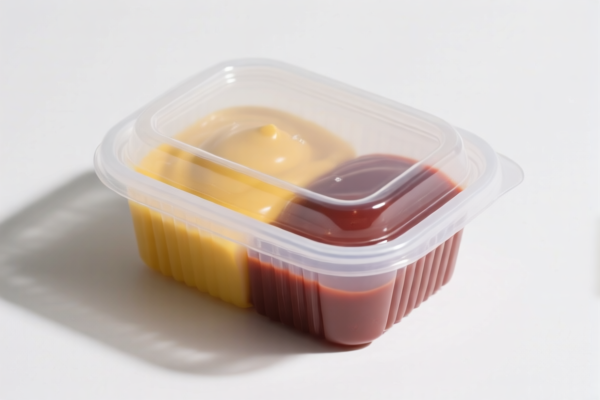
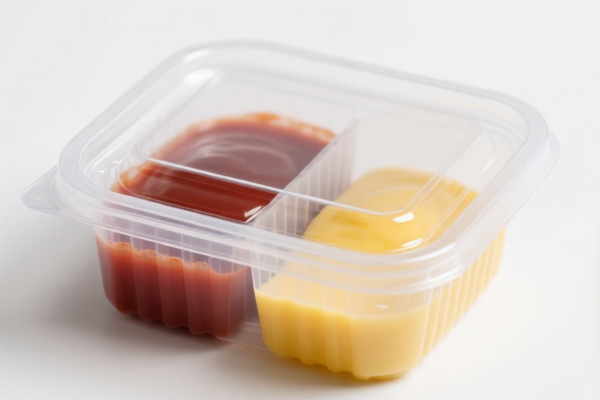
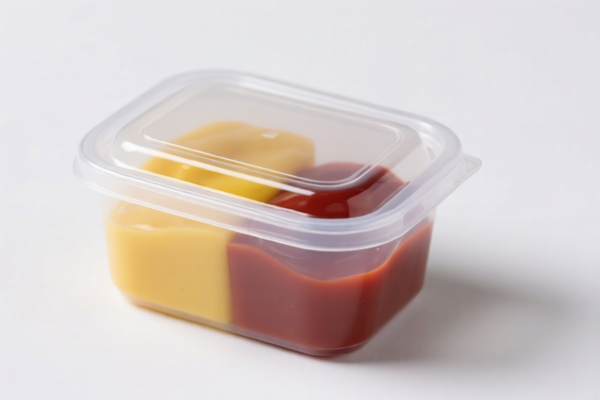
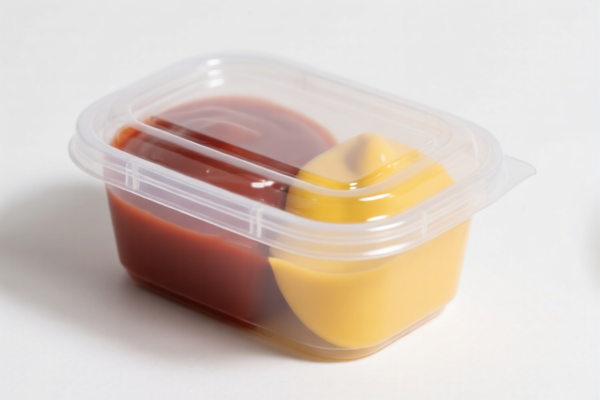
AI Analysis
🌶️ Plastic Spice Box (Plastic Container for Seasonings/Storage)
🌐 HS Code Reference & Customs Clearance Guide | 2026 Latest Tariff Analysis | Professional Strategy
📌 I. Product Definition & Classification: What Exactly is a "Spice Box"?
A "Plastic Spice Box" is a generic term that covers a wide range of plastic containers used for storing condiments, spices, or general household items. In international trade, the classification depends heavily on the specific form, usage context, and design intent.
Two Main Categories: 1. Tableware/Kitchen Utensils (Household Use): Containers designed for direct food contact in a kitchen setting (e.g., seasoning jars, spice racks, or storage boxes specifically for spices). These often fall under "Tableware" or "Kitchen Articles." 2. Packaging/Transport Containers: Containers used primarily for transporting, bulk packing, or general storage where the container is not considered "tableware" (e.g., generic plastic bins, transport tubs). These fall under "Articles for the transport or packing of goods."
⚠️ Key Distinction Point:
- If the item is specifically designed as a seasoning jar, spice rack, or small storage box for kitchen use → It is often classified as 3924.10 (Tableware/Kitchenware).
- If the item is a generic plastic container, bin, or box used for storage or transport (not strictly "tableware") → It is classified under 3923 (Articles for the transport or packing of goods).
📦 II. HS Code Classification Details (2026 Latest Tariff Authoritative Mapping)
Based on the provided data, here is the breakdown of potential HS Codes for "Plastic Spice Box":
| HS Code | Product Description | Use Case / Context | Category |
|---|---|---|---|
3924.10.40.00 |
Plastic tableware/kitchen articles; specifically for seasoning containers or storage boxes | Kitchen storage, seasoning jars, spice racks | ✅ Tableware/Kitchenware |
3923.30.00.90 |
Plastic articles for the transport or packing of goods; bottles or similar containers | Generic plastic bottles/jars for transport or bulk packaging | 📦 Packaging/Transport |
3923.30.00.10 |
Plastic articles for the transport or packing of goods; containers | General plastic containers, storage bins | 📦 Packaging/Transport |
3926.90.10.00 |
Other plastic articles; specifically for storage boxes (non-packaging) | General household storage boxes, organizational bins | 🏠 Household Storage |
3923.90.00.80 |
Other plastic articles for the transport or packing of goods | Generic plastic packaging/storage items not elsewhere specified | 📦 Packaging/Transport |
🔍 Critical Note:
- 3924.10.40.00 is the lowest tax option if the product is clearly a "spice box" used in the kitchen.
- All other codes (3923.xxxxand3926.90) carry significantly higher tariffs due to being classified as "packaging" or "general plastics" under Section 301/122 tariffs.
- Do not misclassify a kitchen spice box as a "packaging container" if it is intended for household use, but be aware that customs may scrutinize the "tableware" claim.
💰 III. 2026 Latest Tariff Rate Breakdown (Including Additional Duties & Policies)
✅ Applicable Country: USA (US)
✅ Origin: China (CN)
✅ Effective Date: Post-November 2025 (Current Policy)
🎯 1. 3924.10.40.00 —— Plastic Tableware/Kitchen Articles (Seasoning/Storage Boxes)
| Item | Content |
|---|---|
| Base Duty Rate | 3.4% |
| Section 301 Additional Duty | 0.0% (No extra 25% tariff for this subheading under current mapping for "tableware") |
| Section 122 Duty | 10% |
| Total Effective Rate | 13.4% |
| Tax Calculation | CIF Value × 13.4% |
| De Minimis Eligibility | ❌ Not Eligible (Deny De Minimis for Section 301/122 items from China) |
| Legal Basis Path | HTS:3924.10.40.00 → USITC:3924.10.40.00 → 122Clause:10% |
📌 Explanation:
- This is the most favorable classification for a "Plastic Spice Box" if it can be proven to be kitchenware/tableware.
- Section 301 (25%) does NOT apply to this specific subheading under the provided data, which is a significant advantage.
- However, Section 122 (10%) applies, bringing the total to 13.4%.
🎯 2. 3923.30.00.90 & 3923.30.00.10 —— Plastic Bottles/Containers (Packaging/Transport)
| Item | Content |
|---|---|
| Base Duty Rate | 3.0% |
| Section 301 Additional Duty | 25.0% |
| Section 122 Duty | 10% |
| Total Effective Rate | 38.0% |
| Tax Calculation | CIF Value × 38.0% |
| De Minimis Eligibility | ❌ Not Eligible |
| Legal Basis Path | HTS:3923.30.xxxx → USITC:3923.30 → 301Clause:25% → 122Clause:10% |
📌 Explanation:
- If the spice box is classified as a "packaging container" or "transport bottle," it triggers the Section 301 tariff (25%).
- Combined with Section 122 (10%) and base duty (3%), the total tax is 38.0%.
- This is a high-cost classification. Avoid this if the product is clearly household kitchenware.
🎯 3. 3926.90.10.00 —— Other Plastic Articles (Storage Boxes)
| Item | Content |
|---|---|
| Base Duty Rate | 3.4% |
| Section 301 Additional Duty | 7.5% |
| Section 122 Duty | 10% |
| Total Effective Rate | 20.9% |
| Tax Calculation | CIF Value × 20.9% |
| De Minimis Eligibility | ❌ Not Eligible |
| Legal Basis Path | HTS:3926.90.10.00 → USITC:3926.90 → 301Clause:7.5% → 122Clause:10% |
📌 Explanation:
- This code is for "other plastic articles" like general storage boxes that are not tableware or packaging.
- It incurs a 7.5% Section 301 tariff (lower than the 25% for packaging, but still present).
- Total tax is 20.9%.
🎯 4. 3923.90.00.80 —— Other Packaging Articles
| Item | Content |
|---|---|
| Base Duty Rate | 3.0% |
| Section 301 Additional Duty | 25.0% |
| Section 122 Duty | 10% |
| Total Effective Rate | 38.0% |
| Tax Calculation | CIF Value × 38.0% |
| De Minimis Eligibility | ❌ Not Eligible |
| Legal Basis Path | HTS:3923.90.00.80 → USITC:3923.90 → 301Clause:25% → 122Clause:10% |
📌 Explanation:
- Same high tariff as other packaging codes. 38.0% total.
🛠️ IV. Customs Clearance Practical Advice (Pitfall Avoidance Guide)
✅ 1. Preparation Checklist (Required Documents)
| Document | Required? | Description |
|---|---|---|
| ✅ Product Specifications | ✔️ | Must specify dimensions, material (Plastic PP/PE), and intended use (e.g., "for kitchen spice storage"). |
| ✅ Product Photos | ✔️ | Clear images showing the product in a kitchen setting or with food items to support "tableware" classification. |
| ✅ Commercial Invoice | ✔️ | Clearly state "Plastic Spice Container/Box" or "Kitchen Storage Box." Avoid vague terms like "Plastic Container" without context. |
| ✅ Declaration of Tableware Use | ✔️ | If claiming 3924.10.40.00, provide a statement that the product is designed for direct food contact and kitchen use. |
| ✅ Material Safety Certificate | ✔️ | FDA compliance (for food contact) strengthens the "tableware" argument. |
✅ 2. Declaration Strategy (Key Mnemonics)
🔥 "Kitchenware Low Tax, Packaging High Tax! Clarify Use to Save!"
| Scenario | Correct HS Code | Wrong Classification | Consequence |
|---|---|---|---|
| Spice Box for Home Kitchen Use | 3924.10.40.00 (13.4%) |
3923.30.00.90 (38.0%) |
Save 24.6% tax! |
| Bulk Plastic Transport Bins | 3923.30.00.90 (38.0%) |
3924.10.40.00 (13.4%) |
Penalty + Back Taxes |
| General Household Storage Box | 3926.90.10.00 (20.9%) |
3924.10.40.00 (13.4%) |
Risk of Re-classification |
| Generic Plastic Jars (Packaging) | 3923.90.00.80 (38.0%) |
3924.10.40.00 (13.4%) |
High Tax Risk |
✅ 3. Special Considerations
| Situation | Handling Advice |
|---|---|
| OEM Custom Spice Boxes | Provide design drawings showing kitchen-specific features (e.g., measurement marks, spice compartments) to support 3924.10.40.00. |
| Mixed Shipments | If the shipment contains both tableware and packaging, segregate HS Codes. Do not mix classifications to avoid audit flags. |
| FDA Compliance | Ensure products meet FDA food-contact standards. Lack of compliance can lead to rejection even if HS Code is correct. |
| Section 122 Applicability | Remember that Section 122 (10%) applies to ALL plastic articles from China in this dataset, regardless of HS Code. Do not expect exemptions. |
🌍 V. Global Market Comparison (2026 Latest)
| Country/Region | Recommended HS Code | Tariff Rate | Certification Required | Notes |
|---|---|---|---|---|
| 🇺🇸 USA | 3924.10.40.00 |
13.4% | FDA (if food contact) | Best Option for kitchen spice boxes. Avoid 3923 codes for high tax. |
| 🇨🇳 China | 3924.10.40.00 |
5-7% | GB Standards | No Section 301/122 tariffs. |
| 🇪🇺 EU | 3924.10.10 |
4.2% | LFGB/FDA | Lower tariffs, no Section 301. |
| 🇬🇧 UK | 3924.10.10 |
4.2% | UKCA | Post-Brexit standards apply. |
| 🇯🇵 Japan | 3924.10.90 |
6-8% | Food Sanitation Act | Strict food-contact regulations. |
📌 Conclusion:
- USA is the most complex market due to Section 301 and 122 tariffs.
- Proper classification as "Tableware" (3924.10.40.00) is critical to save over 24% in tariffs compared to "Packaging" codes.
- Always prepare FDA documentation to support the "food contact" claim.
📌 VI. Common Mistakes & Pitfalls (Lessons Learned)
❌ Mistake 1: Calling it "Plastic Container" without specifying "Kitchen/Spice"
👉 Result: Customs may default to "Packaging" (3923) → 38.0% Tax instead of 13.4%.
❌ Mistake 2: Ignoring Section 122
👉 Result: Underestimating total cost. Even tableware incurs 10% extra tax under Section 122.
❌ Mistake 3: Using "Storage Box" for a Kitchen Spice Jar
👉 Result: Risk of misclassification. Use "Spice Jar" or "Seasoning Container" to align with 3924.10.40.00.
✅ Correct Declaration Example:
"Plastic Kitchen Spice Storage Jar, Food Grade PP Material, FDA Compliant, For Household Seasoning Use, Model SP-101"
🎯 VII. Conclusion: Professional Classification, Cost Savings, Compliance!
🎯 Remember the Mantra:
🔹 "Kitchenware is Cheaper, Packaging is Expensive!"
🔹 "13.4% vs 38.0% – A 24.6% Difference!"
🔹 "FDA Proof, Kitchen Claim, Save Big in USA!"
📌 Pro Tip:
If your spice boxes are sourced from Vietnam, Thailand, or Malaysia, they may be exempt from Section 301 and 122 tariffs. Consider supply chain diversification to reduce costs.
For China-origin products, secure a Pre-Ruling (Advance Ruling) from US Customs to lock in the 3924.10.40.00 classification.
📣 Action Plan:
📞 Contact a Customs Broker + Provide Product Photos + Declare "Kitchen/Tableware Use"
🚀 Ensure FDA Compliance + Avoid "Packaging" Language
💼 Your Profit Margin Depends on This 13.4% vs 38.0% Decision!
✨ Professional Clearance Starts with Precise Classification!
💼 Every Dollar Saved is a Dollar Earned!
Customer Reviews
About HS Code Classification
The Harmonized System (HS) is an internationally standardized nomenclature developed by the World Customs Organization (WCO) to classify traded products. Over 200 countries use the HS system as the basis for customs tariffs, trade statistics, and import/export regulations.
Each HS code follows a hierarchical structure:
- Chapter (2 digits) — Broad category of goods (e.g., Chapter 84: Machinery and Mechanical Appliances)
- Heading (4 digits) — More specific grouping within the chapter
- Subheading (6 digits) — Internationally standardized breakdown, used by all WCO member countries
- National subdivisions (8-10 digits) — Country-specific extensions for further classification, such as US HTSUS 10-digit codes
Correct HS code classification is essential for smooth customs clearance, accurate duty payment, and compliance with trade regulations. Misclassification can lead to customs delays, overpayment of duties, or penalties.
When importing from CN to US, the applicable tariff rates may include:
- Most-Favored-Nation (MFN) rate — The standard duty rate applied to WTO members
- General rate — Applied to countries without trade agreements
- Trade remedy duties — Additional tariffs such as Section 301 (anti-dumping), Section 232 (national security), or countervailing duties
The information provided on this page is for reference purposes only. For official classification, please consult with your local customs authority or a licensed customs broker.