Plastic Spool
CN → US| HS Code | Tariff Rate | Origin | Destination | Doc |
|---|---|---|---|---|
| 3916903000 | 41.5% | CN | US | Official Doc |
| 3926909989 | 22.8% | CN | US | Official Doc |
| 3926906090 | 39.2% | CN | US | Official Doc |
| 8448399000 | 17.5% | CN | US | Official Doc |
| 3916905000 | 40.8% | CN | US | Official Doc |
Product Images
AI Analysis
🧵 Plastic Spool (Industrial/Textile Accessories)
🌐 HS Code Reference & Clearance Guide | 2026 Latest Tariff Analysis | Professional Clearance Strategy
📌 Part 1: Product Definition & Classification: Do You Really Understand "Plastic Spool"?
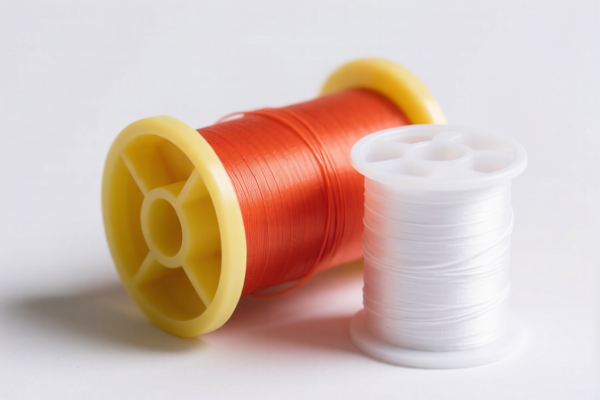
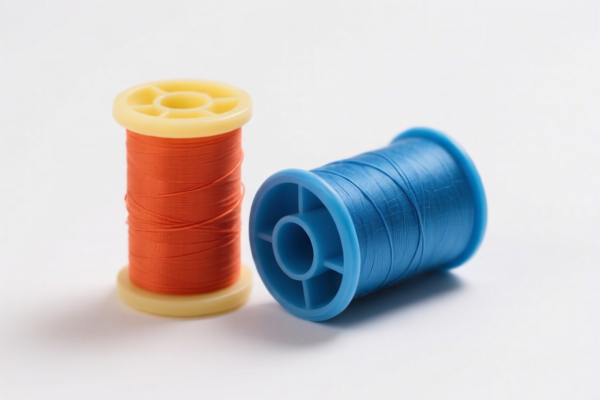
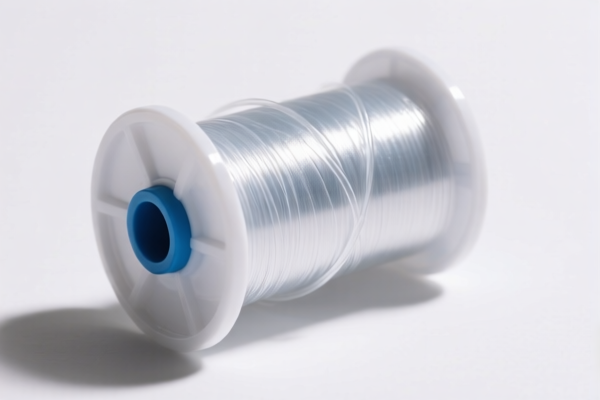
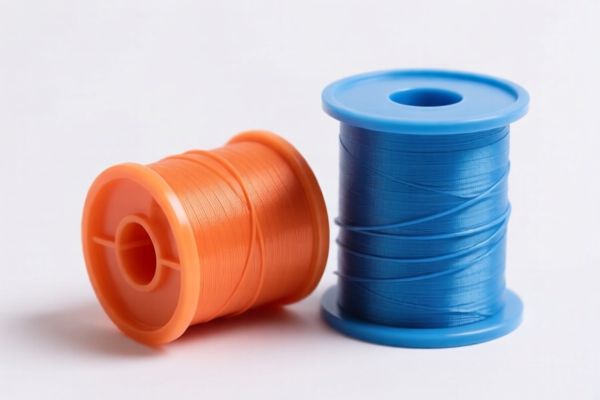
A Plastic Spool is a cylindrical or disk-shaped object used to wind thread, yarn, wire, or cables. In international trade, its classification depends heavily on its specific use and physical structure. It is not a single commodity but a component that can fall under several chapters depending on its primary function.
⚠️ Key Distinction Points:
- If it is a textile accessory (part of a machine) → It may fall under Chapter 84 (Machinery);
- If it is a general plastic article (standalone) → It falls under Chapter 39 (Plastics);
- Critical Rule: If the spool is specifically designed for a machine and essential to its operation, Chapter 84 often takes precedence over Chapter 39.
📦 Part 2: HS Code Classification Details (2026 Latest Tariff Authority Comparison)
Based on the provided data, here are the five possible HS Codes and their logical justifications:
| HS Code | Product Description | Application Scenario | Logic/Justification |
|---|---|---|---|
3916.90.30.00 |
Plastic Spools (Monofilament/Bulk) | Used for winding plastic monofilament or bulk materials | Shape-Based: Classified as an extension form (bulk/rod-like) of plastics. No material conflict. |
3926.90.99.89 |
Other Plastic Articles (Spool-like) | General-purpose plastic spools used as parts or accessories | Shape-Based: Fits the "other articles" category. Matches spool/roll-like accessory characteristics. |
3926.90.60.90 |
Plastic Spools (Other Articles) | General plastic spools without specific mechanical belt use | Fallback Principle: No conflict with mechanical belts. Acts as a general plastic product fallback. |
8448.39.90.00 |
Plastic Spool (Textile Machine Accessory) | Spools used specifically in textile machinery | Function-Based: Classified as an auxiliary machine/accessory for textile machinery. Plastic material is non-conflicting. |
3916.90.50.00 |
Plastic Spools (Other Forms) | Other variations of plastic spools not covered elsewhere | General Plastic Category: Fits under "other forms" within the monofilament/bulk plastic section. No material conflict. |
🔍 Key Reminder:
- Textile Machinery Spools (8448.39.90.00) generally offer lower duties if the primary function is clearly tied to textile machinery.
- General Plastic Spools (39xxseries) are treated as simple plastic products, often attracting higher tariffs due to trade disputes (Section 301/122).
💰 Part 3: 2026 Latest Tariff Rate Details (Including Surcharges & Policy Add-ons)
✅ Applicable Country: United States (US)
✅ Origin: China (CN)
✅ Effective Date: From November 10, 2025 (including subsequent imports)
🎯 1. 3916.90.30.00 – Plastic Spool (Monofilament/Bulk Form)
| Item | Content |
|---|---|
| Base Tariff | 6.5% |
| Section 301 Surcharge | +25.0% |
| Section 122 Tariff | +10.0% |
| Total Effective Rate | 41.5% |
| Tax Calculation | CIF Value × 41.5% |
| De Minimis Eligibility | ❌ Not Eligible |
| Legal Basis Path | Base Rate → Sec 301 → Sec 122 |
📌 Explanation:
- This code classifies the spool based on its material form (plastic bulk/monofilament shape).
- It is subject to all three layers of tariffs: Base, Section 301 (Trade War), and Section 122 (Global Trade Emergency).
- Result: High tax burden (41.5%).
🎯 2. 3926.90.99.89 – Other Plastic Articles (Spool-like)
| Item | Content |
|---|---|
| Base Tariff | 5.3% |
| Section 301 Surcharge | +7.5% |
| Section 122 Tariff | +10.0% |
| Total Effective Rate | 22.8% |
| Tax Calculation | CIF Value × 22.8% |
| De Minimis Eligibility | ❌ Not Eligible |
| Legal Basis Path | Base Rate → Sec 301 (Lower Tier) → Sec 122 |
📌 Explanation:
- This code treats the spool as a general plastic article (3926).
- It benefits from a lower Section 301 rate (7.5%) compared to the 25% rate for3916or3926.60.90.
- Result: Moderate tax burden (22.8%). Recommended if functional use is ambiguous.
🎯 3. 3926.90.60.90 – Plastic Spool (General Fallback)
| Item | Content |
|---|---|
| Base Tariff | 4.2% |
| Section 301 Surcharge | +25.0% |
| Section 122 Tariff | +10.0% |
| Total Effective Rate | 39.2% |
| Tax Calculation | CIF Value × 39.2% |
| De Minimis Eligibility | ❌ Not Eligible |
| Legal Basis Path | Base Rate → Sec 301 → Sec 122 |
📌 Explanation:
- This is a fallback classification for plastic products not specifically mentioned elsewhere.
- Despite a low base rate (4.2%), it incurs the full 25% Section 301 surcharge.
- Result: High tax burden (39.2%). Avoid if possible.
🎯 4. 8448.39.90.00 – Plastic Spool (Textile Machine Accessory) 🏆 LOWEST TARIFF
| Item | Content |
|---|---|
| Base Tariff | 0.0% |
| Section 301 Surcharge | +7.5% |
| Section 122 Tariff | +10.0% |
| Total Effective Rate | 17.5% |
| Tax Calculation | CIF Value × 17.5% |
| De Minimis Eligibility | ❌ Not Eligible |
| Legal Basis Path | Base Rate (0%) → Sec 301 (Lower Tier) → Sec 122 |
📌 Explanation:
- This code classifies the spool as an auxiliary accessory for textile machinery.
- It enjoys a 0% base tariff and a lower Section 301 surcharge (7.5%).
- Requirement: You must prove the spool is used specifically for textile machinery (e.g., provide machinery manuals, usage statements).
- Result: Lowest tax burden (17.5%). Highly Recommended if applicable.
🎯 5. 3916.90.50.00 – Plastic Spool (Other Forms)
| Item | Content |
|---|---|
| Base Tariff | 5.8% |
| Section 301 Surcharge | +25.0% |
| Section 122 Tariff | +10.0% |
| Total Effective Rate | 40.8% |
| Tax Calculation | CIF Value × 40.8% |
| De Minimis Eligibility | ❌ Not Eligible |
| Legal Basis Path | Base Rate → Sec 301 → Sec 122 |
📌 Explanation:
- Similar to3916.90.30.00, this is a plastic material-based classification.
- It attracts the maximum Section 301 surcharge (25%).
- Result: High tax burden (40.8%). Avoid if possible.
🛠️ Part 4: Clearance Practical Advice (Battle-Tested Pitfall Guide)
✅ 1. Document Checklist (Mandatory)
| Document | Required | Description |
|---|---|---|
| ✅ Product Specifications | ✔️ | Include dimensions, material (e.g., PP/PE), weight, and load capacity. |
| ✅ Usage Statement/Declaration | ✔️ | Critical for 8448.39.90.00. State clearly: "Used as a part/auxiliary device for textile machinery [Model X]." |
| ✅ Photos (Labeled) | ✔️ | Clear images showing the spool, its scale, and any specific features (e.g., flanges, holes). |
| ✅ Commercial Invoice | ✔️ | Accurately describe the item. Avoid vague terms like "Plastic Part." Use "Plastic Spool for Textile Machine." |
| ✅ Packing List | ✔️ | Show relationship between spools and any machinery if shipped together. |
✅ 2. Declaration Tips (Key Mantra)
🔥 "Function Defines Code, Machine Use Saves Money!"
| Scenario | Correct Declaration | Error to Avoid |
|---|---|---|
| Spool for Textile Machine | 8448.39.90.00 (Accessory) |
Declaring as "Plastic Spool" → 41.5% |
| General Purpose Spool | 3926.90.99.89 (Plastic Article) |
Declaring as "Textile Accessory" without proof → Risk of Rejection |
| Spool with Thread on It | Same as empty spool (if thread is negligible) | Declaring as "Thread" → Wrong Chapter |
| Spool for Cable/Wire | Likely 3926 or 8544 (if part of cable) |
Ignoring cable association → Misclassification |
✅ 3. Special Situations
| Situation | Handling Advice |
|---|---|
| OEM Spools for Specific Machine | Provide a letter from the end-user confirming the spool is custom-made for their textile machine. This strengthens the 8448 claim. |
| Mixed Shipments (Spools + Machinery) | If spools are shipped with the main machine, they may be classified under the main machine's HS Code, potentially reducing overall duty. |
| Generic Spools | If the spool is a standard, off-the-shelf item not tied to a specific machine, you must use the 3926 codes (22.8% is the best option). |
| Plastic Material Type | Ensure the material is declared correctly (e.g., Polypropylene). If it's not plastic, these codes do not apply. |
🌍 Part 5: Global Market Clearance Comparison (2026 Latest)
| Country/Region | Recommended HS Code | Tariff Rate (China Origin) | Certification | Notes |
|---|---|---|---|---|
| 🇺🇸 USA | 8448.39.90.00 |
17.5% (Best Option) | N/A (Standard) | Highest Priority: Use if for textiles. |
| 🇺🇸 USA | 3926.90.99.89 |
22.8% (Fallback) | N/A | Use if textile use cannot be proven. |
| 🇪🇺 EU | 3926.90.99 |
4.0% | CE (if applicable) | No Section 301/122 surcharges. |
| 🇨🇳 China | 3926.90.99 |
5.0% - 6.0% | N/A | Import duties vary by specific subheading. |
| 🇬🇧 UK | 3926.90.99 |
4.0% | N/A | Post-Brexit tariffs apply. |
📌 Conclusion:
- USA: The difference between 17.5% and 41.5% is massive. Proving textile machine usage is critical.
- Other Markets: Tariffs are generally lower and not subject to US-specific trade war surcharges.
📌 Part 6: Common Errors & Pitfalls (Lessons Learned)
❌ Error 1: Declaring a textile machine spool as a generic plastic spool (3916 or 3926.60.90).
👉 Consequence: Pay 39.2% - 41.5% instead of 17.5%. Overpayment of ~24%!
❌ Error 2: Declaring a generic plastic spool as a textile accessory without proof.
👉 Consequence: Customs may reject the classification, leading to delays, re-inspection, or penalties.
❌ Error 3: Ignoring Section 122 Tariffs.
👉 Consequence: All these codes are subject to Section 122 (10%). Failing to account for this leads to budget shortfalls.
❌ Error 4: Vague Description: "Plastic Roll."
👉 Consequence: Ambiguity leads to random classification by Customs, often resulting in the highest possible rate.
✅ Correct Practice:
"Plastic Spool, Polypropylene, Diameter: 10cm, Used as an Auxiliary Device for [Machine Name] Textile Machinery. Model: XYZ."
🎯 Part 7: Conclusion: Smart Classification, Cost Savings!
🎯 Remember the Mantra:
🔹 "Machine Use = 17.5%; Generic Plastic = 22.8% - 41.5%. Prove the Machine!"
🔹 "Don't let a $100 shipment cost you $41 in taxes when $17 would suffice."
📌 Pro Tip:
If your plastic spools are used for non-textile purposes (e.g., sewing machines at home, industrial cable winding), you cannot use 8448.39.90.00. In that case, use 3926.90.99.89 (22.8%) as it is the cheapest plastic option provided.
📣 Immediate Action:
📞 Consult your customs broker to determine if your spools qualify as textile machine accessories.
📄 Prepare a "Statement of Use" for your supplier/customs broker.
🚀 Save 24% in taxes by choosing the right HS Code!
✨ Professional Clearance Starts with Precise Classification!
💼 Every dollar saved is a dollar earned!
Customer Reviews
About HS Code Classification
The Harmonized System (HS) is an internationally standardized nomenclature developed by the World Customs Organization (WCO) to classify traded products. Over 200 countries use the HS system as the basis for customs tariffs, trade statistics, and import/export regulations.
Each HS code follows a hierarchical structure:
- Chapter (2 digits) — Broad category of goods (e.g., Chapter 84: Machinery and Mechanical Appliances)
- Heading (4 digits) — More specific grouping within the chapter
- Subheading (6 digits) — Internationally standardized breakdown, used by all WCO member countries
- National subdivisions (8-10 digits) — Country-specific extensions for further classification, such as US HTSUS 10-digit codes
Correct HS code classification is essential for smooth customs clearance, accurate duty payment, and compliance with trade regulations. Misclassification can lead to customs delays, overpayment of duties, or penalties.
When importing from CN to US, the applicable tariff rates may include:
- Most-Favored-Nation (MFN) rate — The standard duty rate applied to WTO members
- General rate — Applied to countries without trade agreements
- Trade remedy duties — Additional tariffs such as Section 301 (anti-dumping), Section 232 (national security), or countervailing duties
The information provided on this page is for reference purposes only. For official classification, please consult with your local customs authority or a licensed customs broker.