Plastic Spool Core
CN → US| HS Code | Tariff Rate | Origin | Destination | Doc |
|---|---|---|---|---|
| 3923400010 | 40.3% | CN | US | Official Doc |
| 3923400050 | 40.3% | CN | US | Official Doc |
| 8548000000 | 35.0% | CN | US | Official Doc |
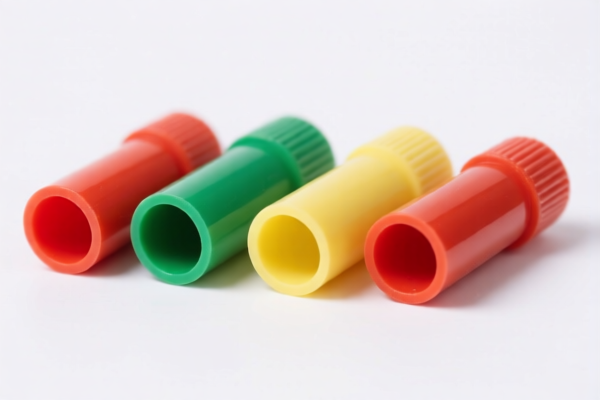
Product Images


AI Analysis
📦 Plastic Spool Core (Roller Core / Bobbin)
🌐 HS Code Classification & Customs Clearance Guide | 2026 Tariff Analysis | Professional Compliance Strategy
📌 Product Definition: What is a "Plastic Spool Core"?
A Plastic Spool Core (also known as a bobbin, reel, tube, or mandrel) is a cylindrical support structure made of plastic, used to wind and hold materials such as textiles, wires, films, tapes, or paper during manufacturing, storage, and transport.
In international trade, these items are critical components in packaging, logistics, and industrial manufacturing. However, misclassification is common because they can fall under "Plastic Articles" (Chapter 39) or "Electrical Parts" (Chapter 85), depending on their specific use and design.
📊 I. HS Code Classification Matrix (2026 Authorized Data)
Based on the provided dataset, there are three potential HS Codes for Plastic Spool Cores. The correct classification depends on the primary function and material composition.
| HS Code | Summary Description | Key Characteristics | Primary Use Case |
|---|---|---|---|
| 3923.40.00.10 | Plastic reels, bobbins, and similar supports; Plastic material, wire-winding core form. | Pure plastic construction; standardized industrial core shape. | General packaging, textile winding, non-electrical industrial use. |
| 3923.40.00.50 | Plastic reels, bobbins, and similar supports; Plastic material, used for packaging or transport support. | Plastic construction; broader support structure for bulk goods. | Logistics rolls, film cores, paper cores, transport spools. |
| 8548.00.00.00 | Electrical parts/pieces; Plastic core form; Catch-all category for electrical components. | Contains or supports electrical wiring/coils; specific to electrical assemblies. | Transformer cores, motor windings, electrical component housings. |
⚠️ Critical Distinction:
- If the core is used for textiles, paper, or general packaging → Chapter 39 (3923.40.00)
- If the core is specifically designed for electrical coils/transformers → Chapter 85 (8548.00.00.00)
💰 II. 2026 Tariff Rate Breakdown (US Market)
✅ Applicable Country: United States (US)
✅ Origin: China (CN)
✅ Effective Date: 2025–2026 (Current Trade Policies)
🎯 1. HS Code 3923.40.00.10 & 3923.40.00.50
(Plastic Reels/Bobbins for General Use)
| Item | Details |
|---|---|
| Base Tariff | 5.3% (Ad Valorem) |
| Section 301 Tariff | +25.0% (USITC Footnote 9903.88.01) |
| 122 Clause Tariff | +10.0% (Specific provision for certain plastic articles/industrial goods) |
| Total Tax Rate | 40.3% |
| Calculation Basis | CIF Value × 40.3% |
| De Minimis Exemption | ❌ Not Eligible (High-value industrial parts usually excluded) |
| Legal Basis Path | USITC:3923.40.00 → Section 301:9903.88.01 → Clause 122:10% |
📌 Explanation:
- These codes fall under Chapter 39 (Plastics and Articles Thereof).
- The 25% Section 301 tariff applies to most Chinese-origin plastic products.
- The 10% Clause 122 is a specific additional duty often applied to industrial plastic supports.
- Total Duty: 40.3% is high and must be factored into your cost model.
🎯 2. HS Code 8548.00.00.00
(Electrical Parts/Pieces)
| Item | Details |
|---|---|
| Base Tariff | 0.0% (Ad Valorem) |
| Section 301 Tariff | +25.0% (USITC Footnote 9903.88.01) |
| 122 Clause Tariff | +10.0% (Specific provision for electrical components/parts) |
| Total Tax Rate | 35.0% |
| Calculation Basis | CIF Value × 35.0% |
| De Minimis Exemption | ❌ Not Eligible |
| Legal Basis Path | USITC:8548.00.00 → Section 301:9903.88.01 → Clause 122:10% |
📌 Explanation:
- This code is a catch-all for electrical parts not elsewhere specified.
- Although the base tariff is 0%, the 35% total rate (25% + 10%) is still significant.
- Why choose this? Only if the spool core is integral to an electrical device (e.g., a transformer bobbin). Using this code for non-electrical cores is illegal and risks penalties.
🛠️ III. Customs Clearance Best Practices (Avoiding Pitfalls)
✅ 1. Documentation Requirements
| Document | Required? | Notes |
|---|---|---|
| Product Specification Sheet | ✅ Yes | Must clearly state material (Plastic Type: PP/PE/PVC), dimensions, and intended use. |
| Commercial Invoice | ✅ Yes | Description must match HS Code. Use precise terms: "Plastic Spool Core for Textile Winding" vs. "Electrical Transformer Bobbin". |
| Packing List | ✅ Yes | Include gross/net weight, quantity, and packaging type. |
| Certificate of Origin (CO) | ✅ Yes | Required for origin verification. If not Chinese origin, claim FTZ benefits if applicable. |
| Declaration of Non-Electrical Use | ✅ If using 3923 | If using HS 3923, confirm no electrical function. |
| Declaration of Electrical Use | ✅ If using 8548 | If using HS 8548, provide technical drawings showing electrical application. |
✅ 2. Classification Strategy: How to Choose the Right HS Code?
🔹 Scenario A: General Industrial/Packaging Use
- Product: Plastic tubes for winding fabric, paper, or plastic film.
- HS Code: 3923.40.00.10 or 3923.40.00.50
- Reason: No electrical function; purely mechanical support.
- Duty: 40.3%
🔹 Scenario B: Electrical Application
- Product: Plastic bobbins for motor windings, transformers, or inductors.
- HS Code: 8548.00.00.00
- Reason: Integral part of an electrical machine/component.
- Duty: 35.0%
💡 Pro Tip:
- Do NOT use8548.00.00.00for non-electrical spools to save 5.3% duty. Customs will inspect and penalize for misclassification.
- Do NOT use3923.40.00for electrical bobbins. The base rate is higher, and it may violate electrical safety regulations.
✅ 3. Common Mistakes & Penalties
| Mistake | Consequence | Solution |
|---|---|---|
| Misclassifying Electrical Bobbins as Plastic Reels | Overpayment of duty (40.3% vs 35.0%) + Compliance risk | Use 8548.00.00.00 for electrical parts. |
| Misclassifying Non-Electrical Cores as Electrical Parts | Customs rejection, fines, seizure, back-duties | Use 3923.40.00.10/50 for general use. |
| Vague Description on Invoice | Customs delay, requests for additional info | Use specific descriptions: "PP Plastic Spool Core, 100mm Dia, for Textile Industry". |
| Ignoring 122 Clause | Unexpected 10% duty charge | Always verify if Clause 122 applies to your specific plastic/electrical article. |
🌍 IV. Global Market Comparison (2026)
| Market | Recommended HS Code | Est. Total Duty (China Origin) | Notes |
|---|---|---|---|
| 🇺🇸 USA | 3923.40.00.10/50 or 8548.00.00.00 |
40.3% or 35.0% | High tariffs due to Section 301 & Clause 122. |
| 🇨🇳 China | 3926.90.99 or 8548.00.00 |
0%~5% | Import tariffs may be lower; verify current tariff schedule. |
| 🇪🇺 EU | 3926.90 or 8548.00 |
0%~4.5% | Generally lower tariffs; no Section 301 equivalent. |
| 🇨🇦 Canada | 3926.90 or 8548.00 |
0%~5% | Similar to EU; CETA benefits may apply for non-China origin. |
| 🇦🇺 Australia | 3926.90 or 8548.00 |
5%~10% | Standard MFN rates apply. |
📌 Key Insight:
- The US market is the most expensive for Plastic Spool Cores due to aggressive trade policies.
- Consider supply chain diversification (e.g., Vietnam, Mexico) to avoid Section 301 tariffs if exporting to the US.
🎯 V. Conclusion & Actionable Advice
📌 Final Recommendations:
- Identify the Primary Use: Is it for textiles/packaging (HS 3923) or electrical components (HS 8548)?
- Prepare Technical Documentation: Provide clear specs, drawings, and use-case declarations.
- Calculate Landed Cost: Include 40.3% (for plastic) or 35.0% (for electrical) in your pricing model.
- Consult a Customs Broker: For high-volume shipments, apply for a Binding Ruling with US Customs to lock in the HS Code and avoid disputes.
- Consider Origin Strategy: If possible, source from non-China countries to mitigate the 25% Section 301 tariff.
🔥 "The Right HS Code Saves Money. The Wrong One Costs You Everything."
✅ Act Now: Verify your product's function, choose the correct HS Code, and prepare compliant documentation.
🚀 Smooth Customs Clearance = Higher Profits + Less Risk.
✨ Professional Classification, Precise Compliance.
💼 Your Supply Chain, Optimized for 2026.
Customer Reviews
About HS Code Classification
The Harmonized System (HS) is an internationally standardized nomenclature developed by the World Customs Organization (WCO) to classify traded products. Over 200 countries use the HS system as the basis for customs tariffs, trade statistics, and import/export regulations.
Each HS code follows a hierarchical structure:
- Chapter (2 digits) — Broad category of goods (e.g., Chapter 84: Machinery and Mechanical Appliances)
- Heading (4 digits) — More specific grouping within the chapter
- Subheading (6 digits) — Internationally standardized breakdown, used by all WCO member countries
- National subdivisions (8-10 digits) — Country-specific extensions for further classification, such as US HTSUS 10-digit codes
Correct HS code classification is essential for smooth customs clearance, accurate duty payment, and compliance with trade regulations. Misclassification can lead to customs delays, overpayment of duties, or penalties.
When importing from CN to US, the applicable tariff rates may include:
- Most-Favored-Nation (MFN) rate — The standard duty rate applied to WTO members
- General rate — Applied to countries without trade agreements
- Trade remedy duties — Additional tariffs such as Section 301 (anti-dumping), Section 232 (national security), or countervailing duties
The information provided on this page is for reference purposes only. For official classification, please consult with your local customs authority or a licensed customs broker.