Plastic Spools
CN → US| HS Code | Tariff Rate | Origin | Destination | Doc |
|---|---|---|---|---|
| 3916903000 | 41.5% | CN | US | Official Doc |
| 3926909989 | 22.8% | CN | US | Official Doc |
| 3926906090 | 39.2% | CN | US | Official Doc |
| 8448399000 | 17.5% | CN | US | Official Doc |
| 3916905000 | 40.8% | CN | US | Official Doc |
Product Images
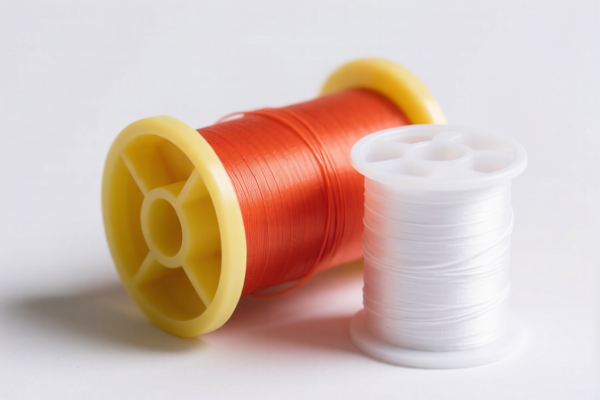
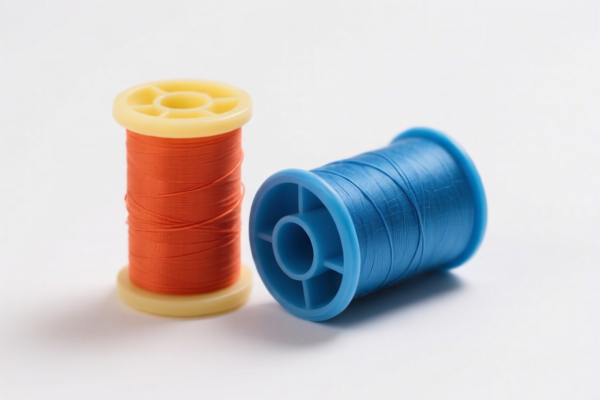
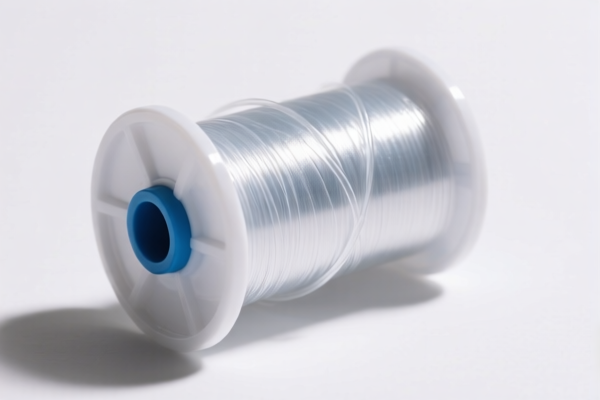
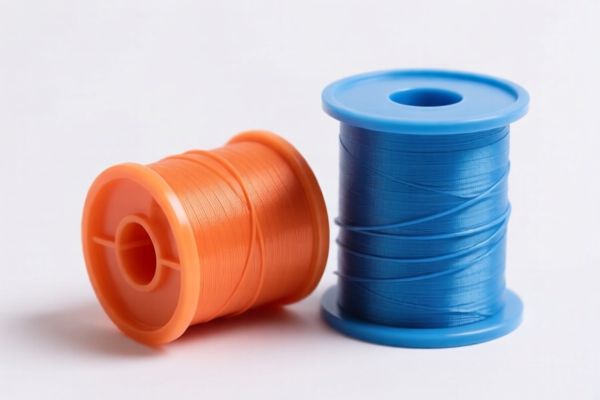
AI Analysis
🧵 Plastic Spools: The Critical Choice in Classification & Customs Clearance
🌐 HS Code Reference & Customs Clearance Guide | 2026 Latest Tariff Analysis | Professional Strategy for Plastic Spools
📌 I. Product Definition & Classification: Do You Really Understand "Plastic Spools"?
"Plastic Spools" (塑料线轴) are cylindrical structures used for winding, storing, or transporting thread, filament, wire, or similar materials. In international trade, their classification depends heavily on material composition, physical form, and intended use.
⚠️ Key Distinction Points:
- If the spool is merely a raw material form (e.g., extruded plastic line/coil) → Likely falls under Chapter 39 (Plastics and Articles Thereof).
- If the spool is an accessory for machinery (e.g., textile machinery parts) → May fall under Chapter 84 (Machinery).
- If it is a general plastic article with no specific mechanical function → Falls under Other Plastic Articles.
📦 II. HS Code Classification Details (2026 Latest Tariff Authority Comparison)
Based on the provided data, here are the 5 potential HS Codes for "Plastic Spools" with corresponding tax details:
| HS Code | Product Description Summary | Material/Form Conflict? | Total Tax Rate | Tax Breakdown |
|---|---|---|---|---|
3916.90.30.00 |
Plastic Monofilament/Sheets/Planks: Plastic material, spool form, classified as extruded/plastic rod-like form. No material conflict. | ❌ None | 41.5% | Base: 6.5% + Section 301: 25.0% + Section 122: 10% |
3926.90.99.89 |
Other Plastic Articles: Plastic material, spool/coil accessory characteristics. No material conflict. | ❌ None | 22.8% | Base: 5.3% + Section 301: 7.5% + Section 122: 10% |
3926.90.60.90 |
Other Plastic Articles: Plastic material, no clear conflict with mechanical belt use. | ❌ None | 39.2% | Base: 4.2% + Section 301: 25.0% + Section 122: 10% |
8448.39.90.00 |
Textile Machinery Accessories: Spools as auxiliary machinery/accessories for textile equipment. Plastic material no conflict. Fits "Other" category. | ❌ None | 17.5% | Base: 0.0% + Section 301: 7.5% + Section 122: 10% |
3916.90.50.00 |
Other Plastic Extruded Forms: Plastic material, spool form, fits other forms in this subheading. No material conflict. | ❌ None | 40.8% | Base: 5.8% + Section 301: 25.0% + Section 122: 10% |
🔍 Critical Insight:
- HS 8448.39.90.00 offers the lowest total tax rate (17.5%) if the spool is used in textile machinery.
- HS 3926.90.99.89 is the second lowest (22.8%) for general plastic spools with accessory-like characteristics.
- The 3916 series (Monofilaments/Extruded Forms) carries high Section 301 tariffs (25%), resulting in total rates >40%.
💰 III. 2026 Latest Tariff Rate Explanation (Including Surtaxes & Policy Add-ons)
✅ Applicable Country: United States (US)
✅ Origin: China (CN)
✅ Effective Date: November 10, 2025 onwards (for subsequent imports)
🎯 1. 3916.90.30.00 & 3916.90.50.00 – Plastic Extruded Forms / Monofilaments
| Item | Detail |
|---|---|
| Base Tariff | 5.8% – 6.5% |
| Section 301 Tariff | +25.0% |
| Section 122 Tariff | +10.0% |
| Total Tax Rate | 40.8% – 41.5% |
| Tax Calculation | CIF Value × (40.8% ~ 41.5%) |
| De Minimis Exemption | ❌ Not Eligible |
| Legal Basis Path | 3916.xxxxxx → USITC:8448/3916 Footnotes → IEEPA:9903.01.24/25 |
📌 Explanation:
- These codes classify spools as plastic materials in raw/extruded forms.
- The 25% Section 301 tariff is applied because these fall under "Plastics and Articles Thereof" subject to high tariffs on Chinese goods.
- Total cost impact is severe – over 40% of CIF value.
🎯 2. 3926.90.99.89 & 3926.90.60.90 – Other Plastic Articles
| Item | Detail |
|---|---|
| Base Tariff | 4.2% – 5.3% |
| Section 301 Tariff | +7.5% (for 3926.90.99.89) or +25.0% (for 3926.90.60.90) |
| Section 122 Tariff | +10.0% |
| Total Tax Rate | 22.8% – 39.2% |
| Tax Calculation | CIF Value × (22.8% ~ 39.2%) |
| De Minimis Exemption | ❌ Not Eligible |
| Legal Basis Path | 3926.xxxxxx → USITC:3926 Footnotes → IEEPA:9903.01.24/25 |
📌 Explanation:
-3926.90.99.89is the most favorable general plastic code with only 7.5% Section 301 tariff.
-3926.90.60.90has a 25% Section 301 tariff, making it significantly more expensive.
- These codes treat spools as finished plastic articles, not raw materials.
🎯 3. 8448.39.90.00 – Textile Machinery Accessories
| Item | Detail |
|---|---|
| Base Tariff | 0.0% |
| Section 301 Tariff | +7.5% |
| Section 122 Tariff | +10.0% |
| Total Tax Rate | 17.5% |
| Tax Calculation | CIF Value × 17.5% |
| De Minimis Exemption | ❌ Not Eligible |
| Legal Basis Path | 8448.xxxxxx → USITC:8448 Footnotes → IEEPA:9903.01.24/25 |
📌 Explanation:
- This is the lowest tax rate option (17.5%).
- It applies only if the spool is specifically designed for textile machinery (e.g., bobbin, shuttle, or thread guide).
- Base tariff is 0%, and Section 301 surcharge is reduced to 7.5% for machinery accessories.
- Requires strict justification: Must prove use in textile machinery via product specs, diagrams, or customer orders.
🛠️ IV. Customs Clearance Practical Advice (Battle-Tested Pitfall Avoidance Guide)
✅ 1. Required Documentation Checklist (All Mandatory)
| Document | Required? | Notes |
|---|---|---|
| ✅ Product Specifications Sheet | ✔️ | Include dimensions, material (e.g., PP, PE, ABS), load capacity, winding diameter |
| ✅ Structural/Assembly Diagram | ✔️ | Show if spool is for machinery use or general storage |
| ✅ Product Photos (with Labels) | ✔️ | Clear view of brand, model, usage indication |
| ✅ Third-Party Test Reports | ✔️ | RoHS, REACH, etc. (if applicable) |
| ✅ Commercial Invoice | ✔️ | Must specify "Plastic Spool for Textile Machinery" or "General Plastic Spool" |
| ✅ Certificate of Origin (CO) | ✔️ | If not Chinese origin, may qualify for lower tariffs |
| ✅ Packing List | ✔️ | Clarify if spools are sold with thread/filament or empty |
✅ 2. Declaration Strategy (Key Mnemonic)
🔥 “Machinery Use = 17.5%, General Plastic = 22.8%, Raw Form = 40%+!”
| Scenario | Correct HS Code | Incorrect Action | Consequence |
|---|---|---|---|
| Spool used in textile machines | 8448.39.90.00 (17.5%) |
Declare as "Plastic Article" → 22.8%–41.5% | Overpay by 5.3%–24% |
| General-purpose plastic spool | 3926.90.99.89 (22.8%) |
Declare as "Extruded Plastic" → 40.8%–41.5% | Overpay by 18%–18.7% |
| Spool as raw plastic form | 3916.90.30.00 (41.5%) |
Declare as "Accessory" → 17.5% | Under-declaration risk: Penalties + Back Taxes |
✅ 3. Special Case Handling
| Situation | Handling Advice |
|---|---|
| OEM Spools for Textile Machines | Provide customer order + design drawings to justify 8448.39.90.00 |
| Spools Sold with Thread | Declare separately: Spool as accessory, Thread as raw material. Avoid mixing to prevent misclassification. |
| Multi-Purpose Spools (General + Industrial) | Default to 3926.90.99.89 (22.8%) unless machinery use is proven. |
| Spools Made of Recycled Plastic | May still fall under same HS code, but provide environmental certifications to avoid scrutiny. |
🌍 V. Global Market Comparison (2026 Latest)
| Country/Region | Recommended HS Code | Tariff (China Origin) | Certification Requirements | Notes |
|---|---|---|---|---|
| 🇺🇸 United States | 8448.39.90.00 (if machinery) |
17.5% | No special certs | Highest risk of misclassification |
| 🇨🇳 China (Import) | 3926.90.99.89 |
5.3% | No special certs | Lower base tariff globally |
| 🇪🇺 European Union | 3926.90.99.89 |
0–6.5% (varies) | CE, RoHS | No Section 301/122 equivalent |
| 🇬🇧 United Kingdom | 3926.90.99.89 |
0–6.5% | UKCA, RoHS | Post-Brexit rules apply |
| 🇯🇵 Japan | 3926.90.99.89 |
0–5% | PSE (if electrical) | Low tariffs, high compliance focus |
📌 Conclusion:
- USA has the most complex tariff structure due to Section 301 and Section 122 add-ons.
- EU/UK/Japan have simpler, lower base tariffs but stricter environmental/compliance rules.
- Proper classification is critical in the US to avoid 20%+ overpayment.
📌 VI. Common Errors & Pitfall Avoidance (Blood-Tested Lessons)
❌ Error 1: Declaring a textile machine spool as a general plastic article
👉 Consequence: Pay 22.8%–41.5% instead of 17.5% → Overpayment by 5.3%–24%
❌ Error 2: Declaring raw plastic spools as machinery accessories
👉 Consequence: Misclassification penalty + Back taxes + Possible seizure
❌ Error 3: Not providing product specs to prove machinery use
👉 Consequence: Customs defaults to higher tariff code (3926 or 3916 series)
❌ Error 4: Mixing spools with thread in one declaration
👉 Consequence: Complex valuation + Risk of incorrect classification for both items
✅ Correct Approach:
“Plastic Spool, Empty, PP Material, Ø100mm, Designed for Textile Bobbin Use, Model XYZ, No Thread Included”
🎯 VII. Conclusion: Precision Classification Saves Thousands!
🎯 Remember the Mnemonic:
🔹 “Machinery Use = 17.5%, General Plastic = 22.8%, Raw Form = 40%+!”
🔹 “HS Code Determines Tax Bill, Wrong Code = Cost Explosion!”
📌 Pro Tip:
If your spools are originating from Vietnam, Malaysia, or Thailand, you may qualify for IEEPA exemptions under US trade rules, reducing tariffs to 0–5%.
Recommendation: Apply for an Advance Ruling (Pre-classification) with US CBP before shipping to avoid clearance delays and tax surprises.
📣 Immediate Action Required:
📞 Contact a licensed customs broker + Provide product diagrams + Apply for HS Code Advance Ruling
🚀 Ensure your plastic spools clear customs smoothly, efficiently, and profitably!
✨ Professional Clearance Starts with Precise Classification!
💼 Every dollar of cost deserves accurate calculation!
Customer Reviews
About HS Code Classification
The Harmonized System (HS) is an internationally standardized nomenclature developed by the World Customs Organization (WCO) to classify traded products. Over 200 countries use the HS system as the basis for customs tariffs, trade statistics, and import/export regulations.
Each HS code follows a hierarchical structure:
- Chapter (2 digits) — Broad category of goods (e.g., Chapter 84: Machinery and Mechanical Appliances)
- Heading (4 digits) — More specific grouping within the chapter
- Subheading (6 digits) — Internationally standardized breakdown, used by all WCO member countries
- National subdivisions (8-10 digits) — Country-specific extensions for further classification, such as US HTSUS 10-digit codes
Correct HS code classification is essential for smooth customs clearance, accurate duty payment, and compliance with trade regulations. Misclassification can lead to customs delays, overpayment of duties, or penalties.
When importing from CN to US, the applicable tariff rates may include:
- Most-Favored-Nation (MFN) rate — The standard duty rate applied to WTO members
- General rate — Applied to countries without trade agreements
- Trade remedy duties — Additional tariffs such as Section 301 (anti-dumping), Section 232 (national security), or countervailing duties
The information provided on this page is for reference purposes only. For official classification, please consult with your local customs authority or a licensed customs broker.