Plastic Spring Clothespin
CN → US| HS Code | Tariff Rate | Origin | Destination | Doc |
|---|---|---|---|---|
| 3926906530 | 14.2% | CN | US | Official Doc |
| 3926906520 | 14.2% | CN | US | Official Doc |
| 3926907000 | 22.8% | CN | US | Official Doc |
| 3926906510 | 14.2% | CN | US | Official Doc |
| 7326200020 | 88.9% | CN | US | Official Doc |
Product Images
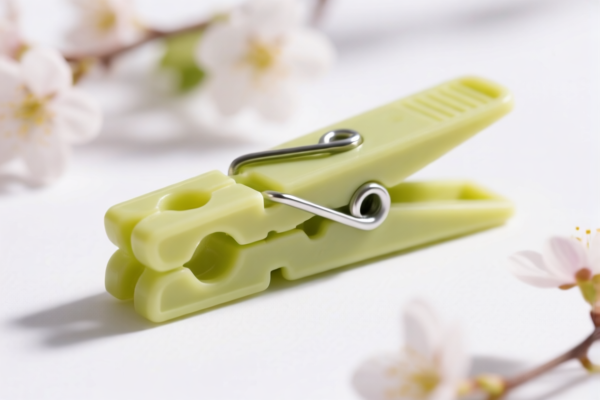
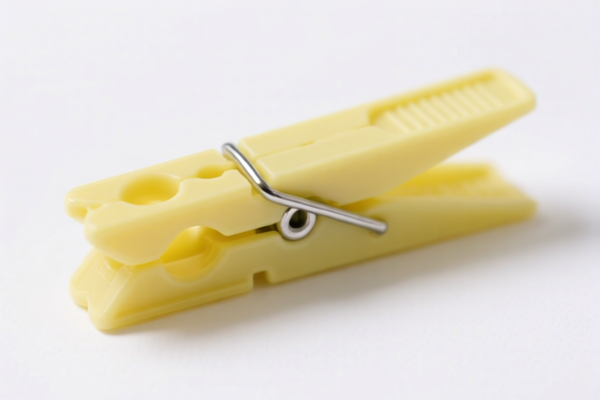
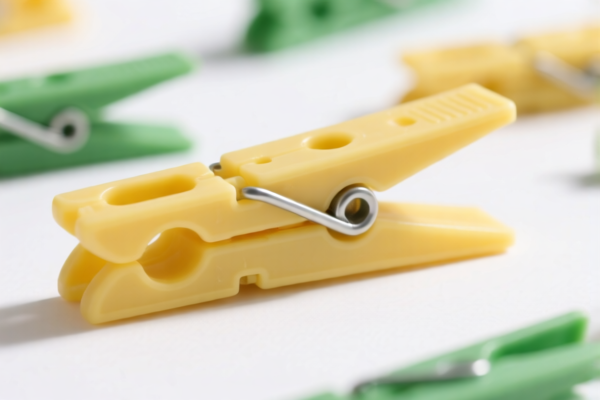
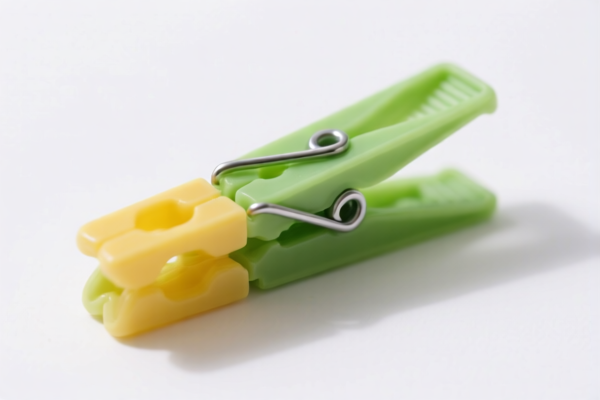
AI Analysis
🧺 Plastic Spring Clothespins (Plastic Clips)
🌐 HS Code Reference & Customs Clearance Guide | 2026 Latest Tariff Analysis | Professional Clearance Strategy
📌 I. Product Definition & Classification: Do You Really Understand "Plastic Spring Clothespins"?
Plastic spring clothespins are ubiquitous household items used for drying laundry. In international trade, their classification hinges primarily on material composition and structural form.
Key Distinction:
- Plastic Body + Metal Spring: If the main body is plastic but the spring is metal, it is still generally classified under Chapter 39 (Plastics) because the plastic provides the essential character.
- All-Metal Clothespins: Classified under Chapter 73 (Articles of Iron or Steel).
- Material Ambiguity: If the material is unclear (e.g., composite or non-metallic non-plastic), it may fall under generic "other" articles.
⚠️ Critical Note for US Imports (China Origin):
Due to Section 301 and IEEPA tariffs, the choice of HS Code dramatically affects the total tax burden, ranging from 14.2% to 88.9%. Misclassification can lead to severe financial loss.
📦 II. HS Code Classification Details (2026 Latest Tariff Authority Comparison)
Based on the provided data, here are the four possible classifications for "Plastic Spring Clothespins," ranked by suitability.
| HS Code | Product Description | Applicability | Material/Form Match | Total Tax Rate |
|---|---|---|---|---|
| 3926.90.65.30 | Plastic Spring Clothespins | Highly Recommended | Plastic body, spring-type form. Matches "Plastic Articles" and "Spring-type Clips." | 14.2% |
| 3926.90.65.20 | Plastic Spring Clothespins | Highly Recommended | Plastic material. Matches form and use (laundry clip). | 14.2% |
| 3926.90.65.10 | Clothespins (Laundry) | Recommended | Inferred plastic or non-metallic material. Matches "Other Plastic Articles." | 14.2% |
| 3926.90.70.00 | Clothespins (Laundry) | Alternative | Inferred plastic. Classified as "Other Plastic Articles" without specific spring-type detail. | 22.8% |
| 7326.20.00.20 | Clothespins (Metal) | Incorrect for Plastic | Inferred as Metal (Iron/Steel). Do not use if product is plastic. | 88.9% |
🔍 Key Insight:
- Codes 3926.90.65.10/20/30 all result in the same 14.2% effective tax rate.
- 3926.90.65.30 is the most precise description ("Spring-type"), making it the strongest candidate for customs scrutiny.
- 7326.20.00.20 must be avoided unless the product is 100% metal. Misdeclaring plastic as metal triggers a massive 88.9% tax due to steel/aluminum surcharges.
💰 III. 2026 Latest Tariff Rate Details (Including Surcharges)
✅ Applicable Country: United States (US)
✅ Origin: China (CN)
✅ Effective Date: November 10, 2025 (for subsequent imports)
🎯 1. 3926.90.65.30 / 3926.90.65.20 / 3926.90.65.10
Description: Plastic Spring Clothespins / Other Plastic Articles
Best Choice for Plastic Products
| Item | Content |
|---|---|
| Base Duty Rate | 4.2% (Ad Valorem) |
| Section 301 Surcharge | 0.0% (Note: Base rate includes specific treatment for this subheading) |
| IEEPA Section 122 Surcharge | +10% (Targeted China-specific tariff) |
| Total Tax Rate | 14.2% |
| Tax Calculation | CIF Value × 14.2% |
| De Minimis Exemption | ❌ Not Applicable (Deny De Minimis) |
| Legal Basis Path | IEEPA:9903.01.25 → USITC:3926.90.65.30 |
📌 Explanation:
- The 14.2% rate is the most favorable for plastic clothespins.
- It combines a 4.2% base duty with a 10% IEEPA surcharge.
- Unlike metal products, plastic articles do not attract the additional 25% Section 301 tariff or the 50% steel/aluminum surcharge.
🎯 2. 3926.90.70.00
Description: Other Plastic Articles (Laundry Clips)
Alternative (Higher Cost)
| Item | Content |
|---|---|
| Base Duty Rate | 5.3% |
| Section 301 Surcharge | +7.5% |
| IEEPA Section 122 Surcharge | +10% |
| Total Tax Rate | 22.8% |
| Tax Calculation | CIF Value × 22.8% |
| De Minimis Exemption | ❌ Not Applicable |
| Legal Basis Path | IEEPA:9903.01.25 → USITC:3926.90.70.00 |
📌 Note:
- This code is less specific than .65 series.
- It incurs an additional 8.6% in taxes compared to the .65 series codes.
- Use only if the specific "spring-type" detail cannot be substantiated.
🎯 3. 7326.20.00.20
Description: Articles of Iron or Steel (Clothespins)
❌ FOR PLASTIC PRODUCTS ONLY (Avoid!)
| Item | Content |
|---|---|
| Base Duty Rate | 3.9% |
| Section 301 Surcharge | +25.0% |
| IEEPA Section 122 Surcharge | +10% |
| Steel/Aluminum Surcharge | +50% |
| Total Tax Rate | 88.9% |
| Tax Calculation | CIF Value × 88.9% |
| De Minimis Exemption | ❌ Not Applicable |
📌 Warning:
- This rate is astronomical for plastic goods.
- Only apply if the clothespins are 100% metal.
- Misclassifying plastic as metal will result in a 74.7% tax increase plus potential penalties.
🛠️ IV. Customs Clearance Practical Advice (Pitfall Avoidance Guide)
✅ 1. Documentation Checklist (Mandatory)
| Document | Required | Explanation |
|---|---|---|
| ✅ Product Specification Sheet | ✔️ | Clearly state: "Plastic Body, Metal Spring" or "100% Plastic". |
| ✅ Material Composition Certificate | ✔️ | Essential to prove it is not metal (to avoid 88.9% tax). |
| ✅ Product Photos | ✔️ | Show the entire clip, including the spring and any packaging labels. |
| ✅ Commercial Invoice | ✔️ | Description: "Plastic Spring Clothespins, Household Use, HS 3926.90.65.30". |
| ✅ Packing List | ✔️ | Confirm quantity and weight. |
| ✅ FCC/CE Certificates | ❌ | Not required for plastic clothespins unless they contain electronic components (rare). |
✅ 2. Declaration Tips (Key Mantra)
🔥 "Plastic is King, Metal is Ring (88.9%)! Declare Material Clearly!"
| Scenario | Correct Declaration | Error to Avoid |
|---|---|---|
| Plastic Body + Metal Spring | 3926.90.65.30 (Plastic Article) | Declaring as "Metal Clothespin" → 88.9% Tax |
| 100% Plastic (with plastic spring) | 3926.90.65.30 or 65.20 | Declaring as "Metal" → 88.9% Tax |
| Mixed Materials (Unclear) | 3926.90.70.00 (Safer, but higher tax) | Guessing → Potential audit |
| 100% Metal Clothespins | 7326.20.00.20 | Declaring as "Plastic" → 0% Tax (Illegal, but risk of fraud penalty) |
📌 Critical Strategy:
- If your clothespins have a metal spring, you MUST classify them under Chapter 39 (Plastic), not Chapter 73 (Steel).
- The spring is considered an "accessory" or "functional part" that does not change the essential character of the plastic body.
- Explicitly state: "Plastic Clothespin with Metal Spring" in the declaration notes to justify the 14.2% rate.
✅ 3. Special Circumstances
| Situation | Handling Advice |
|---|---|
| OEM/Private Label | Provide brand authorization if necessary, but material classification remains the same. |
| Bundled Sales | If sold in a box with other items, declare clothespins separately. Do not merge with metal hangers. |
| Sample Imports | Even for samples, the 14.2% tax applies. Do not use "gift" loopholes if value exceeds de minimis thresholds (though de minimis is denied for China-origin goods under IEEPA). |
🌍 V. Global Market Comparison (2026 Latest)
| Country/Region | Recommended HS Code | Tariff (China Origin) | Certifications | Notes |
|---|---|---|---|---|
| 🇺🇸 USA | 3926.90.65.30 |
14.2% | No specific | High Tax Due to IEEPA 10% |
| 🇨🇳 China | 3926.90.65.30 |
5-7% | None | Standard import duty |
| 🇪🇺 EU | 3926.90.97 |
4.5% | REACH (Plastics) | Low tariff, high environmental compliance |
| 🇬🇧 UK | 3926.90.97 |
4.5% | UKCA | Post-Brexit tariff alignment with EU |
| 🇨🇦 Canada | 3926.90.90 |
5.5% | None | Moderate tariff |
📌 Conclusion:
- The USA is the most expensive market for plastic clothespins due to the 10% IEEPA surcharge.
- However, compared to metal products (88.9%), plastic remains the only viable option for cost-effective import.
- No other major market imposes the 10% IEEPA surcharge on these items.
📌 VI. Common Mistakes & Pitfalls (Lessons Learned)
❌ Mistake 1: Declaring "Plastic Clothespins" as "Metal Clothespins" (7326.20.00.20)
👉 Consequence: 88.9% Tax Rate → Profit margin wiped out instantly.
❌ Mistake 2: Using generic "Plastic Articles" (3926.90.70.00) without justification
👉 Consequence: 22.8% Tax Rate → Paying 8.6% more than necessary.
❌ Mistake 3: Ignoring the "Spring" component in description
👉 Consequence: Customs may question if it's a metal product → Delayed clearance + Potential reclassification.
❌ Mistake 4: Assuming De Minimis (Section 321) applies
👉 Consequence: De Minimis is DENIED for China-origin goods under IEEPA Section 122. All shipments, regardless of value, are subject to duty.
✅ Correct Approach:
"Plastic Spring-Type Clothespins, Household Use, Plastic Body with Metal Spring, HS 3926.90.65.30, IEEPA 122 Applicable"
🎯 VII. Conclusion: Professional Classification, Maximize Profit!
🎯 Remember the Mantra:
🔹 "Plastic is 14.2%, Metal is 88.9%! Don't let a metal spring cost you 75%!"
🔹 "Be Specific: 'Plastic Spring-Type' wins the best rate!"
🔹 "IEEPA 10% is Non-Negotiable for China!"
📌 Pro Tip:
- If you have large volume imports, consider applying for an Advance Ruling from US Customs (CBP) to lock in the 14.2% rate for 3926.90.65.30.
- Ensure your supplier provides a material declaration confirming the body is plastic, even if the spring is metal.
📣 Take Action Now:
📞 Consult your customs broker with the exact description: "Plastic Clothespin with Metal Spring".
🚀 Clear Customs Smoothly, Minimize Tax, Maximize Profit!
✨ Professional Clearance Starts with Precise Classification!
💼 Every Cent Saved is Pure Profit!
Customer Reviews
About HS Code Classification
The Harmonized System (HS) is an internationally standardized nomenclature developed by the World Customs Organization (WCO) to classify traded products. Over 200 countries use the HS system as the basis for customs tariffs, trade statistics, and import/export regulations.
Each HS code follows a hierarchical structure:
- Chapter (2 digits) — Broad category of goods (e.g., Chapter 84: Machinery and Mechanical Appliances)
- Heading (4 digits) — More specific grouping within the chapter
- Subheading (6 digits) — Internationally standardized breakdown, used by all WCO member countries
- National subdivisions (8-10 digits) — Country-specific extensions for further classification, such as US HTSUS 10-digit codes
Correct HS code classification is essential for smooth customs clearance, accurate duty payment, and compliance with trade regulations. Misclassification can lead to customs delays, overpayment of duties, or penalties.
When importing from CN to US, the applicable tariff rates may include:
- Most-Favored-Nation (MFN) rate — The standard duty rate applied to WTO members
- General rate — Applied to countries without trade agreements
- Trade remedy duties — Additional tariffs such as Section 301 (anti-dumping), Section 232 (national security), or countervailing duties
The information provided on this page is for reference purposes only. For official classification, please consult with your local customs authority or a licensed customs broker.