Plastic Stabilizer Compound
CN → US| HS Code | Tariff Rate | Origin | Destination | Doc |
|---|---|---|---|---|
| 2942003500 | 41.5% | CN | US | Official Doc |
| 2942005000 | 38.7% | CN | US | Official Doc |
| 3824992900 | 41.5% | CN | US | Official Doc |
| 3824994900 | 41.5% | CN | US | Official Doc |
| 3901909000 | 41.5% | CN | US | Official Doc |
Product Images
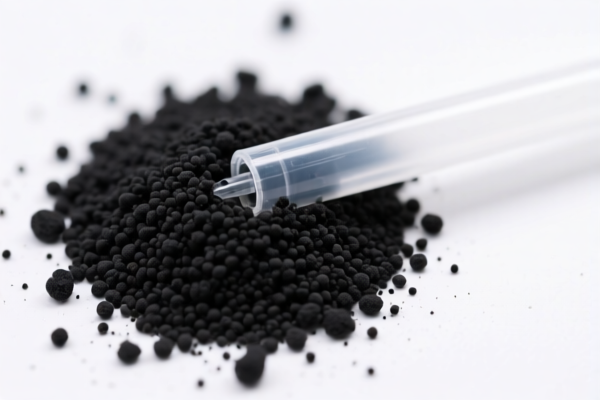


AI Analysis
🧪 Plastic Stabilizer Compound (塑料稳定剂复合剂)
🌐 HS Code Reference & Customs Clearance Guide | 2026 Latest Tariff Analysis | Professional Strategy for US Import
📌 I. Product Definition & Classification: What is a "Plastic Stabilizer Compound"?
A Plastic Stabilizer Compound is a chemical additive used in the polymer industry to prevent degradation (such as heat, light, or oxidation) during processing and use. It is not a raw polymer itself but a formulation containing organic chemical substances.
Key Distinction: * Organic Chemicals (Chapter 29): If the stabilizer is a pure chemical entity or a mixture where the chemical structure is the primary defining feature. * Chemical Products/Preparations (Chapter 38): If the stabilizer is a formulated mixture, composite, or preparation designed specifically for industrial chemical purposes, even if it contains organic compounds. * Polymers (Chapter 39): If it is primarily a polymer additive that alters the physical properties of the base plastic.
⚠️ Critical Clarification Point:
- The term "Compound" implies a mixture or formulation, not a single pure organic molecule. This strongly points toward Chapter 38 (Miscellaneous Chemical Products) or Chapter 29 (Other Organic Compounds) depending on the specific chemical nature and whether it fits a specific subheading.
- "Plastic" indicates the application, not necessarily the material of the commodity itself (the stabilizer is added to plastic).
📦 II. HS Code Classification Details (2026 Tariff Schedule)
Based on the provided data, here are the four potential HS Codes, their matching logic, and tax implications.
| HS Code | Product Description / Matching Logic | Application/Context | Key Differentiator |
|---|---|---|---|
2942.00.35.00 |
Other Organic Compounds: Matches "Plastic Stabilizer Compound" as an organic chemical form. The name "Compound" suggests a chemical structure, falling under "Other Organic Compounds" with no obvious material conflict. | Pure chemical additives, single-substance stabilizers. | Focuses on chemical composition. |
2942.00.50.00 |
Other Organic Compounds: Similar to above. "Compound" is inferred as a chemical raw material. Fits the "Other" category's catch-all logic for organic chemicals. | Generic organic chemical raw materials. | Lower base duty (3.7%) vs. 35 (6.5%). |
3824.99.29.00 |
Other Chemical Products/Preparations: "Compound" fits "Chemical Products and Preparations." "Plastic Stabilizer" is a chemical industry product. No material conflict with the "Other" category. | Formulated mixtures, commercial chemical preparations. | Focuses on industrial preparation/formulation. |
3824.99.49.00 |
Other Chemical Products/Preparations: Belongs to chemical industry products/preparations. Inferred to contain hydrocarbons or chemical assistants. Fits "Unspecified Chemical Products." | Complex formulations, proprietary blends. | Focuses on unlisted chemical aids. |
3901.90.90.00 |
Ethylene Polymers (Other): Inferred from "Plastic Stabilizer" to be polymer-related chemical components. Fits the "Other" category for ethylene polymers as an additive raw material. | Polymer-based stabilizers, additive resins. | Focuses on polymer origin. |
🔍 Key Insight:
- Chapter 29 codes (2942.xx) treat the product as a chemical substance.
- Chapter 38 codes (3824.xx) treat the product as a chemical preparation/mixture.
- Chapter 39 code (3901.xx) treats the product as a polymer-related material.
- Most likely scenario: For a "Stabilizer Compound," Chapter 38 is often more accurate if it is a formulated mixture for industrial use. However, if it is a specific organic compound, Chapter 29 may apply.
💰 III. 2026 Latest Tariff Rate Details (Including Surcharges)
✅ Applicable Country: United States (US)
✅ Origin: China (CN)
✅ Effective Date: November 10, 2025 (and subsequent imports)
🎯 1. 2942.00.35.00 —— Other Organic Compounds
| Item | Content |
|---|---|
| Base Duty Rate | 6.5% |
| USITC Surtax (Section 301) | +25.0% |
| IEEPA Surtax (Section 122) | +10.0% |
| Total Tax Rate | 41.5% |
| Tax Calculation | CIF Value × 41.5% |
| De Minimis Eligibility | ❌ Not Eligible (Deny de minimis) |
| Legal Basis Path | Base: 6.5% → USITC: 25% → IEEPA: 10% |
📌 Explanation:
- Base duty: 6.5% for other organic compounds.
- Additional 35% surcharge applied to Chinese goods.
- Total 41.5% is a significant cost factor.
🎯 2. 2942.00.50.00 —— Other Organic Compounds
| Item | Content |
|---|---|
| Base Duty Rate | 3.7% |
| USITC Surtax (Section 301) | +25.0% |
| IEEPA Surtax (Section 122) | +10.0% |
| Total Tax Rate | 38.7% |
| Tax Calculation | CIF Value × 38.7% |
| De Minimis Eligibility | ❌ Not Eligible (Deny de minimis) |
| Legal Basis Path | Base: 3.7% → USITC: 25% → IEEPA: 10% |
📌 Note:
- Lower base duty (3.7%) makes this slightly cheaper than2942.00.35.00, but still very high.
- Suitable if the product is classified under this specific subheading.
🎯 3. 3824.99.29.00 —— Other Chemical Products/Preparations
| Item | Content |
|---|---|
| Base Duty Rate | 6.5% |
| USITC Surtax (Section 301) | +25.0% |
| IEEPA Surtax (Section 122) | +10.0% |
| Total Tax Rate | 41.5% |
| Tax Calculation | CIF Value × 41.5% |
| De Minimis Eligibility | ❌ Not Eligible (Deny de minimis) |
| Legal Basis Path | Base: 6.5% → USITC: 25% → IEEPA: 10% |
📌 Explanation:
- Chapter 38 products often face high duties.
- Classification as "Other Chemical Products" leads to the same 41.5% rate as2942.00.35.00.
🎯 4. 3824.99.49.00 —— Other Chemical Products/Preparations
| Item | Content |
|---|---|
| Base Duty Rate | 6.5% |
| USITC Surtax (Section 301) | +25.0% |
| IEEPA Surtax (Section 122) | +10.0% |
| Total Tax Rate | 41.5% |
| Tax Calculation | CIF Value × 41.5% |
| De Minimis Eligibility | ❌ Not Eligible (Deny de minimis) |
| Legal Basis Path | Base: 6.5% → USITC: 25% → IEEPA: 10% |
📌 Note:
- Similar to3824.99.29.00, this is a "catch-all" for chemical products.
- High tax burden requires careful cost calculation.
🎯 5. 3901.90.90.00 —— Other Ethylene Polymers
| Item | Content |
|---|---|
| Base Duty Rate | 6.5% |
| USITC Surtax (Section 301) | +25.0% |
| IEEPA Surtax (Section 122) | +10.0% |
| Total Tax Rate | 41.5% |
| Tax Calculation | CIF Value × 41.5% |
| De Minimis Eligibility | ❌ Not Eligible (Deny de minimis) |
| Legal Basis Path | Base: 6.5% → USITC: 25% → IEEPA: 10% |
📌 Caution:
- Only applicable if the stabilizer is primarily a polymer additive derived from ethylene polymers.
- Misclassification here could lead to significant duty penalties if it is not a polymer.
🛠️ IV. Customs Clearance Practical Advice (Pitfall Avoidance Guide)
✅ 1. Required Documentation Checklist (All are Mandatory)
| Document | Required | Description |
|---|---|---|
| ✅ Product Specification Sheet | ✔️ | Details composition, CAS numbers, concentration, and physical state. |
| ✅ Safety Data Sheet (SDS) | ✔️ | Must be GHS-compliant, detailing hazards and handling. |
| ✅ Formula/Composition Breakdown | ✔️ | Critical for determining if it’s a "chemical" (Ch 29) or "preparation" (Ch 38). |
| ✅ Commercial Invoice | ✔️ | Clearly state "Plastic Stabilizer Compound" and HS Code. |
| ✅ Packing List | ✔️ | Show net/gross weight, dimensions, and packaging type. |
| ✅ Certificate of Origin (CO) | ✔️ | For origin verification (China). |
| ✅ Third-Party Test Report | ✔️ | FDA, REACH, or other regulatory compliance if applicable. |
✅ 2. Declaration Tips (Key Rules)
🔥 "Clarify Composition, Choose Chapter Wisely, Avoid Polymer Trap!"
| Scenario | Correct Declaration | Wrong Action |
|---|---|---|
| Pure chemical stabilizer | 2942.00.35.00 or 2942.00.50.00 |
Misclassify as "Chemical Mixture" → Higher duty |
| Formulated commercial blend | 3824.99.29.00 or 3824.99.49.00 |
Misclassify as "Pure Organic" → Discrepancy |
| Polymer-based additive | 3901.90.90.00 |
Misclassify as "Chemical" → Incorrect chapter |
| Any scenario | Always provide SDS & Formula | Omit formula → Customs delay/audit |
📌 Note:
- If the product is a mixture, Chapter 38 is often more appropriate.
- If it is a pure substance, Chapter 29 is correct.
- Do not use "Plastic Stabilizer" alone; include "Compound" or "Formulation" to clarify.
✅ 3. Special Handling
| Scenario | Recommendation |
|---|---|
| Proprietary Formulations | Provide a detailed composition breakdown to customs; redact trade secrets if necessary but maintain compliance. |
| New Chemical Substances | Ensure EPA TSCA compliance if imported into the US. |
| High-Volume Imports | Apply for Advance Ruling (Ruling Letter) from CBP to confirm HS Code before shipment. |
| Small Samples | Still subject to 41.5% duty; no de minimis exemption. |
🌍 V. Global Market Comparison (2026 Latest)
| Country/Region | Recommended HS Code | Duty Rate | Certification | Notes |
|---|---|---|---|---|
| 🇺🇸 USA | 3824.99.29.00 / 2942.00.35.00 |
41.5% / 38.7% | TSCA + SDS | High tariffs on Chinese goods. |
| 🇨🇳 China | 3824.99.29.00 |
5-10% | REACH/China Compulsory | No extra surcharges. |
| 🇪🇺 EU | 3824.99.29.00 |
0-4% | REACH + RoHS | Strict chemical regulations. |
| 🇯🇵 Japan | 3824.99.29.00 |
0-5% | PRTR Law | No major surcharges. |
| 🇰🇷 South Korea | 3824.99.29.00 |
0-5% | K-REACH | Free Trade Agreement (FTA) benefits. |
📌 Conclusion:
- USA has the highest duty burden (41.5%) for Chinese-origin plastic stabilizers.
- EU, Japan, and Korea have lower base duties but strict regulatory compliance (REACH, PRTR, K-REACH).
- Cost Advantage: Consider sourcing from countries with FTA benefits (e.g., Vietnam, Mexico) if possible, though chemical sourcing may be limited.
📌 VI. Common Mistakes & Pitfalls (Lessons Learned)
❌ Mistake 1: Declaring as "Plastic Additive" without specifying chemical nature
👉 Consequence: Customs may reclassify to a higher-duty code → Penalties + Delays
❌ Mistake 2: Assuming "Stabilizer" is a polymer (Chapter 39)
👉 Consequence: If it’s not a polymer, classification error → Duty Difference + Audit
❌ Mistake 3: Omitting SDS or Formula
👉 Consequence: Customs cannot verify composition → Hold at Port + Storage Fees
❌ Mistake 4: Ignoring Section 122 (IEEPA) Surcharge
👉 Consequence: Underpayment by 10% → Back Taxes + Interest
✅ Correct Practice:
"Plastic Stabilizer Compound, Formulation, Contains [Chemical Name] CAS# XXXX-XX-X, Non-Polymeric, For Industrial Use, SDS Available, TSCA Compliant"
🎯 VII. Conclusion: Professional Classification Saves Money!
🎯 Remember These Key Points:
🔹 "Compound = Mixture? Think Chapter 38."
🔹 "Pure Chemical? Think Chapter 29."
🔹 "Not a Polymer? Avoid Chapter 39."
🔹 "Always Pay Attention to 35% Surcharges!"
📌 Pro Tip:
If your plastic stabilizer is originated from Vietnam, Malaysia, or Thailand, you may qualify for lower or zero surcharges under certain trade agreements.
Recommendation: Apply for an Advance Ruling (CBP) before shipping to ensure correct HS Code classification and avoid unexpected costs.
📣 Immediate Action:
📞 Contact your customs broker + Provide Formula/SDS + Apply for Pre-Ruling
🚀 Ensure Smooth Customs Clearance, Minimize Costs, and Boost Profit Margins!
✨ Professional Customs Clearance Starts with Accurate Classification!
💼 Every Percent of Duty Counts!
Customer Reviews
About HS Code Classification
The Harmonized System (HS) is an internationally standardized nomenclature developed by the World Customs Organization (WCO) to classify traded products. Over 200 countries use the HS system as the basis for customs tariffs, trade statistics, and import/export regulations.
Each HS code follows a hierarchical structure:
- Chapter (2 digits) — Broad category of goods (e.g., Chapter 84: Machinery and Mechanical Appliances)
- Heading (4 digits) — More specific grouping within the chapter
- Subheading (6 digits) — Internationally standardized breakdown, used by all WCO member countries
- National subdivisions (8-10 digits) — Country-specific extensions for further classification, such as US HTSUS 10-digit codes
Correct HS code classification is essential for smooth customs clearance, accurate duty payment, and compliance with trade regulations. Misclassification can lead to customs delays, overpayment of duties, or penalties.
When importing from CN to US, the applicable tariff rates may include:
- Most-Favored-Nation (MFN) rate — The standard duty rate applied to WTO members
- General rate — Applied to countries without trade agreements
- Trade remedy duties — Additional tariffs such as Section 301 (anti-dumping), Section 232 (national security), or countervailing duties
The information provided on this page is for reference purposes only. For official classification, please consult with your local customs authority or a licensed customs broker.