Plastic Statuette Bows
CN → US| HS Code | Tariff Rate | Origin | Destination | Doc |
|---|---|---|---|---|
| 3926400090 | 15.3% | CN | US | Official Doc |
| 9503000073 | 10.0% | CN | US | Official Doc |
| 3926909989 | 22.8% | CN | US | Official Doc |
| 3921190090 | 41.5% | CN | US | Official Doc |
| 3921905050 | 39.8% | CN | US | Official Doc |
Product Images
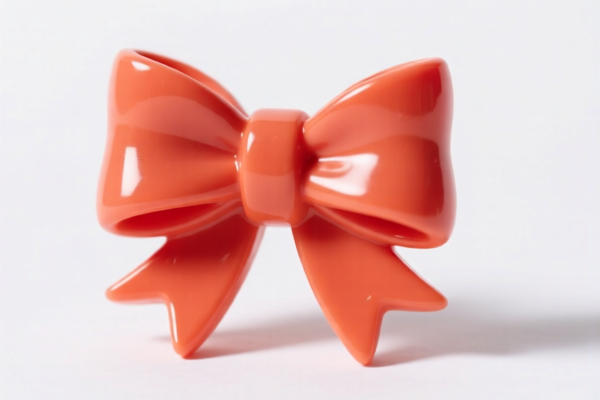

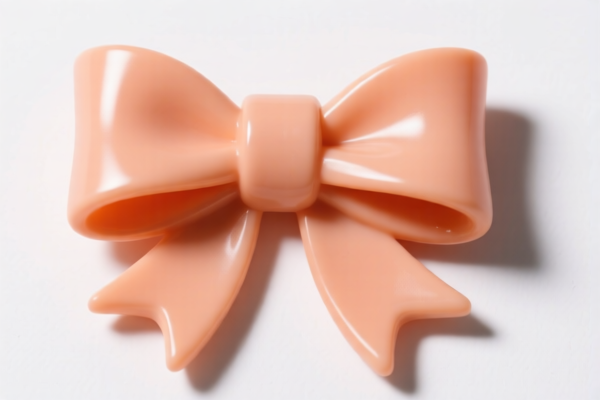

AI Analysis
🏛️ Plastic Statuette Bows: The Ultimate Classification & Customs Clearance Guide
🌐 HS Code Reference & Clearance Strategy | 2026 Latest Tariff Analysis | Plastic Decorative Goods
📌 I. Product Definition & Core Conflict: What Exactly Are "Plastic Statuette Bows"?
"Plastic Statuette Bows" (塑料雕像蝴蝶结/装饰件) refer to small plastic components or decorative items shaped like bows, often intended to be attached to figurines, statues, or used as standalone decorative accessories. In international trade, the core dispute lies in distinguishing between "Statues/Decorations" (Chapter 95/3926) and "Plastic Plates/Sheets/Slabs" (Chapter 3921) or "Other Plastic Articles" (Chapter 3926/3921 fallbacks).
⚠️ Key Distinction Point:
- If the item is a 3D formed object representing a bow figure, intended for decoration → It falls under Decorative Plastic Articles.
- If the item is a flat sheet/panel cut into the shape of a bow, used as a material component → It falls under Plastic Plates/Sheets.
- Customs Reality: The physical form (3D vs. 2D) and primary function (Decoration vs. Material Component) dictate the HS Code.
📦 II. HS Code Classification Matrix (Based on Provided Data)
| HS Code | Product Description | Classification Logic | Total Tax Rate |
|---|---|---|---|
| 3926.40.00.90 | Statuettes and other ornaments of plastic | ✅ Best Fit: Explicitly covers "statues and ornaments." Bow shapes are considered decorative ornaments. | 15.3% |
| 3926.90.99.89 | Other articles of plastic, NIS (Not elsewhere specified) | ⚠️ Fallback: Used if the bow is not considered a "statue" but a general plastic accessory. Subject to higher duties. | 22.8% |
| 3921.19.00.90 | Plastic plates, sheets, film, foil, and strip | ❌ Misclassification Risk: Applies only if the "bow" is actually a flat plastic sheet/panel. High penalty tax due to trade measures. | 41.5% |
| 3921.90.50.50 | Other plates, sheets, etc. | ❌ Misclassification Risk: Another "plate/sheet" fallback. Incorrect for 3D bowed objects. | 39.8% |
| 3926.90.99.10 | Other plastic articles (specific sub-category) | ⚠️ Alternative Fallback: Similar to 3926.90.99.89 but specific to certain plastic types. Same tax rate. | 22.8% |
💰 III. Detailed Tariff Breakdown & Legal Basis (2026)
✅ Applicable Region: USA (US)
✅ Origin: China (CN)
✅ Impact Section 301 & IEEPA Tariffs
🎯 1. 3926.40.00.90 — Statuettes and Ornaments (RECOMMENDED)
The most logical and cost-effective classification for decorative plastic bows.
| Item | Details |
|---|---|
| Base Tariff | 5.3% (General Rate) |
| Section 301 Tariff | 0.0% (Note: Some 3926 items are excluded, but verify latest list. Data shows 0.0% here) |
| Section 122 Tariff | 10.0% (Specific China-related add-on) |
| Total Effective Rate | 15.3% |
| Calculation | CIF Value × 15.3% |
| Legal Path | HTSUS:3926.40 → Section 301 Exclusion/Inclusion → Section 122 |
📌 Why This Wins:
- Definition Match: "Statuettes and ornaments" explicitly covers decorative 3D plastic items.
- Lowest Cost: 15.3% is significantly lower than the "Plate/Sheet" categories (39-41%).
- Avoids Trade War Penalties: The data indicates 0.0% Section 301 tax for this specific subheading, avoiding the heavy 25% tariff applied to plastic plates.
🎯 2. 3926.90.99.89 / 3926.90.99.10 — Other Plastic Articles (ALTERNATIVE)
Used if customs rejects "Statuette" status (e.g., if the bow is too small or plain).
| Item | Details |
|---|---|
| Base Tariff | 5.3% |
| Section 301 Tariff | +7.5% (Partial application or specific category rate) |
| Section 122 Tariff | +10.0% |
| Total Effective Rate | 22.8% |
| Calculation | CIF Value × 22.8% |
📌 Risk:
- If declared as "Plastic Ornament" but customs interprets it as "General Plastic Accessory," you may be downgraded to this category.
- Still cheaper than the "Plate" categories.
🎯 3. 3921.19.00.90 / 3921.90.50.50 — Plastic Plates/Sheets (DANGER ZONE)
High-risk misclassification if the item is actually a 3D formed bow.
| Item | Details |
|---|---|
| Base Tariff | 4.8% - 6.5% |
| Section 301 Tariff | +25.0% (Full Section 301 duty applies) |
| Section 122 Tariff | +10.0% |
| Total Effective Rate | 39.8% - 41.5% |
| Calculation | CIF Value × ~40% |
📌 Why This is Dangerous:
- "Plate" Definition: Chapter 3921 is for flat products. A 3D bow is not a plate.
- Heavy Penalties: The 25% Section 301 duty makes this category prohibitively expensive.
- Customs Audit Risk: Declaring a 3D object as a "plate" triggers immediate red flags for misdeclaration.
🛠️ IV. Customs Clearance Strategy & Practical Tips
✅ 1. Documentation Checklist
| Document | Requirement | Purpose |
|---|---|---|
| Product Photos | ✔️ Mandatory | Must clearly show the 3D structure of the bow. Prove it is NOT a flat sheet. |
| Technical Specification | ✔️ Mandatory | Describe dimensions, thickness, and molding process (injection molding = 3D). |
| Commercial Invoice | ✔️ Critical | Use precise description: "Plastic Decorative Bow Ornament (3D)" NOT "Plastic Sheet." |
| Material Certificate | ✔️ Recommended | Confirm 100% Plastic content to support Chapter 39 classification. |
| Unpacked Photos | ✔️ Mandatory | Show the item isolated to prove it is a standalone ornament, not part of a kit. |
✅ 2. Declaration Keywords (Do's and Don'ts)
| ✅ DO Use | ❌ DO NOT Use |
|---|---|
| "Plastic Decorative Ornament" | "Plastic Sheet" / "Plastic Plate" |
| "3D Molding Bow Shape" | "Cut-out Plastic Piece" (implies 2D) |
| "Statuette Accessory" | "Packaging Material" |
| "Chapter 3926 Article" | "Chapter 3921 Material" |
✅ 3. Customs Argument Strategy
Argument for
3926.40.00.90:
"The product is a three-dimensional molded plastic item designed for decorative purposes. It retains its shape independently and is not a flat sheet or plate. According to the Harmonized System Explanatory Notes, Chapter 3926 covers 'statuettes and other ornaments,' which includes small decorative figures and shaped items. Therefore, it is not a 'plate' under Chapter 3921."Argument Against
3921Classification:
"Chapter 3921 is explicitly for 'plates, sheets, film, foil, and strip' in a flat state. Even if cut into a bow shape, if it is molded to retain a 3D form, it is an 'article of plastic' under 3926, not a 'plate.' Misclassification into 3921 incurs an unnecessary 25% Section 301 duty."
🌍 V. Global Market Comparison (2026)
| Country/Region | Recommended HS Code | Est. Tax Rate | Notes |
|---|---|---|---|
| 🇺🇸 USA | 3926.40.00.90 |
15.3% | Lowest rate due to 0% Sec 301. AVOID 3921 (41.5%). |
| 🇨🇳 China | 3926.40.00.90 |
~5-6% | Standard import duty. No heavy trade war tariffs. |
| 🇪🇺 EU | 3926.90.99 |
4-6% | VAT applies (19-27%). No Section 301 equivalent. |
| 🇬🇧 UK | 3926.90.99 |
4-6% | Post-Brexit duties similar to EU. |
📌 Conclusion:
The USA market is the critical decision point. The difference between 15.3% and 41.5% is massive. Do not risk misclassification into Chapter 3921.
📌 VI. Common Pitfalls & Lessons Learned
❌ Pitfall 1: Calling the product "Plastic Bow Cutout"
👉 Risk: Customs may view "cutout" as a flat sheet → Classify as 3921 → 41.5% Tax.
✅ Fix: Use "Molded 3D Ornament."
❌ Pitfall 2: Providing only flat images in documentation
👉 Risk: Customs assumes it's a sheet.
✅ Fix: Provide angled 3D photos showing depth and volume.
❌ Pitfall 3: Ignoring Section 122 Tariff
👉 Risk: Underestimating total cost.
✅ Fix: All China-origin plastic goods face the additional 10% Section 122 tariff. Budget for it.
🎯 VII. Final Recommendation
🏆 Best HS Code:
3926.40.00.90
🏷️ Tax Rate: 15.3%
📝 Description: "Plastic Decorative Bows, 3D Molded, Chapter 3926"💡 Pro Tip:
Apply for a Binding Tariff Information (BTI) or Advance Ruling from US Customs (CBP) if shipping large volumes. This locks in the3926.40classification and protects against future audits.
📣 Action Required:
1. Update Product Photos: Ensure 3D structure is visible.
2. Revise Invoice: Use "Decorative Ornament" language.
3. Verify Section 301 Status: Confirm 3926.40.00.90 remains exempt from Section 301 duties in your current batch.
✨ Clearance Success = Accurate Description + 3D Proof + Correct HS Code
Customer Reviews
About HS Code Classification
The Harmonized System (HS) is an internationally standardized nomenclature developed by the World Customs Organization (WCO) to classify traded products. Over 200 countries use the HS system as the basis for customs tariffs, trade statistics, and import/export regulations.
Each HS code follows a hierarchical structure:
- Chapter (2 digits) — Broad category of goods (e.g., Chapter 84: Machinery and Mechanical Appliances)
- Heading (4 digits) — More specific grouping within the chapter
- Subheading (6 digits) — Internationally standardized breakdown, used by all WCO member countries
- National subdivisions (8-10 digits) — Country-specific extensions for further classification, such as US HTSUS 10-digit codes
Correct HS code classification is essential for smooth customs clearance, accurate duty payment, and compliance with trade regulations. Misclassification can lead to customs delays, overpayment of duties, or penalties.
When importing from CN to US, the applicable tariff rates may include:
- Most-Favored-Nation (MFN) rate — The standard duty rate applied to WTO members
- General rate — Applied to countries without trade agreements
- Trade remedy duties — Additional tariffs such as Section 301 (anti-dumping), Section 232 (national security), or countervailing duties
The information provided on this page is for reference purposes only. For official classification, please consult with your local customs authority or a licensed customs broker.