Plastic Stone Packaging Bag
CN → US| HS Code | Tariff Rate | Origin | Destination | Doc |
|---|---|---|---|---|
| 3923210080 | 38.0% | CN | US | Official Doc |
| 3923290000 | 38.0% | CN | US | Official Doc |
| 6305330080 | 25.9% | CN | US | Official Doc |
| 6305330040 | 25.9% | CN | US | Official Doc |
| 3923210080 | 38.0% | CN | US | Official Doc |
Product Images
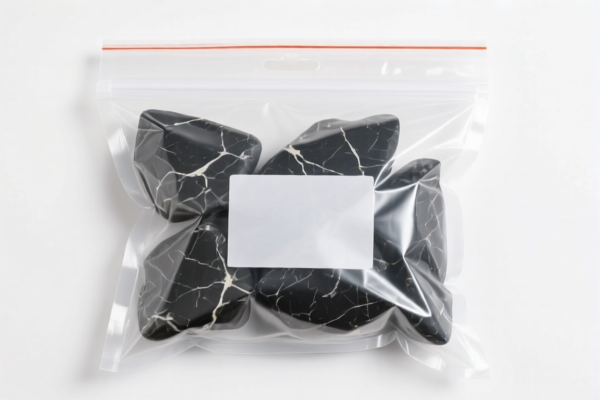
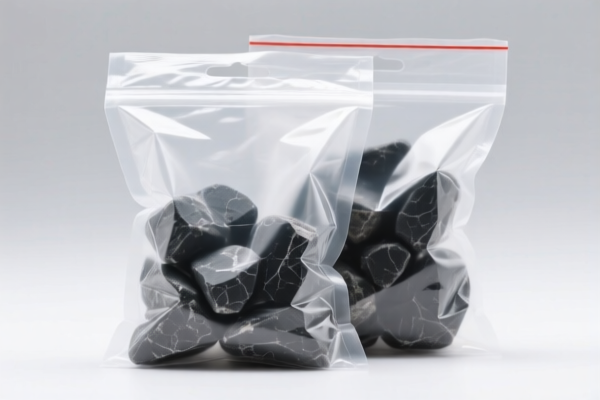
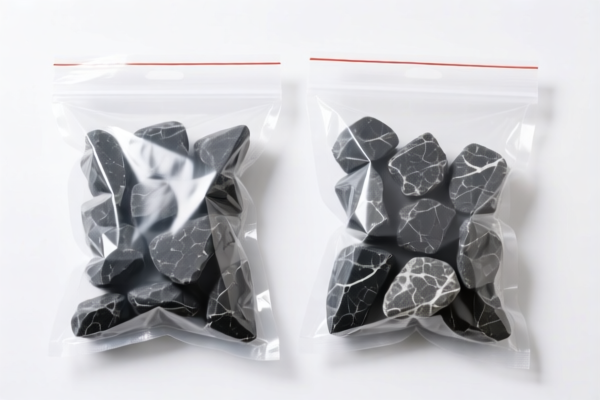
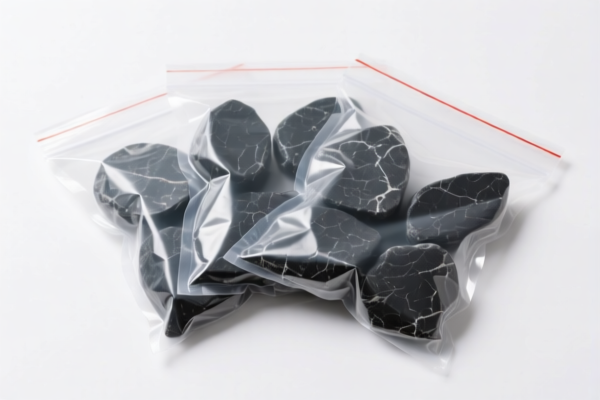
AI Analysis
📦 Plastic Stone Packaging Bag (Plastic Bags for Stone Products)
🌐 HS Code Reference & Customs Clearance Guide | 2026 Latest Tariff Analysis | Professional Clearance Strategy
📌 I. Product Definition & Classification: What Exactly is a "Plastic Stone Packaging Bag"?
The Plastic Stone Packaging Bag is a specialized industrial packaging solution designed to protect heavy, abrasive, or fragile stone products (such as marble slabs, granite blocks, tiles, or carved stone) during transportation and storage.
In international trade, these bags are not simply "plastic bags." Their classification depends heavily on: 1. Material Composition: Is it made from generic plastics, specific polymers (like Polyethylene), or woven materials? 2. Form & Structure: Is it a simple sack, a rigid box-like enclosure, or a flexible film? 3. Intended Use: Specifically for packaging stone goods vs. general-purpose plastic packaging.
⚠️ Key Distinction Point:
- If the bag is made of woven plastic or generic plastic film primarily for general cargo, it may fall under Chapter 63 (Other Made Up Articles; Set... Textile Products).
- If the bag is made specifically of plastic sheets/films (like PE or PP) and classified by its material type under Chapter 39, it falls under Chapter 39 (Plastics and Articles Thereof).
- Crucial Note: The exact HS code determines whether you face a 25.9% or 38.0% total tax burden—a difference of over 12%!
📦 II. HS Code Classification Details (2026 Latest Tariff Authority Comparison)
Based on the provided data, here are the four specific classifications for Plastic Stone Packaging Bags:
| HS Code | Product Description (Summary) | Material/Form Details | Total Tax Rate |
|---|---|---|---|
6305.33.00.40 |
Plastic Stone Packaging Bag | Material: Plastic; Form: Packaging Bag | 25.9% |
3923.21.00.80 |
Plastic Stone Packaging Bag | Material: Ethylene Polymer; Use: Packaging Bag | 38.0% |
3923.29.00.00 |
Plastic Stone Packaging Bag | Material: Plastic; Form: Sacks/Wrapper/Packaging Articles | 38.0% |
6305.33.00.80 |
Plastic Stone Packaging Bag | Material: Polyethylene (PE) or Polypropylene (PP); Use: Bags for Packing Goods | 25.9% |
🔍 Critical Observation:
- Codes6305.33.00.40and6305.33.00.80offer a lower total tax rate (25.9%). They are categorized under Chapter 63, which covers "Sacks and bags, of a kind used for the packing of goods," specifically those of plastics. - Codes3923.21.00.80and3923.29.00.00carry a higher total tax rate (38.0%). These are classified under Chapter 39 (Plastics), focusing on the material itself (Ethylene Polymer or other plastic sacks) rather than the broader "bag article" category. - Misclassification Risk: Declaring a PE/PP bag as3923.21.00.80(Ethylene Polymer) instead of6305.33.00.80(PE/PP Bag) results in an extra 12.1% tax on the CIF value.
💰 III. 2026 Latest Tariff Rate Breakdown (Including Surtaxes & Policy Add-ons)
✅ Applicable Country: United States (US)
✅ Origin: China (CN)
✅ Effective Date: Ongoing (Includes Section 301 & IEEPA provisions)
🎯 1. 6305.33.00.40 & 6305.33.00.80 —— Plastic Packaging Bags (Chapter 63)
These codes benefit from a more favorable base tariff rate compared to Chapter 39 codes.
| Item | Content |
|---|---|
| Base Tariff | 8.4% (Ad Valorem) |
| Section 301 Surtax | +7.5% (From USITC Footnote 9903.02.01) |
| IEEPA Surtax (Section 122) | +10% (Specific 122-clause tariff) |
| Total Tax Rate | 25.9% |
| Calculation | CIF Value × 25.9% |
| De Minimis Exemption | ❌ Not Applicable (Deny De Minimis for Chinese origin goods under current enforcement) |
| Legal Path | HTSUS:6305.33.00 → USITC:9903.02.01 → IEEPA:122 Clause |
📌 Explanation:
- The 8.4% base rate is standard for plastic sacks of Chapter 63.
- The 7.5% Section 301 surtax is a targeted addition for specific plastic products.
- The 10% IEEPA 122 clause is an additional layer of duty specifically applied here.
- Total: 25.9%. This is the preferred classification if the product fits the description of "Plastic" or "PE/PP Bags for Packing Goods."
🎯 2. 3923.21.00.80 & 3923.29.00.00 —— Plastic Sacks/Bags (Chapter 39)
These codes are subject to higher base tariffs, leading to a significantly higher total duty.
| Item | Content |
|---|---|
| Base Tariff | 3.0% (Ad Valorem) |
| Section 301 Surtax | +25.0% (High Section 301 rate for certain plastic articles) |
| IEEPA Surtax (Section 122) | +10% (Specific 122-clause tariff) |
| Total Tax Rate | 38.0% |
| Calculation | CIF Value × 38.0% |
| De Minimis Exemption | ❌ Not Applicable |
| Legal Path | HTSUS:3923.21/29 → USITC:9903.88.01 → IEEPA:122 Clause |
📌 Explanation:
- While the base rate (3.0%) is lower than Chapter 63 (8.4%), the Section 301 surtax is drastically higher (25%) compared to the 7.5% in Chapter 63.
- The 10% IEEPA 122 clause remains constant.
- Total: 38.0%. This classification is costlier and should only be used if the product cannot be argued as a "general plastic sack" under Chapter 63.
🛠️ IV. Customs Clearance Practical Advice (Pitfall Avoidance Guide)
✅ 1. Preparation Checklist (Non-negotiable)
| Document | Required | Explanation |
|---|---|---|
| ✅ Product Specification Sheet | ✔️ | Must specify material (PE, PP, Ethylene, etc.), thickness, dimensions, and tensile strength. |
| ✅ Material Safety Data Sheet (MSDS) | ✔️ | For plastic components, confirms chemical composition. |
| ✅ Commercial Invoice | ✔️ | Must clearly state: "Plastic Bag for Stone Packaging," Material Type, and Quantity. |
| ✅ Packing List | ✔️ | Detail the weight of stone vs. weight of packaging bags. |
| ✅ Certificate of Origin | ✔️ | Essential for proving Chinese origin to apply correct surtaxes. |
| ✅ Photos of Bags | ✔️ | Show the bag's structure (woven vs. film), printing, and closure type. |
✅ 2. Declaration Strategy (Key Tips)
🔥 "Clarify Material, Choose Chapter 63, Save 12%!"
| Scenario | Correct Declaration | Incorrect Declaration | Result |
|---|---|---|---|
| PE/PP Bags for Stone | 6305.33.00.80 |
3923.21.00.80 |
Savings: 12.1% on CIF value |
| Generic Plastic Bags | 6305.33.00.40 |
3923.29.00.00 |
Savings: 12.1% on CIF value |
| Ethylene-Specific Bags | 3923.21.00.80 |
6305.33.00.40 |
Risk: If not strictly ethylene polymer, may be flagged for reclassification + penalties |
| Mixed Material Bags | Consult HS Ruling | Guess | Delay: Customs may hold shipment for expert review |
📌 Critical Note:
- If the bag is made of Polyethylene (PE) or Polypropylene (PP), strongly argue for6305.33.00.80. The description "Plastic Stone Packaging Bag" fits Chapter 63's "Sacks and bags of a kind used for the packing of goods."
- Avoid using3923.21.00.80unless the bag is strictly defined as an "Ethylene Polymer" article under Chapter 39, which incurs a much higher Section 301 surtax.
✅ 3. Special Case Handling
| Situation | Handling Advice |
|---|---|
| Woven Plastic Bags | Clearly specify "Woven" in the description. If it's a woven sack, 6305.33 is often more appropriate than Chapter 39 films. |
| Heavy-Duty Stone Bags | Provide proof of load capacity (e.g., "Can hold 500kg stone slab"). This supports the "Packaging of Goods" argument under Chapter 63. |
| Branded Bags | If the bag has a specific brand or logo, ensure the invoice lists the brand. Customs may check for IP violations, but this doesn't affect HS code. |
| Recycled Plastic | If the bag is made from recycled content, mention it. While it doesn't change the HS code, it may help in environmental compliance documentation. |
🌍 V. Global Market Customs Comparison (2026 Latest)
| Country/Region | Recommended HS Code | Total Tariff (China Origin) | Certification Requirements | Notes |
|---|---|---|---|---|
| 🇺🇸 USA | 6305.33.00.80 |
25.9% | None specific for bags | Avoid 3923 codes to save 12% |
| 🇨🇳 China | 6305.33.00.80 |
5% | None | Low import duty |
| 🇪🇺 EU | 6305.33.00 |
0-2% | REACH Compliance | Check for plastic restrictions |
| 🇦🇺 Australia | 6305.33.00 |
5% | None | Standard textile/plastic rules |
| 🇯🇵 Japan | 6305.33.00 |
3% | None | Low tariff |
📌 Conclusion:
- USA is the most complex market due to Section 301 and IEEPA surtaxes.
- Choosing6305.33.00.80over3923.21.00.80saves 12.1% of the CIF value. For a $100,000 shipment, this is a $12,100 saving.
- Always prioritize Chapter 63 for "bags of a kind used for packing goods" if the material allows.
📌 VI. Common Mistakes & Pitfalls (Lessons Learned)
❌ Mistake 1: Declaring a PE/PP bag as 3923.21.00.80
👉 Consequence: Paying 38.0% tax instead of 25.9%. Overpayment of 12.1%.
❌ Mistake 2: Not specifying the material in the invoice
👉 Consequence: Customs may default to the higher-rate code or hold the shipment for clarification.
❌ Mistake 3: Using vague terms like "Plastic Wrap" instead of "Packaging Bag"
👉 Consequence: Misclassification risk. "Wrap" might be seen as a film (Chapter 39), while "Bag" is Chapter 63.
❌ Mistake 4: Ignoring the 122 Clause
👉 Consequence: Underpayment if the 10% IEEPA surtax is not included in your cost calculation.
✅ Correct Approach:
"Plastic Stone Packaging Bag, Material: Polyethylene (PE), Form: Woven Sack, Use: Packaging for Stone Slabs, Model: XYZ"
🎯 VII. Conclusion: Precise Classification, Cost Optimization!
🎯 Remember the Rule:
🔹 "Chapter 63 Saves Money, Chapter 39 Costs More!"
🔹 "PE/PP Bags →6305.33.00.80→ 25.9% Tax"
🔹 "Ethylene Polymer Bags →3923.21.00.80→ 38.0% Tax"
🔹 "Difference: 12.1% CIF Value. Don't Leave Money on the Table!"
📌 Pro Tip:
If your bags are made of Polypropylene (PP), always declare them under 6305.33.00.80. This is the most cost-effective classification for plastic stone packaging bags in the US market.
📣 Immediate Action:
📞 Contact your customs broker with the exact material specification (PE, PP, or Ethylene).
📄 Prepare a clear commercial invoice describing the bag as a "Plastic Stone Packaging Bag."
🚀 Optimize your landed cost by choosing the right HS Code!
✨ Professional Customs Clearance Starts with Precise Classification!
💼 Every percentage point of tax matters. Optimize your supply chain today!
Customer Reviews
About HS Code Classification
The Harmonized System (HS) is an internationally standardized nomenclature developed by the World Customs Organization (WCO) to classify traded products. Over 200 countries use the HS system as the basis for customs tariffs, trade statistics, and import/export regulations.
Each HS code follows a hierarchical structure:
- Chapter (2 digits) — Broad category of goods (e.g., Chapter 84: Machinery and Mechanical Appliances)
- Heading (4 digits) — More specific grouping within the chapter
- Subheading (6 digits) — Internationally standardized breakdown, used by all WCO member countries
- National subdivisions (8-10 digits) — Country-specific extensions for further classification, such as US HTSUS 10-digit codes
Correct HS code classification is essential for smooth customs clearance, accurate duty payment, and compliance with trade regulations. Misclassification can lead to customs delays, overpayment of duties, or penalties.
When importing from CN to US, the applicable tariff rates may include:
- Most-Favored-Nation (MFN) rate — The standard duty rate applied to WTO members
- General rate — Applied to countries without trade agreements
- Trade remedy duties — Additional tariffs such as Section 301 (anti-dumping), Section 232 (national security), or countervailing duties
The information provided on this page is for reference purposes only. For official classification, please consult with your local customs authority or a licensed customs broker.