Plastic Storage Boxes
CN → US| HS Code | Tariff Rate | Origin | Destination | Doc |
|---|---|---|---|---|
| 3926901000 | 20.9% | CN | US | Official Doc |
| 3924104000 | 13.4% | CN | US | Official Doc |
| 3923900080 | 38.0% | CN | US | Official Doc |
| 3923109000 | 38.0% | CN | US | Official Doc |
| 3924905650 | 20.9% | CN | US | Official Doc |
| 3926909989 | 22.8% | CN | US | Official Doc |
Product Images


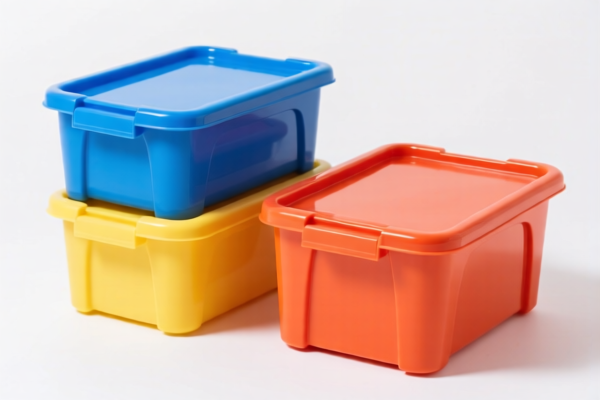
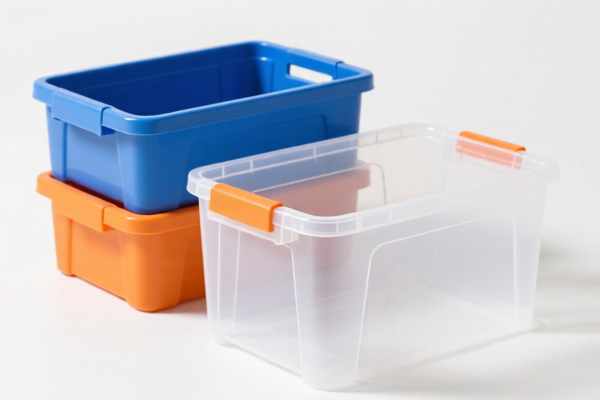
AI Analysis
📦 Plastic Storage Boxes: HS Code Classification & U.S. Customs Clearance Guide (2026)
🌐 HS Code Reference & Clearance Strategy | 2026 Latest Tariff Analysis | Professional Entry Guide
📌 I. Product Definition & Classification: What Exactly Are "Plastic Storage Boxes"?
Plastic storage boxes are versatile household and industrial containers used for organizing, protecting, and transporting goods. In international trade, they fall under Chapter 39 (Plastics and Articles Thereof). However, classification depends heavily on:
- Material: 100% plastic vs. composite materials.
- Form & Structure: Rigid boxes, bins, drawers, or flexible containers.
- Intended Use: Household organization, industrial packaging, or transport containment.
⚠️ Critical Distinction:
- If primarily for household organization (e.g., closet bins, desk organizers) → Likely HS 3924 or 3926.
- If primarily for packaging/transport (e.g., shipping crates, industrial pallet boxes) → Likely HS 3923.
- Misclassification can lead to tariff differences of up to 25% due to Section 301 and IEEPA surcharges.
📊 II. HS Code Breakdown & Tax Analysis (Based on Provided Data)
Below are the six possible HS codes for "Plastic Storage Boxes" with their corresponding tax structures. All scenarios assume origin: China (CN) to Destination: United States (US).
📋 Summary Table
| HS Code | Product Description | Primary Use | Base Tariff | Sec. 301 Tariff | IEEPA Tariff | Total Tariff |
|---|---|---|---|---|---|---|
3926.90.10.00 |
Plastic storage containers (bucket/class extension) | Household收纳盒 | 3.4% | 7.5% | 10% | 20.9% |
3924.10.40.00 |
Household plastic items (home organization) | Home storage/organizers | 3.4% | 0.0% | 10% | 13.4% ✅ Lowest |
3923.90.00.80 |
Plastic packaging articles (non-specified) | Industrial packaging/boxes | 3.0% | 25.0% | 10% | 38.0% ⚠️ High |
3923.10.90.00 |
Plastic transport/ packaging containers | Shipping/transport boxes | 3.0% | 25.0% | 10% | 38.0% ⚠️ High |
3924.90.56.50 |
Other household plastic articles | General home storage | 3.4% | 7.5% | 10% | 20.9% |
3926.90.99.89 |
Other plastic articles (not elsewhere specified) | Miscellaneous plastic制品 | 5.3% | 7.5% | 10% | 22.8% |
💰 III. Detailed Tax Breakdown by HS Code
🎯 1. 3924.10.40.00 – Best Case Scenario
Summary: Material is plastic; use is household items/home organizers.
Total Tax: 13.4%
Tax Detail:
- Base Tariff: 3.4%
- Section 301 (Add-on): 0.0%
- IEEPA (China-specific): 10%✅ Why This Code?
This code fits household organizational boxes (e.g., drawer organizers, closet bins, cosmetic storage). Since these are not primarily for transport or industrial packaging, they may qualify for 0% Section 301 tariff if clearly defined as "household goods."
💡 Tip: Clearly label as "Household Storage Organizer" in commercial invoice.
🎯 2. 3926.90.10.00 & 3924.90.56.50 – Mid-Range Scenarios
Total Tax: 20.9% each
Tax Detail:
- Base Tariff: 3.4%
- Section 301: 7.5%
- IEEPA: 10%⚠️ Why This Code?
These codes apply if the box is considered a general plastic article or household item but does not strictly fit "home organization" category. The 7.5% Section 301 tariff applies here.
💡 Tip: Use if product is multi-purpose (e.g., can be used for storage or light packaging).
🎯 3. 3926.90.99.89 – Alternative General Plastic Code
Summary: Plastic article, not specifically listed elsewhere.
Total Tax: 22.8%
Tax Detail:
- Base Tariff: 5.3%
- Section 301: 7.5%
- IEEPA: 10%⚠️ Why This Code?
This is a catch-all for plastic articles that don’t fit into specific household or packaging categories. Higher base tariff (5.3%) makes it less favorable.
💡 Tip: Avoid unless no other code fits.
🎯 4. 3923.90.00.80 & 3923.10.90.00 – Worst-Case Scenario
Total Tax: 38.0% each
Tax Detail:
- Base Tariff: 3.0%
- Section 301: 25.0%
- IEEPA: 10%❌ Why This Code?
These codes classify the product as packaging or transport containers. If customs determines the box is used for shipping, logistics, or industrial packaging, the 25% Section 301 tariff applies.
💡 Tip: Avoid this classification unless the product is explicitly designed for industrial shipping (e.g., heavy-duty crate, pallet box). Use terms like "Storage Bin" instead of "Packaging Box."
🛠️ IV. Customs Clearance Recommendations
✅ 1. Documentation Checklist (Essential for Smooth Clearance)
| Document | Required? | Notes |
|---|---|---|
| Commercial Invoice | ✅ Yes | Clearly state: "Plastic Storage Box for Household Organization" |
| Product Photos | ✅ Yes | Show box size, structure, and intended use (e.g., in a closet) |
| Material Composition | ✅ Yes | Specify: "100% PP Plastic" or "HDPE Plastic" |
| Usage Declaration | ✅ Yes | "For home organization only, not for industrial transport" |
| Packaging List | ✅ Yes | Include unit weight, dimensions, and quantity |
| CE/FCC/RoHS Certs | ⚠️ If applicable | Not always required for plastic boxes, but helpful |
✅ 2. Classification Strategy: How to Achieve 13.4% Tariff (3924.10.40.00)
🔥 Key Rule: Position matters!
- If the box is designed for home use (e.g., under-bed storage, bathroom bins, drawer organizers) → Use3924.10.40.00(13.4%).
- If the box is designed for shipping/industrial use (e.g., crate, pallet container) → Use3923.xx.xx(38.0%).📌 Evidence to Provide:
- Product catalog showing home environments
- Instructions for home use
- Lack of industrial-grade features (e.g., no heavy-duty handles, no forklift slots)
✅ 3. Common Mistakes to Avoid
| Mistake | Consequence | Solution |
|---|---|---|
| Using term "Shipping Box" | Classified as 3923 → 38% tax |
Change to "Storage Bin" or "Organizer" |
| Not specifying material | Customs may assume worst-case | Clearly state "100% Plastic" |
| Vague description "Plastic Container" | May default to higher tax | Specify "Household Storage Box" |
| Mixing household & industrial boxes | Risk of partial misclassification | Separate shipments by use case |
🌍 V. Global Market Comparison (2026)
| Country | Recommended HS Code | Tariff (China Origin) | Notes |
|---|---|---|---|
| 🇺🇸 USA | 3924.10.40.00 |
13.4% | Best case; avoid 3923 |
| 🇪🇺 EU | 3924.90 |
~6–8% | No Section 301; lower base |
| 🇨🇳 China | 3924.90 |
5–6% | Low import duty |
| 🇬🇧 UK | 3924.90 |
~5–7% | Post-Brexit tariffs |
| 🇨🇦 Canada | 3924.90 |
~5% | CUSMA eligible if qualified |
📌 Conclusion:
- USA has the highest variability due to Section 301 and IEEPA.
- Proper classification can save up to 24.6% in tariffs (38% vs. 13.4%).
- Household use is the key to lower tariffs.
📌 VI. Final Checklist for Importers
✅ Step 1: Confirm product is for household use.
✅ Step 2: Use 3924.10.40.00 if it’s a home organizer.
✅ Step 3: Clearly label as "Household Storage Box" in invoice.
✅ Step 4: Provide photos & usage instructions to prove home use.
✅ Step 5: Avoid terms like "Shipping," "Industrial," or "Packaging."
✅ Step 6: Consult a customs broker for pre-classification ruling if unsure.
🎯 VII. Pro Tip: Save Money with Pre-Ruling
📞 Request a Customs Ruling (CBP Ruling Letter) before shipment.
📄 Submit product samples, photos, and descriptions to U.S. CBP.
💡 A binding ruling can lock in the 13.4% tariff rate and prevent disputes at border.
🚀 Summary: Your Action Plan
- If Home Use →
3924.10.40.00→ 13.4% Total Tax ✅ - If General Plastic →
3926.90.10.00→ 20.9% Total Tax - If Industrial/Packaging →
3923.xx.xx→ 38.0% Total Tax ❌
💡 Golden Rule: Describe, don’t declare.
"Plastic Household Storage Organizer" vs. "Plastic Shipping Container" makes a 24.6% difference.
📌 Need Help?
Contact a licensed customs broker or submit a CBP Ruling Request to ensure compliance and optimize costs.
✨ Smart Classification = Lower Tariffs = Higher Profits
💼 Don’t Let Misclassification Cost You 25% in Savings!
Customer Reviews
About HS Code Classification
The Harmonized System (HS) is an internationally standardized nomenclature developed by the World Customs Organization (WCO) to classify traded products. Over 200 countries use the HS system as the basis for customs tariffs, trade statistics, and import/export regulations.
Each HS code follows a hierarchical structure:
- Chapter (2 digits) — Broad category of goods (e.g., Chapter 84: Machinery and Mechanical Appliances)
- Heading (4 digits) — More specific grouping within the chapter
- Subheading (6 digits) — Internationally standardized breakdown, used by all WCO member countries
- National subdivisions (8-10 digits) — Country-specific extensions for further classification, such as US HTSUS 10-digit codes
Correct HS code classification is essential for smooth customs clearance, accurate duty payment, and compliance with trade regulations. Misclassification can lead to customs delays, overpayment of duties, or penalties.
When importing from CN to US, the applicable tariff rates may include:
- Most-Favored-Nation (MFN) rate — The standard duty rate applied to WTO members
- General rate — Applied to countries without trade agreements
- Trade remedy duties — Additional tariffs such as Section 301 (anti-dumping), Section 232 (national security), or countervailing duties
The information provided on this page is for reference purposes only. For official classification, please consult with your local customs authority or a licensed customs broker.