Plastic Stretch Film Packaging Bag
CN → US| HS Code | Tariff Rate | Origin | Destination | Doc |
|---|---|---|---|---|
| 3920100000 | 39.2% | CN | US | Official Doc |
| 3920992000 | 39.2% | CN | US | Official Doc |
| 3919905040 | 40.8% | CN | US | Official Doc |
| 3919905060 | 40.8% | CN | US | Official Doc |
| 3921904090 | 39.2% | CN | US | Official Doc |
| 3921905050 | 39.8% | CN | US | Official Doc |
Product Images
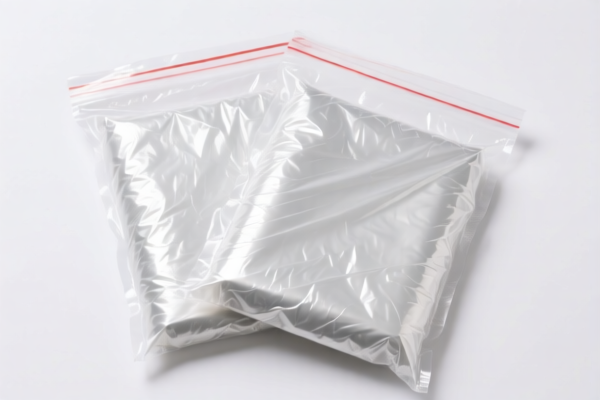
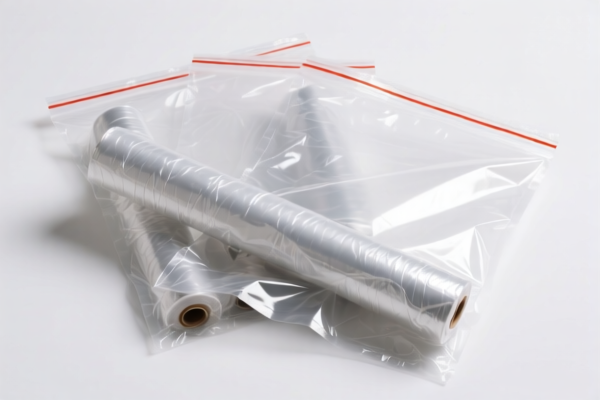
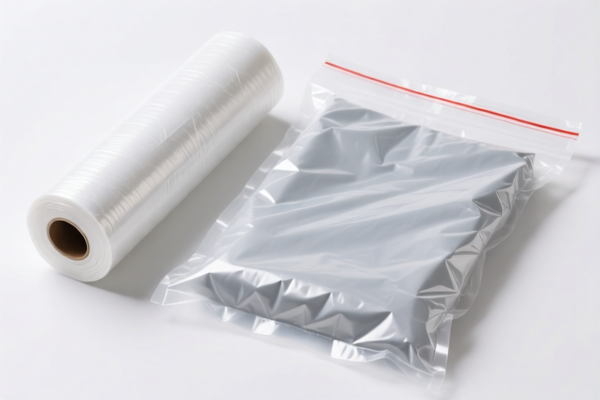
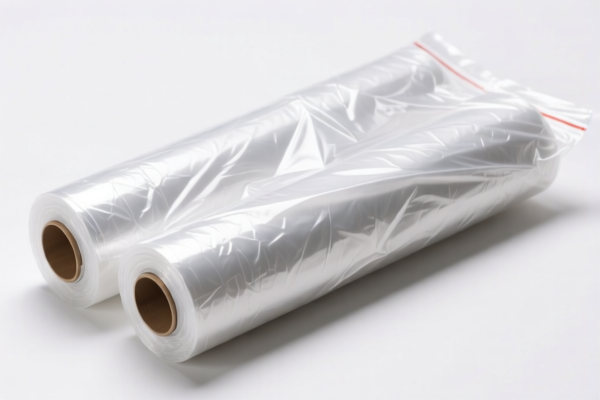
AI Analysis
📦 Plastic Stretch Film & Packaging Bags (Plastic Films)
🌐 HS Code Reference & Customs Clearance Guide | 2026 Latest Tariff Analysis | Professional Strategy for Plastic Packaging
📌 I. Product Definition & Classification: What is "Plastic Stretch Film" truly?
Plastic Stretch Film and Packaging Bags are essential materials in global logistics and retail. They are primarily composed of polyethylene (PE) or other polymer plastics. In international trade, the classification hinges on the physical form, adhesive properties, and specific manufacturing process.
The core distinction lies in whether the film is: 1. Non-adhesive rolls/films (used for wrapping/palletizing) → Typically Chapter 39, Heading 3920 or 3921. 2. Self-adhesive rolls (with a glue layer, often for sealing) → Typically Chapter 39, Heading 3919.
⚠️ Key Distinction Point:
- If it is a plain, non-adhesive plastic film used for stretch wrapping or general packaging → Look at 3920.10 or 3920.99.
- If it has a self-adhesive backing (like tape or sticky labels) → Look at 3919.90.
- If it is a laminate or reinforced plastic sheet/film → Look at 3921.90.
📦 II. HS Code Classification Details (2026 Latest Tariff Authority Mapping)
Based on the provided data, here are the precise classifications for Plastic Stretch Film and related plastic films:
| HS Code | Product Description | Application Scenario | Key Characteristics |
|---|---|---|---|
3920.10.00.00 |
Plastic Stretch Film (Ethylene Polymer) | Pallet wrapping, stretch wrapping | Ethylene-based, non-adhesive roll |
3920.99.20.00 |
Plastic Film (Non-cellular, Non-reinforced) | General flexible plastic packaging | Generic plastic film, no specific polymer listed |
3919.90.50.40 |
Self-Adhesive Plastic Film | Sealing, labeling, sticky rolls | Has adhesive backing, plastic material |
3919.90.50.60 |
Self-Adhesive Plastic Film (Flat Shape) | Industrial sealing, packaging | Self-adhesive, flat form, plastic material |
3921.90.40.90 |
Plastic Sheets, Films, Foils (Other) | Laminated or reinforced plastic packaging | Composite or other plastic forms not elsewhere specified |
🔍 Critical Note:
-3920codes are for non-adhesive films. Most "stretch wrap" (pallet wrap) falls here.
-3919codes are for self-adhesive products. If your "packaging bag" has an adhesive strip or is a sticky roll, it may fall here.
-3921codes are often for composite or specialty plastic sheets/films. If the film is laminated with paper or another material, or is a rigid plastic sheet rather than a flexible wrap, use this.
💰 III. 2026 Latest Tariff Rate Breakdown (Including Surtaxes & Policy Surcharges)
✅ Applicable Country: USA (US)
✅ Country of Origin: China (CN)
✅ Effective Date: November 10, 2025 (and subsequent imports)
🎯 1. 3920.10.00.00 & 3920.99.20.00 — Non-Adhesive Plastic Films
| Item | Detail |
|---|---|
| Base Tariff Rate | 4.2% (Ad Valorem) |
| Section 301 Surtax | +25.0% (USITC Footnote) |
| Section 122 Surtax | +10.0% (Specific China surcharge) |
| Total Tariff Rate | 39.2% |
| Tax Calculation | CIF Value × 39.2% |
| De Minimis Eligibility | ❌ No (deny_de_minimis) |
| Legal Basis Path | Section 301: 9903.01.25 → Section 122 → HTSUS: 3920.10.00.00 |
📌 Explanation:
- Base Rate (4.2%): The standard Most Favored Nation (MFN) duty for plastic films.
- Section 301 (+25%): The major Trump-era/Biden-administration tariff on Chinese goods.
- Section 122 (+10%): Additional surcharge targeting specific Chinese imports under U.S. Trade Act provisions.
- Total 39.2%: This is a high-cost category. Do not attempt to under-declare value.
🎯 2. 3919.90.50.40 & 3919.90.50.60 — Self-Adhesive Plastic Films
| Item | Detail |
|---|---|
| Base Tariff Rate | 5.8% (Ad Valorem) |
| Section 301 Surtax | +25.0% (USITC Footnote) |
| Section 122 Surtax | +10.0% (Specific China surcharge) |
| Total Tariff Rate | 40.8% |
| Tax Calculation | CIF Value × 40.8% |
| De Minimis Eligibility | ❌ No (deny_de_minimis) |
| Legal Basis Path | Section 301: 9903.01.25 → Section 122 → HTSUS: 3919.90.50.40 |
📌 Explanation:
- Base Rate (5.8%): Self-adhesive films have a slightly higher base duty than plain stretch films.
- Surtaxes: Same 25% + 10% surcharges apply.
- Total 40.8%: This is the highest tariff in the list. If your product is truly non-adhesive stretch film, do not classify it here, or you will pay more unnecessarily. Verify if it has adhesive.
🎯 3. 3921.90.40.90 — Other Plastic Sheets/Films
| Item | Detail |
|---|---|
| Base Tariff Rate | 4.2% (Ad Valorem) |
| Section 301 Surtax | +25.0% (USITC Footnote) |
| Section 122 Surtax | +10.0% (Specific China surcharge) |
| Total Tariff Rate | 39.2% |
| Tax Calculation | CIF Value × 39.2% |
| De Minimis Eligibility | ❌ No (deny_de_minimis) |
| Legal Basis Path | Section 301: 9903.01.25 → Section 122 → HTSUS: 3921.90.40.90 |
📌 Explanation:
- Used for composite or other plastic forms. If your "packaging bag" is a multi-layer laminate (e.g., plastic + aluminum foil), this might be the correct code, but verify with technical specs.
🛠️ IV. Customs Clearance Practical Advice (Battle-Tested Pitfall Avoidance)
✅ 1. Required Documentation Checklist (Non-Negotiable)
| Document | Mandatory? | Notes |
|---|---|---|
| ✅ Product Spec Sheet | ✔️ | Must clearly state: "Non-adhesive" vs. "Self-Adhesive", Material (PE, PP, etc.), Thickness, Width. |
| ✅ Commercial Invoice | ✔️ | Must match HS Code description exactly. Avoid vague terms like "Plastic Bag". Use "Polyethylene Stretch Film Roll". |
| ✅ Packing List | ✔️ | Detail gross weight, net weight, and number of rolls. |
| ✅ Certificate of Origin (CO) | ✔️ | Proves Chinese origin. Without it, you may still face surtaxes. |
| ✅ Material Safety Data Sheet (MSDS) | ✔️ | Sometimes required for plastic polymers to confirm no hazardous substances. |
| ✅ Third-Party Test Report | Optional but Recommended | Confirms polymer composition if customs challenges the classification. |
✅ 2. Declaration Strategy (Key Mnemonic)
🔥 "Adhesive? Check 3919! No Adhesive? Check 3920! Laminated? Check 3921! Total Tax ~40%!"
| Scenario | Correct HS Code | Incorrect Code & Risk |
|---|---|---|
| Plain Stretch Wrap (Pallet wrap, no glue) | 3920.10.00.00 or 3920.99.20.00 |
❌ Using 3919.90.50.40 → Overpay by 1.6% |
| Sticky Seal Tape (Has adhesive layer) | 3919.90.50.40 or 3919.90.50.60 |
❌ Using 3920.10.00.00 → Underpayment Penalty |
| Laminated Plastic Bag (Multi-layer, e.g., PET/PE) | 3921.90.40.90 |
❌ Using 3920 → Misclassification |
| Small Sample Rolls (< $800) | ❌ No De Minimis | ❌ Assuming it's exempt via de minimis → Seizure/Return |
✅ 3. Special Handling Cases
| Case | Advice |
|---|---|
| Multi-layer Composite Films | If the film is bonded with paper, aluminum, or other plastics, it is not 3920. Use 3921. |
| Biodegradable Plastic Films | Still classified under 3920/3921 unless specifically exempted. Do not assume "eco-friendly" changes the HS code. |
| Rolls vs. Cut Bags | Rolls are typically 3920/3919. If pre-cut into bags with handles, check if it qualifies as a "made-up article" (often Chapter 39 or 63). |
| OEM Custom Printing | Printing does not change the HS code. Keep the description as "Printed Polyethylene Film". |
🌍 V. Global Market Comparison (2026 Latest)
| Country/Region | Recommended HS Code | Tariff (China Origin) | Certification | Notes |
|---|---|---|---|---|
| 🇺🇸 USA | 3920.10.00.00 |
39.2% | None Specific | High tariff due to 301+122. No de minimis. |
| 🇨🇳 China | 3920.10.00.00 |
5.0% | CCC (if applicable) | Low base duty, no US surcharges. |
| 🇪🇺 EU | 3920.10.00.00 |
6.5% | REACH | No Section 301/122 equivalents, but REACH compliance required. |
| 🇨🇦 Canada | 3920.10.00.00 |
5.0% | None | Free Trade Agreement (CUSMA) may apply if manufactured in Canada/Mexico. |
| 🇲🇽 Mexico | 3920.10.00.00 |
0% (CUSMA) | None | If made in Mexico/USA, 0% under USMCA. |
📌 Conclusion:
- USA is the most expensive market for Chinese plastic films due to combined 39.2%–40.8% tariffs.
- No de minimis exemption applies. Even small shipments are taxed.
- Consider transshipment via Vietnam/Mexico (with substantial transformation) to avoid US tariffs, but ensure compliance with rules of origin.
📌 VI. Common Mistakes & Pitfalls (Blood & Tears Lessons)
❌ Mistake 1: Calling it "Plastic Bag" instead of "Stretch Film Roll"
👉 Consequence: Customs may classify it as "made-up articles" (higher duty or different code) → Delays & Penalties.
❌ Mistake 2: Assuming small shipments are tax-free
👉 Consequence: Plastic films are excluded from de minimis ($800) exemption. Full tax paid.
❌ Mistake 3: Confusing "Stretch Wrap" with "Shrink Wrap"
👉 Consequence: Shrink wrap (PVC/PVDC) might have different HS codes. Ensure material is correctly identified as PE (for stretch).
❌ Mistake 4: Omitting "Self-Adhesive" info
👉 Consequence: If it has glue but you declare 3920, you face underpayment fraud risks. If you declare 3919 for non-adhesive, you overpay.
✅ Correct Declaration Example:
"Plastic Stretch Film Roll, Polyethylene (PE), Non-Adhesive, Width 18", Length 1500m, For Palletizing, Model XYZ, Made in China"
🎯 VII. Conclusion: Professional Declaration Saves Money!
🎯 Remember the Rule:
🔹 "Stretch Wrap = 3920 (39.2%)
🔹 "Sticky Roll = 3919 (40.8%)
🔹 "Laminated = 3921 (39.2%)
🔹 "No De Minimis = Pay Full Tax"
📌 Pro Tip:
If you are importing large volumes, consider Advance Rulings from US Customs (CBP) to lock in the classification.
If your supply chain allows, explore origin switching (e.g., manufacturing in Vietnam or Mexico) to avoid the ~40% US tariff.
📣 Immediate Action:
📞 Verify Adhesive Status → Choose 3919 or 3920.
📊 Calculate Landed Cost → Include 39.2–40.8% tariff.
🚀 Plan Ahead → Avoid surprises at US ports.
✨ Precision in Classification, Profitability in Logistics!
💼 Your plastic film, properly declared, is a competitive advantage!
Customer Reviews
About HS Code Classification
The Harmonized System (HS) is an internationally standardized nomenclature developed by the World Customs Organization (WCO) to classify traded products. Over 200 countries use the HS system as the basis for customs tariffs, trade statistics, and import/export regulations.
Each HS code follows a hierarchical structure:
- Chapter (2 digits) — Broad category of goods (e.g., Chapter 84: Machinery and Mechanical Appliances)
- Heading (4 digits) — More specific grouping within the chapter
- Subheading (6 digits) — Internationally standardized breakdown, used by all WCO member countries
- National subdivisions (8-10 digits) — Country-specific extensions for further classification, such as US HTSUS 10-digit codes
Correct HS code classification is essential for smooth customs clearance, accurate duty payment, and compliance with trade regulations. Misclassification can lead to customs delays, overpayment of duties, or penalties.
When importing from CN to US, the applicable tariff rates may include:
- Most-Favored-Nation (MFN) rate — The standard duty rate applied to WTO members
- General rate — Applied to countries without trade agreements
- Trade remedy duties — Additional tariffs such as Section 301 (anti-dumping), Section 232 (national security), or countervailing duties
The information provided on this page is for reference purposes only. For official classification, please consult with your local customs authority or a licensed customs broker.