Plastic Sunscreen Curtains
CN → US| HS Code | Tariff Rate | Origin | Destination | Doc |
|---|---|---|---|---|
| 3907100000 | 41.5% | CN | US | Official Doc |
| 3907610010 | 41.5% | CN | US | Official Doc |
| 5903102090 | 35.0% | CN | US | Official Doc |
| 3926909989 | 22.8% | CN | US | Official Doc |
| 3926905900 | 37.4% | CN | US | Official Doc |
Product Images
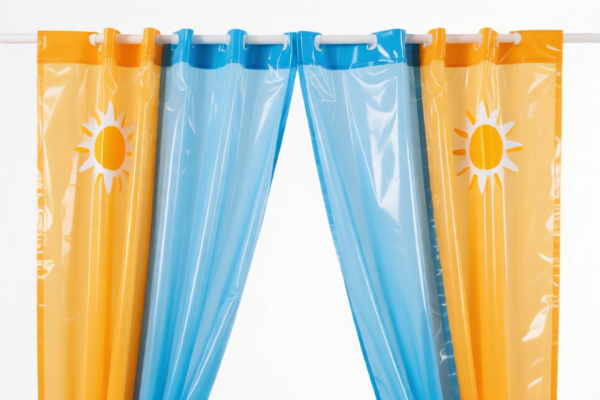

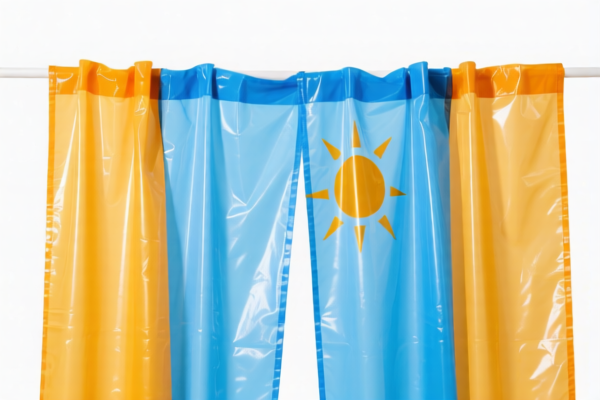
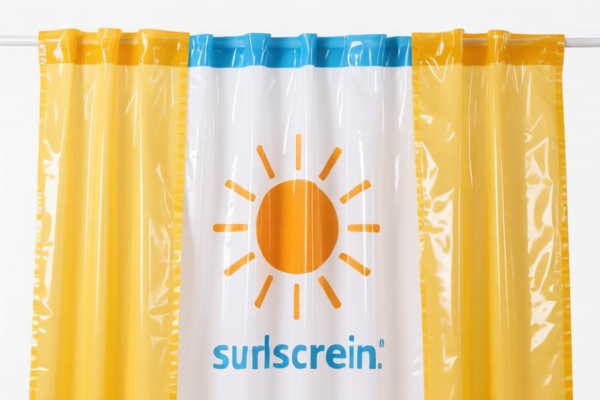
AI Analysis
🌞 Plastic Sunscreen Curtains (Shower Curtains / Sun Shades)
🌐 HS Code Reference & Customs Clearance Guide | 2026 Latest Tariff Analysis | Strategic Compliance Strategy
📌 I. Product Definition & Classification: What Exactly Are "Plastic Sunscreen Curtains"?
In international trade, "Plastic Sunscreen Curtains" is a broad term that typically covers two distinct product categories based on their material composition and structure:
- Textile-Based with Plastic Coating: Fabric (polyester, nylon, etc.) that is impregnated, coated, or covered with plastic (PVC, PE, etc.) for waterproofing or sun protection. These are classified as textile articles.
- Pure Plastic Articles: Sheets, films, or molded items made entirely of plastics, used for shading or privacy. These are classified as plastic articles.
⚠️ Key Distinction Point:
- If the base material is textile/fabric and the plastic is just a coating/impregnation → Chapter 59 (Textile Articles).
- If the material is pure polymer/resin (e.g., PVC sheets, PE films) without a textile base → Chapter 39 (Plastics).
📦 II. HS Code Classification Details (2026 Latest Tariff Authority Comparison)
| HS Code | Product Description | Application Scenario | Material Basis | Total Tax Rate (US/China Origin) |
|---|---|---|---|---|
5903.10.20.90 |
Textile fabrics impregnated, coated, covered or laminated with plastics (PVC) | Plastic Shower Curtains (Fabric base + PVC coating) | Textile + Plastic Coating | 35.0% |
3926.90.99.89 |
Other articles of plastics (Catch-all/Residual) | Plastic Shower Curtains (Generic plastic articles not elsewhere specified) | Pure Plastic | 22.8% |
3926.90.59.00 |
Other articles of plastics (Finished consumer goods) | Plastic Shower Curtains (Finished consumer items) | Pure Plastic | 37.4% |
3907.10.00.00 |
Polyacetal (POM) or other primary forms of polymers | Plastic Sunscreen Agents (Raw polymer material) | Polymer Aggregate | 41.5% |
3907.61.00.10 |
Polycarbonates, primary forms | Plastic Sunscreen Agents (Raw polymer material) | Polymer Aggregate | 41.5% |
🔍 Critical Note:
- Scenario A (Shower Curtain/Fabric-Based): The most common consumer "plastic shower curtain" is actually a fabric coated with PVC. This falls under 5903.10.20.90.
- Scenario B (Shower Curtain/Pure Plastic): A simple PVC sheet or film without fabric backing falls under 3926.90.99.89 or 3926.90.59.00.
- Scenario C (Raw Material): If you are importing the raw plastic resin (polymers) used to make the sunscreen agent/curtain, it falls under 3907.10.00.00 or 3907.61.00.10.
💰 III. 2026 Latest Tariff Rate Breakdown (Including Surcharges & Policy Add-ons)
✅ Applicable Country: United States (US)
✅ Origin: China (CN)
✅ Effective Date: From November 10, 2025 (and subsequent imports)
🎯 1. 5903.10.20.90 —— Textile Fabrics Coated with Plastics (PVC)
(Most Common for Consumer "Plastic Shower Curtains")
| Item | Content |
|---|---|
| Base Tariff | 0.0% (ad valorem) |
| USITC Additional Tariff | +25.0% (Section 301) |
| Section 122 Tariff | +10.0% (Specific China-origin surcharge) |
| Total Tax Rate | 35.0% |
| Tax Calculation | CIF Value × 35% |
| De Minimis Exemption? | ❌ No (deny_de_minimis) |
| Legal Basis Path | Section 122 → USITC:5903.10.20.90 → Footnote 9903.88.01 |
📌 Explanation:
- Despite being a textile, the plastic coating triggers specific trade rules. - The 0% base tariff is misleading; the 25% Section 301 and 10% Section 122 make the effective rate 35%.
🎯 2. 3926.90.99.89 —— Other Articles of Plastics (Catch-All)
(For Pure Plastic Sheets/Films Without Fabric Base)
| Item | Content |
|---|---|
| Base Tariff | 5.3% (ad valorem) |
| USITC Additional Tariff | +7.5% (Reduced Section 301 rate for some exclusions) |
| Section 122 Tariff | +10.0% (Specific China-origin surcharge) |
| Total Tax Rate | 22.8% |
| Tax Calculation | CIF Value × 22.8% |
| De Minimis Exemption? | ❌ No (deny_de_minimis) |
| Legal Basis Path | Section 122 → USITC:3926.90.99.89 |
📌 Explanation:
- This is the lowest tariff option for pure plastic sunscreen materials. - Crucial: If your product is a fabric-coated curtain, do NOT use this code. It will be rejected as misclassification.
🎯 3. 3926.90.59.00 —— Other Plastic Articles (Finished Consumer Goods)
(For Specific Finished Plastic Items)
| Item | Content |
|---|---|
| Base Tariff | 2.4% (ad valorem) |
| USITC Additional Tariff | +25.0% (Standard Section 301) |
| Section 122 Tariff | +10.0% (Specific China-origin surcharge) |
| Total Tax Rate | 37.4% |
| Tax Calculation | CIF Value × 37.4% |
| De Minimis Exemption? | ❌ No (deny_de_minimis) |
| Legal Basis Path | Section 122 → USITC:3926.90.59.00 |
📌 Explanation:
- Higher base tariff and full Section 301 rate apply. - Less favorable than3926.90.99.89.
🎯 4. 3907.10.00.00 & 3907.61.00.10 —— Polyacetal (POM) / Polycarbonates (Primary Forms)
(For Raw Polymer Material, NOT Finished Curtains)
| Item | Content |
|---|---|
| Base Tariff | 6.5% (ad valorem) |
| USITC Additional Tariff | +25.0% (Standard Section 301) |
| Section 122 Tariff | +10.0% (Specific China-origin surcharge) |
| Total Tax Rate | 41.5% |
| Tax Calculation | CIF Value × 41.5% |
| De Minimis Exemption? | ❌ No (deny_de_minimis) |
| Legal Basis Path | Section 122 → USITC:3907.10.00.00 / 3907.61.00.10 |
📌 Explanation:
- These codes are for raw plastic resin (granules, sheets, films) used in manufacturing. - Highest tax burden (41.5%). - Only applicable if you are importing the chemical/polymer material, not the finished curtain.
🛠️ IV. Customs Clearance Practical Advice (Battle-Tested Pitfall Guide)
✅ 1. Documentation Checklist (All or Nothing)
| Document | Required | Description |
|---|---|---|
| ✅ Product Specification Sheet | ✔️ | Must clearly state: Base Material (Textile vs. Pure Plastic) and Coating Type (PVC, PE, etc.) |
| ✅ Product Photos (With Dimensions) | ✔️ | Show texture: Fabric weave visible? Or smooth plastic sheet? |
| ✅ Commercial Invoice | ✔️ | Describe accurately: "Shower Curtain, Polyester Fabric, PVC Coated" OR "Plastic Shower Curtain, PVC Sheet" |
| ✅ Packing List | ✔️ | Specify net/gross weight and dimensions |
| ✅ Certificate of Origin (CO) | ✔️ | Required for Section 122 tariff application |
| ✅ Third-Party Test Report | ✔️ | If claiming PVC content or chemical compliance (REACH, Prop 65) |
✅ 2. Declaration Tips (Key Mnemonics)
🔥 "Fabric + PVC = 5903. Pure Plastic = 3926. Raw Resin = 3907. Never Mix Up!"
| Scenario | Correct HS Code | Incorrect Practice | Consequence |
|---|---|---|---|
| Shower Curtain (Fabric + PVC) | 5903.10.20.90 (35%) |
Misdeclare as 3926 (22.8%) |
Penalty + Back Taxes |
| Shower Curtain (Pure PVC Sheet) | 3926.90.99.89 (22.8%) |
Misdeclare as 5903 (35%) |
Overpay Tax |
| Raw PVC Granules/Resin | 3907.10.00.00 (41.5%) |
Declare as finished curtain | Misclassification + Fraud Risk |
| Finished Plastic Curtains | 3926.90.59.00 (37.4%) |
Use 3926.90.99.89 (22.8%) |
Audit Flag + Penalties |
✅ 3. Special Situation Handling
| Situation | Handling Advice |
|---|---|
| OEM Custom Curtains | Provide design specs + material breakdown to justify HS Code |
| Mixed Packaging (Curtain + Hook) | Declare separately: Curtain as 5903/3926, Hooks as 7320 (if metal) to avoid over-taxing accessories |
| Plastic vs. Fabric Ambiguity | Provide cross-section photo showing fabric weave under plastic layer |
| Raw Material Import | Clearly state "Polymer Resin for Manufacturing" on invoice |
🌍 V. Global Main Market Clearance Comparison (2026 Latest)
| Country/Region | Recommended HS Code | Tariff | Certification | Notes |
|---|---|---|---|---|
| 🇺🇸 United States | 5903.10.20.90 |
35% | Prop 65 (PVC) | High tax burden due to Section 301 & 122 |
| 🇨🇳 China | 5903.10.20.90 |
9% (Import Duty) | None | Lower base duty, no Section 301 |
| 🇪🇺 European Union | 5903.10.20.90 |
4% | REACH | No Section 301, lower overall cost |
| 🇬🇧 United Kingdom | 5903.10.20.90 |
4% | UKCA | Post-Brexit alignment with EU |
| 🇦🇺 Australia | 5903.10.20.90 |
5% | None | Competitive market |
📌 Conclusion:
- USA has the highest effective tariff for these products due to Section 301 (25%) and Section 122 (10%).
- China-origin products face significant cost disadvantages in the US market.
- EU/UK/Australia remain more cost-effective markets for Chinese manufacturers.
📌 VI. Common Mistakes & Pitfall Guide (Blood & Tears Lessons)
❌ Mistake 1: Declaring a Fabric-Based PVC Shower Curtain as a Plastic Article (3926)
👉 Consequence: Under-declaration of value/tax. Customs may seize goods, impose fines, and back-taxes at the higher 5903 rate.
❌ Mistake 2: Declaring Raw Polymer Resin (3907) as a Finished Curtain
👉 Consequence: Misclassification fraud risk. High penalties and potential loss of import privileges.
❌ Mistake 3: Ignoring Section 122 Tariff (10%) in Cost Calculation
👉 Consequence: Profit margin erosion. Many importers forget this 10% surcharge, leading to unexpected costs.
❌ Mistake 4: Using "Plastic Curtain" as a Generic Description
👉 Consequence: Customs ambiguity. Must specify "Textile with PVC Coating" or "Pure Plastic Sheet" to avoid delays.
✅ Correct Practice:
"Shower Curtain, 100% Polyester Fabric, PVC Coated, Waterproof, 72x72 inches, Model XYZ, Prop 65 Compliant"
OR
"Plastic Sunscreen Shade, 100% PVC Film, Unreinforced, 1000m² Roll, Model ABC"
🎯 VII. Conclusion: Precise Declaration, Cost Savings, Efficiency!
🎯 Remember the Mnemonics:
🔹 "Fabric + PVC = 5903 (35%). Pure Plastic = 3926 (22.8%). Raw Resin = 3907 (41.5%)."
🔹 "Section 122 adds 10% to everything from China. Always budget for it!"
🔹 "HS Code determines your profit. Declare correctly, save thousands!"
📌 Pro Tip:
- If your product is Fabric-based, do NOT try to use 3926 to save 12% tax. The risk of audit and penalty is too high.
- If you are importing Raw Materials, prepare for a 41.5% effective tax rate. Consider sourcing from non-China origins if possible to avoid Section 301.
- Apply for a Binding Ruling with US Customs (CBP) if the material composition is ambiguous (e.g., non-woven fabric vs. plastic film).
📣 Immediate Action:
📞 Consult a Professional Customs Broker
📄 Prepare Detailed Material Breakdown
🚀 Ensure Smooth Clearance, Maximize Profit, Avoid Penalties!
✨ Professional Clearance Starts with Accurate Classification!
💼 Every Penny of Tax Matters!
Customer Reviews
About HS Code Classification
The Harmonized System (HS) is an internationally standardized nomenclature developed by the World Customs Organization (WCO) to classify traded products. Over 200 countries use the HS system as the basis for customs tariffs, trade statistics, and import/export regulations.
Each HS code follows a hierarchical structure:
- Chapter (2 digits) — Broad category of goods (e.g., Chapter 84: Machinery and Mechanical Appliances)
- Heading (4 digits) — More specific grouping within the chapter
- Subheading (6 digits) — Internationally standardized breakdown, used by all WCO member countries
- National subdivisions (8-10 digits) — Country-specific extensions for further classification, such as US HTSUS 10-digit codes
Correct HS code classification is essential for smooth customs clearance, accurate duty payment, and compliance with trade regulations. Misclassification can lead to customs delays, overpayment of duties, or penalties.
When importing from CN to US, the applicable tariff rates may include:
- Most-Favored-Nation (MFN) rate — The standard duty rate applied to WTO members
- General rate — Applied to countries without trade agreements
- Trade remedy duties — Additional tariffs such as Section 301 (anti-dumping), Section 232 (national security), or countervailing duties
The information provided on this page is for reference purposes only. For official classification, please consult with your local customs authority or a licensed customs broker.