Plastic Support Pallet
CN → US| HS Code | Tariff Rate | Origin | Destination | Doc |
|---|---|---|---|---|
| 3926100000 | 15.3% | CN | US | Official Doc |
| 3924103000 | 22.8% | CN | US | Official Doc |
| 3924104000 | 13.4% | CN | US | Official Doc |
| 3926909989 | 22.8% | CN | US | Official Doc |
| 3926901000 | 20.9% | CN | US | Official Doc |
Product Images
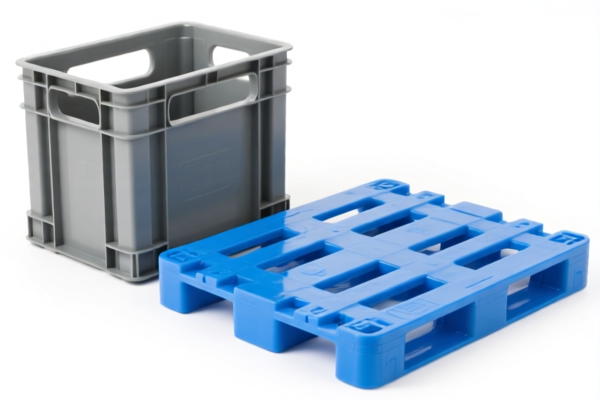

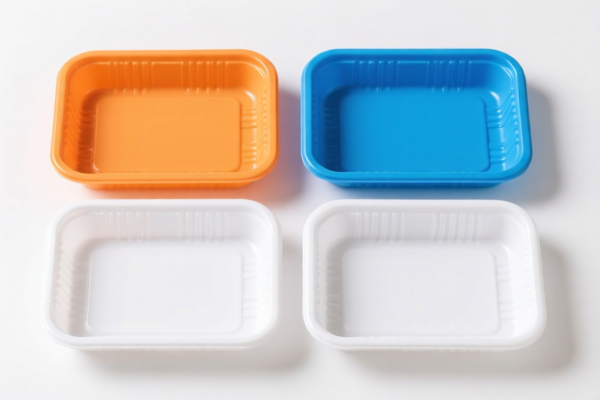
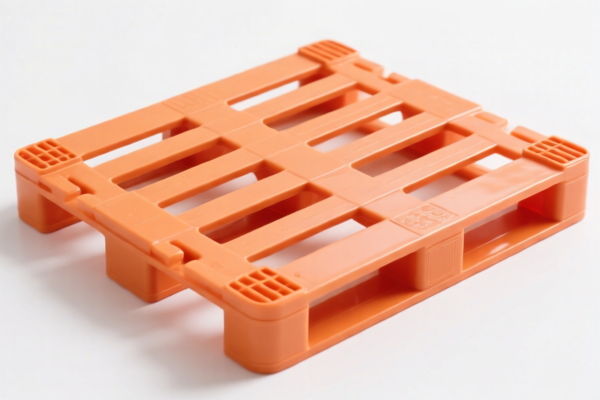
AI Analysis
📦 Plastic Support Pallet (Plastic Pallets for Support/Storage)
🌐 HS Code Reference & Customs Clearance Guide | 2026 Latest Tariff Structure | Professional Clearance Strategy
📌 I. Product Definition & Classification: What Exactly is a "Plastic Support Pallet"?
A "Plastic Support Pallet" typically refers to a rigid or semi-rigid plastic structure used for stacking, storing, moving, and supporting goods in logistics and warehousing. However, in international trade (specifically US Customs), the classification heavily depends on intended use and structural design.
Two Main Categories in Customs Interpretation:
- Industrial/Logistics Pallets (HS Chapter 3926):
- Designed for mechanical handling (forklifts, pallet jacks).
- Used for bulk storage, transport, and heavy loads.
-
Considered "articles of plastic" (other plastic articles).
-
Household/Kitchen Tableware (HS Chapter 3924):
- Designed for serving food, dining, or kitchen use (e.g., trays for plates, drinks, or kitchen items).
- Even if called a "pallet," if it’s small, lightweight, and intended for table use, it may be classified as tableware.
⚠️ Key Distinction Point:
- If used for warehousing, shipping, or industrial storage → Likely 3926.
- If used for serving food, dining tables, or kitchen organization → Likely 3924.
📊 II. HS Code Classification Details (2026 Latest Tariff Authority Mapping)
Based on the provided data, here are the possible HS Codes for "Plastic Support Pallets" with their tax implications:
| HS Code | Product Description | Application Scenario | Tax Rate | Tax Detail |
|---|---|---|---|---|
3926.10.00.00 |
Plastic pallets, classified under other plastic articles/accessories | Industrial/Logistics use, general plastic articles | 15.3% | Base: 5.3%, Addl: 0.0%, Section 301 (122): 10% |
3924.10.30.00 |
Plastic pallets, fully meeting definition of plastic tableware/trays | Kitchen/Dining use, food service trays | 22.8% | Base: 5.3%, Addl: 7.5%, Section 301 (122): 10% |
3924.10.40.00 |
Plastic pallets, classified under tableware/kitchenware trays | Food serving, lightweight kitchen trays | 13.4% | Base: 3.4%, Addl: 0.0%, Section 301 (122): 10% |
3926.90.99.89 |
Plastic pallets, catch-all category for non-specified plastic articles | General plastic support structures, non-specific industrial use | 22.8% | Base: 5.3%, Addl: 7.5%, Section 301 (122): 10% |
3926.90.10.00 |
Polyethylene (PE) pallets, other plastic articles | PE material industrial pallets, non-specific | 20.9% | Base: 3.4%, Addl: 7.5%, Section 301 (122): 10% |
🔍 Key Insight:
- Industrial Pallets (3926) generally have lower or moderate taxes (15.3% – 22.8%), but some subcategories (like3926.90.99.89) carry high additional duties.
- Tableware Pallets (3924) can be cheaper (13.4%) if correctly classified as kitchenware, but more expensive (22.8%) if deemed general plastic tableware.
- Section 301 (122) Tariff: A flat 10% additional duty applies to all Chinese-origin goods under these codes, regardless of base rate.
💰 III. 2026 Latest Tariff Breakdown (Detailed Tax Analysis)
✅ Applicable Country: United States (US)
✅ Origin: China (CN)
✅ Effective Date: Includes imports post-November 10, 2025
🎯 1. 3926.10.00.00 — Plastic Pallets (Industrial/Logistics)
| Item | Detail |
|---|---|
| Base Tariff | 5.3% (ad valorem) |
| Additional Duty (USITC 301) | 0.0% |
| Section 301 (122) Duty | +10% |
| Total Tariff | 15.3% |
| Tax Calculation | CIF Value × 15.3% |
| De Minimis Exemption | ❌ Not Eligible |
| Legal Basis | HTSUS:3926.10.00.00 → Section 301:122 |
📌 Explanation:
- This code is for industrial-grade plastic pallets (e.g., warehouse storage, forklift-compatible).
- No additional 301 duty beyond the 10% Section 301 rate.
- Best option for cost optimization among industrial pallets.
🎯 2. 3924.10.30.00 — Plastic Pallets (Tableware/General)
| Item | Detail |
|---|---|
| Base Tariff | 5.3% |
| Additional Duty (USITC 301) | +7.5% |
| Section 301 (122) Duty | +10% |
| Total Tariff | 22.8% |
| Tax Calculation | CIF Value × 22.8% |
| De Minimis Exemption | ❌ Not Eligible |
| Legal Basis | HTSUS:3924.10.30.00 → Section 301:122 |
📌 Explanation:
- High tariff due to additional 7.5% duty on general plastic tableware.
- Only use if the product is clearly not industrial pallets.
🎯 3. 3924.10.40.00 — Plastic Pallets (Kitchenware/Food Service)
| Item | Detail |
|---|---|
| Base Tariff | 3.4% |
| Additional Duty (USITC 301) | 0.0% |
| Section 301 (122) Duty | +10% |
| Total Tariff | 13.4% |
| Tax Calculation | CIF Value × 13.4% |
| De Minimis Exemption | ❌ Not Eligible |
| Legal Basis | HTSUS:3924.10.40.00 → Section 301:122 |
📌 Explanation:
- Lowest tariff (13.4%) if correctly classified as kitchenware/food service trays.
- Must prove intended use is for serving food, not industrial storage.
🎯 4. 3926.90.99.89 — Plastic Pallets (Catch-All Industrial)
| Item | Detail |
|---|---|
| Base Tariff | 5.3% |
| Additional Duty (USITC 301) | +7.5% |
| Section 301 (122) Duty | +10% |
| Total Tariff | 22.8% |
| Tax Calculation | CIF Value × 22.8% |
| De Minimis Exemption | ❌ Not Eligible |
| Legal Basis | HTSUS:3926.90.99.89 → Section 301:122 |
📌 Explanation:
- High tariff due to 7.5% additional duty.
- Use only if no more specific industrial pallet code applies.
🎯 5. 3926.90.10.00 — Polyethylene (PE) Pallets
| Item | Detail |
|---|---|
| Base Tariff | 3.4% |
| Additional Duty (USITC 301) | +7.5% |
| Section 301 (122) Duty | +10% |
| Total Tariff | 20.9% |
| Tax Calculation | CIF Value × 20.9% |
| De Minimis Exemption | ❌ Not Eligible |
| Legal Basis | HTSUS:3926.90.10.00 → Section 301:122 |
📌 Explanation:
- Mid-range tariff.
- Specific to PE material pallets.
🛠️ IV. Customs Clearance Practical Advice (Risk Avoidance Guide)
✅ 1. Document Checklist (Essential for Clearance)
| Document | Required | Notes |
|---|---|---|
| ✅ Product Specification Sheet | ✔️ | Material (PE, PP, HDPE), dimensions, weight capacity, stackability |
| ✅ Usage Declaration | ✔️ | Clearly state: "Industrial Storage Pallet" or "Kitchen Serving Tray" |
| ✅ Product Photos (Including Labels) | ✔️ | Show structure, holes, forks, branding |
| ✅ Third-Party Test Report | ✔️ | Load-bearing test, FDA compliance (if food contact) |
| ✅ Commercial Invoice | ✔️ | Accurate description: "Plastic Pallet for Warehouse Use" or "Plastic Serving Tray" |
| ✅ Packing List | ✔️ | Indicate quantity, gross/net weight |
| ✅ Certificate of Origin (CO) | ✔️ | If not from China, may qualify for lower tariffs |
✅ 2. Declaration Strategy (Key Rules)
🔥 "Define Use, Choose Code, Avoid Misclassification!"
| Scenario | Correct HS Code | Wrong Declaration | Consequence |
|---|---|---|---|
| Industrial Warehouse Pallet | 3926.10.00.00 |
"Plastic Tray" | Audit risk, possible reclassification |
| Kitchen Food Serving Tray | 3924.10.40.00 |
"Industrial Pallet" | Higher tax (22.8% vs 13.4%) |
| Generic Plastic Support Structure | 3926.90.99.89 |
Vague term "Support" | High tax (22.8%), delays |
| PE Material Pallet | 3926.90.10.00 |
"Plastic Pallet" (no material spec) | Potential misclassification |
✅ 3. Special Cases
| Case | Handling Advice |
|---|---|
| Multi-use Pallet (Both Industrial & Kitchen) | Declare based on primary intended use; provide supporting documentation |
| Stackable/Interlocking Pallets | Clearly describe structural features; may affect classification |
| Food-Contact Surface | Provide FDA compliance certificate; may qualify for 3924.10.40.00 |
| Custom/OEM Pallets | Provide design drawings; avoid generic descriptions |
🌍 V. Global Market Comparison (2026 Update)
| Country/Region | Recommended HS Code | Tariff (China Origin) | Certifications | Notes |
|---|---|---|---|---|
| 🇺🇸 USA | 3926.10.00.00 (Industrial) |
15.3% | None required | 3924.10.40.00 is 13.4% if kitchenware |
| 🇨🇳 China | 3926.10.00.00 |
5.3% | GB Standards | No additional duties |
| 🇪🇺 EU | 3926.90.99 |
1.7–6.5% | REACH, RoHS | No Section 301 |
| 🇦🇺 Australia | 3926.10.00.00 |
5% | None | No additional duties |
| 🇯🇵 Japan | 3926.10.00.00 |
5% | None | No additional duties |
📌 Conclusion:
- USA has the highest effective tariff due to Section 301 (122) 10% additional duty.
- Correct classification is critical to avoid paying 22.8% instead of 13.4% or 15.3%.
📌 VI. Common Mistakes & Pitfalls (Lessons Learned)
❌ Mistake 1: Declaring industrial pallets as "plastic trays" to avoid duties
👉 Result: Customs rejects, imposes 22.8% or fines.
❌ Mistake 2: Using vague terms like "support structure"
👉 Result: Falls under 3926.90.99.89 → 22.8% tax.
❌ Mistake 3: Not specifying material (PE vs. PP vs. HDPE)
👉 Result: May be misclassified under generic codes with higher rates.
❌ Mistake 4: Ignoring intended use declaration
👉 Result: Customs may reclassify, leading to back taxes + penalties.
✅ Correct Approach:
"HDPE Warehouse Pallet, 48x40 inches, Nestable, Forklift Compatible, Model XYZ"
OR
"Plastic Serving Tray, Food-Grade, Microwave Safe, Model ABC"
🎯 VII. Conclusion: Professional Classification Saves Money!
🎯 Remember the Rules:
🔹 "Industrial → 3926, Kitchen → 3924"
🔹 "Define Use, Declare Accurately, Pay Less"
🔹 "Vague Description = High Tax = Delayed Clearance"
📌 Pro Tip:
If your plastic pallets are originally from Vietnam, Mexico, or Thailand, you may qualify for IEEPA exemptions or lower tariffs. Consider Advance Ruling from US Customs to confirm HS Code before shipment.
📣 Immediate Action:
📞 Consult a licensed customs broker + Provide Product Specs + Apply for Pre-Ruling
🚀 Ensure smooth clearance, minimized costs, and faster delivery!
✨ Professional Customs Clearance Starts with Precise Classification!
💼 Every Dollar Saved is a Dollar Earned!
Customer Reviews
About HS Code Classification
The Harmonized System (HS) is an internationally standardized nomenclature developed by the World Customs Organization (WCO) to classify traded products. Over 200 countries use the HS system as the basis for customs tariffs, trade statistics, and import/export regulations.
Each HS code follows a hierarchical structure:
- Chapter (2 digits) — Broad category of goods (e.g., Chapter 84: Machinery and Mechanical Appliances)
- Heading (4 digits) — More specific grouping within the chapter
- Subheading (6 digits) — Internationally standardized breakdown, used by all WCO member countries
- National subdivisions (8-10 digits) — Country-specific extensions for further classification, such as US HTSUS 10-digit codes
Correct HS code classification is essential for smooth customs clearance, accurate duty payment, and compliance with trade regulations. Misclassification can lead to customs delays, overpayment of duties, or penalties.
When importing from CN to US, the applicable tariff rates may include:
- Most-Favored-Nation (MFN) rate — The standard duty rate applied to WTO members
- General rate — Applied to countries without trade agreements
- Trade remedy duties — Additional tariffs such as Section 301 (anti-dumping), Section 232 (national security), or countervailing duties
The information provided on this page is for reference purposes only. For official classification, please consult with your local customs authority or a licensed customs broker.